Blog
Hunting Blinds Kentucky | Complete Guide to Deer Blinds, Placement, Regulations & Buying Tips

Hunting Blinds Kentucky | Complete Guide to Deer Blinds, Placement, Regulations & Buying Tips
Kentucky offers a diverse mix of hardwood forests, rolling hills, agricultural fields, creek bottoms, river corridors, and thick cover that can provide excellent whitetail deer habitat. But having deer on a property does not automatically mean a hunting blind is in the right location.
The right Hunting Blinds Kentucky setup should match your terrain, deer movement, hunting method, shooting equipment, weather conditions, access route, and local regulations.
Whether you are searching for deer blinds for sale in Kentucky, comparing ground and elevated blinds, preparing a bowhunting setup, or building a more permanent deer hunting location, this guide covers what you need to know.
You will learn how to choose the right blind, where to place it, how to use blinds for bow and gun hunting, how insulation and window systems affect performance, what to know about Kentucky public-land rules, and how to evaluate a hunting blind before purchasing. Explore hunting blinds USA to know more about hunting in other cities.
Why Hunting Blinds Matter in Kentucky
A hunting blind is not simply a shelter where you sit and wait for deer.
A properly selected and positioned blind can help you:
- Break up your outline
- Reduce visible movement
- Improve concealment
- Protect against weather
- Create more comfortable hunting conditions
- Provide controlled shooting windows
- Improve visibility
- Give bowhunters more predictable shooting positions
- Provide a stable location for longer hunts
Kentucky’s terrain makes blind selection particularly important.
A blind positioned on a steep wooded ridge may require a completely different strategy from one overlooking an agricultural field. Likewise, a ground blind used for bowhunting has different requirements from an elevated enclosed blind used for firearm hunting.
The best approach is therefore to choose your hunting blind based on the property and hunting strategy, rather than simply buying the most expensive or largest blind available.
Understanding Kentucky Deer Habitat
Before purchasing or installing a deer blind, study the property.
Kentucky’s combination of forest, farmland, hills, valleys, waterways, and transitional habitat creates numerous potential deer travel routes.
Hardwood Forests
Kentucky’s wooded areas can provide:
- Bedding cover
- Food
- Security
- Travel corridors
- Terrain funnels
- Mast-producing trees
- Connecting cover
When scouting timber, look for trails, ridges, saddles, benches, creek crossings, funnels, and transitions between different types of cover.
Agricultural Fields
Agricultural fields can attract deer, but the center of the field is not necessarily the best blind location.
Instead, examine:
- Field edges
- Timber transitions
- Brushy corners
- Fence lines
- Drainages
- Travel routes
- Entry and exit trails
The objective is to intercept deer movement while keeping your blind concealed and your access route discreet.
Creek and River Bottoms
Waterways can influence deer movement, especially where they connect timber, fields, and thick cover.
Potential locations include:
- Creek crossings
- Narrow travel corridors
- Timber edges
- Brushy banks
- Trail intersections
- Funnels between water and steep terrain
Hills and Ridges
Kentucky’s rolling and mountainous terrain creates natural movement patterns.
Pay attention to:
- Saddles
- Ridge tops
- Benches
- Draws
- Hollows
- Steep terrain
- Ridge intersections
A blind positioned near a natural funnel can be more productive than one placed simply because deer sign is visible.
Best Types of Hunting Blinds in Kentucky
There is no single best hunting blind for every Kentucky hunter.
The major categories include:
- Ground hunting blinds
- Elevated hunting blinds
- Enclosed blinds
- Box blinds
- Bowhunting blinds
- Gun hunting blinds
- Insulated blinds
- Octagon or 360-degree blinds
- Portable blinds
- Permanent or semi-permanent blinds
Each has different advantages.
Ground Hunting Blinds in Kentucky
Ground blinds are useful when hunters need flexibility or when the terrain does not provide a practical location for an elevated blind.
They can be particularly useful for:
- Bowhunting
- Field edges
- Agricultural properties
- Brushy areas
- Properties where portable setups are preferred
- Hunters who frequently change locations
- Hunters who cannot install an elevated platform
Advantages of ground blinds
- Flexible placement
- Easier transportation
- Easier installation
- Lower profile
- Convenient access
- Useful for bowhunting
- Can be positioned where trees are unavailable
Ground blind considerations
Ground-level hunting brings deer closer to the hunter’s line of sight.
That makes:
- Concealment
- Movement control
- Scent
- Entry routes
- Exit routes
- Window placement
particularly important.
Avoid positioning the blind directly on top of a heavily used deer trail.
Instead, try to intercept movement from a reasonable distance while preserving natural deer behavior.
Elevated Hunting Blinds in Kentucky
Elevated hunting blinds can provide excellent visibility over:
- Agricultural fields
- Timber openings
- Food plots
- Brush
- Grass
- Rolling terrain
Elevation can also help create a more controlled shooting environment.
However, installing an elevated blind requires additional planning.
Consider:
- Ground conditions
- Platform stability
- Ladder access
- Handrails
- Anchoring
- Blind weight
- Delivery access
- Shooting direction
- Wind
- Safe shooting zones
Never assume that the highest possible elevation is automatically the best.
The ideal elevation is the one that provides useful visibility while maintaining a safe and comfortable shooting position.
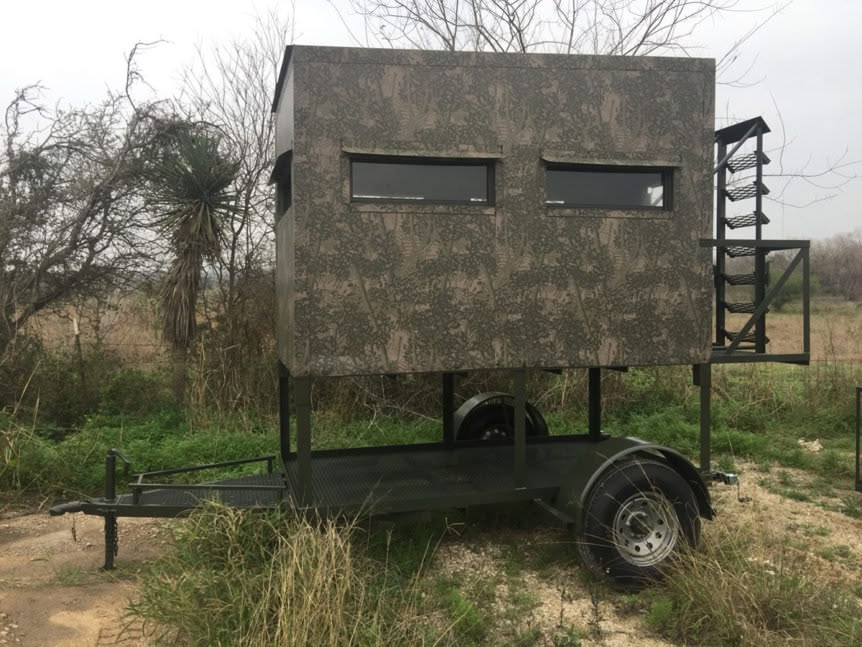
Enclosed and Box Deer Blinds
Enclosed hunting blinds are popular among hunters who want additional protection from Kentucky weather.
An enclosed blind can be particularly useful during:
- Cold mornings
- Rainy conditions
- Windy days
- Long sits
- Family hunts
- Youth hunts
- Extended firearm hunts
A box blind also provides an opportunity to create a more controlled interior environment.
Before purchasing, consider:
- Number of hunters
- Interior floor area
- Door placement
- Window height
- Shooting clearance
- Seating
- Equipment storage
- Bow clearance
- Firearm clearance
- Ventilation
A blind that looks large externally can feel surprisingly small once hunters, seats, backpacks, bows, rifles, and other equipment are inside.
Bow Hunting Blinds in Kentucky
Bowhunting requires careful attention to blind dimensions.
A bowhunter must have enough room to:
- Draw the bow
- Rotate
- Anchor
- Follow deer movement
- Maintain concealment
- Shoot through the selected window
Window height is critical
A window that works perfectly for rifle hunting may be uncomfortable for a bowhunter.
Look for:
- Quiet window operation
- Adequate vertical clearance
- Sufficient draw room
- Comfortable shooting angles
- Minimal obstructions
- Enough interior maneuvering space
Practice drawing and aiming from inside the blind before hunting.
This allows you to discover whether your bow, chair, shooting position, and window actually work together.
Gun Hunting Blinds in Kentucky
Gun hunting generally requires a stable and comfortable shooting position.
Important considerations include:
- Window height
- Shooting rest compatibility
- Visibility
- Safe shooting direction
- Firearm clearance
- Interior space
- Noise control
An enclosed gun blind can be particularly useful for hunters who expect to spend several hours in one location.
Multiple windows can also allow hunters to monitor different approaches without constantly moving their bodies.
Choosing the Right Deer Blind Size
One of the most common mistakes is buying a blind based only on exterior dimensions.
Consider how many people will actually use it.
One-person hunting blind
A smaller blind may be suitable for:
- Solo bowhunters
- Minimal equipment
- Shorter hunts
- Compact hunting locations
Two-person hunting blind
A two-person blind needs enough space for:
- Two hunters
- Chairs
- Bows or firearms
- Backpacks
- Binoculars
- Other hunting equipment
Family hunting blind
If you plan to hunt with:
- Children
- Parents
- Multiple adults
- Guides
a larger blind may be worth the additional cost.
Remember equipment space
A hunter does not occupy only the space taken by their body.
You also need room for:
- Weapon
- Backpack
- Seat
- Binoculars
- Rangefinder
- Clothing
- Water
- Hunting accessories
Choose interior dimensions accordingly. Read more on How to Choose the Right Deer Blind Size.
Are Insulated Hunting Blinds Worth It in Kentucky?
Kentucky weather can change significantly throughout the deer season.
For hunters who spend several hours inside an enclosed blind, insulation can improve comfort during cold-weather hunts.
Potential benefits include:
- Reduced cold exposure
- Improved comfort during long sits
- Less wind penetration
- More comfortable conditions for youth hunters
- Better overall hunting experience
Insulation may be especially valuable if your blind is intended for repeated use over several seasons.
However, insulation can also add:
- Weight
- Cost
- Construction complexity
If your hunting style consists mostly of short hunts during mild weather, you may not need a heavily insulated structure.
Hunting Blind Windows and Shooting Systems
The window system can have a major effect on hunting performance.
A good window should allow you to:
- Observe deer
- Prepare for a shot
- Maintain concealment
- Minimize movement
- Operate quietly
Look for:
- Quiet operation
- Durable construction
- Clear visibility
- Appropriate height
- Weather resistance
- Suitable shooting openings
- Multiple shooting directions
Bowhunting windows
Prioritize:
- Quiet operation
- Adequate draw clearance
- Sufficient vertical space
- Comfortable shooting angles
Gun-hunting windows
Prioritize:
- Stable shooting positions
- Firearm clearance
- Visibility
- Safe shooting lanes
360-degree blinds
Octagon and 360-degree designs can offer visibility around much of the blind.
This can be useful on properties where deer may approach from multiple directions.
However, every shooting window still needs to correspond with a safe and practical shooting direction.
Where to Place a Deer Blind in Kentucky
The most important question is not:
“Where can I put my blind?”
It is:
“Where do deer naturally want to travel?”
Start by identifying:
Bedding → Travel → Feeding
Your objective is to intercept movement between these areas while minimizing disturbance.
Potential locations include:
- Field edges
- Timber transitions
- Creek crossings
- Funnels
- Saddles
- Ridge intersections
- Food plot edges
- Travel corridors
- Brush transitions
- Timber openings
Deer Blind Placement by Kentucky Habitat
Agricultural Properties
Look for the transition between food and cover.
Instead of placing your blind in the middle of the field, consider:
- Field corners
- Timber edges
- Brushy edges
- Fence lines
- Travel routes
Your entry route should not unnecessarily cross the areas where deer are expected to move.
Kentucky Hardwood Timber
In mature timber, look for:
- Deer trails
- Ridge saddles
- Benches
- Funnels
- Creek crossings
- Mast-producing trees
- Bedding transitions
A blind can be positioned where terrain naturally concentrates deer movement.
Creek Bottoms
Creek bottoms can provide excellent travel corridors.
Look for:
- Crossing points
- Narrow terrain
- Timber edges
- Brush
- Trails
- Connections between bedding and food
Hills and Hollows
Kentucky’s hills can create natural movement funnels.
Study:
- Ridge lines
- Saddles
- Hollows
- Benches
- Draws
- Steep slopes
Deer may use terrain features that make movement easier or provide concealment.
Wind, Thermals, Scent and Hunter Access
Even an excellent blind location can fail if your scent and access repeatedly alert deer.
Consider prevailing wind
Your blind should allow you to hunt without constantly blowing your scent toward the area where deer are expected.
Study thermals
Air movement can change as the landscape warms and cools.
Morning and evening conditions can behave differently.
Plan your entry route
The path to the blind matters almost as much as the blind itself.
Avoid crossing:
- Bedding areas
- Major trails
- Feeding areas
- Creek crossings
- Frequent deer travel routes
Reduce unnecessary disturbance
Do not repeatedly visit a blind just to check it if doing so disturbs deer.
Plan maintenance, equipment checks, and scouting efficiently.
Hunting Blinds for Different Regions of Kentucky
Kentucky’s landscape varies significantly from one region to another.
Eastern Kentucky
Mountainous and heavily wooded areas may favor:
- Elevated blinds
- Enclosed blinds
- Timber-edge setups
- Bowhunting blinds
- Terrain-funnel locations
Central Kentucky
Mixed agricultural and wooded habitat can provide opportunities for:
- Field-edge blinds
- Elevated blinds
- Ground blinds
- Enclosed box blinds
Western Kentucky
Agricultural fields, timber, waterways, and flatter terrain may favor:
- Field-edge blinds
- Ground blinds
- Elevated blinds
- Creek-bottom setups
Southern Kentucky
Mixed forest, rolling terrain, agricultural areas, and creek corridors may support several blind styles.
The important principle is to match the blind to the specific property, rather than assuming a regional label determines the best setup.
Kentucky Hunting Blind Regulations
Kentucky hunting regulations can change, so hunters should always verify current rules with the Kentucky Department of Fish & Wildlife Resources before hunting.
For the 2026–27 season, Kentucky’s current seasons planner lists:
- Archery: September 5, 2026–January 18, 2027
- Youth/Senior Crossbow: September 5, 2026–January 18, 2027
- Crossbow: September 19, 2026–January 18, 2027
- Youth-only Firearms: October 10–18, 2026
- Early Muzzleloader: October 17–18, 2026
- Modern Firearms: November 14–29, 2026
- Late Muzzleloader: December 12–20, 2026
Kentucky notes that season regulations can change, so hunters should confirm the applicable rules before each hunt.
The 2026–27 regulations also include changes to deer zone classifications and bag limits in 30 counties, making it particularly important to check the current county-specific regulations.
Hunting Blinds on Kentucky Public Land
Public-land hunting requires additional planning.
Kentucky Fish & Wildlife manages more than 85 wildlife management areas, while the state provides access to more than 1.5 million acres of public hunting land. Individual public areas can have special regulations, season dates, or permit requirements that differ from statewide rules.
Before taking or installing a blind on public land, check the specific area’s rules.
Kentucky WMA stand rules
On Kentucky Fish & Wildlife WMAs, hunters may not use:
- Nails
- Spikes
- Screw-in devices
- Wire
- Tree climbers
to attach a tree stand or climb a tree.
Portable stands or climbing devices that do not injure trees may be used. Stands must be marked with the hunter’s name and address, placed no more than two weeks before the season opens, and removed within one week after the last day of each hunting period. Existing permanent tree stands cannot be used.
These rules make public-land hunting materially different from setting up a blind on private property.
Ground Blind Rules During Kentucky Gun Deer Seasons
Kentucky has specific ground-blind requirements on certain public lands.
When gun deer hunting is allowed on a Kentucky Fish & Wildlife WMA, state park, or Otter Creek Outdoor Recreation Area, a hunter inside a ground blind must attach a hat or vest made of solid, unbroken hunter-orange material to the blind so it is visible from all sides.
Hunter-orange clothing requirements still apply to people inside the blind.
Kentucky’s public-land deer quota hunts also specify the same hunter-orange requirement for ground blinds used during gun quota hunts.
There is an exception for state-owned or managed WMAs where firearms hunting for deer, elk, or bear is prohibited.
Important: Do not apply a public-land rule automatically to every private property. Always determine which land-management rules apply to your hunting location.
Kentucky Public-Land Deer Hunting
Kentucky has substantial public hunting opportunities, but public-land hunting requires more preparation than simply finding an open piece of ground.
Before hunting a WMA or other public property:
- Identify the exact property.
- Check the current regulations.
- Determine whether a quota hunt applies.
- Check whether a user permit is required.
- Review season dates.
- Check blind and stand requirements.
- Check hunter-orange requirements.
- Understand access restrictions.
- Scout the property before hunting.
- Confirm any area-specific restrictions.
Kentucky Fish & Wildlife states that some public lands have quota hunts and that individual areas may have special seasons and regulations.
Hunting Blind Safety
A hunting blind should make hunting safer and more comfortable, not introduce unnecessary hazards.
Elevated blind safety
Before climbing into an elevated blind, inspect:
- Platform
- Floor
- Ladder
- Handrails
- Fasteners
- Anchors
- Steps
- Door
- Surrounding vegetation
Never use an elevated structure that appears damaged or unstable.
Shooting safety
Always identify:
- Your target
- What lies beyond it
- Other hunters
- Buildings
- Roads
- Livestock
- Property boundaries
- Safe shooting directions
Never allow a blind to encourage unsafe shooting simply because a window provides a clear view.
Permanent vs. Portable Hunting Blinds
Portable hunting blinds
Portable blinds are useful for:
- Changing hunting locations
- Seasonal setups
- Scouting-based hunting
- Multiple properties
- Hunters who want flexibility
Advantages
- Easier relocation
- Flexible placement
- Often easier transportation
- Useful for temporary setups
Permanent or semi-permanent blinds
These can work well on private properties where hunters repeatedly use the same location.
Potential advantages include:
- Greater comfort
- More interior space
- Better weather protection
- Elevated installation options
- Long-term usability
However, public-land rules may prohibit or restrict permanent structures. Kentucky’s WMA regulations, for example, prohibit the use of existing permanent tree stands and impose specific rules on portable stands.
Wood vs. Steel Hunting Blinds
The best material depends on your priorities.
Wood hunting blinds
Potential benefits:
- Traditional appearance
- Customizable
- Good insulation potential
- Flexible dimensions
- Familiar construction
Steel hunting blinds
Potential benefits:
- Durable exterior
- Strong construction
- Consistent manufactured design
- Long-term usability
- Resistance to certain forms of wear
When comparing materials, consider:
- Weight
- Transportation
- Installation
- Maintenance
- Insulation
- Weather exposure
- Expected lifespan
- Budget
Hunting Blinds Made in Kentucky
If you are specifically searching for Hunting Blinds Made in Kentucky, verify manufacturing claims before purchasing.
A Kentucky-based seller and a hunting blind actually manufactured in Kentucky are not necessarily the same thing.
Ask the manufacturer:
- Where is the blind manufactured?
- Where are components sourced?
- Where is final assembly performed?
- Is the blind shipped assembled?
- What warranty is provided?
- Are replacement components available?
- Can the blind be customized?
- How is delivery handled?
Businesses should only use “Made in Kentucky” or similar manufacturing claims when they can substantiate them.
Deer Blinds for Sale in Kentucky
Hunters searching for Deer Blinds for Sale in Kentucky should compare more than price.
Consider the complete value of the blind.
Construction
Compare:
- Exterior material
- Floor
- Roof
- Door
- Windows
- Insulation
- Hardware
Hunting performance
Evaluate:
- Visibility
- Shooting angles
- Concealment
- Window operation
- Bow clearance
- Gun clearance
Comfort
Look at:
- Interior dimensions
- Seating
- Headroom
- Window height
- Ventilation
- Floor space
- Storage
Delivery and installation
Before purchasing, determine:
- How the blind will be transported
- Whether delivery is available
- Whether your property has vehicle access
- Whether a stand is included
- How many people are needed for installation
- Whether additional equipment is required
A blind that looks inexpensive online can become much more expensive after transportation, installation, platform, and accessories are added.
How Much Should You Spend on a Hunting Blind?
There is no universal price that makes a hunting blind “worth it.”
Instead, compare what you receive for the price.
A premium hunting blind may offer:
- Better insulation
- More durable materials
- Improved window systems
- Greater weather protection
- Larger interior space
- Better long-term durability
A basic blind may be more appropriate for:
- Temporary locations
- Seasonal hunting
- Portable setups
- Hunters with limited budgets
Think about the number of years you expect to use the blind.
If a higher-quality blind lasts significantly longer and provides better comfort, the initial price may make more sense over time.
Common Hunting Blind Buying Mistakes
1. Choosing the cheapest option
Price should be evaluated alongside construction, durability, comfort, and features.
2. Buying the wrong size
A blind that is too small becomes uncomfortable when equipment is added.
3. Ignoring window placement
Window placement affects visibility and shooting comfort.
4. Forgetting bow clearance
Bowhunters need adequate drawing and maneuvering space.
5. Installing before scouting
Always understand deer movement before committing to a permanent location.
6. Ignoring access
A great blind location can become a poor hunting location if your route constantly disturbs deer.
7. Ignoring wind
Blind placement and access should account for scent and wind.
8. Forgetting public-land regulations
Rules can differ significantly between private land and Kentucky public hunting areas.
9. Failing to inspect elevated equipment
Never prioritize convenience over structural safety.
10. Assuming one blind works everywhere
A Kentucky mountain property may require a different setup from a western agricultural property.
Kentucky Deer Blind Buying Checklist
Before buying, consider:
Hunting method
-
Bowhunting
-
Crossbow
-
Rifle/firearm
-
Muzzleloader
-
Multiple hunting methods
Number of hunters
-
One
-
Two
-
Family/group
Property
-
Private land
-
Public land
-
Agricultural
-
Timber
-
Creek bottom
-
Hills
-
Mixed habitat
Blind type
-
Ground blind
-
Elevated blind
-
Enclosed blind
-
Box blind
-
Octagon/360-degree blind
Features
-
Insulation
-
Carpeted floor
-
Tinted windows
-
Quiet window system
-
Lockable door
-
Multiple shooting directions
-
Durable exterior
Installation
-
Delivery access
-
Stand/platform
-
Anchoring
-
Installation equipment
-
Safe ladder/access
Regulations
-
Private/public status confirmed
-
Current Kentucky regulations checked
-
Specific WMA rules checked
-
Ground blind rules checked
-
Hunter-orange requirements checked
Practical Kentucky Hunting Blind Scenarios
Scenario 1: Kentucky timber property
You have a heavily wooded property with several trails connecting bedding and feeding areas.
An elevated or enclosed blind may work well near a terrain funnel, provided the wind and access route are favorable.
Scenario 2: Kentucky agricultural property
You have a crop field bordering hardwood timber.
Instead of putting the blind in the center of the field, consider the timber-field transition where deer naturally move between cover and food.
Scenario 3: Kentucky bowhunting
You want to hunt from ground level near a narrow travel corridor.
A ground blind may be effective if it is properly concealed, positioned away from the trail, and large enough to allow a full bow draw.
Scenario 4: Family hunting
You want to hunt with a child or another family member.
A larger enclosed blind can provide more room and protection from changing weather.
Scenario 5: Kentucky public-land hunt
You are hunting a Kentucky WMA during a gun deer season.
Before bringing the blind, check the property’s specific regulations. On Kentucky Fish & Wildlife WMAs, ground blinds used when gun deer hunting is allowed require hunter-orange material attached to the blind and visible from all sides, while hunter-orange clothing requirements continue to apply.
FAQs: Hunting Blinds Kentucky
What are the best hunting blinds in Kentucky?
What are the best deer blinds in Kentucky?
Are hunting blinds legal in Kentucky?
Can you leave a hunting blind on Kentucky public land?
Do ground blinds require hunter orange in Kentucky?
Are ground blinds good for Kentucky deer hunting?
Where should I place a deer blind in Kentucky?
Are insulated hunting blinds worth it in Kentucky?
Conclusion: Choosing the Right Hunting Blind in Kentucky
The best hunting blind for Kentucky is not necessarily the largest or most expensive option.
It is the one that fits your property, deer movement, hunting method, terrain, weather conditions, shooting requirements, access route, and budget.
Start with scouting. Identify bedding areas, food sources, trails, terrain funnels, field edges, creek crossings, wind patterns, and safe shooting directions. Then select a blind that supports your hunting strategy.
For hunters looking for deer blinds for sale in Kentucky, ground blinds, elevated blinds, bow hunting blinds, gun hunting blinds, insulated blinds, enclosed blinds, or specialized 360-degree hunting blinds, choosing the right product is only half the equation. Proper placement and responsible use are just as important.
Hunting Blind Supply is positioned by the business as the #1 trusted seller for deer hunting blinds, offering hunting-blind solutions for hunters who want to improve comfort, concealment, and their overall hunting setup.
Before hunting on Kentucky public land, always verify the current Kentucky Fish & Wildlife regulations and the specific rules for the property you plan to hunt. Kentucky maintains extensive public hunting opportunities, but individual WMAs and other public properties can have special requirements.
Choose the right blind. Scout the right location. Hunt safely.

One thought on “Hunting Blinds Kentucky | Complete Guide to Deer Blinds, Placement, Regulations & Buying Tips”