Blog
Hunting Blinds in Montana | Deer Blind Types, Prices, Regulations, and Buying Guide

Hunting Blinds in Montana | Deer Blind Types, Prices, Regulations, and Buying Guide
Montana offers hunters a wide range of landscapes, from open prairie and agricultural land to wooded river corridors and rugged mountain terrain. Choosing the right hunting blind can help you stay concealed, manage changing weather conditions, and prepare a comfortable hunting position for deer and other game.
If you are researching hunting blinds in Montana, this guide explains the main types available, what deer hunting blinds may cost, where to look for new and used options, and what to consider before placing a blind on public or private land. You will also learn how to compare wooden, metal, insulated, ground, and elevated blinds so you can make a practical choice for your hunting blind setup in the US.
Whether you manage a private hunting property or plan seasonal trips, the right blind should match your terrain, hunting method, budget, and applicable regulations.
What Are Hunting Blinds?
A hunting blind is a structure or concealment system that helps hunters remain less visible to wildlife. Depending on its design, a blind may offer protection from wind and precipitation, reduce movement visibility, and provide a stable location for observing game.
Hunting blinds range from lightweight fabric shelters to enclosed wooden or steel structures with windows, floors, doors, and optional insulation.
The best option depends on how and where you hunt.
For example:
- A portable ground blind may suit a hunter who frequently changes locations.
- An enclosed box blind may be appropriate for a private property where a permanent hunting setup is permitted.
- An elevated blind may improve visibility over tall grass or uneven terrain.
- An insulated blind may provide added comfort during extended hunts in cold weather.
Before purchasing a blind, consider your target species, hunting equipment, the number of people using it, access to the site, and any land-use restrictions.
Why Use a Hunting Blind in Montana?
Montana’s varied landscapes mean hunters may need different equipment for different properties and seasons. A blind that works well on an open agricultural field may not be the most practical choice for a wooded hillside.
Weather protection
Montana weather can change quickly, particularly in exposed areas and at higher elevations. Enclosed blinds can help reduce exposure to wind and precipitation, although insulation, construction quality, and window design determine how much protection they provide.
A weather-resistant roof, sealed joints, durable door, and suitable flooring can make an enclosed blind more comfortable during long hunting sessions.
Concealment
A well-positioned blind helps break up a hunter’s outline. Window placement and careful movement inside the structure are important because wildlife can detect movement even when the blind itself blends into the surroundings.
Choose a finish that suits the surrounding vegetation, and avoid unnecessary movement near windows.
A more organized hunting position
An enclosed blind can provide a defined location for equipment, seating, and observation. Larger models may accommodate more than one person, provided the interior dimensions and shooting windows are suitable.
A setup for repeated use
Hunters with access to private land may benefit from a blind designed for repeated seasonal use. A durable structure can be maintained and repositioned or repaired as needed, subject to the landowner’s permission and applicable rules.
Types of Hunting Blinds in Montana
Different blind designs serve different purposes. Compare the following options before deciding which one fits your property and hunting style.
Enclosed box blinds
Box blinds are enclosed structures with walls, a roof, a door, and windows. They are often used on private hunting properties where a fixed or semi-permanent setup is allowed.
Potential advantages include:
- Protection from wind and precipitation.
- Defined window positions for observation.
- Space for seating and hunting equipment.
- Options for insulation and interior finishes.
- Compatibility with certain approved platforms or stands.
Box blinds can be made from wood, metal, composite materials, or combinations of materials. Their weight and dimensions make transportation and installation important considerations.
Wood hunting blinds in Montana
Wood hunting blinds can suit properties where owners want a traditional appearance and the flexibility to customize certain features.
Depending on the design, a wooden blind may offer a substantial floor, enclosed walls, and a familiar interior finish. However, wood requires maintenance to help manage moisture, rot, and deterioration.
Before buying a wooden blind, inspect its framing, roof, floor, joints, and door. Ask about the materials used and whether the structure is supplied assembled or as a kit.
Metal hunting blinds
Metal blinds may appeal to buyers who prioritize a durable exterior and a structured enclosure.
Their suitability depends on the gauge and quality of the metal, frame construction, protective finish, roof design, and how the structure is anchored. Metal surfaces can also transmit heat and cold, so insulation and ventilation deserve attention.
For long-term use, inspect seams, fasteners, corrosion protection, and window mechanisms.
Insulated hunting blinds
Insulated blinds include materials intended to reduce heat transfer through walls, roofs, or other surfaces.
They may be useful for hunters planning longer sessions during colder weather. Insulation does not automatically make a blind warm, quiet, or completely weatherproof. Air leaks, window openings, flooring, and ventilation still matter.
If you plan to use a heater, follow the manufacturer’s instructions and all applicable fire and carbon-monoxide safety precautions. Never use an outdoor-rated fuel-burning heater in an enclosed space unless it is specifically approved for that use.
Ground hunting blinds
Ground blinds are positioned at ground level. They include portable fabric shelters and some enclosed structures designed to sit on a prepared base.
They can be practical when you need flexibility, have limited access for heavy equipment, or want to hunt along a travel corridor without installing an elevated platform.
Check visibility from inside, available shooting windows, concealment, wind exposure, and how securely the blind can be anchored.
Elevated and tower hunting blinds
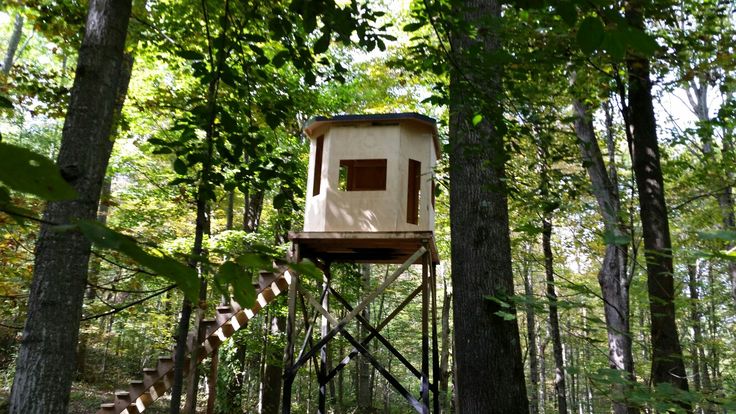
Elevated blinds are installed on an approved platform or tower. Elevation can improve visibility over vegetation and may help hunters observe a larger section of a field.
However, an elevated structure introduces additional safety considerations, including access ladders, handrails, platform capacity, anchoring, and fall protection.
Only use a platform designed for the blind’s weight and dimensions. Follow the manufacturer’s installation instructions and inspect the structure before each season.
Portable and mobile hunting blinds
Portable blinds are useful for hunters who need to change locations or cannot leave a structure in place.
Lightweight fabric models are generally easier to transport, while larger enclosed blinds may require a trailer, specialized equipment, or professional delivery.
Before moving any blind, check its weight, dimensions, transport requirements, and whether the destination allows its use.
Deer Hunting Blinds in Montana
Deer hunting blinds in Montana should be selected according to the terrain, vegetation, hunting method, and access available at your chosen location.
Montana hunters pursue different deer species in different habitats, so there is no single blind design that suits every hunt.
Choosing a blind for private property
For a private ranch or hunting property, an enclosed blind may be a practical option if the landowner permits it and the installation suits the location.
Consider the following:
- The number of hunters using the blind.
- Whether the blind will be used for bowhunting, firearm hunting, or both.
- The amount of space needed for safe equipment handling.
- Exposure to wind, snow, rain, and direct sunlight.
- Whether a suitable base or platform is available.
- How the blind will be delivered, installed, and maintained.
A landowner who plans to reuse the same location may value a durable structure with replaceable components and accessible windows.
Deer blinds for bowhunting
Bowhunting requires particular attention to interior clearance, window height, shooting lanes, and safe movement.
A blind that feels spacious while sitting may not provide enough room to draw a bow without contacting a wall, roof, window frame, or other equipment.
Before purchasing, evaluate the actual interior dimensions and window configuration. Confirm that the intended shooting positions provide sufficient clearance for your equipment and comply with applicable hunting rules.
Deer blinds for firearm hunting
For firearm hunting, prioritize a stable structure, appropriate window positioning, a clear view of the intended hunting area, and safe handling space.
The blind should allow you to maintain control of your firearm without pointing it toward other occupants or areas where people may be present. Never assume that a window opening or shooting lane is safe simply because it faces away from a road or building.
Insulated deer hunting blinds
An insulated deer blind may be worth considering if you regularly hunt during cold weather or spend extended periods observing a field or travel corridor.
Compare insulation, window seals, roof construction, flooring, ventilation, and door fit rather than relying on the word “insulated” alone.
Hunting Blinds in Montana for Sale
When shopping for hunting blinds in Montana, compare the full cost and specifications of each option instead of focusing only on the advertised price.
Where to look
You can investigate several types of sellers:
- Specialist hunting blind retailers: Useful for comparing models, dimensions, accessories, and construction details.
- Manufacturers: May provide product specifications, assembly instructions, warranty information, and delivery options.
- Local outdoor equipment dealers: May offer the opportunity to inspect products or discuss regional delivery.
- Online marketplaces: May list new, used, or surplus blinds, although condition and seller reliability require careful checking.
- Private sellers: May offer an existing blind that can be inspected before purchase.
For enclosed hunting blinds, ask whether the listed price includes the floor, windows, door, insulation, platform, assembly, delivery, and installation. These items may be sold separately.
What to compare before ordering
Use this checklist when comparing hunting blinds for sale:
- Dimensions: Confirm exterior and interior measurements.
- Materials: Compare framing, wall construction, roof, floor, and finish.
- Windows: Check the opening style, positioning, seals, and ease of operation.
- Insulation: Determine which surfaces are insulated and what materials are used.
- Weight: Confirm transportation and installation requirements.
- Compatibility: Verify that any stand or platform is suitable for the exact blind.
- Warranty: Read the written coverage and exclusions.
- Delivery: Check freight charges, access requirements, and unloading arrangements.
- Returns: Understand the return policy before ordering.
- Regulations: Confirm that the planned location and intended use are permitted.
Buying from Hunting Blind Supply
Hunters comparing enclosed deer blinds, insulated models, ground blinds, and elevated hunting equipment can explore Hunting Blind Supply.
Hunting Blind Supply presents itself as a trusted destination for deer hunting blinds, with options to explore for different hunting setups. Buyers should compare current product specifications, availability, pricing, shipping arrangements, and warranty terms before ordering.
The business’s Texas roots may be relevant to customers researching hunting equipment for properties across the United States, but delivery timing and installation availability should always be confirmed for the specific Montana address.
Deer Hunting Blind Prices and Costs in Montana
The cost of deer hunting blinds in Montana depends on construction, size, insulation, window systems, platform requirements, and transportation.
The following ranges are illustrative budgeting estimates, not verified current Montana retail prices or quotes. Actual prices may be lower or higher, so request current written quotes before making a purchase.
| Hunting blind type | Illustrative price range |
|---|---|
| Basic portable ground blind | $50–$300 |
| Entry-level enclosed blind | $500–$1,500 |
| Larger or upgraded enclosed blind | $1,500–$3,500+ |
| Elevated blind and tower setup | $2,000–$5,000+ |
| Premium insulated or specialized enclosed blind | $2,500–$4,000+ |
These categories can overlap. An elevated setup, for example, may cost considerably more depending on the platform, stairs or ladder, materials, and installation work.
What affects deer hunting blind costs?
Size: Larger blinds generally use more material and may require more substantial transport and support structures.
Construction: Wood, steel, composite panels, and different framing systems have different costs and maintenance requirements.
Insulation: Additional insulation and upgraded windows can increase the initial purchase price.
Elevated platforms: A compatible tower, stand, stairs, handrails, and anchoring system can add significant cost.
Delivery: Large, heavy blinds may require freight shipping, specialized unloading equipment, or a local delivery arrangement.
Installation: Site preparation, assembly, platform construction, and professional labor may be additional expenses.
Accessories: Seating, window upgrades, flooring, blinds, and other components can affect the final total.
How to estimate your total budget
Rather than comparing the product price alone, calculate:
Total project cost = blind + platform or base + delivery + installation + accessories + maintenance allowance.
For example, a buyer comparing two enclosed blinds should ask each seller for a complete quote covering the same components. A lower advertised price may not represent better value if the required platform, freight, or installation is excluded.
Used Deer Hunting Blinds in Montana
Used deer hunting blinds in Montana may appeal to buyers looking to reduce their initial equipment costs. However, a low purchase price is only beneficial if the structure is safe, functional, and suitable for the intended location.
Where to find used blinds
Potential sources include local classifieds, online marketplaces, hunting communities, landowner networks, equipment dealers, and sellers replacing older installations.
Listings may use phrases such as “used deer hunting blinds in Montana,” “used box blinds,” or “pre-owned hunting towers.” Search for the exact dimensions and construction type you need.
Used blind inspection checklist
Before paying, inspect the structure in person whenever possible.
- Floor: Look for rot, soft areas, water damage, and loose boards.
- Walls: Check for warping, holes, damaged insulation, and weak framing.
- Roof: Inspect for leaks, sagging, corrosion, and deteriorated seals.
- Windows: Open and close each window to check its movement and locking system.
- Door: Make sure it operates properly and closes securely.
- Fasteners: Look for missing bolts, loose screws, and damaged connections.
- Platform: Check for corrosion, bent components, unstable supports, and missing safety features.
- Anchoring: Determine how the blind was secured and whether the system is appropriate for the new site.
- Transport: Confirm the weight, dimensions, lifting points, and equipment required to move it.
- History: Ask about age, repairs, exposure to weather, and any structural damage.
A blind that has been assembled, disassembled, or transported several times may have hidden damage. Avoid using an elevated structure if its structural condition or platform compatibility cannot be verified.
Is a used blind worth buying?
A used blind may be a reasonable purchase when it is structurally sound, appropriately sized, and available at a price that reflects its condition.
Compare the purchase price with the cost of repairs, transport, replacement windows, new fasteners, and installation. If repairs are extensive or safety is uncertain, a new blind with documented specifications may be the more practical option.
Wood vs. Metal Hunting Blinds
Wooden and metal hunting blinds each offer advantages. The right choice depends on maintenance preferences, climate exposure, budget, and how frequently the blind will be used.
| Feature | Wood hunting blinds | Metal hunting blinds |
|---|---|---|
| Appearance | Traditional look that can blend with some properties | Industrial or modern finish, depending on design |
| Maintenance | Requires attention to moisture, rot, and finish | Requires attention to corrosion, seams, and protective coatings |
| Customization | May be easier to modify in some designs | Modifications depend on frame and panel construction |
| Insulation | Depends on wall design and added insulation | Depends on panel design and added insulation |
| Weight | Varies with lumber and construction | Varies with steel gauge, frame, and panel materials |
| Longevity | Depends on materials, construction, and maintenance | Depends on materials, coating, joints, and maintenance |
When to choose a wooden deer blind
Consider wood if you prefer a traditional appearance and have the ability to inspect and maintain the structure. Pay particular attention to roof protection, floor treatment, drainage, and exposed joints.
When to choose a metal deer blind
Consider metal if you want a structure built around metal framing or panels and prefer the exterior finish offered by a specific model. Check corrosion protection, panel connections, and whether the design needs additional insulation.
Neither material is automatically superior in every situation. Quality of construction, proper installation, and ongoing maintenance are often more important than material alone.
Ground Blinds vs. Elevated Hunting Blinds
The choice between a ground blind and an elevated blind should be based on terrain, visibility, access, mobility, and safety.
Ground blinds
Ground blinds may be appropriate when:
- You need a portable or relatively easy-to-relocate setup.
- Your location already offers suitable concealment.
- Access for a large structure is limited.
- You want to avoid the added complexity of an elevated platform.
Ground-level placement can make access easier, but vegetation, uneven terrain, wind exposure, and water drainage still need to be considered.
Elevated hunting blinds
Elevated blinds may be appropriate when:
- Tall vegetation limits visibility from ground level.
- The site has enough space for a properly installed platform.
- The structure can be safely accessed and maintained.
- The landowner and applicable regulations permit the installation.
Elevation introduces fall risks and additional structural requirements. Inspect the ladder or stairs, handrails, fasteners, support points, and platform before each use.
Which is right for your Montana property?
For a frequently changing hunting location, a portable ground blind may provide more flexibility. For a private property where a suitable elevated installation is permitted, a box blind on a properly engineered platform may provide a more permanent setup.
Compare the entire system, not just the blind enclosure. A blind designed for ground use should not be placed on an improvised tower.
How to Choose the Right Hunting Blind
Before buying, work through these practical questions.
Step 1: Identify your hunting method
Bowhunting and firearm hunting can require different interior layouts and window arrangements. Check that the blind accommodates your equipment and allows safe handling.
Step 2: Measure the available space
Estimate how many people will use the blind and how much room they need for seating, movement, and equipment.
Do not rely on exterior dimensions alone. Ask for interior measurements and window specifications.
Step 3: Evaluate the site
Consider the terrain, drainage, vegetation, prevailing winds, sunlight, access route, and distance from the unloading point.
A large blind may be unsuitable for a remote location if there is no safe way to transport and install it.
Step 4: Decide how much weather protection you need
Compare roof construction, wall materials, insulation, seals, flooring, and ventilation. Think about the conditions in which you expect to hunt rather than choosing a model based only on its name.
Step 5: Confirm platform requirements
If you want an elevated setup, verify the blind’s weight, base dimensions, support points, and manufacturer-approved platform requirements.
Step 6: Calculate the complete cost
Include delivery, installation, platform or base, accessories, and future maintenance.
Step 7: Check rules before installing
Verify the land manager’s requirements, any landowner restrictions, and applicable Montana hunting regulations. Confirm the rules for the specific location and season rather than assuming one rule applies everywhere.
Where to Place a Hunting Blind in Montana
Placement affects concealment, visibility, comfort, and safety. A productive-looking location is not necessarily a suitable or legal place to install a blind.
Scout the area first
Observe the property before deciding on a final position. Look for wildlife travel routes, feeding areas, natural cover, terrain features, and changes in wind direction.
Use maps and lawful scouting methods to understand the property. Avoid choosing a site based only on one brief observation.
Consider wind and weather
Wind direction can affect scent movement and comfort. Exposed ridges and open areas may experience stronger winds than sheltered locations.
Select a site that offers suitable visibility without exposing the blind to unnecessary weather or creating a hazardous access route.
Plan safe shooting directions
Evaluate what lies beyond each potential shooting lane. Avoid directing shots toward roads, homes, livestock areas, trails, or locations where other people may be present.
Follow all applicable firearm and hunting safety rules. Never assume concealment makes an unsafe shooting direction acceptable.
Protect the land
Avoid unnecessary vegetation removal, damage to trees, blocked drainage, and disturbance to sensitive habitat. Follow the land manager’s restrictions on digging, anchoring, construction materials, and leaving equipment behind.
Consider access and maintenance
A blind that is easy to reach is easier to inspect, clean, and repair. For larger structures, confirm that the installation site can be reached by the required transport and lifting equipment.
Montana Hunting Blind Regulations
Always verify current rules before installing or using a hunting blind. Requirements can vary by landowner, managing agency, wildlife area, refuge, and property-specific access agreement.
Montana Fish, Wildlife & Parks (FWP) publishes current hunting regulations and access information. Start with the official Montana FWP hunting regulations page and review the regulations that apply to your species, hunting district, and season.
Hunting blinds on private land
Montana requires hunters to obtain permission from the landowner, lessee, or their agent before hunting on private property. FWP explains this requirement in its hunting access FAQ.
If you want to place a blind on a ranch or other private property, obtain clear permission before installation. Discuss the precise location, installation method, duration of use, maintenance, and removal responsibilities.
Permission to hunt should not automatically be treated as permission to construct or leave a structure. Ask the owner directly.
Hunting blinds on public land
Public land does not have one universal set of blind-placement rules. Different agencies manage different properties and may impose different restrictions.
Montana FWP’s public-land hunting guidance explains that access and use restrictions vary by land manager. Check the rules for the specific wildlife management area, national forest, Bureau of Land Management parcel, refuge, or other property.
For example, the Montana Department of Natural Resources and Conservation states that portable tree stands and ground blinds may be used during the applicable district hunting season on state trust land, while permanent tree stands and ground blinds are not allowed there. Review the current requirements on the Montana DNRC hunting and fishing page before planning a setup.
That state trust-land rule should not be assumed to apply identically to every other public property.
Can you leave a hunting blind on public land?
Do not assume that you can leave a blind on public land throughout the year. Placement periods, removal dates, marking requirements, and whether a structure must be portable can depend on the managing agency and property.
Before placing a blind, verify:
- Whether ground blinds or elevated stands are permitted.
- Whether the structure must be portable.
- When it may be installed and when it must be removed.
- Whether identification or other markings are required.
- Whether nails, screws, spikes, or other attachments to trees are prohibited.
- Whether the site has additional restrictions or seasonal closures.
If the official rules are unclear, contact the relevant land management office before installing the blind.
Hunting regulations beyond the blind itself
A blind does not exempt a hunter from rules governing licenses, permits, hunting seasons, legal weapons, shooting restrictions, access, or species-specific methods.
Review the current regulations for the species and hunting district you plan to hunt. Regulations can change between seasons, so avoid relying on an old printed guide or an online discussion from a previous year.
Hunting Blind Installation and Maintenance
A good blind still needs proper installation and regular inspection.
Prepare the site
Check access, drainage, ground stability, and the space needed for safe installation. Confirm permission and land-management requirements before disturbing the site.
Follow the manufacturer’s instructions
Use the recommended base, support structure, fasteners, and anchoring method. Do not improvise an elevated platform or exceed its stated capacity.
For large or elevated structures, use qualified assistance and suitable lifting equipment where necessary.
Inspect before hunting season
Review the following:
- Roof leaks and damaged seals.
- Floor condition and stability.
- Wall panels and structural joints.
- Window movement and latches.
- Door operation.
- Platform connections, ladders, stairs, and handrails.
- Anchors and signs of movement.
- Evidence of water damage, corrosion, insects, or animal intrusion.
Repair structural problems before use.
Keep the interior safe and functional
Remove debris and unnecessary equipment. Keep doors and exits clear, store equipment securely, and avoid modifications that interfere with safe movement or handling.
If using lighting, heaters, or other accessories, follow their instructions and applicable safety requirements. Ensure adequate ventilation and do not use equipment in a way that creates fire or carbon-monoxide risks.
Maintain the exterior
Clean the blind as recommended by the manufacturer. Refinish or treat exposed materials where appropriate, and replace damaged seals and fasteners.
At the end of the season, follow the applicable land manager’s removal rules. Take away trash and equipment that must not remain on site.
FAQs: Hunting Blinds in Montana
Are hunting blinds legal in Montana?
Do I need permission to put a deer blind on private land in Montana?
How much do deer hunting blinds in Montana cost?
Are wooden deer hunting blinds a good option for Montana?
Are insulated hunting blinds worth the extra cost?
Can I buy used deer hunting blinds in Montana?
Can I leave a hunting blind on Montana public land all year?
Where can I buy deer hunting blinds for a Montana property?
Final Buying Recommendations
Choosing hunting blinds in Montana starts with understanding where you will hunt, what type of blind you need, and which rules apply to the property.
A portable ground blind may suit hunters who need flexibility. A wooden or metal box blind may be worth considering for a permitted private-land setup. Insulated models can offer added comfort in colder weather, while elevated blinds require particular attention to platform compatibility and fall prevention.
Before making your purchase:
- Compare dimensions, materials, windows, and insulation.
- Calculate the full cost of the blind, delivery, installation, and accessories.
- Inspect used structures carefully.
- Obtain permission before placing a blind on private land.
- Verify current rules with the relevant public-land manager.
- Install, inspect, and maintain the structure according to the manufacturer’s instructions.
If you are ready to compare options for your next hunting season, visit Hunting Blind Supply. The business positions itself as a trusted destination, and promotional choice, for deer hunting blinds, with products to explore for different hunting setups. Review the available models and confirm the specifications, pricing, and delivery details that fit your property.
Choose a blind that suits your terrain, supports safe hunting practices, and complies with the rules governing the land you use.