Blog
Hunting Blinds Mississippi | Complete Deer Blind Guide, Placement, Regulations & Buying Tips

Hunting Blinds Mississippi | Complete Deer Blind Guide, Placement, Regulations & Buying Tips
Mississippi offers excellent whitetail deer hunting opportunities across agricultural fields, hardwood forests, river bottoms, pine forests, swamps, creek corridors, and mixed habitat. But having a good hunting property is only part of the equation. Choosing and positioning the right hunting blind can make a major difference in concealment, comfort, shooting opportunities, and the overall hunting experience.
Whether you are looking for Hunting Blinds Mississippi, researching Deer Blinds Mississippi, comparing ground and elevated blinds, or searching for Deer Blinds for Sale in Mississippi, this guide covers what you need to know before buying or installing a blind.
You will learn how to choose the right blind for Mississippi terrain, where to place it, how to account for wind and deer movement, what to consider for bow and gun hunting, how insulation and windows affect comfort, and what Mississippi hunters should know about public-land blind and stand rules. Explore Our Complete Guide On hunting blinds USA to know more about hunting in other US cities.
Important: Mississippi hunting regulations can change by season, deer management unit, WMA, and land type. Always verify current rules with the Mississippi Department of Wildlife, Fisheries, and Parks (MDWFP) before hunting.
Why Hunting Blinds Matter in Mississippi
A hunting blind is more than a structure that gives you somewhere to sit. A well-designed blind can help control your movement, reduce your visibility, protect you from weather, improve shooting positioning, and make long sits more comfortable.
Mississippi’s diverse terrain makes blind selection particularly important.
A blind positioned on a Mississippi agricultural property may need different characteristics from one placed deep in hardwood timber or along a river bottom.
The best hunting blind depends on:
- Deer movement
- Terrain
- Vegetation
- Hunting method
- Bow or firearm use
- Number of hunters
- Desired shooting angles
- Weather exposure
- Property size
- Blind accessibility
- Whether the property is private or public
- Whether the blind will remain in place or be moved
For example, an elevated enclosed blind overlooking a Mississippi soybean field may provide excellent visibility and weather protection, while a ground blind may be more practical along a heavily wooded travel corridor.
The objective is not simply to find the biggest or most expensive blind.
The objective is to match the blind to the hunting situation.
Understanding Mississippi Deer Habitat
Mississippi’s deer habitat is highly varied, and understanding the habitat surrounding your hunting property is one of the first steps toward effective blind placement.
Common Mississippi deer-hunting environments include:
Agricultural Fields
Crop fields can attract deer throughout the year depending on available crops, surrounding cover, and seasonal food sources.
Blind opportunities may exist near:
- Soybean fields
- Corn fields
- Wheat fields
- Hay fields
- Food plots
- Field corners
- Field edges
- Drainage areas
- Timber transitions
Rather than placing a blind directly in the middle of an open field, hunters often have better concealment by positioning it near an edge, timber line, or natural screening feature.
Hardwood Timber
Mississippi hardwood forests provide cover, mast, travel routes, and bedding habitat.
Look for:
- Oak flats
- Timber edges
- Saddles
- Ridges
- Hollows
- Creek crossings
- Natural funnels
- Fallen timber
- Thick cover adjacent to mature timber
River and Creek Bottoms
River corridors and creek bottoms can act as natural travel routes.
Deer may use these areas because they provide combinations of:
- Cover
- Water
- Food
- Security
- Travel routes
A blind overlooking a creek crossing or timber transition can provide an excellent observation and hunting position when the location also works with prevailing wind and safe shooting lanes.
Pine and Mixed Forests
Mississippi’s pine forests and mixed pine-hardwood properties can create excellent deer habitat.
The key is identifying how deer move between:
Bedding → Cover → Feeding → Water → Travel Corridors
Your blind should intercept that movement without unnecessarily disturbing the area.
Types of Hunting Blinds for Mississippi
There is no single “best” hunting blind for every Mississippi property.
The major options include:
- Ground hunting blinds
- Elevated hunting blinds
- Tower blinds
- Enclosed hunting blinds
- Box blinds
- Portable blinds
- Permanent-style blinds
- Insulated blinds
- Octagon/360-degree blinds
- Bow hunting blinds
- Gun hunting blinds
Each type has advantages and limitations.
Ground Hunting Blinds in Mississippi
Ground blinds are popular because they provide flexibility.
They can be useful when:
- Elevating a blind is impractical
- Terrain is relatively flat
- You need a portable setup
- Deer movement is close to the ground
- You need to hunt along timber edges
- You are bowhunting
- You want to minimize installation requirements
Ground blinds can also be useful on properties where permanent structures are inappropriate or where you want the ability to change hunting locations.
Advantages of Ground Blinds
- Lower installation requirements
- Flexible placement
- Easy access
- Useful for bowhunting
- Can be moved when deer patterns change
- Often less expensive than elevated structures
Limitations
Ground blinds generally provide less elevation and may have more limited visibility than elevated blinds.
They can also require more attention to concealment because deer are viewing the structure at ground level.
Elevated Hunting Blinds in Mississippi
Elevated blinds provide additional visibility and can improve concealment by positioning the hunter above the deer’s normal line of sight.
They can be particularly useful for:
- Agricultural fields
- Large food plots
- Open timber
- Field edges
- Large hunting properties
- Long-range observation areas
An elevated blind can also provide additional protection from ground-level vegetation and moisture.
However, elevation introduces additional safety considerations.
Always use appropriate access equipment and follow safe climbing practices.
Enclosed and Box Deer Blinds
Enclosed or box-style deer blinds are popular with hunters who prioritize:
- Comfort
- Weather protection
- Concealment
- Multiple shooting windows
- Long hunting sessions
- Family hunting
- Youth hunting
- Gun hunting
An enclosed blind can be especially valuable when hunters spend several hours in one location.
The enclosed design also makes it easier to control interior movement and protect equipment from weather.
Bow Hunting Blinds vs. Gun Hunting Blinds
A blind suitable for firearm hunting is not automatically ideal for bowhunting.
Bowhunting requires additional attention to:
- Window height
- Window opening size
- Shooting angle
- Bow clearance
- Draw movement
- Arrow path
- Broadside opportunities
- Deer distance
A bowhunter needs enough interior space to draw without striking walls, windows, shelves, or other equipment.
Bow Hunting Blind Considerations
Look for:
- Large enough shooting windows
- Quiet window operation
- Adequate interior room
- Appropriate shooting height
- Good concealment
- Multiple shooting angles
Gun Hunting Blind Considerations
Gun hunters may place greater emphasis on:
- Visibility
- Shooting windows
- Stable shooting positions
- Long sightlines
- Weather protection
- Comfortable seating
If a blind will be used for both bow and gun hunting, choose a design that provides enough clearance and adaptable shooting positions.
How to Choose the Right Deer Blind Size
Blind size should be based on how many people will hunt from it and how much equipment needs to be inside.
Consider:
- Number of hunters
- Hunting method
- Firearm or bow
- Seating
- Shooting positions
- Backpacks
- Heater or other approved equipment
- Window configuration
- Interior movement
One-Person Blind
A compact blind may be appropriate for a solo hunter who wants a small footprint and easy concealment.
Two-Person Blind
Two-person hunting often requires additional room for:
- Two hunters
- Two weapons
- Backpacks
- Seating
- Comfortable shooting positions
Family or Group Blind
If the blind will accommodate multiple hunters, children, or longer hunting sessions, prioritize interior space and window placement.
Do not buy a blind based solely on its exterior dimensions.
Consider how usable the interior space actually is.
Are Insulated Hunting Blinds Worth It in Mississippi?
Mississippi may not have the same winter conditions as northern deer-hunting states, but insulation can still provide meaningful benefits.
An insulated hunting blind can help with:
- Temperature control
- Noise reduction
- Condensation management when properly designed
- Comfort during long sits
- Protection from wind
- Reduced exterior noise
Insulation can be particularly attractive for hunters who spend extended periods inside enclosed blinds.
However, insulation should be considered alongside ventilation, window design, durability, and overall construction quality.
Insulation alone does not make a hunting blind better.
The complete design matters.
Choosing the Right Hunting Blind Windows
Windows are one of the most important components of a deer blind.
A good window system should allow you to:
- Observe deer
- Prepare for a shot
- Minimize movement
- Control visibility
- Maintain concealment
- Shoot comfortably
For bowhunting, quiet window operation is especially important.
A noisy window can create unnecessary movement or sound at exactly the wrong time.
Consider Window Placement
Look for shooting windows that cover:
- Front
- Sides
- Rear or alternate angles where appropriate
A 360-degree or octagonal blind can provide particularly broad visibility when the property and hunting situation justify it.
Where to Place a Deer Blind in Mississippi
Blind placement is arguably more important than the blind itself.
A premium blind placed in the wrong location can perform poorly.
A basic blind positioned over a productive travel corridor can be highly effective.
Before installing a blind, identify:
- Where deer feed
- Where deer bed
- How deer travel between these locations
- How wind affects the site
- How you will access the blind
- Where you can safely shoot
- How your presence will affect deer movement
Place the Blind Near Deer Travel Routes
Look for:
- Trails
- Funnels
- Pinch points
- Creek crossings
- Field edges
- Timber transitions
- Saddles
- Ridges
- Drainages
- Brush lines
You want the blind positioned where deer naturally want to travel rather than forcing deer to pass through an unnatural location.
Consider Bedding Areas
Do not automatically place your blind directly beside bedding cover.
Getting too close can increase the likelihood of disturbing deer.
Instead, identify the routes deer use when traveling from bedding areas toward food or water.
That route may provide a better hunting opportunity.
Field Edge Placement
Field edges are often productive because they combine:
Food + Cover + Travel
Instead of placing the blind directly in the open, consider using nearby trees, vegetation, terrain changes, or other natural screening features to conceal the structure.
Mississippi Deer Blind Placement by Habitat
Agricultural Property
For Mississippi farmland, consider placing blinds near:
- Field corners
- Crop transitions
- Timber edges
- Drainage ditches
- Creek crossings
- Travel corridors
- Food plot entrances
Avoid placing a blind where your access route crosses the primary deer movement path.
Hardwood Timber
In hardwoods, look for:
- Saddles
- Ridges
- Hollows
- Oak flats
- Creek crossings
- Timber funnels
- Thick-to-open transitions
A blind overlooking a natural funnel may be more productive than one placed randomly inside mature timber.
River Bottoms
River-bottom properties can have complex movement patterns.
Pay attention to:
- Water
- Muddy crossings
- Drainages
- Elevated terrain
- Thick vegetation
- Agricultural openings
- Travel corridors
During wet conditions, deer may alter their routes around flooded or saturated areas, making terrain and access particularly important.
Wind, Thermals, Scent and Access
A blind can be in an excellent location and still perform poorly if your access route consistently alerts deer.
Wind
Before choosing the final location, understand prevailing wind directions for the hunting conditions you expect.
Your goal is to avoid having your scent blow directly toward:
- Bedding areas
- Deer trails
- Feeding areas
- Expected approach routes
Thermals
Thermals can change throughout the day.
Morning and evening thermals may behave differently depending on terrain and temperature.
This matters particularly on properties with:
- Hills
- Ridges
- Hollows
- Slopes
- Creek bottoms
Access
Your route to the blind should be part of the placement strategy.
A perfect blind location becomes less useful if reaching it requires walking directly through a bedding area every morning.
Whenever possible, approach from:
- Downwind
- Less-used terrain
- Existing roads
- Field edges
- Property boundaries
- Natural barriers
Hunting Blinds for Different Parts of Mississippi
Mississippi’s geography means that the best blind configuration can vary considerably.
Mississippi Delta
The Delta contains extensive agricultural landscapes and relatively open terrain.
Hunters may prioritize:
- Elevated blinds
- Enclosed blinds
- Field-edge blinds
- Crop-transition setups
- Long sightlines
North Mississippi
Northern Mississippi includes substantial hardwood and mixed forest habitat.
Blind placement may focus more heavily on:
- Timber edges
- Ridges
- Hollows
- Funnels
- Food sources
- Travel corridors
Central Mississippi
Central Mississippi offers a mixture of forests, agricultural land, pine habitat, and varied terrain.
A versatile blind that can be positioned around food, cover, and travel routes can be valuable.
South Mississippi
Southern Mississippi contains substantial pine, mixed forest, wetland, and agricultural habitat.
Hunters may need to account for:
- Dense vegetation
- Wet ground
- Pine cover
- Creek bottoms
- Swamps
- Timber transitions
The important lesson is simple:
Do not choose a Mississippi hunting blind based only on the state name. Choose it based on the specific habitat and hunting method on your property.
Hunting Blinds for Public vs. Private Land
The rules governing hunting blinds can differ significantly depending on where you hunt.
Private property may offer more flexibility, subject to state and local regulations.
Public lands, including Wildlife Management Areas, can have additional requirements concerning:
- Blind types
- Portable stands
- Permanent structures
- Placement dates
- Removal dates
- Identification
- Tree damage
- Hunter-orange requirements
- Special WMA regulations
This is one of the most important distinctions Mississippi hunters should understand.
Mississippi Hunting Blind Regulations
Mississippi hunting regulations change over time and may differ between private land, open public land, National Forest land, and individual Wildlife Management Areas.
MDWFP’s current regulatory materials should be checked before every season.
The department’s published WMA regulations have included rules stating that permanent stands or blinds cannot be constructed or hunted from on WMAs. They also prohibit damaging standing live trees and establish requirements for portable stands and ground blinds that remain on the area. Under the published WMA rules, unattended portable stands must carry the hunter’s name and phone number, and timing restrictions apply to when portable stands may be installed and when they must be removed.
Public-Land Blind Rules Can Include
Depending on the specific WMA and current regulation:
- Restrictions on permanent blinds
- Restrictions on damaging trees
- Identification requirements for unattended portable stands
- Limits on how long a stand can remain
- Installation-window requirements
- Removal deadlines
- Special hunter-orange requirements
- WMA-specific deer seasons
- Special permit or draw-hunt requirements
MDWFP’s WMA regulations also state that portable stands can include tripods and ground blinds. Stands left unattended must be identified, and leaving a stand in place does not reserve the hunting location for the owner.
Hunter Orange on Mississippi WMAs
MDWFP WMA regulations have required hunters pursuing deer or hogs during firearm deer seasons on WMAs to wear at least 500 square inches of solid, unbroken fluorescent orange, with stated exceptions including hunting from a deer stand elevated 12 feet or more above the ground or hunting in a fully enclosed blind. Special youth-hunt rules can also apply.
Because exceptions and individual-area rules can apply, never assume that the rule for one Mississippi WMA applies to another.
Mississippi Deer Management Units
Mississippi divides deer hunting into management units, including:
- Delta
- Hills
- Southeast
- North Central
MDWFP’s current mapping system identifies these deer zones, and season structures and legal-buck requirements can differ between them.
For example, published 2026–27 information identifies different legal-buck standards for the Delta, Hills, and Southeast units, while the North Central unit has different antler requirements.
Always confirm your exact deer management unit, land type, WMA rules, season dates, and current regulations before hunting.
Hunting Blind Safety
Safety should be considered before comfort, concealment, or shooting opportunity.
Elevated Blind Safety
Before using an elevated hunting blind:
- Inspect the structure
- Check ladders and platforms
- Inspect connections and hardware
- Check the foundation
- Verify the structure is stable
- Inspect after severe weather
- Use appropriate fall protection where applicable
- Keep firearms unloaded while climbing
- Use a haul line to raise equipment when appropriate
Ground Blind Safety
Ground blinds also require careful setup.
Check:
- Stability
- Visibility
- Shooting direction
- Firearm muzzle control
- Backstop
- Nearby roads
- Property boundaries
- Other hunters
- Blind exits
Never assume that being inside a blind automatically makes an unsafe shooting direction safe.
Public-Land Safety
Mississippi WMA rules also address road and boundary safety. Published WMA regulations restrict certain loaded firearms near roads and prohibit shooting across WMA boundary lines.
Permanent vs. Portable Hunting Blinds
Both options have legitimate applications.
Portable Hunting Blinds
Best for hunters who:
- Change locations
- Hunt multiple properties
- Follow changing deer patterns
- Need flexibility
- Hunt public land where permitted
- Want easier relocation
Permanent-Style Hunting Blinds
Best suited to:
- Established private properties
- Long-term food plots
- Consistent deer movement
- Dedicated hunting locations
- Multi-season hunting
However, “permanent” does not mean legally permitted everywhere.
Never install a permanent blind on public land simply because the structure can physically be installed there.
Wood vs. Steel Hunting Blinds
Another important purchasing decision is construction material.
Wood Hunting Blinds
Potential advantages include:
- Traditional appearance
- Customization
- Natural aesthetics
- Potential insulation options
Steel Hunting Blinds
Potential advantages include:
- Durability
- Resistance to certain forms of weather exposure
- Strong exterior construction
- Long-term use
The best choice depends on your budget, intended lifespan, transportation requirements, climate exposure, and maintenance expectations.
Rather than asking which material is universally better, ask:
Which construction material makes sense for the property, climate, transportation method, and expected years of use?
Hunting Blinds Made in Mississippi
“Hunting blinds made in Mississippi” can be an important search term for shoppers who want locally manufactured or regionally produced products.
However, buyers should verify manufacturing claims before treating a product as Mississippi-made.
Look for information about:
- Where the blind is manufactured
- Where components are sourced
- Where assembly occurs
- Construction materials
- Warranty
- Company history
- Shipping options
- Customer service
- Replacement components
A product being sold by a Mississippi business does not automatically mean it was manufactured in Mississippi.
If a manufacturer makes a specific “Made in Mississippi” claim, that claim should be supported by the company’s actual manufacturing information.
Deer Blinds for Sale in Mississippi
If you are searching for Deer Blinds for Sale Mississippi, don’t make price your only consideration.
Compare:
Construction
Look at:
- Exterior material
- Flooring
- Roof
- Windows
- Door
- Fasteners
- Insulation
- Interior finish
Shooting System
Evaluate:
- Number of windows
- Window dimensions
- Window operation
- Shooting height
- Bow clearance
- Firearm positioning
Transportation
Ask:
- Can the blind be delivered assembled?
- Can it be transported to the property?
- Does it require specialized equipment?
- How will it be positioned?
- Is installation available?
Warranty
Understand:
- What is covered
- What is excluded
- Warranty duration
- Structural coverage
- Window coverage
- Hardware coverage
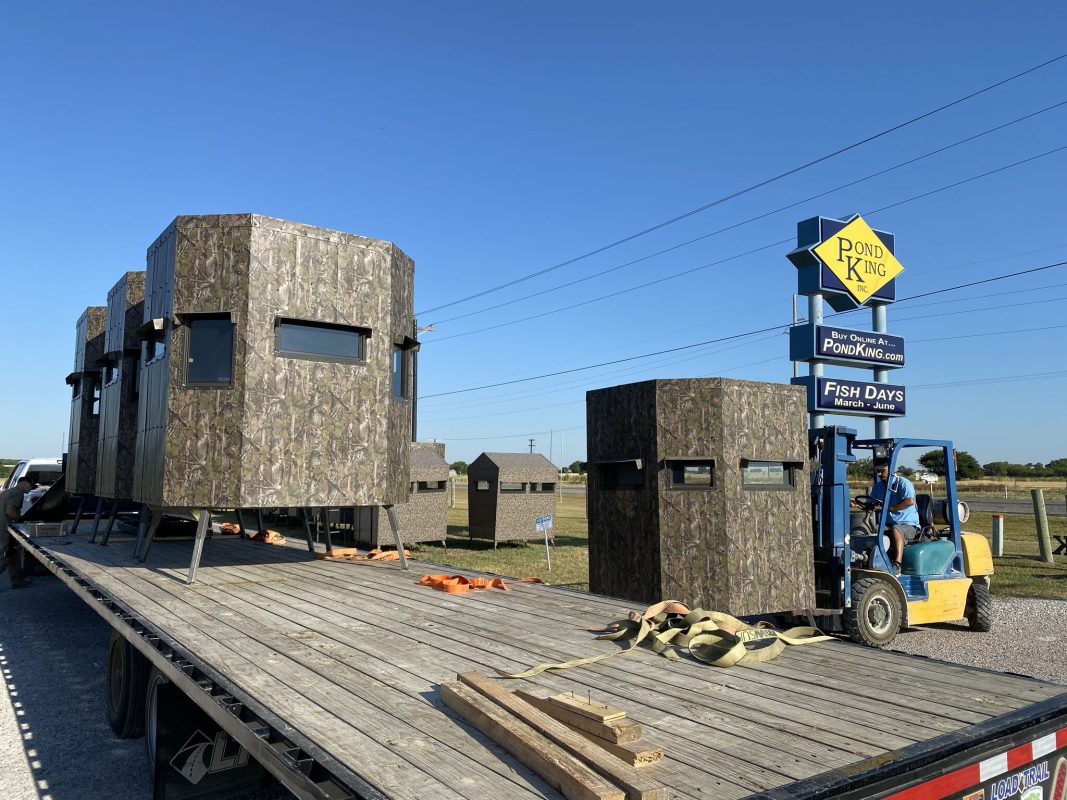
Shipping
Before ordering a large hunting blind, verify:
- Delivery area
- Freight charges
- Delivery method
- Site access
- Unloading requirements
- Assembly requirements
How Much Should You Spend on a Deer Blind?
There is no universal ideal price.
Instead, consider cost per hunting season and expected lifespan.
A cheaper blind may make sense for:
- Temporary hunting locations
- Occasional use
- Mobile setups
- Smaller properties
A more substantial blind can make sense for:
- Long-term private properties
- Frequent hunting
- Multiple hunters
- Extended sits
- Extreme weather exposure
- Family hunting
- Year-round observation
A useful purchasing question is:
“How many seasons do I expect this blind to serve me, and how much comfort and durability do I need during those seasons?”
Common Hunting Blind Buying Mistakes
1. Buying the Cheapest Blind
Low purchase price can become expensive if durability, comfort, or functionality is poor.
2. Ignoring Window Placement
A blind with excellent construction but poor shooting-window placement may not work for your hunting style.
3. Buying Too Small
A cramped blind can make bowhunting and multi-person hunting unnecessarily difficult.
4. Ignoring Access
A blind location is only useful if you can reach it without consistently disturbing deer.
5. Ignoring Wind
The best-looking hunting location can become a poor hunting location when prevailing winds carry your scent toward deer.
6. Forgetting Local Regulations
A blind that is legal on private property may not be legal on a particular WMA.
7. Ignoring Maintenance
Every hunting blind benefits from periodic inspection.
8. Choosing a Blind Before Studying the Property
The property should determine the blind location and configuration, not the other way around.
Mississippi Hunting Blind Buying Checklist
Before purchasing a blind, ask:
Property
- Where are deer bedding?
- Where are deer feeding?
- Where are the major travel corridors?
- What direction does the wind normally come from?
- How will I access the blind?
Hunting Method
- Bow?
- Gun?
- Both?
- Solo?
- Two hunters?
- Family hunting?
Blind
- Ground or elevated?
- Enclosed or open?
- Insulated?
- What window system?
- How many shooting angles?
- How durable is the construction?
Logistics
- How will the blind reach the property?
- Can the property accommodate delivery?
- Is assembly required?
- Is installation available?
- Can the blind be moved later?
Regulations
- Is the property private or public?
- Is it a WMA?
- Are there special WMA rules?
- Are there installation/removal deadlines?
- Are identification requirements applicable?
- Are hunter-orange requirements applicable?
Practical Mississippi Deer Blind Setups
Scenario 1: Mississippi Agricultural Property
A hunter has a large soybean field bordered by hardwood timber.
A strong starting strategy could be:
Timber → Blind → Field Edge → Crop
The blind provides visibility across the field while remaining close to natural cover.
The hunter should then evaluate wind and access before finalizing the location.
Scenario 2: Mississippi Hardwood Property
A hunter identifies a heavily used deer trail connecting bedding cover to an oak-heavy feeding area.
Instead of placing the blind directly inside the bedding area, the hunter can evaluate the travel corridor between bedding and food.
The goal is to intercept movement without unnecessarily disturbing the core bedding area.
Scenario 3: Mississippi Creek Bottom
A property has thick cover on both sides of a creek crossing.
The hunter notices repeated tracks and trail activity near the crossing.
A blind positioned with the wind and safe shooting lanes in mind may allow the hunter to intercept deer naturally using the crossing.
Scenario 4: Bowhunting Property
A bowhunter identifies a travel corridor approximately 15–25 yards from a food source.
The blind should provide:
- Quiet window operation
- Adequate bow clearance
- Good concealment
- Broadside shooting opportunities
- Controlled access
- Wind advantage
In this situation, blind size and window design may be more important than simply having the highest possible elevation.
FAQs: Hunting Blinds Mississippi
What are the best hunting blinds in Mississippi?
What are the best deer blinds for Mississippi?
Are hunting blinds legal in Mississippi?
Can you leave a hunting blind on public land in Mississippi?
Are ground blinds good for deer hunting in Mississippi?
What size deer blind should I buy?
Are insulated hunting blinds worth it in Mississippi?
Where should I place a deer blind in Mississippi?
Start by identifying bedding areas, feeding areas, travel corridors, water, funnels, field edges, and terrain transitions. Then choose a location that provides good deer movement while allowing you to approach and leave without repeatedly crossing major deer travel routes.
What should I check before buying a Mississippi hunting blind?
Building a Better Mississippi Deer Hunting Setup
The best hunting blind is only one part of a successful setup.
A strong Mississippi deer hunting strategy combines:
Habitat + Deer Movement + Blind Placement + Wind + Access + Concealment + Safety
If any one of these elements is ignored, the performance of the entire setup can suffer.
For example, buying a premium elevated blind does not guarantee success if:
- The blind is placed over an inactive area
- Your scent blows toward bedding deer
- Your access route crosses a major trail
- Shooting lanes are poorly positioned
- The blind is too small for your hunting method
- Public-land rules are overlooked
That is why blind selection should begin with the property, not the product catalog.
Why Choose Hunting Blind Supply?
Hunters looking for high-quality deer hunting blinds can evaluate Hunting Blind Supply for a range of hunting blind solutions designed around real hunting needs.
The company offers options covering different hunting styles and applications, including:
- Deer hunting blinds
- Bow hunting blinds
- Gun hunting blinds
- Ground hunting blinds
- Elevated hunting blinds
- Insulated hunting blinds
- Octagon and 360-degree hunting blinds
- Hunting blind stands
- Hunting blind accessories
Hunting Blind Supply is positioned by the business as the #1 trusted seller for deer hunting blinds, with products designed and built by hunters.
When comparing a hunting blind, focus on the combination of construction, shooting system, comfort, durability, delivery, warranty, and suitability for your specific property.
Final Thoughts: Choosing the Right Hunting Blinds Mississippi Hunters Need
Choosing the right Hunting Blinds Mississippi hunters can rely on starts with understanding the property.
Mississippi offers an enormous variety of deer habitat, from Delta agricultural fields and river bottoms to hardwood forests, pine timber, creek corridors, and mixed farmland.
That means the ideal blind will vary from one property to another.
Before buying, consider:
- Deer movement
- Habitat
- Wind
- Scent
- Access
- Hunting method
- Blind size
- Window design
- Insulation
- Elevation
- Construction
- Safety
- Public or private land
- Current Mississippi regulations
If you are ready to upgrade your Mississippi deer hunting setup, explore the available hunting blind options and choose a design that matches your property, hunting style, and long-term needs.
The right blind isn’t simply the biggest or most expensive one. It’s the blind that puts you in the right position, keeps you concealed and comfortable, and works with the way deer actually use your property.
Shop Hunting Blinds for Your Mississippi Hunt and build your setup around the deer, terrain, and hunting conditions that matter most.

One thought on “Hunting Blinds Mississippi | Complete Deer Blind Guide, Placement, Regulations & Buying Tips”