Blog
Hunting Blinds in Nebraska | Complete Guide to Deer Blinds, Placement, Regulations & Buying Tips

Hunting Blinds in Nebraska | Complete Guide to Deer Blinds, Placement, Regulations & Buying Tips
Choosing the right hunting blind can make a significant difference to comfort, concealment, and hunting success. Nebraska offers diverse deer-hunting environments, from agricultural fields and wooded creek bottoms to river corridors, brushy cover, and the rugged terrain of the Pine Ridge. The best setup for one property may not be the right choice for another.
This guide to Hunting Blinds in Nebraska explains how to choose between ground, elevated, enclosed, insulated, and wooden deer hunting blinds. You will also learn how to evaluate blind size, placement, windows, materials, prices, and public-land considerations before buying.
Whether you are looking for the best deer hunting blinds in Nebraska, comparing affordable options, or researching deer hunting blinds in Nebraska for sale, this guide will help you make a more informed decision for your property, hunting style, and budget. Explore our hunting blinds USA guide to know more about hunting blind set up in other US cities.
Why Hunting Blinds Matter in Nebraska
A hunting blind provides a concealed location from which a hunter can observe deer and prepare for a safe, ethical shot. An enclosed blind can also offer shelter from wind, cold, and changing weather, while a ground blind may provide a flexible option for hunters who want to adapt their setup to different locations.
Nebraska’s mix of farmland, timber, grassland, river valleys, and broken terrain makes choosing the right blind especially important.
Benefits of a hunting blind
- Concealment: Helps reduce the visibility of human movement when properly positioned and used.
- Weather protection: Enclosed and insulated models can make long sits more comfortable.
- Flexible hunting positions: Ground and elevated models can suit different properties and shooting requirements.
- Shared hunting space: Larger enclosed blinds may accommodate multiple hunters, depending on their dimensions.
- Long-term property management: A suitable blind can become part of a repeatable hunting setup on private land where placement and installation are permitted.
A blind does not guarantee that deer will approach. Wind direction, scent, access routes, noise, hunting pressure, and natural deer movement all affect the outcome.
Understanding Nebraska Deer Habitat
Before shopping for hunting blinds in Nebraska, consider the landscape you hunt. A blind should fit the terrain, the way deer travel, and your intended shooting opportunities.
Agricultural fields and crop edges
Agricultural areas can offer opportunities to observe deer moving between feeding areas and nearby cover. A blind near a field edge may be useful when deer movement is predictable, but placement should account for wind, visibility, safe shooting directions, and access.
Avoid placing a blind where normal entry and exit routes repeatedly cross the area you expect deer to use.
Hardwood timber and wooded draws
Wooded areas can provide natural concealment and travel corridors. A compact ground blind or an enclosed blind positioned near a suitable opening may work well, depending on the property layout.
Look for natural transitions between thicker cover and more open ground. Do not assume that a location with abundant deer sign automatically offers a safe or ethical shooting angle.
Creek bottoms and river corridors
Waterways and their surrounding vegetation can influence animal movement. In these environments, consider drainage, flooding, muddy access, and changes in vegetation throughout the season.
Elevated equipment must be installed on suitable ground and according to the manufacturer’s instructions. Check the site for erosion, unstable soil, and potential water damage before committing to a permanent setup.
Grassland, brush, and broken terrain
Open grassland and brushy areas may offer fewer natural concealment options. A ground blind that blends into its surroundings may be useful, provided it is legally placed and does not obstruct other hunters or create unsafe shooting conditions.
In rolling or broken terrain, evaluate sightlines carefully. A ridge or elevated position can change what is visible beyond the intended target, so identify the complete shooting area before hunting.
Types of Hunting Blinds for Nebraska Deer Hunting
There is no single best deer blind for every Nebraska property. Compare the main styles before deciding which design fits your needs.
Ground hunting blinds in Nebraska
A ground blind sits directly on the ground or on a suitable low platform. Depending on the model, it may be portable or designed for longer-term use.
Best suited to:
- Hunters who need flexibility in where they hunt.
- Properties where a tall structure is impractical.
- Hunters who prefer ground-level entry.
- Locations with enough surrounding cover to help conceal the blind.
Before choosing a ground blind, assess the window arrangement, interior space, weather resistance, stability, and visibility from all likely approaches.
Elevated and tower hunting blinds
An elevated blind is installed on a raised platform or stand. It may offer a wider view of surrounding terrain and help separate the hunter’s position from some ground-level movement.
Best suited to:
- Suitable private properties with a stable installation area.
- Locations where the elevation improves visibility and safe shooting opportunities.
- Hunters who want a fixed hunting position for repeated use.
Elevation introduces additional responsibilities. The stand, foundation, anchoring, access ladder, handrails, and installation must be appropriate for the blind and site. Follow the manufacturer’s instructions and use suitable fall-protection practices.
Enclosed and box blinds
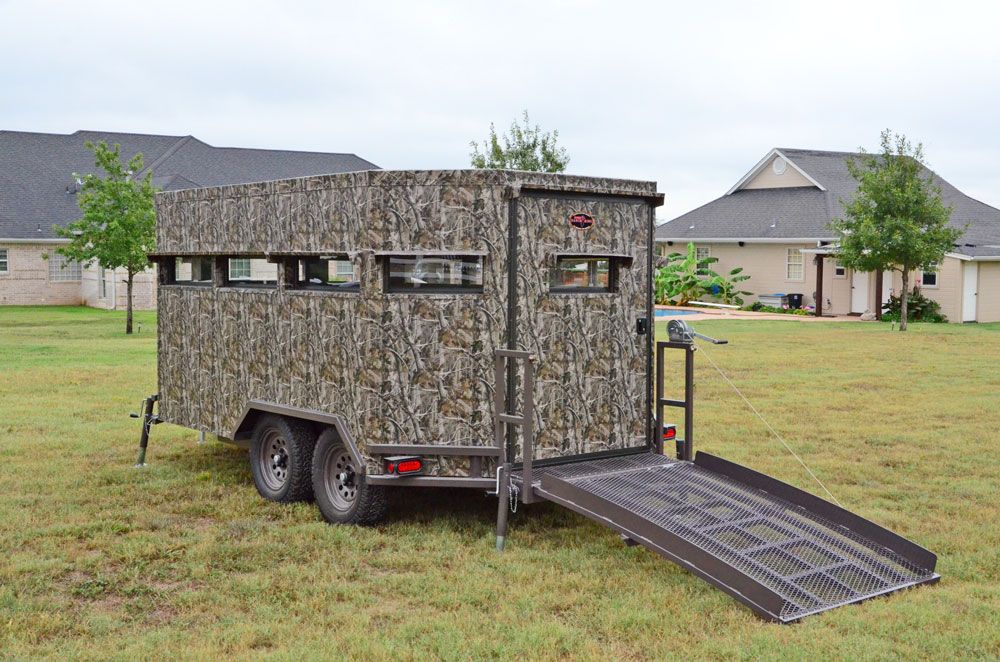
Enclosed blinds typically have solid walls, a roof, a door, and designated shooting windows. Some include insulation, carpet, adjustable window systems, or lockable access.
They may be useful for hunters who prioritize comfort during extended sits or want a more permanent-feeling hunting location on private land.
When comparing enclosed models, look at:
- Interior dimensions and usable floor space.
- Window height, width, and opening style.
- Door access and ease of entry.
- Ventilation and condensation management.
- Floor construction and weather resistance.
- Total weight and installation requirements.
Octagon and 360-degree hunting blinds
Octagon-shaped blinds can offer window positions on several sides, allowing hunters to observe different directions without turning the entire structure.
Window placement matters more than the shape alone. Check whether the openings support your hunting method, provide useful sightlines, and allow safe shot selection.
Insulated hunting blinds
Insulated blinds are designed to reduce heat transfer through their walls or other enclosed surfaces. They can improve comfort during cold-weather hunts, although the actual performance depends on insulation quality, air leakage, window design, ventilation, and outdoor conditions.
Ground vs. Elevated Hunting Blinds: Which Is Better?
The best option depends on the property, hunting method, installation constraints, and your comfort requirements.
| Feature | Ground Blind | Elevated Blind |
|---|---|---|
| Installation | Often simpler, depending on model | Requires a suitable stand or platform |
| Mobility | Portable models offer flexibility | Usually less convenient to relocate |
| View | Depends on terrain and window placement | May provide a higher viewpoint |
| Access | Ground-level entry | Requires safe climbing access |
| Weather exposure | Depends on design and placement | More exposed to wind in some locations |
| Best use | Flexible or lower-profile setups | Suitable fixed locations with useful sightlines |
A ground blind can be a practical choice where a raised structure is unnecessary or difficult to install. An elevated blind may be more suitable where elevation improves visibility and the property allows a safe, stable installation.
Neither design is automatically better for deer hunting. Evaluate the specific site before purchasing.
Bow Hunting Blinds vs. Gun Hunting Blinds
Your hunting method should influence the blind’s dimensions, window design, interior clearance, and placement.
Bow hunting blinds in Nebraska
Bowhunters need adequate clearance for drawing, holding, and releasing a bow without contacting walls, windows, or roof supports.
Look for:
- Sufficient interior room to draw safely.
- Window openings at appropriate heights.
- A stable position for the hunter and equipment.
- Window designs that accommodate the intended shooting angle.
- A layout that minimizes accidental contact with blind components.
Practice the complete movement sequence inside the blind before hunting. Never assume that a window offers enough clearance simply because it appears wide from outside.
Gun hunting blinds in Nebraska
For firearm hunting, consider the opening size, support surfaces, shooting direction, and ability to maintain a safe field of fire. The blind must not encourage shooting at an obscured target or toward an area where people, roads, buildings, or livestock could be endangered.
A larger window is not automatically better. The useful opening is the one that supports a controlled, ethical shot while maintaining awareness of the surrounding area.
Explore bow hunting blinds and gun hunting blinds to compare options for your hunting style.
How to Choose the Right Deer Blind Size
Blind size affects comfort, movement, weight, installation, and cost. Choose a size based on the number of people who will use it and the equipment they need to carry.
Small blinds
A compact blind may suit a solo hunter who carries limited equipment and wants to minimize the footprint of the setup.
Before buying, check whether the interior provides enough space to sit comfortably, change position quietly, and use the intended shooting openings.
Medium-sized blinds
A medium-sized enclosed blind may offer a useful balance between interior space and installation requirements. It can suit a hunter who wants room for a chair, essential equipment, and controlled movement.
Larger blinds
Larger blinds may be useful for multiple hunters or anyone who needs extra interior clearance. They generally require more room on the property and may be heavier, more expensive, and harder to transport or install.
A simple sizing checklist
Ask yourself:
- How many hunters will occupy the blind at once?
- Will you use a bow, firearm, or another legal hunting method?
- How much interior clearance is required for safe movement?
- Will chairs, packs, and other equipment occupy floor space?
- Can your chosen site accommodate the structure and its access route?
- Can the blind be installed and maintained safely?
Review the manufacturer’s actual interior dimensions instead of relying on exterior measurements alone.
Are Insulated Deer Hunting Blinds Worth It in Nebraska?
Insulation may be worthwhile if you regularly hunt in cold weather or spend long periods inside an enclosed blind. However, the value depends on how often you hunt, the construction of the blind, and your budget.
Benefits of insulated blinds
- Reduced heat transfer through insulated wall sections.
- Potentially more comfortable conditions during long sits.
- Less exposure to cold exterior surfaces.
- A more comfortable environment when the structure is properly sealed and ventilated.
What insulation cannot do
Insulation alone does not make a blind waterproof, windproof, or temperature-controlled. Windows, doors, joints, and ventilation openings can allow significant heat loss. Poor ventilation can also contribute to condensation.
Before purchasing, check:
- Insulation material and coverage.
- Window and door seals.
- Roof and floor construction.
- Ventilation options.
- Manufacturer guidance for maintenance.
For occasional warm-weather hunts, a basic model may offer better value. For frequent cold-weather use, an insulated blind may justify the additional cost.
Wooden vs. Steel Hunting Blinds
Hunters searching for wooden deer hunting blinds in Nebraska should compare wood and steel construction based on durability, maintenance, installation, and the conditions where the blind will be used.
Wooden deer hunting blinds
Wooden blinds can be attractive to hunters who prefer traditional construction or want to build a structure suited to a particular property.
Potential advantages include:
- Flexible construction and customization.
- Familiar building materials.
- The ability to adapt the design to a specific site.
Considerations include moisture exposure, rot, fastener condition, structural maintenance, and the quality of the lumber and protective finishes.
If building your own blind, use suitable structural materials and safe construction practices. A homemade design should not be assumed to meet the requirements of an elevated structure simply because it looks sturdy.
Steel hunting blinds
Steel blinds can provide a durable exterior and may suit hunters who prefer a manufactured enclosed structure.
Potential advantages include:
- A manufactured design with defined specifications.
- Exterior durability when properly constructed and maintained.
- Options with integrated windows and other features.
Consider the total weight, corrosion protection, insulation, interior finish, and installation requirements. Steel construction does not eliminate the need for inspection or maintenance.
Which material should you choose?
Choose based on the specific model and the demands of the site. A well-built wooden blind may suit one property, while a manufactured steel blind may be more practical for another.
Compare the complete structure, including the roof, floor, windows, door, insulation, and support system, not just the primary wall material.
Best Deer Blind Placement in Nebraska
Good placement balances concealment, deer movement, scent control, access, and safe shooting opportunities. Even a well-built blind may perform poorly if it is placed where deer repeatedly detect human activity.
Consider food, bedding, and travel routes
Look for natural patterns connecting feeding areas, bedding cover, and travel corridors. Field edges, timber transitions, creek crossings, and narrow openings may be worth evaluating, but the best location depends on the individual property.
Use trail-camera observations and scouting where permitted. Do not assume a location will remain productive throughout the season: crops, vegetation, weather, and hunting pressure can change deer movement.
Pay attention to wind and scent
Deer can detect human scent. Before selecting a site, consider prevailing winds, local terrain, and how air may move through a creek bottom or along a slope.
Choose access routes that minimize disturbance. Avoid repeatedly walking through the areas you expect deer to use.
Evaluate the approach to the blind
A useful hunting location is not just a place to sit. Consider how you will enter and leave without crossing key travel routes, disturbing bedding cover, or exposing yourself to deer.
Whenever possible, plan the route before installation. A blind that is difficult to reach quietly may create more problems than its location solves.
Make safety the deciding factor
Before finalizing a location:
- Identify roads, homes, livestock areas, and other people who may be nearby.
- Establish safe shooting directions and know what lies beyond the target.
- Avoid unstable slopes, flood-prone ground, and unsuitable supports.
- Confirm that you have permission to install and use the blind.
- Check whether the property has additional access or equipment rules.
Never choose a position solely because it offers a clear view of a deer trail. A safe, legal, and sustainable setup is more important than a theoretically perfect shooting opportunity.
Nebraska Hunting Blind Regulations and Public-Land Considerations
Before installing or using a hunting blind, distinguish between private land, wildlife management areas, state recreation areas, state parks, federal land, and properties enrolled in public-access programs. Rules may differ by ownership, location, species, season, and equipment type.
Private property
On private land, obtain the landowner’s permission before entering or installing a blind if you do not own the property. Confirm where equipment may be placed, whether permanent structures are allowed, and who is responsible for removing or maintaining them.
Permission to hunt does not necessarily mean permission to build a permanent structure or leave equipment on the property indefinitely.
Public hunting land
Nebraska provides access to public hunting opportunities through wildlife management areas, federal lands, Open Fields and Waters properties, and other designated sites. The Nebraska Public Access Atlas can help hunters identify available locations, but access rules and site-specific restrictions must be checked before a trip.
Do not assume that a blind can be installed, left overnight, or reserved for personal use on public land. Some locations prohibit permanent blinds, and others have special equipment or access requirements.
For example, Nebraska Game and Parks lists certain state-park hunting opportunities with restrictions on permanent blinds and specific registration or area requirements. These rules are property-specific, so check the exact site before bringing equipment.
What to verify before hunting
Check the current official regulations and property information for:
- Whether portable or permanent blinds are allowed.
- Whether equipment can remain unattended.
- Any marking or identification requirements.
- Seasonal installation and removal dates.
- Hunter-orange requirements for the hunting method and location.
- Property-specific rules, permits, and access restrictions.
The Nebraska Game and Parks hunting guides provide current season and regulatory information. Rules can change, so review the applicable guide and site-specific instructions rather than relying on a general online summary.
Hunting Blinds for Northern, Central, and Western Nebraska
Nebraska’s regions vary in terrain, vegetation, land use, and deer habitat. Consider the landscape of your actual hunting property rather than choosing a blind based only on a regional label.
Northern Nebraska
In northern areas, evaluate the combination of agricultural ground, wooded corridors, river systems, and local terrain. A blind near a suitable transition between cover and open ground may be useful if scouting confirms deer activity.
Central Nebraska
Central Nebraska includes varied agricultural landscapes, grassland, and wooded areas along waterways. Consider whether the blind should provide flexibility for changing conditions or serve as a fixed position overlooking a consistent travel route.
Western Nebraska
Western Nebraska includes more open terrain in some areas as well as wooded draws, river corridors, and the Pine Ridge landscape. Concealment, access, wind exposure, and the availability of suitable installation ground may be particularly important when choosing a site.
Eastern Nebraska
Eastern Nebraska’s agricultural landscapes and wooded areas can offer different opportunities depending on property size and cover. Evaluate the distance between the blind, likely deer movement, nearby homes or roads, and safe shooting areas.
Across every region, local scouting and property-specific knowledge are more useful than assuming one blind design works everywhere.
Deer Hunting Blinds in Nebraska: Cost and Budget
The cost of deer hunting blinds in Nebraska varies by construction, size, materials, insulation, windows, included accessories, and whether a stand or installation is included.
Rather than judging a blind by its price alone, compare the complete cost of owning and using it.
What affects hunting blind cost?
| Cost factor | Why it matters |
|---|---|
| Size | Larger structures generally require more material and space |
| Construction | Wood, steel, and other materials differ in cost and maintenance |
| Insulation | Additional insulation and sealing can increase the purchase price |
| Windows | Specialized sliding, hinged, or adjustable systems can affect cost |
| Stand or platform | An elevated blind may need a separate stand, ladder, and anchoring system |
| Delivery | Distance, freight requirements, and product weight may affect shipping |
| Installation | Labor, site preparation, and equipment can add to the total |
| Maintenance | Protective coatings, repairs, and replacement parts contribute to long-term cost |
Cheap deer hunting blinds in Nebraska
If you are searching for cheap deer hunting blinds in Nebraska, start by deciding which features are essential. A lower-priced model can be a good value if it meets your needs and is constructed for its intended use.
However, avoid choosing a blind based only on the lowest advertised price. Check structural quality, weather resistance, window operation, warranty terms, and delivery charges.
A portable ground blind may suit a hunter who needs a flexible, lower-cost solution. Someone who hunts frequently from a fixed location may find that a more durable enclosed blind offers better long-term value.
How to compare total cost
Before buying, ask the seller for a clear breakdown of:
- The blind’s purchase price.
- Whether a stand, platform, or other equipment is included.
- Shipping or freight charges.
- Assembly and installation requirements.
- Warranty coverage and exclusions.
- Expected maintenance and replacement-part needs.
This approach makes it easier to compare products fairly and avoid unexpected expenses.
Where to Find Deer Hunting Blinds for Sale in Nebraska
When researching deer hunting blinds in Nebraska for sale, compare the specifications, delivery options, and support offered by different sellers. A product listing should explain what is included and provide enough information to determine whether the blind fits your needs.
What to look for in a hunting blind supplier
- Clear dimensions and construction details.
- Accurate descriptions of insulation and window systems.
- Information about the stand or platform, if applicable.
- Delivery and installation information.
- Accessible customer support.
- Clear warranty, return, and shipping policies.
- Product photographs that help you evaluate the design.
Consider Hunting Blind Supply
Hunting Blind Supply offers hunting blinds and related equipment for hunters comparing different configurations. The business positions itself as the #1 trusted seller for deer hunting blinds; treat that wording as the company’s marketing positioning rather than an independently verified industry ranking.
When evaluating products, compare the listed specifications with the needs of your Nebraska property. Confirm shipping availability, delivery arrangements, total cost, and installation requirements before ordering.
A good supplier should help you understand what you are purchasing, including whether a blind is supplied assembled, whether a stand is included, and what preparation is required at the installation site.
Common Hunting Blind Buying Mistakes
Avoiding a few common mistakes can save money and help you select a more suitable blind.
Choosing the wrong size
A blind that is too small can restrict movement and equipment placement. A structure that is unnecessarily large may cost more and be harder to transport or install.
Better approach: Measure the usable interior space and plan how you will occupy it before ordering.
Ignoring window placement
Window openings that do not suit your height, hunting method, or intended direction can make a blind uncomfortable and limit safe shooting opportunities.
Better approach: Review window dimensions and practice positioning inside the blind where possible.
Overlooking the stand or foundation
The blind is only one part of an elevated setup. A stand, ladder, anchors, and foundation must be appropriate for the structure and site.
Better approach: Confirm exactly what is included and follow the manufacturer’s installation instructions.
Buying insulation without checking the rest of the design
Insulated walls cannot compensate for poorly sealed doors, unsuitable windows, or inadequate ventilation.
Better approach: Evaluate the entire enclosure and how it handles moisture and changing weather.
Assuming public land allows permanent blinds
Access to a public hunting property does not automatically authorize building or leaving equipment there.
Better approach: Check the current regulations and site-specific rules before taking a blind onto public land.
Forgetting delivery and installation expenses
The advertised price may not include freight, site preparation, a stand, or installation.
Better approach: Calculate the total cost before committing to a purchase.
Hunting Blind Setup and Maintenance
Proper setup and routine inspection help preserve a blind and reduce avoidable risks.
Before the hunting season
- Inspect the roof, walls, floor, door, and window mechanisms.
- Look for corrosion, rot, loose fasteners, leaks, and other damage.
- Inspect stands, ladders, handrails, and anchoring systems.
- Confirm that access routes remain clear and safe.
- Check the blind’s position against current property boundaries and permissions.
- Review the latest hunting and public-land rules.
During the season
Keep equipment organized and avoid unnecessary movement or noise. Monitor changing wind direction, vegetation, weather, and signs of disturbance around the blind.
Do not use a damaged elevated stand or climb a structure that appears unstable. Repair it according to the manufacturer’s instructions before returning to use.
After the season
Remove personal equipment where required, clean the interior, address moisture, and store accessories properly. On public land, follow the applicable removal rules and deadlines.
A blind that is inspected and maintained regularly is easier to evaluate for safe use before the next season.
FAQs: Hunting Blinds in Nebraska
What are the best hunting blinds in Nebraska?
Are ground blinds suitable for Nebraska deer hunting?
How much do deer hunting blinds in Nebraska cost?
Are wooden deer hunting blinds a good choice in Nebraska?
Can you leave a hunting blind on public land in Nebraska?
What size deer blind should I choose?
Are insulated hunting blinds worth the extra cost?
What should I check before buying a deer blind online?
Final Thoughts: Choosing the Right Hunting Blind in Nebraska
Choosing among hunting blinds in Nebraska requires more than comparing product prices. Consider the terrain, deer movement, hunting method, available space, weather exposure, and the rules that apply to your property.
A ground blind may suit a flexible setup, while an enclosed or elevated blind may be more appropriate for a well-planned, fixed hunting location. Wooden and steel models each have potential advantages, and insulation can be valuable for hunters who regularly spend long periods in cold conditions.
Before buying, measure the space you need, evaluate the window arrangement, calculate delivery and installation costs, and confirm that your intended location permits the blind you want to use.
Ready to compare your options? Visit Hunting Blind Supply to explore hunting blinds and related equipment. Compare the specifications, ask questions about delivery and installation, and choose a setup that fits your property, budget, and hunting style.
Make your next hunting blind a well-informed investment in comfort, concealment, and safe hunting.

One thought on “Hunting Blinds in Nebraska | Complete Guide to Deer Blinds, Placement, Regulations & Buying Tips”