Blog
Hunting Blinds in North Dakota | Complete Guide to Deer Blinds, Metal Blinds, Prices & Regulations

Hunting Blinds in North Dakota | Complete Guide to Deer Blinds, Metal Blinds, Prices & Regulations
Choosing the right hunting blind can make a major difference when preparing for deer season in North Dakota. From agricultural fields and shelterbelts to wooded river corridors and the rugged Badlands, North Dakota offers diverse hunting environments that call for different blind designs, placement strategies, and equipment.
This guide to hunting blinds in North Dakota explains how to compare ground blinds, elevated deer blinds, insulated enclosures, wooden blinds, and metal hunting blinds. You’ll learn how to choose the right size, evaluate prices, position a blind for prevailing winds and deer movement, understand important public-land rules, and prepare your setup for changing weather.
Whether you’re a first-time deer hunter, an experienced bowhunter, or a landowner improving a hunting property, this guide will help you make a more informed decision. Explore our hunting blinds USA guide for more information about hunting blind set up in other hunting related cities.
Why Hunting Blinds Matter in North Dakota
A hunting blind creates a defined place to wait, observe wildlife, and prepare for a safe, controlled shot when legal hunting conditions and a suitable opportunity align. Depending on the design, it can also help conceal movement, reduce exposure to wind, and make longer hunting sessions more comfortable.
North Dakota’s weather and landscapes make the choice especially important. Wind can affect scent distribution and comfort, while cold temperatures can make extended periods outdoors challenging. Agricultural fields and open grassland can also leave hunters with fewer natural places to hide.
A well-chosen blind can help you:
- Improve concealment: An enclosed blind can help obscure movement when windows are managed carefully.
- Reduce exposure: Solid walls and a suitable roof can offer shelter from wind and precipitation.
- Plan your shooting position: Window height, opening direction, and interior space affect how comfortably you can use the blind.
- Support different hunting styles: Ground blinds, elevated blinds, and enclosed box blinds suit different properties and equipment.
- Create a repeatable setup: A properly installed blind gives you a consistent observation point for monitoring deer movement.
A blind does not guarantee that deer will approach or remain unaware of a hunter. Deer can detect scent, sound, movement, and changes in their surroundings. Placement, wind direction, access routes, and disciplined hunting practices remain essential.
Understanding North Dakota Deer Habitat
Before comparing the best hunting blinds in North Dakota, consider the habitat where you intend to hunt. The landscape should influence your blind type, camouflage, placement, and access plan.
Agricultural fields and crop edges
North Dakota’s agricultural areas can attract deer when food, cover, and travel routes intersect. Field edges may provide opportunities to observe deer moving between feeding areas and nearby cover.
Consider an enclosed box blind or elevated blind when you have a suitable, lawful location with a clear view and safe shooting directions. Avoid placing a blind where it obstructs farm operations or creates an unsafe shooting angle.
Shelterbelts and wooded draws
Shelterbelts, wooded draws, and tree-lined drainage areas can provide cover in otherwise open landscapes. A ground blind may blend into the edge of a shelterbelt, while an elevated blind may provide a useful view where the terrain and installation conditions support it.
Look for existing deer trails and signs of regular movement rather than assuming every wooded edge is productive.
River corridors and creek bottoms
River corridors and creek bottoms can connect feeding areas, bedding cover, and other habitat. A blind may work well where natural terrain limits visibility and deer movement is reasonably predictable.
Avoid disturbing the area unnecessarily. Repeated trips through a travel corridor can change animal behavior, especially when your access route crosses areas deer use frequently.
Prairie and open country
Open grassland and prairie landscapes often offer fewer natural concealment opportunities. A ground blind placed near suitable cover or a well-positioned elevated blind may help, but visibility, wind, safe shooting directions, and permission are especially important.
Western North Dakota and the Badlands
Western North Dakota’s varied terrain can create opportunities around draws, ridgelines, brush, and sheltered areas. Use the actual contours of your hunting property to assess visibility and access rather than selecting a location solely because it offers a high vantage point.
Practical tip: Scout the property before purchasing a blind. Identify food sources, cover, trails, access points, wind exposure, and safe shooting directions. Then choose equipment that fits the location.
Types of Hunting Blinds for North Dakota Hunters
Different blind styles provide different advantages. The best choice depends on your hunting method, property, budget, and willingness to install and maintain equipment.
Ground hunting blinds
Ground blinds sit directly on the ground or on a suitable low platform.
Best for:
- Hunters who want to avoid climbing.
- Properties where elevated structures are impractical.
- Bowhunters who need a suitable shooting-window arrangement.
- Locations where natural vegetation helps break up the blind’s outline.
Ground blinds can be relatively straightforward to position, but they still require a stable site, careful concealment, and a safe shooting plan. A portable fabric blind and a permanent enclosed ground blind are not interchangeable; their weather resistance, durability, and installation requirements can differ considerably.
Elevated hunting blinds
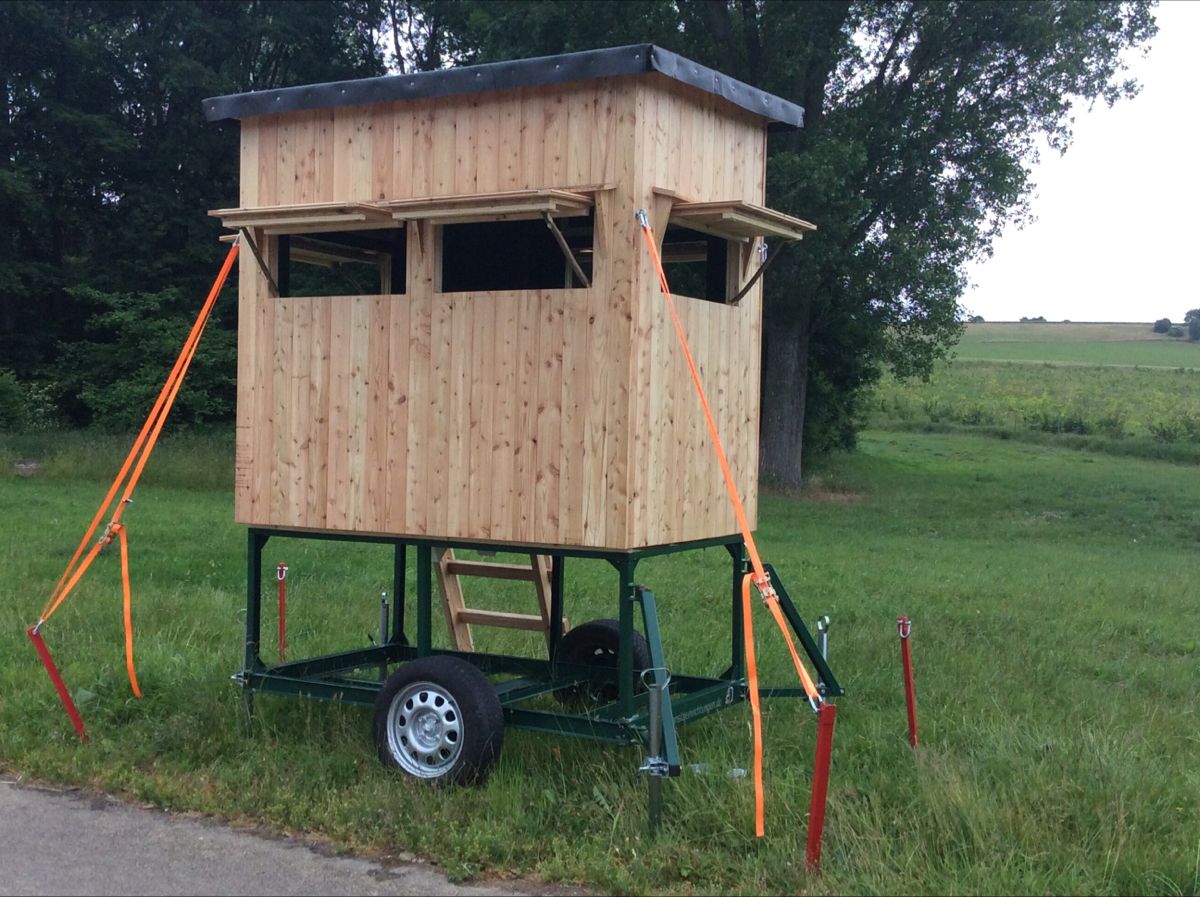
Elevated blinds sit on a purpose-built stand or platform.
Best for:
- Properties where a raised viewpoint improves visibility.
- Hunters seeking an enclosed structure above ground level.
- Locations where the terrain and surrounding vegetation make elevation useful.
An elevated blind requires more planning than simply placing a structure on the ground. Evaluate the stand’s rated capacity, foundation, anchoring, access ladder, handrails, and installation instructions. Follow manufacturer guidance and applicable building or property requirements.
Enclosed box blinds
Box blinds are enclosed structures with walls, a roof, and shooting windows. They may be built from wood, metal, composite materials, or combinations of materials.
Best for:
- Landowners who want a more permanent hunting station on private property.
- Hunters who value a defined interior and multiple shooting windows.
- Setups where weather protection and long-term use are priorities.
Box blinds vary significantly in insulation, weight, window design, floor construction, and maintenance requirements. Compare the actual specifications rather than assuming all enclosed blinds provide the same comfort or durability.
Octagon and 360-degree blinds
Octagon-style blinds may offer windows facing multiple directions, allowing hunters to observe a broader area without turning the entire structure.
Best for:
- Locations where deer may approach from more than one direction.
- Properties where a wide field of view is useful.
- Hunters who want multiple potential shooting directions, subject to safe angles and local rules.
More windows do not automatically make a blind better. Consider window height, quiet operation, concealment, and whether each opening provides a safe and appropriate shooting opportunity.
Insulated hunting blinds
Insulated blinds are designed to reduce heat transfer through the walls or other parts of the enclosure. Actual performance depends on insulation thickness, air leaks, windows, roof construction, and ventilation.
Best for:
- Hunters planning long sits in cold weather.
- Enclosed blinds intended for repeated seasonal use.
- Setups where comfort is a high priority.
Insulation does not replace appropriate cold-weather clothing, safe heating practices, or ventilation.
Metal Hunting Blinds in North Dakota
Metal hunting blinds in North Dakota may appeal to buyers looking for an enclosed structure with a durable exterior and a design suited to repeated outdoor use. However, metal construction alone does not establish how well a blind will withstand local weather.
When comparing metal hunting blinds, assess the entire structure: frame, exterior panels, roof, floor, seams, windows, door, and anchoring system.
Advantages of metal hunting blinds
Depending on the design and materials, metal blinds can offer:
- A durable exterior: Properly finished metal panels can provide a protective outer shell.
- A defined enclosed structure: Solid walls can help limit visual movement inside the blind.
- Multiple camouflage options: Some models feature patterned or colored exterior finishes.
- Compatibility with insulated designs: Metal exteriors can be used with insulation systems.
- Repeat-use potential: A well-maintained structure may serve for multiple seasons.
What to inspect before buying
Not every metal blind has the same construction quality. Before purchasing, check:
- Panel material and thickness, where specified.
- Frame construction and corrosion protection.
- Roof design and water-shedding details.
- Floor material, support, and rated load capacity.
- Window type, size, seals, and operating noise.
- Door clearance and secure closure.
- Insulation specifications, if included.
- Overall weight, transport requirements, and installation instructions.
- Warranty coverage and replacement-part availability.
Are metal blinds suitable for North Dakota weather?
They can be suitable when the particular model is designed for the intended exposure and is installed correctly. Metal is not automatically weatherproof, windproof, or insulated.
Wind resistance depends on the complete structure, anchoring, foundation, and installation. Roof seams, doors, windows, and panel joints also affect water and air infiltration. Ask the seller for documented specifications rather than relying on general material claims.
For buyers comparing metal hunting blinds in North Dakota, the most useful comparison is between complete models with verified specifications, not simply between metal and wood.
Ground Blinds vs. Elevated Deer Blinds
Both ground and elevated blinds can work well, but they solve different problems.
| Feature | Ground Blind | Elevated Blind |
|---|---|---|
| Installation | Often simpler, depending on design | Usually requires a stand or platform |
| Viewpoint | At or near ground level | Raised above ground |
| Access | Usually avoids ladders | Requires safe climbing access |
| Concealment | Depends on cover, shape, and placement | Depends on height, surroundings, and sightlines |
| Weather exposure | Varies by model and location | More exposed to wind in some locations |
| Bowhunting | Can work with suitable window height and shooting space | Requires appropriate shooting windows and angles |
| Cost | Can be lower for basic models | Stand, foundation, and installation may add cost |
| Long-term setup | Depends on whether the model is portable or permanent | Often planned as a fixed property installation |
When a ground blind makes sense
Choose a ground blind when you have a suitable concealed location and want to minimize climbing. It can be useful along cover edges or where the terrain makes a raised platform unnecessary.
When an elevated blind makes sense
Consider an elevated blind when a higher viewpoint genuinely improves observation and you can install a stable, properly supported structure. Evaluate how elevation affects shooting angles, access, visibility, and wind exposure.
Important: Do not choose a raised blind simply because higher is always assumed to be better. The terrain, vegetation, hunting method, and safe shooting zone should determine the design.
Choosing a Blind for Bow Hunting or Gun Hunting
Your hunting method should influence the windows, interior layout, and shooting space you need.
Bow hunting blinds
Bowhunters need enough space to draw, anchor, and release without striking a wall, roof, window frame, or other equipment. Window placement is especially important.
Before buying a bowhunting blind:
- Check the interior dimensions and ceiling height.
- Assess the width and height of each shooting window.
- Consider whether a seated or standing shot is appropriate for the design.
- Make sure the window arrangement supports a controlled draw and release.
- Practice with the intended equipment in a safe, lawful setting before hunting.
A blind that looks spacious from the outside may feel restrictive once a chair, bow, and other gear are inside.
Gun hunting blinds
Gun hunters should consider the position of each window, the available rest or support, and the direction in which lawful shots could be taken.
Look for quiet window operation, suitable sightlines, and sufficient room to handle equipment safely. Never assume that a wide window makes every direction a safe shooting lane.
Can one blind work for both?
Yes, some blinds can accommodate both bowhunting and gun hunting. The deciding factors are the actual interior dimensions, window layout, manufacturer’s guidance, and whether the configuration is suitable for the intended equipment.
If you hunt with both methods, evaluate each blind against both sets of requirements rather than relying on a general “multi-purpose” label.
How to Choose the Right Deer Blind Size
The correct size depends on the number of hunters, equipment, seating, and the window arrangement.
Small blinds
A compact blind may suit one hunter with limited equipment. Check that the space still permits comfortable seating, quiet movement, and safe handling of hunting equipment.
Medium-sized blinds
A medium blind may be more comfortable for one hunter with extra gear or for a configuration that requires additional interior space. Compare usable floor dimensions rather than exterior measurements alone.
Larger blinds
A larger enclosed blind may accommodate multiple occupants or more equipment, depending on its design. Confirm the manufacturer’s stated occupancy and load limits rather than assuming the interior size determines capacity.
Questions to ask before purchasing
- How many people will use the blind at the same time?
- Will you hunt seated, standing, or in different positions?
- What equipment must fit inside?
- Do you need separate shooting windows for different directions?
- Is the floor space sufficient for safe movement?
- Can the structure be transported and installed at your chosen location?
The best deer blind is not necessarily the largest. It is the model that fits your hunting needs, property, budget, and safe-use requirements.
Are Insulated Hunting Blinds Worth It?
For hunters who spend long periods in enclosed blinds during cold weather, insulation may be worth considering. However, the value depends on the quality of the design and how often the blind will be used.
Benefits of insulated blinds
- May reduce heat loss through insulated wall and roof sections.
- Can help moderate interior temperature changes.
- May improve comfort during longer hunting sessions.
- Can complement effective door and window seals.
Limitations to consider
- Insulation adds cost and may add weight.
- Windows and doors can remain sources of heat loss.
- Air leaks can reduce the benefit of insulated panels.
- Condensation can develop when warm, moist air contacts cold surfaces.
- Insulation does not guarantee a particular interior temperature.
How to evaluate insulation
Ask the manufacturer which components are insulated, what materials are used, and whether any performance information is available. Check the floor, roof, door, and windows as well as the walls.
If you hunt occasionally in mild weather, a non-insulated blind may meet your needs. If you expect repeated cold-weather use, a properly insulated model may offer more value over time.
Never use a fuel-burning heater inside an enclosed blind unless the device and installation are specifically approved for that environment and all manufacturer safety requirements can be followed. Carbon monoxide can be fatal. Maintain required ventilation and use appropriate carbon-monoxide safety equipment where applicable.
Wooden vs. Metal Hunting Blinds
Both materials can work for enclosed hunting blinds, but the final result depends on construction quality, protective finishes, design, and maintenance.
| Consideration | Wooden Blind | Metal Blind |
|---|---|---|
| Construction | Can be customized by a capable builder | Often supplied as panels or a manufactured enclosure |
| Exterior maintenance | May require periodic sealing, painting, or repairs | May require inspection for corrosion, finish damage, and loose fasteners |
| Weight | Varies with timber, size, and construction | Varies with panel thickness, frame, and insulation |
| Insulation | Can accommodate several insulation approaches | Can also be built with insulation systems |
| Repairs | Some timber components may be relatively straightforward to replace | Repairs depend on panel, frame, and finish design |
| Weather performance | Depends on roof, joints, finishes, and anchoring | Depends on corrosion protection, joints, roof, and anchoring |
| Cost | Depends on materials and labor | Depends on materials, manufacturing, features, and delivery |
Which should you choose?
Choose a wooden blind if its construction, maintenance needs, and design suit your property. Consider a metal blind if you prefer a manufactured enclosure with specifications that meet your requirements.
Do not assume that one material always lasts longer or costs less. Compare warranties, construction details, floor and roof design, and the expected maintenance over the blind’s useful life.
Best Deer Blind Placement Tips
Placement can be just as important as the blind itself. A well-built structure in a poor location may provide little benefit.
Start with deer movement
Scout the property to identify trails, feeding areas, bedding cover, field edges, and travel routes. Use multiple observations when possible, because deer movement can change with weather, hunting pressure, food availability, and the season.
Avoid assuming that the most obvious trail is always the best location.
Pay attention to wind and scent
Deer may detect human scent even when a blind conceals movement. Study prevailing winds and how air moves around nearby terrain, trees, and structures.
Choose access routes that minimize disturbance to areas you expect deer to use. Remember that wind direction can change during a hunt, and terrain can create localized air movement.
Consider visibility and concealment
Look at the proposed site from the directions deer are likely to approach. Check whether the blind’s outline, windows, roof, or access route stands out against the background.
Natural vegetation can help break up a structure’s shape, but do not cut vegetation or modify public land in ways that violate regulations or damage protected habitat.
Plan a safe shooting zone
Before setting up, identify where a shot could be taken safely and lawfully. Account for roads, trails, buildings, neighboring properties, livestock, other hunters, and the terrain beyond the intended target.
A blind should never be placed where it encourages unsafe shooting angles or shots without a safe backstop.
Protect access and avoid disturbance
Repeated visits can leave scent and noise along an access route. Where practical, plan an approach that avoids crossing the most important travel areas.
Also consider how you will carry equipment, maintain the blind, and leave the site without disturbing neighboring landowners or other lawful users.
Example: a blind near an agricultural field
Suppose you hunt private land bordering a crop field and a shelterbelt. Rather than placing the blind directly in the middle of the open field, assess the cover edge, wind direction, deer trails, and safe shooting directions. A concealed ground blind or enclosed blind may work if the location is lawful and the shooting zone is appropriate.
The correct location depends on the property and observed deer movement, not a universal distance from the field.
North Dakota Hunting Blind Regulations
Before placing or using a hunting blind in North Dakota, distinguish between private land, state wildlife management areas, federal lands, and other public-access properties. Different rules may apply to equipment placement, identification, attachment methods, and removal dates.
The following is a practical overview, not legal advice. Always check the current regulations for the exact property and hunting season.
Private land and landowner permission
Confirm that you have permission to hunt and install equipment on private land. North Dakota’s general hunting regulations explain the rules governing posted land and trespass.
Permission to hunt should not automatically be assumed to authorize leaving equipment on the property indefinitely. Agree on the permitted location, installation method, duration, and removal expectations with the landowner.
State wildlife management areas
North Dakota Game and Fish states that permanent tree stands and permanent steps to tree stands are prohibited on state wildlife management areas. Portable tree stands, portable steps, natural tree stands, and portable ground blinds may be used subject to applicable rules.
The department’s published guidance states that tree stands, steps, ground blinds, and game cameras may not be put up before August 20, 2026, and must be removed by January 31, 2027, on the covered public lands. Equipment left after the deadline may be treated as abandoned and subject to removal or confiscation. Verify dates for the season and property you plan to use.
Portable blinds and other covered equipment left unattended on specified public lands require an identification tag. North Dakota Game and Fish describes acceptable identification as the owner’s name, address, and telephone number, or a department-issued equipment registration number. The tag must be readable from the ground.
Federal wildlife refuges and waterfowl production areas
Federal properties can have additional restrictions. North Dakota Game and Fish notes that nails, wire, screws, or bolts used to attach stands or steps to trees are prohibited on U.S. Fish and Wildlife Service national wildlife refuges, waterfowl production areas, and National Forest System lands under the specified regulations.
The U.S. Fish and Wildlife Service also publishes rules for portable blinds and equipment on North Dakota waterfowl production areas. Check the specific property’s current rules before installing anything.
Private Land Open To Sportsmen (PLOTS)
PLOTS tracts are private lands enrolled in a public-access program, not unrestricted public property. North Dakota Game and Fish states that blinds and tree stands may be used, but equipment must be removed when the hunter leaves unless the landowner grants written permission to leave it overnight.
Safety, hunting hours, and hunter requirements
Blind placement does not override firearm safety requirements, trespass laws, hunting-season restrictions, or land-management rules. Hunters should review the current deer proclamation for the applicable season, legal methods, and hunter-orange requirements.
The 2026 North Dakota deer regulations list the statewide deer-bow season from September 4, 2026, through January 3, 2027, and the regular deer-gun season from November 6 through November 22, 2026. Season dates, eligibility, unit restrictions, and clothing requirements depend on the applicable rules and license. Verify current details before hunting.
Before every season: Check current official regulations, confirm permission, label equipment as required, and record the deadline for removing any blind or stand.
Hunting Blind Considerations by Region
North Dakota’s hunting conditions vary across the state. Use local scouting and property knowledge rather than relying on a single statewide placement formula.
Eastern North Dakota
Agricultural land, wetlands, shelterbelts, and wooded corridors can influence deer movement. Consider how a blind fits around field edges and existing cover, while ensuring that it does not interfere with farming or other land uses.
Central North Dakota
Mixed agricultural areas, grassland, wooded draws, and river corridors may offer different concealment opportunities. Evaluate each site for visibility, wind exposure, access, and the location of nearby roads or property boundaries.
Western North Dakota
Open terrain and varied topography can make blind placement more exposed to wind and visible from a distance. A blind’s anchoring, roof design, finish, and surrounding backdrop may be particularly important.
Missouri River and Badlands areas
Terrain can create sheltered pockets and useful observation points, but it can also make access and safe shooting angles more complicated. Assess slopes, drainage, footing, and visibility before selecting a location.
These are general habitat considerations, not guarantees of deer activity. Local scouting, landowner knowledge, and current wildlife information should guide your final decision.
Hunting Blinds in North Dakota: Prices and Cost Factors
The cost of hunting blinds in North Dakota depends on the design, materials, dimensions, insulation, included accessories, delivery requirements, and installation.
Because prices and product configurations can change, compare current listings and written quotes rather than relying on a single statewide price estimate.
What affects hunting blind prices?
1. Size and occupancy
Larger blinds generally require more material and may cost more to manufacture, transport, and install. Confirm usable floor space and stated occupancy.
2. Construction materials
Wood, metal, and composite designs have different material and manufacturing costs. Compare construction details and warranty coverage.
3. Insulation
An insulated model may cost more initially, but the added comfort may be valuable if you regularly hunt in cold conditions.
4. Window systems
Window quantity, size, materials, seals, and opening mechanisms can influence both price and usability.
5. Stand or platform
An elevated blind may require a compatible stand, foundation, ladder, handrails, and anchoring equipment. Confirm which components are included in the listed price.
6. Delivery and installation
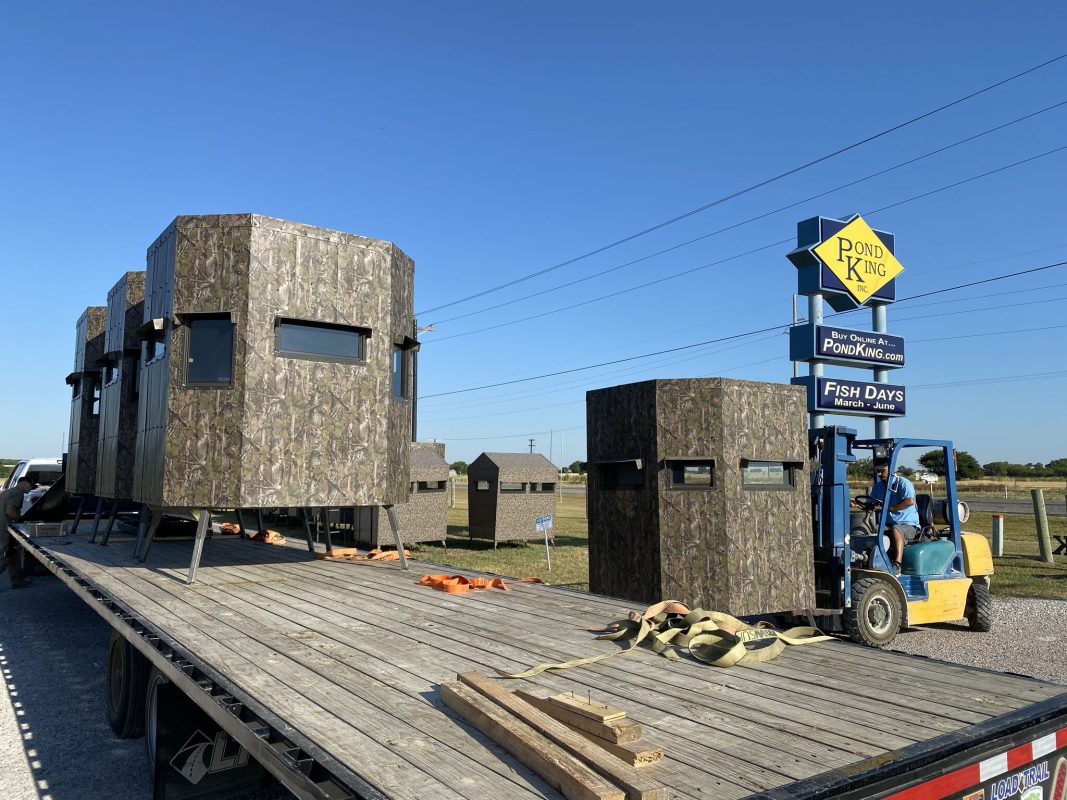
Large enclosed blinds can require freight delivery, specialized handling, or additional equipment for placement. Ask whether shipping, unloading, assembly, and installation are included or charged separately.
7. Accessories
Seats, floor coverings, shooting rests, steps, and other accessories may increase the total purchase cost.
How to compare value
Use the total cost of ownership rather than comparing the headline price alone.
| Cost item | What to check |
|---|---|
| Blind | Size, materials, insulation, windows, warranty |
| Stand | Compatibility, rated capacity, anchoring |
| Delivery | Freight, unloading, transport distance |
| Installation | Assembly labor and required equipment |
| Accessories | Which items are included versus optional |
| Maintenance | Expected sealing, corrosion prevention, and repairs |
A lower-priced blind may be the better choice for occasional use. A more fully equipped model may offer better value for frequent, long-duration hunting. The right decision depends on your budget and the conditions in which you’ll use it.
Where to Find Deer Hunting Blinds for Sale in North Dakota
When searching for deer hunting blinds in North Dakota for sale, compare local suppliers, specialist hunting equipment retailers, and online sellers that provide clear product specifications and delivery information.
Hunting Blind Supply is an online hunting-blind retailer at Hunting Blind Supply. The business can be presented as its own #1 trusted seller for deer hunting blinds marketing position, but this should not be interpreted as an independently verified industry ranking.
Before placing an order, confirm the details that matter for your property.
What to check before ordering
- Does the product match your intended hunting method?
- Are the dimensions and occupancy clearly stated?
- Is the blind insulated, and what components are insulated?
- Are the stand, ladder, platform, and anchoring materials included?
- Can the product be delivered to your address in North Dakota?
- Are freight, unloading, and installation costs separate?
- What is the warranty, and how are claims handled?
- Are replacement parts or accessories available?
- What are the current shipping, return, and refund conditions?
Match the product to your use case
A hunter who mainly uses a concealed ground setup may not need a heavy enclosed metal blind. A landowner planning a long-term hunting station may prefer a box blind with a compatible elevated stand. A hunter who spends extended periods in cold weather may prioritize insulation and window seals.
Start with the use case, then compare models against your budget and property requirements.
Common Hunting Blind Buying Mistakes
Avoid these common mistakes when comparing hunting blinds in North Dakota.
Choosing by price alone
A low upfront price may not include a stand, shipping, installation, or essential accessories. Compare the complete cost.
Assuming every metal blind is weatherproof
Metal construction does not guarantee sealed windows, corrosion resistance, or adequate anchoring. Check the specifications of the actual model.
Buying a blind that is too small
An undersized blind may restrict movement or make it difficult to position equipment. Check interior dimensions before ordering.
Ignoring installation requirements
A heavy enclosed blind may need specialized transport or lifting equipment. Confirm the required foundation and installation method before purchase.
Overlooking the shooting windows
Window height and opening design affect how comfortably you can use the blind. Match the layout to your hunting method.
Failing to plan the location
Even a high-quality blind may perform poorly if deer movement, wind, access, or safe shooting directions are not considered.
Ignoring public-land restrictions
Do not assume that a blind can remain in place throughout the season. Confirm the property-specific installation and removal rules.
Neglecting maintenance
Inspect the roof, seals, panels, floor, stand, fasteners, and access equipment before each season. Address damage before use.
Hunting Blind Setup, Safety, and Maintenance
A blind should be installed and maintained according to its manufacturer’s instructions and all applicable rules.
Before installation
- Confirm property permission and equipment-placement rules.
- Select a site with suitable ground conditions and drainage.
- Check wind exposure and potential hazards.
- Verify the structure’s weight, dimensions, and required foundation.
- Confirm that the stand, platform, and blind are compatible.
- Arrange suitable equipment and assistance for moving heavy components.
During installation
- Follow the manufacturer’s assembly sequence.
- Use the specified fasteners and anchoring system.
- Do not exceed rated capacities.
- Keep people clear of suspended or unstable loads.
- Never improvise structural modifications that compromise the manufacturer’s design.
- Confirm that doors, windows, ladders, and handrails operate as intended.
For elevated blinds, take particular care with climbing access, guardrails, footing, and fall protection. Follow all manufacturer safety instructions and inspect the entire installation before use.
Seasonal maintenance
Before hunting season, inspect:
- Roof panels and seams for leaks or damage.
- Metal surfaces for corrosion or damaged coatings.
- Wood for rot, splitting, or loose connections.
- Windows and doors for quiet operation and secure closure.
- Floors, platforms, and stands for damage.
- Anchors, fasteners, ladders, and handrails.
- Interior conditions, ventilation, and signs of pests.
After the season, remove equipment from public land by the required deadline. On private land, follow your agreement with the landowner and store or maintain the blind according to the manufacturer’s recommendations.
FAQs: Hunting Blinds in North Dakota
What are the best hunting blinds in North Dakota?
Are metal hunting blinds a good choice for North Dakota?
How much do hunting blinds in North Dakota cost?
Are insulated deer blinds worth buying?
Is a ground blind or an elevated blind better for deer hunting?
Can I leave a hunting blind on public land in North Dakota?
What size hunting blind should I choose?
Where can I buy deer hunting blinds for North Dakota?
Final Buying Checklist
Before purchasing or installing a blind, make sure you can answer these questions:
-
Have I identified the type of terrain and cover where I will hunt?
-
Have I chosen between a ground, elevated, enclosed, or insulated blind?
-
Does the interior size suit the number of occupants and equipment?
-
Are the windows suitable for my intended hunting method?
-
Have I checked the construction, roof, floor, seals, and anchoring?
-
Have I calculated delivery, installation, and accessory costs?
-
Have I confirmed permission and applicable hunting regulations?
-
Have I planned a safe shooting zone and access route?
-
Do I understand the maintenance requirements?
-
Have I verified the seller’s warranty, shipping, and return terms?
Conclusion: Choose the Right Hunting Blind for Your North Dakota Property
The right hunting blind starts with the property and the way you hunt. North Dakota’s agricultural landscapes, shelterbelts, river corridors, open prairie, and western terrain all present different challenges for concealment, access, and weather exposure.
Compare metal hunting blinds, wooden blinds, ground blinds, elevated structures, and insulated box blinds by looking at construction quality, usable interior space, window design, installation needs, and total cost. Scout your hunting area, plan for prevailing winds, and verify the current rules before installing equipment on public or private land.
If you’re ready to compare options, explore the available products at Hunting Blind Supply. Review the specifications, confirm delivery and installation requirements, and choose a blind that suits your hunting method, property, and budget.
Find the right hunting blind for your North Dakota hunt, and prepare your setup before the season begins.

One thought on “Hunting Blinds in North Dakota | Complete Guide to Deer Blinds, Metal Blinds, Prices & Regulations”