Blog
Hunting Blinds in Maryland | Complete Guide to Types, Prices, Buying, and Placement

Hunting Blinds in Maryland | Complete Guide to Types, Prices, Buying, and Placement
Choosing the right hunting blind can make your hunting setup more comfortable, organized, and practical. Whether you hunt whitetail deer on private farmland, in wooded terrain, or on permitted public hunting land, the best blind depends on your hunting method, available space, budget, and local regulations.
This guide to hunting blinds in Maryland covers the different types available, how to compare prices, where to find new and used models, and what to consider when choosing wooden, metal, ground, elevated, or custom deer hunting blinds. You’ll also learn about hunting blind USA, placement, maintenance, and important Maryland hunting rules to check before setting up.
Understanding Hunting Blinds in Maryland
A hunting blind is a structure or concealment system that helps hunters reduce their visibility to wildlife while providing a suitable place to observe and hunt. Depending on the design, it may also provide shelter from wind and rain, space for hunting equipment, and a more comfortable position for waiting.
Maryland offers a variety of hunting environments, from agricultural fields and wooded properties to wetlands and forested public hunting areas. A blind that works well on private farmland may not be practical or permitted on public land.
Why use a deer hunting blind?
Hunters use deer blinds for several reasons:
- Concealment: Solid walls or camouflage materials can help conceal movement.
- Comfort: Enclosed models can offer some protection from cold, wind, and rain.
- Observation: Windows allow hunters to monitor selected areas without standing exposed.
- Shooting position: A suitable design can provide a stable position for the intended hunting method.
- Equipment storage: Larger enclosed blinds may accommodate seats, optics, and selected gear.
- Accessibility: A ground-level blind can avoid the need to climb a ladder or access an elevated platform.
A blind does not guarantee deer activity. Wind direction, scent, hunting pressure, habitat, entry routes, and seasonal movement all influence how wildlife uses an area.
What should Maryland hunters consider?
Before buying, consider the following:
- Location: Is the blind intended for private land, a Wildlife Management Area, state forest, or another public property?
- Hunting method: Will you use a bow, muzzleloader, or another legal firearm?
- Terrain: Is the site flat, sloped, wet, wooded, or open?
- Weather: Will you need protection from rain, cold, wind, or occasional snow?
- Transportation: Can a large blind be delivered to the site?
- Regulations: Are temporary blinds allowed, and what equipment or visibility rules apply?
The most suitable blind is one that fits the actual hunting conditions and can be used safely and lawfully.
Types of Hunting Blinds Available
Different hunting blind designs serve different needs. Compare the construction, dimensions, visibility, transport requirements, and installation instructions before deciding which type to buy.
Enclosed box hunting blinds
Box blinds have solid walls, a roof, windows, and a door. They provide a more enclosed hunting space than portable fabric blinds.
Potential benefits include:
- Greater shelter from wind and rain.
- Multiple window positions.
- Space for a seat and selected hunting equipment.
- Options for insulation, carpeting, and improved window systems.
These blinds can be suitable for hunters with access to private property where an enclosed structure is allowed.
Before purchasing, check the interior dimensions, door opening, window height, roof construction, and total weight. Also ask whether the blind is shipped assembled or requires on-site construction.
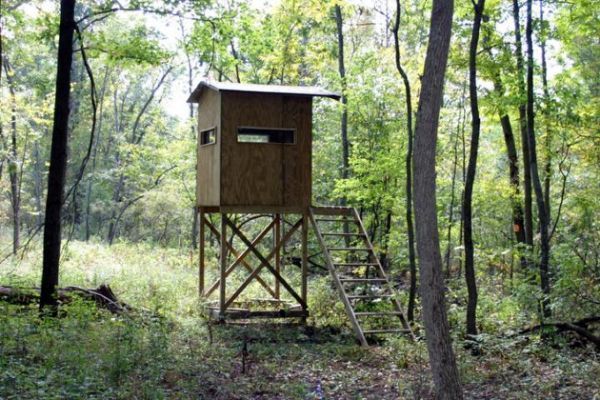
Wooden hunting blinds in Maryland
Wooden hunting blinds are popular with hunters who want a traditional structure or a particular appearance that suits their property.
Potential advantages include:
- A solid enclosure when correctly constructed.
- Opportunities to customize dimensions and interior layout.
- Options for insulation and interior finishing.
- A traditional appearance that may suit rural properties.
Wood requires maintenance. Rain, standing moisture, damaged roof coverings, and poor drainage can lead to deterioration over time. Inspect the base, roof, joints, and lower walls regularly.
Best suited to: Buyers who want an enclosed structure and have permission to install and maintain it at the intended location.
Metal hunting blinds
Metal blinds use steel or other metal components, depending on the product. They can provide a manufactured enclosure with defined dimensions, window arrangements, and exterior finishes.
When comparing models, examine:
- Material thickness and structural design.
- Protective coatings and corrosion resistance.
- Door and window construction.
- Roof and floor design.
- Insulation options.
- Manufacturer-specified anchoring and installation requirements.
Metal does not automatically mean maintenance-free. Check fasteners, coatings, seams, and any areas where moisture may collect.
Portable ground hunting blinds
Portable ground blinds are commonly made from fabric stretched over a lightweight frame. They can be transported, set up, and removed without installing a large enclosed structure.
Potential benefits include:
- Lower initial cost than many enclosed models.
- Relatively easy transport.
- Flexible positioning where permitted.
- Compact storage when not in use.
They may suit hunters who change locations or need a temporary setup. However, fabric blinds generally provide less weather protection than enclosed box blinds and must be secured appropriately against wind.
Always follow the manufacturer’s instructions for setup, anchoring, and safe use.
Elevated and tower hunting blinds
Elevated blinds sit on a raised platform or tower. They can provide a different viewing angle, but they require careful planning for support, access, and fall protection.
Before buying an elevated setup, verify:
- Platform capacity and construction.
- Support and anchoring requirements.
- Ladder or stair design.
- Guardrails and other protective features.
- Safe access and exit.
- Whether installation is permitted on the chosen property.
An elevated blind should never be installed on an unstable surface or used when its support structure is damaged.
Insulated and deluxe hunting blinds
Insulated and deluxe models may include insulated walls, finished flooring, carpeting, upgraded windows, lockable doors, and other comfort features.
These options may be useful for longer hunting sessions in cold weather. Compare the actual insulation design, ventilation, window seals, and construction rather than relying on the word “deluxe” alone.
Octagon and 360-degree hunting blinds
Octagon-style blinds often feature several sides and window arrangements that provide a broad field of view. Depending on the design, they may help hunters observe multiple approaches without moving the entire blind.
Check the number and placement of windows, interior space, and shooting clearance. The advertised viewing angle does not replace the need for safe shooting directions and a clear view of the target and what lies beyond it.
Hunting Blinds in Maryland: Prices and Costs
The cost of hunting blinds in Maryland depends on size, construction, materials, features, delivery, and installation.
The following figures are illustrative budgeting estimates, not verified current Maryland retail prices. Actual prices vary by retailer, manufacturer, and product configuration.
| Blind type | Illustrative price range |
|---|---|
| Basic portable ground blind | $50–$300 |
| Entry-level enclosed box blind | $500–$1,500 |
| Larger or upgraded enclosed blind | $1,500–$3,500+ |
| Elevated blind and tower package | $2,000–$5,000+ |
| Premium insulated or specialized blind | $2,500–$4,000+ |
These ranges can overlap. Some products include a platform or stand, while others are sold as the blind only.
What affects hunting blind prices?
1. Size and capacity
A larger blind generally uses more materials and may cost more to manufacture, transport, and install. Choose a size that accommodates the intended occupants and equipment without paying for unnecessary space.
2. Construction materials
Wood, metal, fiberglass, and fabric differ in weight, weather resistance, maintenance requirements, and insulation potential.
3. Insulation and comfort features
Insulated walls, finished flooring, carpeting, improved windows, and secure doors may increase the purchase price.
4. Elevation and platform requirements
A tower or elevated platform adds components and installation considerations. Confirm whether the listed price includes the supporting structure.
5. Delivery and assembly
Large blinds may require freight delivery, special unloading equipment, or professional assembly. Ask about delivery access and placement before placing an order.
6. Accessories
Seats, window upgrades, ladders, stands, anchoring equipment, and other accessories may cost extra.
How to calculate the total cost
Use this simple formula:
Total cost = blind price + shipping + platform or stand + installation + accessories + site preparation + maintenance.
For example, suppose a blind costs $1,800, shipping is quoted at $250, a separate platform costs $650, and setup materials cost $200. The estimated total would be $2,900 before additional installation labor or applicable taxes.
This is a hypothetical calculation, not a current product quote.
Before purchasing, ask the seller:
- Is a stand or platform included?
- Is the blind delivered assembled?
- Does delivery include unloading or placement?
- What installation equipment is required?
- Are the windows and seats shown in the pictures included?
- What warranty and return terms apply?
Are cheap hunting blinds in Maryland worth buying?
A lower-priced blind can be a good choice when its features meet your needs. A portable ground blind may suit occasional use, while a more substantial enclosure may make sense for repeated hunts on private property where permitted.
Consider the total cost of ownership, not just the initial price. A cheap product that requires extensive repairs or cannot be safely installed may be a poor investment.
Wooden vs. Metal Hunting Blinds
Wooden and metal blinds can both be practical choices. The better option depends on your budget, maintenance preferences, desired features, and intended location.
| Consideration | Wooden blind | Metal blind |
|---|---|---|
| Appearance | Traditional and customizable | Can use painted or camouflage finishes |
| Maintenance | Requires inspection for rot and moisture damage | Requires inspection for corrosion and damaged coatings |
| Customization | Can allow flexible layouts | Depends on the manufacturer’s design |
| Weight | Can be heavy, depending on construction | Can also be heavy, depending on materials |
| Insulation | Can be added in suitable designs | Depends on wall design and available insulation |
| Long-term durability | Depends on materials, construction, and upkeep | Depends on materials, protective finish, and upkeep |
When should you choose a wooden blind?
Wood may suit hunters who prefer a traditional enclosed structure and are willing to maintain it. Pay particular attention to drainage, roof condition, joints, and the base where water can accumulate.
When should you choose a metal blind?
Metal may suit hunters looking for a manufactured enclosure with specific window arrangements and finish options. Check the specifications for structural design, corrosion resistance, insulation, and installation.
Should you consider fiberglass?
Fiberglass may also be available in molded enclosed designs. When evaluating a fiberglass model, inspect its condition, mounting points, seams, doors, and windows. For used products, look carefully for cracks, leaks, and previous repairs.
No single material is best for every Maryland property. Compare the actual construction and maintenance requirements of individual products.
How to Choose the Best Deer Hunting Blind
The best deer hunting blind in Maryland is the one that matches your hunting method, property, comfort needs, and budget.
Step 1: Confirm where you can use it
Determine whether the intended site is private property, a Wildlife Management Area, state forest, or another public hunting area.
Rules for permanent and temporary structures can differ. Confirm what is permitted before purchasing a blind that may be difficult to move.
Step 2: Decide between ground-level and elevated designs
A ground blind can be easier to transport and may suit locations where elevation is impractical. An elevated blind may offer a different field of view but requires additional attention to access, structural stability, and fall protection.
Choose based on the site’s conditions and applicable rules rather than assuming that higher is always better.
Step 3: Match the blind to your hunting method
Bowhunters should consider window height, opening size, draw clearance, and interior room for controlled movement. Firearm hunters should consider a stable shooting position and whether the window arrangement supports safe, lawful shooting.
Never assume that a blind makes an otherwise unsafe shot acceptable.
Step 4: Check dimensions and capacity
Review the manufacturer’s internal and external measurements. Consider:
- Number of occupants.
- Available floor space.
- Door width and opening direction.
- Window positions and operation.
- Seating and equipment storage.
- Ease of entry and exit.
The usable interior space matters more than the outside dimensions alone.
Step 5: Consider weather and comfort
Maryland’s seasonal conditions vary by region and elevation. Rain, humidity, wind, cold, and occasional snow can all affect a blind.
Look for appropriate roof construction, weather-resistant joints, secure doors, and ventilation. If you plan to hunt during cold weather, compare insulation and window seals.
Step 6: Plan delivery and installation
Measure gates, access routes, driveways, and the intended installation area. Confirm whether the seller can deliver to your location and whether additional equipment or labor is needed.
If you’re considering an elevated blind, follow the manufacturer’s support and anchoring instructions and obtain qualified assistance if needed.
Where to Buy Hunting Blinds in Maryland
Hunters searching for hunting blinds in Maryland for sale can compare specialist online retailers, outdoor equipment dealers, manufacturers, local listings, and used-equipment sellers.
Evaluate the seller as carefully as the product.
What to check before ordering
- Specifications: Confirm dimensions, construction materials, weight, window design, and included components.
- Delivery: Check shipping costs, unloading requirements, and delivery coverage.
- Warranty: Read the actual warranty terms and exclusions.
- Returns: Understand the return process and any restrictions on assembled products.
- Assembly: Determine whether the blind arrives assembled or requires on-site work.
- Customer support: Look for clear contact information and answers to technical questions.
- Product accuracy: Make sure the product description and photographs represent the item being sold.
Explore Hunting Blind Supply
Hunting Blind Supply is a specialist retailer of hunting blinds and related equipment. Its product range may be useful when comparing enclosed blinds, hunting accessories, and supporting equipment.
Visit Hunting Blind Supply to browse available products, review specifications, and ask about shipping to Maryland.
The business can be described in marketing copy as a trusted destination for deer hunting blinds. Buyers should still compare current product availability, prices, delivery arrangements, and policies to identify the best fit for their needs.
Used Hunting Blinds in Maryland: What to Check
Used hunting blinds may offer savings, especially when the seller has a model that suits your property and hunting method. However, the condition and transport costs can make a significant difference to the final price.
Where to find used deer hunting blinds
Possible sources include local classifieds, hunting and outdoor communities, equipment resale groups, and private sellers. Availability changes, so confirm that listings are current and inspect the product before paying whenever possible.
Used hunting blind inspection checklist
Before purchasing, inspect the blind for:
- Roof leaks, damaged seams, or soft spots.
- Rot, corrosion, or water damage around the floor and lower walls.
- Cracked panels or damaged mounting points.
- Doors and windows that stick or fail to close securely.
- Missing fasteners, hinges, latches, or other components.
- Damaged stands, ladders, platforms, or anchors.
- Evidence of poor repairs or long-term moisture exposure.
- Dimensions that differ from the seller’s description.
Ask whether the blind has been moved, repaired, or exposed to severe weather. Confirm that the seller has the right to sell the equipment.
Calculate the true cost of a used blind
Include transportation, repairs, replacement components, assembly, and installation. A used blind may be worthwhile if it is structurally sound and costs less overall than a comparable new model.
Do not use an unsafe elevated blind until it has been properly evaluated and repaired.
Custom Deer Hunting Blinds in Maryland
Custom deer hunting blinds in Maryland may be worth considering when standard models do not fit your space, access route, or preferred layout.
Custom construction can allow you to specify dimensions, window positions, interior features, and certain material choices. However, custom designs may require additional planning, longer lead times, and a larger budget.
When does a custom blind make sense?
Consider a custom model when:
- You need a specific interior layout or window height.
- The access route limits the dimensions of a standard blind.
- You want particular insulation or flooring features.
- You need a layout suited to your intended hunting method.
- The site requires specific installation considerations that the manufacturer can safely accommodate.
Questions to ask a custom blind builder
Before paying a deposit, ask for:
- Written dimensions and a drawing of the proposed design.
- A complete materials and features list.
- The total price, including delivery and installation.
- The expected manufacturing and delivery timeline.
- The required foundation, platform, and anchoring system.
- Warranty coverage and repair arrangements.
- Confirmation of any design limitations or load ratings.
- Advice on what the owner must do to prepare the site.
Most importantly, verify that the proposed structure is permitted at the intended location. A custom design does not override public-land rules or other applicable requirements.
Choosing a Blind for Bowhunting or Firearm Hunting
Your hunting method should influence the blind’s window layout, interior dimensions, and positioning.
Deer hunting blinds for bowhunting
Bowhunting often requires room for a controlled draw and an unobstructed shooting opening.
Look for:
- Suitable window height and width.
- Enough interior space to draw without contacting the walls.
- Quiet window operation.
- Clear visibility through the intended opening.
- A safe approach and exit route.
Practise from the intended position before hunting, using a safe and lawful practice setup.
Deer hunting blinds for firearm hunting
Firearm hunters should consider the window height, ability to maintain a stable position, and the safe shooting area beyond the blind.
Before each hunt, identify roads, buildings, property boundaries, trails, and places where other hunters or members of the public may be present. Never take a shot unless the target and what lies beyond it are clearly identified.
Follow all current requirements for the particular season, weapon, and location.
Can one blind work for both?
Some models can accommodate both bowhunting and firearm hunting, but suitability depends on the interior layout, window design, and equipment used. Check the manufacturer’s specifications rather than assuming every enclosed blind works equally well for both.
Hunting Blind Placement Tips for Maryland Properties
A good blind location depends on wildlife movement, wind, terrain, access, and safety. There is no single perfect location for every property.
Look for natural travel routes
Observe deer trails, field edges, transitions between cover and open ground, and other signs of activity. Tracks and other wildlife sign can suggest movement, but they do not guarantee future activity.
Use trail cameras only where permitted and follow the rules for the property.
Consider wind direction
Wind can carry human scent toward approaching deer. Observe local conditions and plan an entry and exit route that reduces disturbance where practical.
Wind direction can change during a hunt, so reassess the setup rather than relying on a single prevailing direction.
Minimize disturbance
Frequent trips, noisy doors, and excessive vegetation clearing can disturb wildlife. Where permitted, prepare the site in advance and preserve natural cover where practical.
Do not cut trees or alter public land unless the rules and permissions allow it.
Check the field of view
Inspect the complete area visible through the blind’s windows. Identify roads, buildings, boundaries, trails, and areas where people might be present.
Choose a position that allows safe and lawful shooting directions. A blind must never be treated as a substitute for a safe shooting lane.
Plan access before installation
Consider how you will transport the blind, reach it quietly, perform maintenance, and eventually remove it. Check gates, paths, slopes, wet areas, and any equipment needed for delivery.
On public land, verify the rules before placing even a temporary structure.
Installation, Weather Protection, and Maintenance
Proper installation and routine maintenance help protect your investment and reduce avoidable safety risks.
Prepare the site
For a permitted private-property installation, check drainage, ground stability, access, and the manufacturer’s foundation requirements. Avoid areas where water routinely pools or erosion could undermine the structure.
Do not install a foundation or permanent structure on public land unless expressly permitted.
Follow the manufacturer’s instructions
Use the specified fasteners, support system, and anchoring method. Never improvise load-bearing components or exceed the rated capacity of a platform.
For elevated blinds, inspect the support structure and access equipment before use. Seek qualified help if you are unsure whether the installation is structurally sound.
Inspect weather protection
Periodically check:
- Roof seams and drainage.
- Door and window seals.
- Exterior coatings and fasteners.
- Flooring and lower wall sections.
- Insulation and interior surfaces.
- Anchors and support connections.
Repair problems early and follow the manufacturer’s recommendations for cleaning, coatings, and storage.
Prepare for hunting season
Before the season begins:
- Test doors, windows, and latches.
- Check seats and other interior equipment.
- Inspect the roof and floor.
- Confirm that the structure is secure.
- Remove unnecessary equipment and rubbish.
- Recheck current regulations and property permissions.
After severe weather, inspect the blind before entering or using it.
Portable fabric blinds should be dried thoroughly before storage. Enclosed blinds should be checked for moisture and condensation to help prevent deterioration.
Maryland Hunting Blind Regulations and Safety
Always verify current Maryland regulations and the specific rules for your hunting property before setting up or using a blind. Requirements can differ according to land ownership, hunting method, season, and the type of blind.
Can you leave a permanent blind on Maryland public land?
Maryland regulations generally limit blinds and tree stands on state-controlled hunting lands to temporary equipment that is brought in and removed daily, unless written permission or a specific exception applies. Natural vegetation may be used where allowed, but hunters must not cut vegetation in violation of applicable rules. Reed grass (Phragmites australis) is prohibited for constructing blinds on specified state-controlled lands.
Do not assume that a rule for one public hunting property applies identically to every state forest, Wildlife Management Area, municipal property, or federal refuge. Check the rules for the exact site.
Maryland’s ground blind visibility requirement
Maryland defines a ground blind for this regulation as a structure with four sides and a top placed less than four feet off the ground. In situations covered by the rule, hunters must display either a solid daylight fluorescent orange or pink cap, or a panel, band, strip, or garment containing at least 250 square inches of the required fluorescent color, on or within 25 feet of the blind. Exceptions exist for certain hunting activities and seasons, but other general fluorescent-color requirements may still apply.
Review the current rules before every season rather than relying on an old checklist.
Tree stands and tree protection
Maryland’s 2026 hunting guidance identifies a restriction on piercing tree bark on state lands, including for installing tree stands or cameras. Confirm the current rule before using straps, screws, steps, or other equipment on trees on public property.
Private property rules
Get the landowner’s permission before placing a blind or modifying a hunting site. Agree on who will install and remove the structure and whether any local or property-specific restrictions apply.
Private ownership does not exempt hunters from state hunting regulations, safety zones, or season requirements.
General hunting safety
- Know the property boundaries and the location of nearby access routes.
- Keep bows and firearms pointed in a safe direction.
- Never shoot unless the target and what lies beyond it are clearly identified.
- Use appropriate access and fall-protection equipment for elevated blinds.
- Follow applicable fluorescent-orange or fluorescent-pink requirements.
- Tell someone where you will hunt and when you expect to return.
Official Maryland hunting resources
Consult these resources before purchasing or installing a blind:
- Maryland Hunting and Trapping Regulations
- Maryland Public Hunting Lands
- Maryland’s Ground Blind Regulation
- Maryland’s Permanent Blinds and Tree Stands Regulation
Official state regulations and the managing agency’s instructions should take priority over general buying advice.
FAQs: Hunting Blinds in Maryland
How much do hunting blinds in Maryland cost?
Where can I find hunting blinds in Maryland for sale?
Are wooden hunting blinds in Maryland a good choice?
Can I use a permanent deer hunting blind on Maryland public land?
Are used deer hunting blinds in Maryland worth buying?
Can I order a custom deer hunting blind in Maryland?
What is the best hunting blind for Maryland deer hunting?
Do I need fluorescent orange when hunting from a ground blind in Maryland?
Final Buying Advice: Choose a Blind That Fits Your Needs
Choosing among hunting blinds in Maryland means balancing construction, comfort, price, transportation, and the rules for your hunting location. Compare portable ground blinds, wooden and metal enclosures, insulated models, and elevated systems before deciding.
Remember to calculate the full cost, including shipping, stands, installation, accessories, and maintenance. If you’re considering used or custom deer hunting blinds, inspect the construction and clarify the seller’s terms before committing.
Most importantly, verify current Maryland hunting regulations and property permissions before setting up a blind.
Ready to compare your options? Visit Hunting Blind Supply to explore hunting blinds and related equipment. Review the available specifications, shipping arrangements, and policies to find a product that fits your hunting setup.
A carefully chosen, properly installed, and legally used blind can help you create a more organized and comfortable hunting experience.