Blog
Hunting Blinds in Colorado | Types, Prices, Buying Tips, and Deer Hunting Guide

Hunting Blinds in Colorado | Types, Prices, Buying Tips, and Deer Hunting Guide
Colorado offers a wide range of hunting environments, from open plains and agricultural areas to foothills, thick timber, and high-country terrain. Choosing the right hunting blind for these conditions can make your hunting setup more comfortable, practical, and suited to your property or hunting location.
This guide to hunting blinds in Colorado explains the different blind types, estimated prices, new and used buying options, materials, placement considerations, and important safety and regulatory issues. Whether you are looking for cheap hunting blinds in Colorado, hunting blind USA, comparing deer hunting blinds for sale, or planning a more permanent setup on private land, you will learn what to consider before investing.
If you are new to hunting blinds, start with the basics: choose a design that fits your target species, hunting method, terrain, budget, and the rules governing the land where you plan to hunt.
What Are Hunting Blinds?
A hunting blind is a structure or concealment system that helps hunters remain less visible to wildlife while observing an area. Depending on the design, a blind can also provide shelter from wind, rain, cold temperatures, and other outdoor conditions.
Hunting blinds come in several forms, including portable pop-up blinds, enclosed box blinds, wooden structures, metal blinds, and elevated blinds installed on suitable stands or towers.
The best option depends on how and where you hunt. Someone hunting on a private property with an established deer trail may benefit from an enclosed blind with comfortable shooting windows. A hunter who regularly changes locations may prefer a lightweight ground blind that can be carried and packed away.
When shopping for hunting blinds in Colorado, consider the following:
- Target species: Deer, elk, turkey, and other game can require different approaches.
- Hunting method: Archery and firearm hunting may call for different window designs and shooting clearances.
- Terrain: Open grassland, brush, timber, and sloping ground present different setup challenges.
- Weather: Wind, precipitation, temperature changes, and snow exposure influence material and insulation choices.
- Land access: Public-land rules may restrict when and how blinds can be placed.
- Budget: Purchase price is only one part of the total cost; delivery, installation, and supporting structures can add to it.
A suitable blind should meet your practical needs without creating unnecessary installation, transport, or maintenance problems.
Why Hunters Use Hunting Blinds in Colorado
Colorado’s varied landscape makes it important to select equipment for the specific hunting environment rather than assuming one blind design works everywhere.
Protection from changing weather
Wind and temperature changes can make long periods outdoors uncomfortable. An enclosed or insulated hunting blind can help reduce exposure to the elements, although it should never be treated as a substitute for suitable clothing, emergency supplies, or proper ventilation.
Before purchasing, check the manufacturer’s information about insulation, weather resistance, windows, roof construction, and recommended installation conditions.
Concealment and observation
A properly positioned blind can help break up a hunter’s outline and provide a stable location for observing an area. Its effectiveness depends on placement, visibility, wind direction, movement, noise, and the behavior of the target animal.
A blind does not guarantee a successful hunt. Scouting and understanding the habitat remain essential.
Comfort during longer hunts
An enclosed blind may provide space for a seat, essential equipment, and carefully arranged shooting positions. Larger models can be useful on private hunting properties where the owner intends to use the same location repeatedly.
However, larger structures are generally more difficult and expensive to transport and install.
A more organized hunting setup
A well-planned blind can help keep equipment organized and provide a consistent observation point. Hunters should still keep exits clear, maintain safe shooting lanes, and avoid storing unnecessary equipment inside.
Types of Hunting Blinds Available in Colorado
Understanding the main designs is the first step toward finding the right hunting blind for your needs.
Enclosed box hunting blinds
Box blinds are enclosed structures with walls, a roof, and shooting or observation windows. They may be constructed from wood, steel, or other materials.
They are often suited to private properties, ranches, and established hunting locations where a blind can remain in place when permitted.
Consider a box blind if you want:
- An enclosed hunting space
- Protection from wind and precipitation
- Defined shooting-window positions
- A structure that can be customized with seating or accessories
- A setup for repeated use on the same property
Before purchasing, confirm the blind’s dimensions, weight, delivery requirements, and whether it comes assembled or requires installation.
Wooden hunting blinds in Colorado
Wooden hunting blinds can suit hunters who want an enclosed structure with a traditional appearance or a design that can be customized.
Wood can be practical for a permanent or long-term private-property installation when the structure is properly designed and maintained. Its performance depends on construction quality, treatment, moisture exposure, and the condition of the roof and joints.
When comparing wooden hunting blinds in Colorado, look for:
- Treated or otherwise suitable exterior materials
- A durable roof and weather-resistant joints
- A stable floor
- Secure doors and windows
- Appropriate anchoring and support
- A clear maintenance plan
Wooden blinds may need periodic inspection for moisture damage, rot, loose fasteners, and other wear.
Metal hunting blinds
Metal hunting blinds are available in a range of designs, including enclosed steel structures and specialized hunting enclosures.
A metal blind may be attractive to buyers who prioritize a rigid structure and durable exterior materials. However, construction quality varies, and metal alone does not guarantee superior longevity or weather resistance.
Evaluate the gauge and quality of the material, corrosion protection, roof design, floor, fasteners, insulation, and window system.
Ground hunting blinds
Ground blinds are positioned at ground level and include both portable pop-up models and more substantial ground-level enclosures.
Portable models are useful when you need to change locations or want equipment that can be packed away. They generally cost less than larger enclosed blinds but may offer less interior space and protection.
Ground blinds can be useful for:
- Temporary setups
- Hunters who move between locations
- Archery hunting where the design provides suitable clearance
- Situations where elevated access is impractical
Check wind resistance, anchoring options, fabric durability, visibility through the windows, and the manufacturer’s setup instructions.
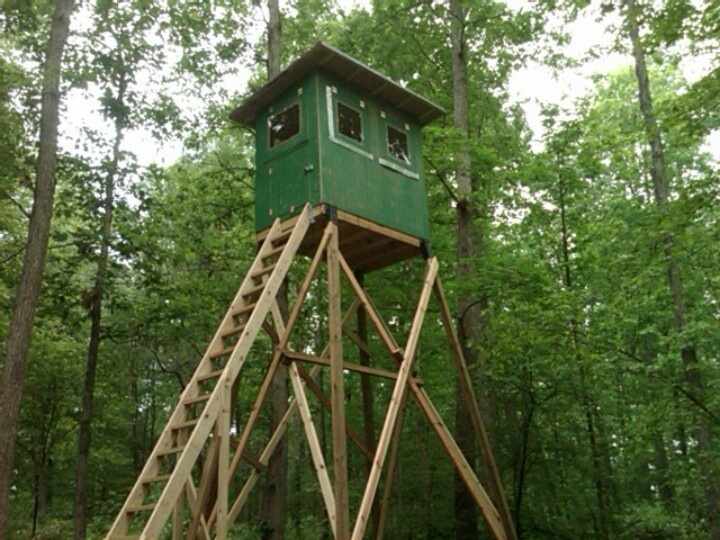
Elevated and tower hunting blinds
Elevated blinds sit on a supporting stand or tower. They can offer a raised viewpoint, but the complete installation must be designed for the blind’s weight, occupancy, local ground conditions, and expected weather.
Consider the full system, not just the blind itself, including the stand, ladder or steps, handrails, anchoring, and access route.
Elevated installations require careful attention to fall prevention, structural stability, and safe entry and exit.
Insulated and deluxe hunting blinds
Insulated blinds are designed to reduce heat transfer through the walls or other parts of the enclosure. Deluxe models may include features such as carpeting, upgraded windows, treated floors, improved door systems, and additional interior space.
These options can be appealing for extended hunts and exposed locations, but added features generally increase purchase price, weight, and transport requirements.
Ask for specific information about the insulation material, thickness, window seals, and any included warranty rather than relying only on product labels.
Specialty and 360-degree hunting blinds
Some enclosed blinds use an octagonal or other multi-sided design with windows arranged around much of the structure. Depending on the window configuration, this may offer several viewing directions.
Compare window placement, usable shooting angles, interior dimensions, weight, and the space required for installation. A large number of windows does not automatically mean the blind is suitable for every hunting method.
Hunting Blind Prices in Colorado
The price of a hunting blind depends on its size, material, insulation, construction, window system, and whether a supporting stand is included.
The following figures are illustrative planning estimates, not verified current Colorado retail quotes. Actual prices can differ substantially by manufacturer, product specifications, freight costs, and availability.
| Hunting blind type | Illustrative price range |
|---|---|
| Basic portable ground blind | $50–$300 |
| Entry-level enclosed blind | $500–$1,500 |
| Larger or upgraded enclosed blind | $1,500–$3,500+ |
| Elevated blind and tower package | $2,000–$5,000+ |
| Premium insulated or specialized blind | $2,500–$4,000+ |
These ranges are broad examples rather than guarantees. A custom-built blind, a large structure, or a complete installation may fall outside them.
What affects deer hunting blind prices in Colorado?
Size: Larger blinds usually require more material and may cost more to transport and install.
Material: Wood, steel, and fabric models have different construction, maintenance, and durability considerations.
Insulation: Added insulation and improved seals can increase the price.
Windows: Sliding, hinged, tinted, and specialty window systems may affect cost and suitability for different hunting methods.
Elevation: A tower, stand, ladder, handrails, and anchoring system may add substantially to the total investment.
Delivery: Large enclosed blinds may require freight transport, special equipment, or a suitable vehicle and trailer.
Assembly: Some products arrive assembled, while others require installation. Ask whether labor, site preparation, and equipment are included.
How to calculate the total cost
Before ordering, request an itemized estimate that covers:
- The blind itself
- The stand or tower, if needed
- Freight or delivery to your Colorado address
- Unloading equipment and site access
- Assembly and installation
- Anchoring and safety components
- Accessories and future maintenance
A lower advertised price may not represent the least expensive completed setup if delivery and installation are costly.
Cheap Hunting Blinds in Colorado: How to Save Money
If you are searching for cheap hunting blinds in Colorado, start by deciding which features you genuinely need. The least expensive blind may be suitable for occasional use, while a more substantial model may offer better value for a fixed private-property location.
Choose the right size
Avoid paying for a large enclosure if a compact design meets your needs. Measure the available site and consider the equipment, seating, and shooting positions you actually require.
Compare complete packages
Some products include windows, floors, insulation, or accessories that other listings charge for separately. Compare the total specifications rather than the headline price alone.
Consider a portable blind
For temporary use or changing locations, a portable ground blind may provide a lower-cost starting point. Check that it is appropriate for the intended conditions and hunting method.
Evaluate used equipment carefully
A used blind can offer savings, particularly if it is structurally sound and does not require expensive repairs or transport.
Inspect it before paying, and calculate the cost of moving and reinstalling it.
Prioritize essential safety features
Do not compromise on a stable supporting structure, secure access, suitable anchoring, or sound construction just to reduce the purchase price. A cheap blind that requires major repairs may become more expensive than a better-maintained alternative.
Best Hunting Blinds in Colorado: How to Choose
There is no single best hunting blind for every Colorado hunter. The right choice depends on your land, target species, hunting style, budget, and intended length of use.
Use these criteria to compare options.
Match the blind to your hunting method
For archery, examine window height, shooting clearance, and the room needed to draw and maneuver a bow safely. For firearm hunting, assess the available shooting positions and ensure the design allows safe handling and a clear view of the intended target area.
Never assume that every blind is suitable for both methods.
Consider the location
A compact portable blind may suit a temporary ground setup. A larger enclosed blind may be more appropriate for a private ranch or established hunting property where permanent or long-term structures are allowed.
Check the specifications
Look for reliable information about:
- Exterior and interior dimensions
- Overall weight
- Construction materials
- Floor and roof design
- Window size and operation
- Insulation and ventilation
- Warranty and replacement parts
- Assembly and delivery requirements
Assess long-term ownership costs
Consider maintenance, replacement windows, protective coatings, fasteners, anchoring, and potential repairs. For an elevated model, include the supporting structure in your assessment.
Ask the seller practical questions
Before placing an order, confirm the delivery area, freight arrangements, unloading responsibilities, assembly requirements, return conditions, and warranty coverage.
For larger structures, obtain written confirmation of what is included in the quoted price.
Deer Hunting Blinds in Colorado
Colorado is known for mule deer hunting, and white-tailed deer are also present. A suitable deer blind depends on the habitat, the hunting unit, the target species, and whether you are hunting on private or public land.
Colorado Parks and Wildlife provides current deer-hunting information, license options, and season details. Always check the current rules for your specific hunt before planning a blind setup.
Choosing a deer blind for private land
On private property, first establish where deer regularly travel and where the landowner permits hunting structures. A blind should fit the terrain and allow safe access without obstructing the surrounding property.
Consider:
- The area’s prevailing winds
- Existing travel routes and feeding areas
- Visibility from the approach route
- Safe and unobstructed shooting directions
- Distance from roads, buildings, and other people
- Whether the landowner permits the proposed structure
A blind should support responsible hunting, not substitute for scouting or knowledge of local rules.
Deer hunting blinds for sale: features to compare
When evaluating deer hunting blinds for sale, compare the following:
- Suitable window configuration
- Weather resistance
- Interior dimensions
- Insulation, if needed
- Floor and roof construction
- Weight and delivery requirements
- Installation and anchoring
- Warranty and maintenance needs
A basic blind may be sufficient for occasional use. Hunters planning repeated trips to the same permitted location may prefer a more substantial enclosure.
Best deer hunting blinds in Colorado for different needs
For occasional hunts: A portable ground blind may be a practical choice if it is permitted at the location and appropriate for the weather.
For a private ranch: An enclosed box blind may provide a stable, repeatable hunting location.
For exposed sites: Consider the quality of the roof, seals, anchoring, and overall construction. Do not rely on insulation alone to address wind or severe weather.
For archery: Prioritize shooting clearance, window operation, and enough room to draw a bow safely.
For elevated setups: Consider the complete stand or tower system, safe access, and professional assistance where needed.
The best choice is the one that fits the actual site and intended use, not simply the most expensive model.
Used Deer Hunting Blinds in Colorado: What to Inspect
Searching for used deer hunting blinds in Colorado can help reduce the initial purchase cost. However, an enclosed blind can be difficult to inspect or move, and repairs may erase the savings.
Before buying a used blind, review its condition in person whenever possible.
Inspect the structure
Check for:
- Loose or damaged framing
- Soft, rotten, or water-damaged wood
- Rust, corrosion, or weakened metal components
- Roof leaks and damaged seams
- Cracked floors or deteriorated runners
- Broken windows or damaged window tracks
- Doors that fail to close securely
- Missing fasteners or hardware
- Signs of mold, pests, or prolonged moisture exposure
For an elevated blind, inspect the supporting stand separately. Do not climb onto an unfamiliar structure until its condition and stability have been assessed.
Confirm the dimensions and weight
A used blind may not fit your trailer, vehicle, property entrance, or intended installation site.
Ask the seller for its measurements and estimated weight, and establish how it will be loaded, transported, unloaded, and installed.
Ask about its history
Find out how long the blind has been used, whether it has remained outdoors year-round, whether it has been moved, and whether any repairs have been completed.
Request any available manuals, warranty details, or original specifications.
Calculate the true savings
Add the purchase price to transport, repairs, replacement parts, and installation. Compare that total with the price of a new blind with a warranty.
If the supporting structure is damaged, the windows are difficult to replace, or the seller cannot explain the blind’s condition, consider walking away.
Wooden vs. Metal Hunting Blinds
Wooden and metal hunting blinds can both be suitable, but the best option depends on construction quality, weather exposure, maintenance, and budget.
| Feature | Wooden hunting blinds | Metal hunting blinds |
|---|---|---|
| Appearance | Traditional and often customizable | Usually a more industrial finish |
| Maintenance | May require protection from moisture and periodic repairs | May require corrosion protection and inspection |
| Insulation | Depends on wall design and added insulation | Depends on wall construction and added insulation |
| Weight | Varies by size and construction | Varies by material thickness and design |
| Customization | Can be straightforward for suitable designs | Depends on the product and fabrication |
| Best comparison method | Inspect framing, joints, roof, and treatment | Inspect metal quality, coatings, joints, and seals |
Neither material is automatically better in every situation.
For wooden deer hunting blinds in Colorado, pay particular attention to moisture protection, roof condition, and the quality of the framing. For metal hunting blinds, inspect coatings, seams, fasteners, and any areas vulnerable to corrosion.
Whichever you choose, confirm the manufacturer’s maintenance instructions and warranty terms.
Ground Blinds vs. Elevated Hunting Blinds
The choice between ground and elevated hunting blinds affects cost, access, installation, visibility, and safety.
Ground hunting blinds
Ground blinds can be portable or enclosed. Their main advantage is that they avoid the need for a raised supporting platform.
They may be suitable for hunters who move frequently, need a compact setup, or have a site where elevation is impractical.
Consider the ground conditions, wind exposure, drainage, and anchoring. A lightweight blind can be vulnerable to strong gusts if it is not secured correctly.
Elevated hunting blinds
Elevated blinds may provide a higher viewpoint, but they require an appropriate support system and safe access.
Before installing one, evaluate:
- The stand’s load rating and compatibility with the blind
- The condition and slope of the ground
- Anchoring and stability
- Steps, ladders, handrails, and fall prevention
- The ability to enter and exit safely
- Inspection and maintenance requirements
An elevated blind is not automatically safer or more effective than a ground blind. Choose based on the location, intended use, and your ability to maintain the complete installation.
Choosing a Hunting Blind for Colorado’s Terrain and Weather
Colorado includes open plains, foothills, wooded areas, agricultural properties, and mountainous terrain. A blind suitable for one location may be inconvenient or unsuitable for another.
Open and windy locations
In exposed areas, pay attention to structural strength, roof design, anchoring, and manufacturer-approved wind limitations.
Do not assume a heavy blind is safe in high winds simply because it is heavy. Its foundation, supporting structure, and anchoring also matter.
Wooded and brush-covered locations
A smaller blind may be easier to place in a constrained area. Confirm that the installation does not obstruct access, damage protected vegetation, or violate property restrictions.
Consider how equipment will be transported through the site and whether maintenance access will remain available.
Cold-weather hunting
Insulation may improve comfort during long hunts, but it is only one part of a cold-weather plan. Dress for changing conditions, carry appropriate emergency supplies, and ensure any heating or other equipment is used according to its safety instructions.
Never use an unsuitable combustion heater in an enclosed space because of carbon monoxide and fire risks.
Snow and moisture
If the blind will remain outdoors, assess its roof, seals, floor, drainage, and resistance to moisture. Follow manufacturer guidance for snow loading and clearing; do not climb onto an unsafe or icy roof.
Remote properties
A blind that is easy to purchase may be difficult to deliver to a remote location. Confirm road access, trailer requirements, unloading equipment, and whether the installation site can accommodate the delivery vehicle.
How to Choose the Right Hunting Blind Size
Blind size affects comfort, weight, transport, price, and installation complexity.
Small blinds
A compact design may be enough for one hunter and limited equipment. It is often easier to transport, but check whether the windows and interior provide the necessary clearance for your hunting method.
Medium blinds
A medium-sized enclosure may offer more usable space for seating and equipment without the transport demands of a very large model.
Compare the actual interior measurements rather than relying only on the product’s advertised exterior dimensions.
Large blinds
Larger blinds can be useful where multiple occupants are permitted and the site can accommodate the structure. They may also require more extensive delivery arrangements, stronger supports, and additional installation work.
Before ordering, ask:
- How many people are expected to use it?
- What equipment needs to fit inside?
- Will users need to draw a bow or maneuver other equipment?
- Can the blind be delivered to the site?
- Does the location permit the proposed size and structure?
Choosing the correct size before purchase helps avoid expensive changes later.
Hunting Blind Placement Tips
Placement should be guided by scouting, safety, property boundaries, and applicable regulations.
Scout before choosing a location
Look for signs of animal activity and learn how the landscape is used. Tracks, trails, feeding areas, and natural cover can help inform a plan, but animal movement changes with weather, season, pressure, and available food.
Do not assume that a location productive one season will remain productive the next.
Check wind and approach routes
Consider how wind direction and human movement could affect the area. Plan an approach that minimizes unnecessary disturbance while remaining safe and lawful.
Keep shooting directions safe
Identify what lies beyond the intended target area. Never plan a shooting lane toward roads, buildings, trails, livestock, or areas where people may be present.
Avoid obstructing access
Ensure the blind does not block gates, established paths, emergency access, livestock operations, or other legitimate property use.
Confirm boundaries and permissions
Use reliable maps and confirm property boundaries. On private land, obtain the required permission. On public land, check the managing agency’s rules before carrying in or installing equipment.
Reassess after installation
Once a blind is in place, check its stability, windows, visibility, access route, and surrounding hazards. Revisit the site after severe weather and before each hunting season.
Hunting Blinds on Public vs. Private Land in Colorado
Land access is one of the most important considerations when buying hunting blinds in Colorado. The rules for installing or leaving a blind can differ by land manager and property.
Hunting on public land
Colorado Parks and Wildlife explains that public hunting opportunities exist on different types of land, including State Wildlife Areas and certain federal and state-managed properties. Access and restrictions depend on the specific location.
Do not assume that public access means you may leave a blind or other equipment on the land.
Before setting up a blind, check:
- Which agency manages the property
- Whether portable blinds are allowed
- When equipment can be installed
- When it must be removed
- Whether identification or dates must be displayed
- Whether the blind remains available for other public users
- Whether local closures or additional restrictions apply
For example, Colorado Parks and Wildlife’s State Wildlife Area rules contain specific restrictions on permanent structures and portable blinds or tree stands, including timing and removal requirements. Read the current rules for the exact property before acting.
Hunting on private land
Private-property access generally requires permission from the landowner or authorized manager, along with compliance with hunting laws and any relevant local requirements.
Before installing a blind, agree on its location, duration of use, maintenance responsibilities, and whether it must be removed at the end of the season.
If the property is leased, confirm that the lease allows the proposed structure.
Do not confuse a hunting license with land permission
A valid hunting license does not automatically grant permission to enter private property or install equipment on public land. Confirm both your hunting authorization and the land-access rules before your trip.
Colorado Hunting Blind Regulations and Safety
Colorado hunting regulations can change, and requirements may vary by species, hunting method, season, and land manager. This section provides general planning guidance, not legal advice.
Check current Colorado hunting regulations
Colorado Parks and Wildlife publishes the current big-game brochure and other official hunting regulations. The 2026 big-game information includes rules and season details for deer and other big-game species. Always review the current publication and any corrections before hunting.
Follow ground-blind visibility guidance
Colorado Parks and Wildlife’s deer-hunting guidance advises hunters using ground or pop-up blinds to display orange or pink on the outside of the blind so that it is visible from all directions. Check the current official guidance and the rules for your specific hunt to confirm applicable requirements.
Do not assume that concealment fabric or a blind’s color removes the need to comply with hunter-visibility rules.
Respect installation restrictions
Rules on public lands may limit permanent structures, prohibit damage to trees, or specify when portable blinds may be installed and removed. Requirements can differ by managing agency and site.
Practice firearm and archery safety
- Keep firearms pointed in a safe direction.
- Keep the muzzle or arrow pointed away from people.
- Identify the target and what lies beyond it before taking a shot.
- Keep the blind’s exits clear.
- Do not shoot through a window unless the opening and shooting position are suitable for the equipment and safe use.
- Make sure all occupants understand the intended shooting directions.
- Wear required safety clothing and follow current regulations.
Check the structure before use
Inspect the roof, floor, windows, door, steps, anchors, and supporting structure. Do not use an elevated blind if the stand is unstable or damaged.
For elevated installations, consider a qualified installer and use appropriate fall-prevention measures. Avoid climbing on a blind or stand that has not been assessed for safety.
Hunting Blind Installation and Maintenance
A well-built blind still requires proper installation and ongoing inspection.
Before installation
Confirm the location, access permissions, delivery arrangements, dimensions, ground conditions, and installation requirements. Read the manufacturer’s instructions before assembling the blind or supporting structure.
During installation
Follow the specified hardware and assembly sequence. Use the correct support system, anchors, and load limits. Do not modify structural parts unless the manufacturer authorizes the change.
For a large or elevated structure, arrange suitable lifting equipment and qualified help where necessary.
Seasonal maintenance checklist
Inspect the following before hunting season:
- Roof, seams, and weather seals
- Walls, framing, and exterior coatings
- Floor and support structure
- Windows, tracks, hinges, and latches
- Door and locking hardware
- Fasteners and anchoring
- Ladder, steps, and handrails
- Signs of moisture, corrosion, pests, or other damage
- Interior ventilation and clear exits
Remove debris and make repairs according to the manufacturer’s instructions. If you discover structural damage, stop using the blind until it has been assessed and repaired appropriately.
Where to Buy Deer Hunting Blinds in Colorado
When searching for deer hunting blinds in Colorado for sale, compare product specifications, delivery options, construction quality, and the seller’s support, not only the price.
Hunting Blind Supply, available at hunting blind supply, is a hunting-blind retailer for buyers comparing deer blinds and related hunting equipment. If using the brand’s promotional positioning, it can be described as “your #1 trusted seller for deer hunting blinds” as marketing language rather than an independently verified market ranking.
What to compare before ordering
Product fit: Confirm that the blind suits your hunting method, site, and intended use.
Delivery: Ask whether the seller delivers to your Colorado location and whether freight, unloading, and placement are included.
Assembly: Check whether the blind arrives assembled, partially assembled, or as a kit.
Warranty: Review what is covered, for how long, and which parts or labor are excluded.
Returns: Read the return policy, especially for large, assembled, or custom products.
Accessories: Confirm whether the price includes a stand, anchoring system, windows, or other components shown in product photos.
Support: Make sure you can obtain specifications and installation guidance before purchasing.
For a large blind, request a written quote that includes the complete delivery and installation plan. This makes it easier to compare options on a like-for-like basis.
FAQs: Hunting Blinds in Colorado
What are the best hunting blinds in Colorado?
How much do deer hunting blinds in Colorado cost?
Where can I find cheap hunting blinds in Colorado?
Are used deer hunting blinds in Colorado worth buying?
Are wooden or metal hunting blinds better for Colorado?
Can I leave a hunting blind on public land in Colorado?
Do ground blinds need hunter-orange or pink visibility in Colorado?
What should I consider before installing an elevated hunting blind?
Final Thoughts: Find the Right Hunting Blind for Your Colorado Property
Choosing the right hunting blinds in Colorado starts with understanding your hunting method, terrain, weather exposure, budget, and land-access rules. Portable ground blinds may be practical for temporary setups, while enclosed wooden or metal blinds can suit certain established private-property locations. Elevated blinds require particular care with structural stability, anchoring, and safe access.
Before buying, compare the full cost of the blind, delivery, installation, accessories, and maintenance. If you are considering a used deer blind, inspect its condition carefully and calculate the cost of any repairs.
Most importantly, check the latest Colorado Parks and Wildlife regulations and the specific rules of the land where you plan to hunt.
When you’re ready to compare options, visit Hunting Blind Supply to explore hunting blinds and related equipment. Choose a setup that fits your needs, budget, and hunting location, and prepare for the season with safety and responsible land use in mind.