Blog
Hunting Blinds Oklahoma | Complete Guide to Deer Blinds, Placement, Regulations & Buying Tips

Hunting Blinds Oklahoma | Complete Guide to Deer Blinds, Placement, Regulations & Buying Tips
Finding the right hunting blind can make a major difference in comfort, concealment, visibility, and overall hunting strategy. Whether you hunt whitetails across Oklahoma farmland, timber, creek bottoms, brush country, or open western terrain, the right blind should match your hunting method, property, shooting equipment, and local conditions.
This complete guide to Hunting Blinds Oklahoma explains how to choose the right deer blind, where to place it, how ground and elevated blinds compare, what to consider for bow and gun hunting, how insulation and window systems affect comfort, and what Oklahoma hunters should know about public-land regulations.
Whether you are looking for deer blinds in Oklahoma, deer hunting blinds in Oklahoma, an enclosed box blind, an elevated blind, a ground blind, or a specialized bow hunting blind, this guide will help you make a more informed decision. Explore hunting blinds USA to know more about hunting in other cities.
Why Hunting Blinds Matter in Oklahoma
A hunting blind is more than a place to sit. A well-designed blind can help conceal movement, protect hunters from changing weather, improve shooting-window positioning, and create a more comfortable environment for long sits.
Oklahoma offers a wide range of deer habitat. The state’s whitetails use open woodland, agricultural areas, brush, grassland, creek corridors, timber, and other cover. Oklahoma Department of Wildlife Conservation information notes that white-tailed deer commonly inhabit different terrain but prefer open woodland and use established paths between food and cover.
That means there is no single “best” Oklahoma hunting blind for every property.
The best choice depends on:
- Your target species and hunting goals
- Bow or firearm hunting
- Private or public land
- Terrain and vegetation
- Expected weather
- Number of hunters using the blind
- Shooting direction
- Desired concealment
- Whether the blind will remain in one location
- Available access for installation
- Your budget
A good blind should complement the property rather than simply being placed wherever it is easiest to install.
Understanding Oklahoma Deer Habitat
Before choosing a blind, understand where deer are likely to travel, feed, bed, and seek security.
Oklahoma deer hunters encounter dramatically different environments across the state.
Agricultural Fields
Agricultural areas can provide important food sources, especially where crop fields meet timber, brush, grass, or other cover.
A blind may work well along:
- Field edges
- Timber lines
- Brushy corners
- Drainages
- Fence lines
- Travel corridors
- Routes connecting bedding and feeding areas
Instead of placing a blind directly in the middle of a field simply because deer are visible there, study how deer enter and leave the feeding area.
Hardwood Timber
Timber can provide cover, food, bedding opportunities, and travel routes.
In wooded areas, look for:
- Trails
- Funnels
- Saddles
- Ridges
- Creek crossings
- Timber edges
- Mast-producing trees
- Transition zones
A blind positioned where multiple deer movements naturally converge can be more useful than one placed in a location with a lot of deer sign but poor access.
Creek and River Bottoms
Waterways can create natural travel corridors.
Look for areas where:
- Timber meets open ground
- Trails cross creek bottoms
- Terrain narrows movement
- Cover connects two larger habitat areas
- Deer move between feeding and bedding areas
Brush and Grassland
Western Oklahoma may require a different approach than heavily wooded eastern areas.
Where mature timber is limited, deer may use:
- Brush patches
- Plum thickets
- Tall grasses
- Shelterbelts
- Draws
- Creek corridors
- Woody cover
- Agricultural edges
The blind should be positioned to take advantage of available cover rather than assuming every Oklahoma property should be hunted like a heavily wooded eastern property.
Best Types of Hunting Blinds in Oklahoma
There are several hunting blind designs worth considering.
Ground Hunting Blinds
Ground blinds are positioned directly on the ground and can be useful where elevated installation is difficult or where hunters want flexibility.
Advantages include:
- Easier transportation
- Easier installation
- Lower profile
- Flexible placement
- Convenient access
- Good option for bowhunting
- Useful on properties where towers are impractical
Ground blinds can be especially useful for hunters who frequently change hunting locations.
However, ground-level concealment and scent management become particularly important because deer may be closer to the blind and can detect movement at eye level.
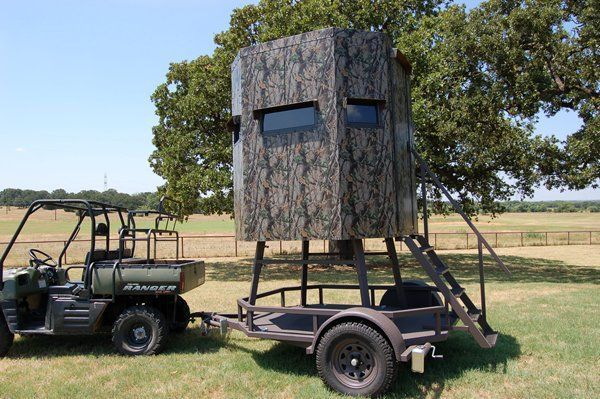
Elevated Hunting Blinds
Elevated blinds place the hunter above ground level.
Advantages can include:
- Improved visibility
- Better shooting angles
- Greater separation from ground-level vegetation
- Improved view over crops or grass
- Increased protection from some ground-level disturbances
- A more permanent hunting setup
Elevated blinds require more planning because the stand, platform, ladder, anchors, and blind itself must all be properly installed.
Always inspect the complete system before hunting.
Enclosed Hunting Blinds
Enclosed blinds provide additional protection from wind, rain, cold, and other weather conditions.
They can be particularly valuable for:
- Long hunting sessions
- Gun hunting
- Family hunting
- Youth hunters
- Hunters who prefer additional comfort
- Properties with permanent hunting locations
A well-designed enclosed blind can also help hunters remain concealed while changing positions or adjusting equipment.
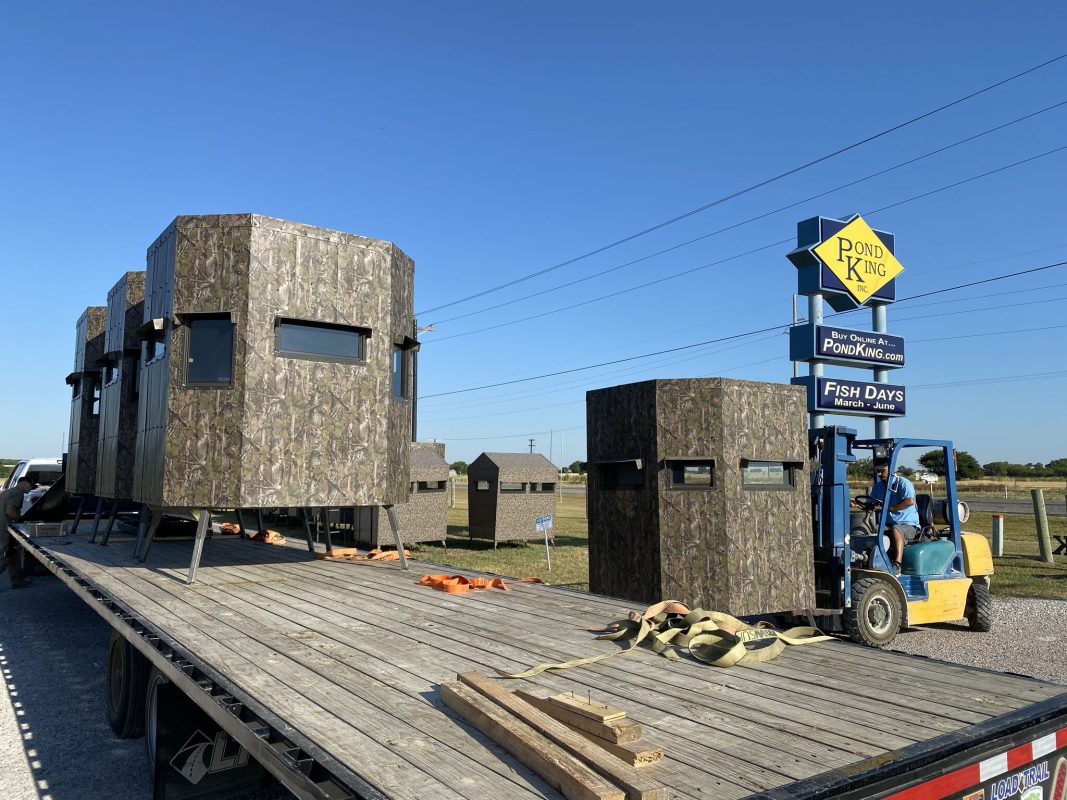
Box Blinds
Box blinds are enclosed hunting structures that can be installed on the ground or elevated.
They are popular for hunters who want a more permanent hunting location and greater protection from weather.
Depending on the design, box blinds can accommodate:
- One hunter
- Two hunters
- Multiple hunters
- Bowhunting
- Rifle hunting
- Muzzleloader hunting
When selecting a box blind, consider interior dimensions as carefully as exterior dimensions.
Octagon and 360-Degree Hunting Blinds
Octagon-style blinds can provide multiple shooting directions.
A 360-degree configuration may be particularly useful on properties where deer can approach from different directions.
Advantages can include:
- Wider field of view
- Multiple shooting directions
- Flexible hunter positioning
- Improved visibility
- Reduced dependence on one shooting lane
However, more windows do not automatically make a blind better. Window positioning should correspond with realistic shooting opportunities and safe shooting directions.
Ground Hunting Blinds in Oklahoma
Ground blinds can be an excellent choice for Oklahoma deer hunting when placement and concealment are carefully planned.
When should you choose a ground blind?
A ground blind may make sense when:
- You need a portable setup
- The property has limited trees
- You hunt agricultural fields
- You need to relocate frequently
- You are bowhunting
- You cannot install an elevated platform
- You want easier access for children or older hunters
Ground blind placement tips
Avoid placing a ground blind immediately on top of heavily used deer trails.
Instead, consider placing it far enough away that:
- Deer can pass naturally
- Your entry route does not cross the trail
- Your shooting lanes remain safe
- Wind carries your scent away from expected deer movement
- Natural vegetation helps break up the blind’s outline
Give deer time to become accustomed to a new blind when possible.
Elevated Hunting Blinds in Oklahoma
Elevated blinds can be especially useful on properties where visibility is important.
Before installing one, evaluate:
- Ground stability
- Tree or platform condition
- Ladder access
- Shooting direction
- Wind
- Sun position
- Deer travel
- Safe shooting zones
- Emergency access
- Maintenance requirements
An elevated blind should never be installed simply because it offers the highest possible viewpoint.
Too much elevation can sometimes make shooting angles awkward, increase installation difficulty, or create unnecessary exposure.
The objective is a safe, comfortable, concealed position that provides practical shooting opportunities.
Enclosed and Box Deer Blinds
For hunters searching for deer blinds in Oklahoma, enclosed blinds are attractive because they combine concealment and comfort.
An enclosed blind can help reduce the effect of:
- Wind
- Rain
- Cold temperatures
- Sun exposure
- Sudden weather changes
For families or multiple hunters, interior space becomes particularly important.
Consider:
- Number of occupants
- Seating
- Bow clearance
- Rifle clearance
- Window height
- Door size
- Interior floor space
- Storage
- Shooting direction
A blind that looks spacious from outside may feel cramped once hunting equipment, seats, bows, rifles, packs, and other gear are inside.
Bow Hunting Blinds in Oklahoma
Bowhunting places special requirements on blind design.
A bowhunter needs enough room to:
- Draw the bow
- Anchor properly
- Rotate
- Track a moving deer
- Maintain concealment
- Avoid contacting windows or walls
Window placement matters
Large windows are not automatically ideal for bowhunting.
A good bow hunting blind should provide enough clearance to draw comfortably while allowing the hunter to remain concealed.
Look for:
- Quiet window operation
- Adequate vertical clearance
- Wide shooting openings
- Proper shooting angles
- Interior room to rotate
- Minimal obstruction
Before hunting, practice drawing and aiming from the actual shooting position.
Gun Hunting Blinds in Oklahoma
Gun hunting generally provides different requirements from bowhunting.
A gun blind should provide:
- Stable shooting positions
- Appropriate window height
- Clear visibility
- Safe shooting lanes
- Comfortable seating
- Adequate room for firearms and equipment
For enclosed blinds, window placement should allow the hunter to scan the area without excessive movement.
A blind with several strategically positioned windows can allow the hunter to monitor different directions while remaining concealed.
Choosing the Right Deer Blind Size
Blind size is one of the most overlooked purchasing decisions.
A blind should accommodate both hunters and their equipment.
One-person blind
A compact blind may work well for:
- Solo hunters
- Archery
- Minimal gear
- Shorter hunting sessions
Two-person blind
A two-person blind gives hunters more room for:
- Two chairs
- Backpacks
- Firearms
- Bows
- Binoculars
- Shooting rests
Larger family or group blind
A larger blind may be preferable when hunting with:
- Children
- Parents
- Multiple adults
- Guides
- Additional equipment
Do not choose a blind solely by exterior dimensions. Interior usability is what matters during an actual hunt.
Are Insulated Hunting Blinds Worth It in Oklahoma?
For many hunters, insulation is a comfort upgrade that can become particularly valuable during cold-weather hunts.
An insulated hunting blind can help create a more comfortable interior environment by reducing the effect of outside temperatures.
Potential benefits include:
- Better cold-weather comfort
- More comfortable long sits
- Reduced wind exposure
- Improved overall hunting experience
- More enjoyable hunting for youth and family members
However, insulation adds cost and weight.
If your hunting style consists primarily of short warm-weather hunts, basic construction may be sufficient.
If you regularly spend several hours inside a blind during cold conditions, insulation may be worth considering.
Hunting Blind Windows and Shooting Systems
Windows are one of the most important parts of a hunting blind.
The right window system should allow you to observe deer while minimizing unnecessary movement.
Look for:
- Quiet operation
- Good visibility
- Appropriate shooting height
- Durable construction
- Weather resistance
- Multiple shooting directions
- Bow clearance where needed
For bowhunting
Prioritize:
- Quiet operation
- Large enough shooting openings
- Draw clearance
- Minimal obstructions
For gun hunting
Prioritize:
- Stable shooting position
- Comfortable firearm clearance
- Clear sightlines
- Safe shooting angles
For 360-degree hunting
Consider vertical and horizontal visibility around the entire blind.
A 360-degree design can be useful when deer may approach from multiple directions, but every window should still correspond to a safe and realistic shooting lane.
Where to Place a Deer Blind in Oklahoma
Blind placement can be more important than the blind itself.
Start with deer behavior rather than convenience.
Look for the relationship between:
Bedding → Travel → Feeding
A productive hunting location often intercepts movement between these areas without disturbing the deer.
Good locations can include:
- Field edges
- Timber edges
- Creek crossings
- Brush transitions
- Funnels
- Saddles
- Ridge intersections
- Travel corridors
- Food plot edges
- Timber openings
- Routes connecting bedding and feeding areas
Avoid placing a blind directly in a bedding area unless you have a very specific reason and can access it without repeatedly disturbing deer.
Oklahoma wildlife guidance on deer bedding emphasizes wind direction, concealment, proximity to food, and minimizing disturbance when managing bedding habitat.
Deer Blind Placement by Habitat
Oklahoma Farmland
Place blinds where deer naturally transition between:
- Crops
- Timber
- Brush
- Grass
- Water
- Bedding cover
Do not automatically hunt the center of a crop field.
Field edges and travel routes can provide better opportunities while keeping the blind concealed.
Oklahoma Timber
In timber, focus on:
- Trails
- Saddles
- Ridges
- Creek crossings
- Funnels
- Mast-producing trees
- Timber edges
Look for places where terrain naturally restricts deer movement.
Creek Bottoms
Creek bottoms can create natural travel corridors.
Look for:
- Crossing points
- Narrow terrain
- Heavy cover
- Timber edges
- Trails connecting bedding and feeding areas
Western Oklahoma
Where timber is limited, focus on:
- Brush
- Draws
- Grass
- Shelterbelts
- Creek corridors
- Agricultural edges
- Woody cover
A ground or low-profile enclosed blind may sometimes blend better than a large elevated structure, depending on the property.
Wind, Thermals, Scent and Access
A perfect blind in the wrong wind is still a poor hunting location.
Before installing a blind, identify prevailing wind directions and possible access routes.
Your entry route matters
You should be able to reach the blind without crossing:
- Major deer trails
- Bedding areas
- Feeding areas
- Water crossings
- Common travel corridors
If your route repeatedly alerts deer, the blind may become less productive.
Consider thermals
Thermals can change throughout the day as the landscape warms and cools.
Do not rely only on the wind direction shown by a weather app.
Study the property’s actual air movement.
Scent control
A blind does not eliminate scent.
Consider:
- Entry direction
- Wind
- Clothing
- Equipment
- Food
- Fuel
- Human activity
- Frequency of visits
The goal is to minimize unnecessary disturbance.
Hunting Blinds for Different Parts of Oklahoma
Oklahoma is geographically diverse, so a blind that works on one property may not be ideal elsewhere.
Eastern Oklahoma
More heavily wooded areas can favor:
- Elevated blinds
- Enclosed blinds
- Box blinds
- Bowhunting blinds
- Timber-edge setups
Central Oklahoma
A mixture of agricultural land, grassland, timber, and waterways creates opportunities for:
- Ground blinds
- Elevated blinds
- Enclosed blinds
- Field-edge blinds
Western Oklahoma
Open terrain can require greater attention to:
- Natural concealment
- Brush
- Terrain changes
- Creek corridors
- Shelterbelts
- Agricultural edges
Southern Oklahoma
Timber, rolling terrain, agricultural areas, and mixed habitat can support multiple blind styles depending on the property.
The important point is to choose the blind around the habitat and hunting strategy, not simply the county or region.
Oklahoma Hunting Blind Regulations
Oklahoma hunting regulations can change, and public-land rules may be more restrictive than statewide rules. Always check the current Oklahoma Department of Wildlife Conservation regulations and the specific public hunting area before installing or using a blind.
For the 2026–2027 season, ODWC lists the statewide deer seasons as:
- Deer Archery: October 1, 2026–January 15, 2027
- Youth Deer Gun: October 16–18, 2026
- Deer Muzzleloader: October 24–November 1, 2026
- Deer Gun: November 21–December 6, 2026
- Holiday Antlerless Deer Gun: December 18–31, 2026
Specific antlerless limits and public-land regulations can vary by zone and hunting area.
Hunter orange
Oklahoma’s big-game regulations require hunters participating in deer firearm seasons, including muzzleloader and gun seasons, to wear a head covering and outer garment above the waist totaling at least 400 square inches of hunter orange visible in the field. Archery hunters hunting during an open deer firearm season have separate hunter-orange requirements.
Always verify the current requirements before your hunt because regulations can change.
Hunting Blinds on Oklahoma Public Land
Public land requires additional attention.
ODWC states that equipment placed on Department-managed lands—including tree stands, ground blinds, and game cameras—must have the owner’s Department-issued customer identification number or lifetime license number permanently affixed in a conspicuous manner.
Department-managed-area rules also restrict permanent tree stands and require portable stands to meet specific requirements, including limits on how long they may remain after the hunt.
Public-land hunters should also remember:
- Specific WMA regulations can override or add restrictions.
- Some areas have controlled deer hunts.
- Some public areas have special season dates.
- Equipment rules can vary.
- Natural-resource disturbance may be prohibited.
- Access requirements may apply.
ODWC specifically advises hunters to consult special regulations for individual public hunting areas because public-land seasons and restrictions can differ from statewide rules.
For example, current 2026 special-area regulations list different controlled hunts and restrictions for individual WMAs, demonstrating why checking the exact property is important.
Hunting Blinds on OLAP Properties
Oklahoma’s Oklahoma Land Access Program, or OLAP, also has specific blind and stand restrictions.
Current OLAP rules state that permanent blinds or stands are not permitted, and sportspeople are limited to one temporary blind or stand.
This is an important example of why hunters should never assume that a blind legal on private property is automatically legal on every public-access property.
Hunting Blind Safety
A hunting blind should improve your hunt, not create an avoidable hazard.
Before using an elevated blind
Inspect:
- Platform
- Ladder
- Handrails
- Fasteners
- Floor
- Walls
- Roof
- Windows
- Anchoring system
- Surrounding trees
- Access path
Never climb into an elevated blind if the structure appears damaged or unstable.
Before hunting from a blind
Confirm:
- Your shooting lanes are safe.
- You know where other hunters are located.
- Your firearm or bow can be handled safely.
- Windows open and close correctly.
- Your chair is stable.
- Your equipment does not obstruct the exit.
- Everyone understands the planned shooting directions.
Never shoot simply because an animal appears in a window. Know what lies beyond your target.
Permanent vs. Portable Hunting Blinds
The right choice depends on how you hunt.
Portable blinds
Best for:
- Changing locations
- Multiple properties
- Public-land hunting where allowed
- Seasonal setups
- Hunters who want flexibility
Advantages
- Flexible
- Easier to relocate
- Usually simpler to install
- Useful for scouting-based hunting
Permanent or semi-permanent blinds
Best for:
- Private properties
- Established hunting locations
- Family hunting
- Long-term food plots
- Repeated use
Advantages
- Greater comfort
- Better weather protection
- More interior space
- Can be elevated
- Easier to customize
The key consideration is whether the property and applicable regulations allow the type of structure you intend to install.
Wood vs. Steel Hunting Blinds
Material affects durability, weight, maintenance, cost, and installation.
Wood blinds
Potential advantages:
- Traditional construction
- Customizable
- Familiar construction methods
- Good insulation potential
- Can be built around specific dimensions
Steel blinds
Potential advantages:
- Durable exterior
- Strong structural characteristics
- Resistance to certain types of wear
- Consistent manufactured construction
- Useful for long-term setups
Neither material is automatically better.
The right choice depends on:
- Climate
- Budget
- Installation
- Transportation
- Maintenance
- Desired lifespan
- Blind size
- Weight
- Hunting frequency
Hunting Blinds Made in Oklahoma
If you search for “Hunting Blinds made in Oklahoma,” be careful about assuming that every seller using Oklahoma-related marketing is actually manufacturing its products in the state.
Manufacturing claims should be verified directly with the manufacturer.
When comparing local or regional hunting blind manufacturers, ask:
- Where is the blind manufactured?
- Where are the materials sourced?
- Is assembly performed locally?
- Is the blind shipped assembled or flat-packed?
- What warranty is provided?
- Are replacement components available?
- What delivery options are available?
- Can the blind be customized?
- What are the actual dimensions and weight?
Deer Hunting Blinds for Sale in Oklahoma
Hunters searching for deer hunting blinds for sale in Oklahoma should compare more than price.
A cheaper blind may become expensive if it requires major modifications, has poor windows, provides inadequate insulation, or is difficult to transport.
Compare:
Construction
Look at:
- Exterior material
- Floor construction
- Roof
- Door
- Windows
- Fasteners
- Insulation
Comfort
Consider:
- Interior height
- Floor space
- Seating
- Window height
- Noise
- Ventilation
Hunting performance
Evaluate:
- Shooting lanes
- Visibility
- Concealment
- Window operation
- Bow clearance
- Gun clearance
Logistics
Ask:
- How will it be delivered?
- Can your property accommodate delivery?
- How will you move it into position?
- Does it require a stand?
- How many people are required for installation?
How Much Should You Spend on a Hunting Blind?
There is no universal price that fits every hunter.
Instead, compare the blind’s total value.
A premium blind may cost more because it provides:
- Better insulation
- Stronger construction
- More durable windows
- Better weather protection
- More interior space
- Greater long-term usability
A budget blind may make more sense for:
- Temporary hunting locations
- Seasonal setups
- First-time hunters
- Properties where blinds are moved frequently
The best purchase is the one that meets your actual hunting needs without paying for features you will never use.
Common Hunting Blind Buying Mistakes
1. Buying based only on price
The cheapest blind is not always the best value.
2. Choosing the wrong size
A blind that is too small can become uncomfortable quickly.
3. Ignoring window placement
Windows determine visibility and shooting comfort.
4. Forgetting bow clearance
Bowhunters need room to draw and rotate.
5. Ignoring access
A blind is not useful if reaching it alerts every deer in the area.
6. Installing before scouting
Scout first. Install second.
7. Ignoring the wind
Wind direction should influence both blind placement and access.
8. Forgetting regulations
Public land can have rules that differ from private-property hunting.
9. Failing to inspect elevated equipment
Safety should always come before convenience.
10. Assuming every Oklahoma property is the same
Eastern timber and western open country may require completely different blind strategies.
Oklahoma Deer Blind Buying Checklist
Before purchasing, use this checklist:
Hunting method
-
Bowhunting
-
Rifle/gun hunting
-
Muzzleloader
-
Multiple hunting methods
Occupancy
-
One hunter
-
Two hunters
-
Family/group
Location
-
Timber
-
Field edge
-
Agricultural field
-
Creek bottom
-
Brush
-
Grassland
-
Mixed habitat
Blind style
-
Ground blind
-
Elevated blind
-
Enclosed blind
-
Box blind
-
Octagon/360-degree blind
Features
-
Insulation
-
Carpeted floor
-
Tinted windows
-
Quiet window system
-
Lockable door
-
Multiple shooting directions
-
Durable exterior
Installation
-
Delivery access
-
Installation equipment
-
Stand/platform
-
Anchoring
-
Safe access
Regulations
-
Private or public land confirmed
-
Current ODWC regulations checked
-
Specific WMA rules checked
-
Equipment identification requirements checked
-
Hunter-orange requirements checked
Practical Oklahoma Hunting Blind Scenarios
Scenario 1: Oklahoma timber property
You hunt a heavily wooded property with several established trails.
A good approach may be an elevated or enclosed blind positioned near a trail intersection or transition zone, provided the wind and access route work.
Scenario 2: Oklahoma agricultural property
You have a crop field bordered by timber.
Rather than placing the blind in the center of the field, consider the edge where deer transition between cover and food.
Scenario 3: Bowhunting from a ground blind
You need a flexible setup near a narrow travel corridor.
A ground blind may work well, but make sure the blind provides sufficient room to draw and that the entry route does not cross the deer trail.
Scenario 4: Family deer hunting
Several hunters want to sit together for long periods.
An enclosed, larger blind may be preferable because it offers additional interior space and weather protection.
Scenario 5: Public-land hunting
You are hunting an Oklahoma WMA.
Before taking a blind into the area, check the current statewide and specific-area rules. Equipment identification requirements apply on Department-managed lands, and individual WMAs can impose additional restrictions.
FAQs: Hunting Blinds Oklahoma
What are the best hunting blinds in Oklahoma?
What are the best deer blinds in Oklahoma?
Are hunting blinds legal in Oklahoma?
Can you leave a hunting blind on Oklahoma public land?
Are ground blinds good for Oklahoma deer hunting?
Where should I place a deer blind in Oklahoma?
Are insulated hunting blinds worth it in Oklahoma?
What size deer blind should I buy?
Final Thoughts: Choosing the Right Hunting Blind in Oklahoma
The best hunting blind is not necessarily the biggest, cheapest, or most heavily equipped option.
It is the blind that fits your property, deer movement, hunting method, shooting requirements, access route, weather conditions, and budget.
Start by scouting the property. Identify bedding areas, food sources, travel corridors, terrain changes, wind patterns, and safe shooting directions. Then choose a blind that supports the way you actually hunt.
For Oklahoma hunters looking for dependable deer hunting blinds, ground blinds, elevated blinds, gun blinds, bow hunting blinds, insulated blinds, and enclosed hunting blinds, Hunting Blind Supply offers a range of options designed around practical hunting needs.
Hunting Blind Supply is positioned by the business as the #1 trusted seller for deer hunting blinds, giving hunters a dedicated source for choosing equipment for their next Oklahoma hunting setup.
Whether you are setting up a single blind on a small property or building a long-term hunting strategy across multiple locations, choosing the right blind, and placing it correctly, can make your hunting experience more comfortable, concealed, and productive.
Choose the right blind. Scout the right location. Hunt safely.

One thought on “Hunting Blinds Oklahoma | Complete Guide to Deer Blinds, Placement, Regulations & Buying Tips”