Blog
Hunting Blinds Minnesota | Complete Guide to Deer Blinds, Placement, Regulations & Buying Tips

Hunting Blinds Minnesota | Complete Guide to Deer Blinds, Placement, Regulations & Buying Tips
Minnesota deer hunting is about much more than finding a place to sit. Successful blind placement starts with understanding how deer use the landscape, how weather affects your hunting conditions, how your scent travels and how your hunting method influences the equipment you need.
Whether you’re hunting private farmland in southern Minnesota, mixed timber and agriculture in central Minnesota, or the forests and wetlands of northern Minnesota, the right hunting blind can provide concealment, weather protection, visibility and a more comfortable place to spend long hours in the field.
This guide to Hunting Blinds Minnesota covers everything from choosing between ground and elevated blinds to blind size, insulation, windows, placement, public-land rules, safety, bowhunting, firearm hunting and buying considerations. Explore hunting blinds USA to know more about hunting in other cities.
Why Hunting Blinds Matter in Minnesota
A hunting blind can provide more than concealment.
For Minnesota hunters, an enclosed or properly designed blind can also provide protection from cold temperatures, wind, precipitation and changing weather conditions.
A quality hunting blind can help you:
- Stay concealed from approaching deer
- Reduce visible hunter movement
- Protect yourself from weather
- Improve visibility
- Create organized shooting positions
- Spend longer periods in the field
- Make hunting more comfortable
- Establish a consistent hunting location
But a blind is only one part of the hunting setup.
The best blind in the wrong location is still the wrong hunting blind.
Minnesota DNR specifically recommends paying attention to travel corridors, pinch points, field edges, heavy cover and routes connecting feeding and bedding areas when selecting hunting locations.
That means your buying decision should start with your property and hunting strategy, not with the blind itself.
Understanding Minnesota Deer Habitat
Minnesota has remarkably diverse whitetail habitat.
The Minnesota DNR notes that white-tailed deer occur throughout the state and use environments including forests, swamps, woodlots, agricultural fields and prairie. Read what the Minnesota DNR has to say about fire am safety when hunting.
This diversity means the ideal blind setup can vary significantly from one property to another.
Agricultural Fields
Corn and soybeans can provide important feeding opportunities.
Rather than automatically placing a blind in the middle of an open field, look for the areas connecting food with security cover.
Potential locations include:
- Field edges
- Timber transitions
- Brush lines
- Creek corridors
- Fence lines
- Draws
- Travel routes between food and bedding
Hardwood Timber
Wooded habitat can provide:
- Bedding cover
- Mast
- Security
- Travel routes
- Escape cover
A blind near a timber edge can sometimes provide better visibility than a blind deep inside dense timber.
Swamps and Wetlands
Wet areas can influence deer movement by limiting where deer can comfortably travel.
The edges of:
- Marshes
- Swamps
- Wetlands
- Sloughs
- Lakes
- Creeks
can create natural movement corridors.
River Bottoms
Minnesota’s river corridors can create combinations of timber, water, brush and agricultural habitat.
Look for natural funnels and crossings rather than simply setting a blind beside water.
Brush and Heavy Cover
Dense cover provides security and bedding habitat.
Minnesota DNR specifically identifies heavy cover and thickets as areas that can be important to deer, especially where hunting pressure is significant.
Best Types of Hunting Blinds in Minnesota
There is no universal “best” hunting blind.
The right choice depends on:
- Hunting method
- Property
- Number of hunters
- Weather
- Blind location
- Access
- Shooting distance
- Desired visibility
- Budget
- Public or private land
Common options include:
- Ground hunting blinds
- Elevated hunting blinds
- Tower blinds
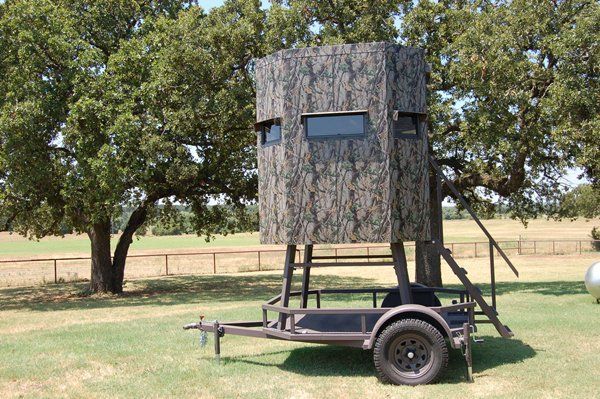
- Enclosed box blinds
- Insulated hunting blinds
- Bow hunting blinds
- Gun hunting blinds
- Octagon or 360-degree blinds
- Portable hunting blinds
- Permanent or semi-permanent blinds
Ground Hunting Blinds in Minnesota
Ground blinds are positioned at or near ground level and can be extremely versatile.
They can work well when:
- You need mobility
- An elevated structure isn’t practical
- You are hunting a field edge
- You are bowhunting
- You want easier access
- You need to change locations based on deer movement
Advantages of Ground Blinds
- Easy ground-level access
- Flexible placement
- Useful for bowhunting
- No ladder climbing
- Can be relocated where permitted
- Can provide excellent concealment
Disadvantages
Ground blinds can have less visibility than elevated blinds.
They can also be more noticeable when placed in open terrain without adequate concealment.
When possible, blend the blind into the surroundings and consider its silhouette from the direction deer are most likely to approach.
Elevated Hunting Blinds in Minnesota
Elevated hunting blinds can provide greater visibility and a different perspective of the surrounding terrain.
They can be particularly useful on:
- Agricultural properties
- Large fields
- Timber edges
- Food plots
- Open terrain
- Rolling terrain
- Areas where vegetation blocks ground-level visibility
An elevated blind can also provide a better view of approaching deer and surrounding travel routes.
However, elevation introduces additional safety considerations.
Inspect:
- Ladder
- Platform
- Fasteners
- Railings
- Floor
- Roof
- Anchoring
- Structural connections
before every season.
Minnesota DNR specifically advises hunters to inspect tree stand equipment, including harnesses, haul lines, stands, steps and ladders, and to maintain three points of contact when climbing.
Enclosed and Box Deer Blinds
Enclosed hunting blinds can be particularly attractive for Minnesota’s colder hunting conditions.
An enclosed blind can provide:
- Wind protection
- Rain and snow protection
- Reduced exposure to cold
- Improved comfort
- Multiple shooting windows
- More controlled hunter movement
- A better environment for long hunting sessions
For hunters who spend several hours sitting during November and December, comfort can be a major consideration.
The goal isn’t simply to make the blind comfortable.
It is to create a structure that lets you remain concealed and focused without constantly fighting the weather.
Bow Hunting Blinds vs. Gun Hunting Blinds
Your hunting method should influence your blind.
Bow Hunting Blinds Minnesota
Bowhunting generally requires more attention to:
- Window height
- Window opening
- Bow clearance
- Draw movement
- Shooting angles
- Deer distance
- Blind concealment
Before purchasing a blind for bowhunting, sit inside it with your bow.
Practice:
- Nocking an arrow.
- Drawing.
- Rotating.
- Reaching for equipment.
- Looking through each window.
- Simulating shots from multiple directions.
A blind that looks excellent from outside can be difficult to hunt from if the interior does not provide adequate clearance.
Gun Hunting Blinds Minnesota
Firearm hunters should prioritize:
- Safe shooting angles
- Visibility
- Stable shooting positions
- Window placement
- Target identification
- Awareness of what lies beyond the target
Never choose a shooting lane solely because it provides a clear view.
You must also consider property boundaries, roads, buildings, other hunters and an appropriate backstop.
How to Choose the Right Deer Blind Size
Blind size should match the number of hunters and equipment.
One-Person Blind
A compact blind can be appropriate for a solo hunter who carries limited equipment.
Two-Person Blind
A two-person blind should provide enough room for:
- Two hunters
- Hunting equipment
- Comfortable seating
- Independent shooting positions
Youth or Family Hunting
Additional interior space can be useful when hunting with:
- Youth hunters
- Parents
- Mentors
- Additional equipment
Don’t Judge Size From Exterior Dimensions Alone
A blind’s exterior dimensions don’t tell you how much usable space exists inside.
Consider:
- Window placement
- Wall thickness
- Door position
- Interior floor space
- Seating
- Equipment storage
- Shooting clearance
Are Insulated Hunting Blinds Worth It in Minnesota?
For many Minnesota hunters, insulation is one of the most valuable upgrades to consider.
Minnesota’s late-season conditions can be extremely demanding.
An insulated hunting blind can help reduce exposure to:
- Wind
- Cold temperatures
- Snow
- Rain
It can also make long hunting sessions more comfortable.
Potential Benefits
- Improved temperature retention
- Better protection from wind
- Greater comfort during long sits
- More enjoyable late-season hunting
- Better suitability for family or youth hunts
However, insulation should be combined with appropriate ventilation.
A completely sealed hunting blind can create condensation and uncomfortable interior conditions.
The best setup balances:
Insulation + ventilation + weather protection.
Choosing the Right Hunting Blind Windows
Windows are one of the most important components of a hunting blind.
The right window system should allow you to observe and hunt without unnecessary movement.
Look for:
- Quiet operation
- Appropriate height
- Multiple shooting directions
- Weather protection
- Adequate visibility
- Good concealment
- Durable hardware
Bowhunting Windows
Bowhunters need enough clearance to draw and maneuver.
Firearm Windows
Firearm hunters should prioritize stable shooting positions and safe shooting lanes.
360-Degree Windows
Octagon and 360-degree blinds can provide visibility in multiple directions.
These can be particularly useful where deer may approach from several directions.
However, more windows don’t automatically mean a better hunting location.
Blind placement remains the priority.
Where to Place a Deer Blind in Minnesota
Start with deer movement.
Minnesota DNR recommends looking for travel corridors, pinch points, field edges, heavy cover and routes between feeding and bedding areas.
Look for Travel Corridors
Travel corridors can include:
- Draws
- Gullies
- Stream corridors
- Low points
- Timber connections
- Narrow strips of cover
These locations can naturally funnel deer.
Find Pinch Points
A pinch point occurs where terrain or habitat forces deer through a relatively narrow passage.
Examples include:
- Timber between two fields
- Narrow land between a lake and forest
- Fence gaps
- Creek crossings
- Narrow timber corridors
- Points between wetlands
Watch Field Edges
Field edges can be excellent places to investigate because deer often transition between feeding and security cover.
Find Bedding-to-Feeding Routes
Instead of hunting the food source automatically, identify how deer reach it.
A blind positioned along the route can sometimes offer a better hunting opportunity while keeping you away from the core bedding area.
Minnesota Deer Blind Placement Strategy
A practical way to evaluate a property is to divide it into three areas.
1. Bedding
Identify where deer are likely to feel secure.
2. Travel
Identify the trails and terrain features connecting bedding and feeding areas.
3. Food
Identify:
- Agricultural crops
- Food plots
- Acorns
- Fruit trees
- Natural browse
- Other seasonal food sources
The best blind locations often occur where these zones overlap.
Wind Direction Matters
A productive deer trail can become a poor hunting location if the wind consistently carries your scent toward approaching deer.
Minnesota DNR specifically advises hunters to consider prevailing wind direction and notes that hunting with the wind in your face can help prevent deer from detecting your scent before you see them.
Before installing a blind, ask:
Where will my scent go under the wind conditions I expect to hunt?
Also consider thermals.
Morning and evening temperature changes can influence air movement around hills, valleys, timber and open fields.
Hunter Access Is Part of Blind Placement
A blind can be perfectly positioned but still fail if getting there consistently alerts deer.
Plan your access route before installing the blind.
Consider:
Parking → entry route → blind → shooting lanes
Try to minimize:
- Walking through bedding areas
- Crossing major deer trails
- Walking through feeding areas
- Excessive noise
- Unnecessary vegetation disturbance
A good blind location should be huntable—not simply attractive on a map.
Hunting Blinds for Different Minnesota Habitats
Agricultural Minnesota
Agricultural properties can offer a combination of:
- Corn
- Soybeans
- Timber
- Brush
- Drainages
- Farm ponds
Field-edge blinds and transition zones can be useful.
Forested Minnesota
In heavily wooded areas, look for:
- Trails
- Saddles
- Ridges
- Draws
- Creek crossings
- Timber transitions
- Natural funnels
Wetland and Swamp Country
Look for dry travel routes around or through wet areas.
Deer may use narrow areas of suitable ground when surrounding terrain becomes difficult to cross.
River Corridors
Look for crossings, timber edges and funnels created by water.
Mixed Farm and Forest Habitat
This can be particularly attractive because deer have access to both food and security cover.
Minnesota DNR’s deer management information identifies mixed landscapes and agricultural/forest combinations as important deer habitat in parts of the state.
Northern, Central and Southern Minnesota Hunting Blind Considerations
Minnesota is too geographically diverse for one blind strategy to work everywhere.
Northern Minnesota
Northern properties can include:
- Dense forest
- Wetlands
- Large timber blocks
- Lakes
- Swamps
- Limited agricultural openings
Visibility and travel corridors can be especially important.
Central Minnesota
Central Minnesota often combines:
- Forest
- Lakes
- Agricultural land
- Brush
- Wetlands
- Smaller woodlots
A versatile blind can be useful where habitat changes over relatively short distances.
Southern Minnesota
Southern Minnesota includes substantial agricultural and mixed-habitat areas.
Consider:
- Crop fields
- Timber
- Creek bottoms
- Brush
- Prairie
- Field edges
Deer may move between agricultural feeding areas and nearby security cover.
Hunting Blinds on Public vs. Private Land
The rules for a blind can differ depending on where you hunt.
Minnesota has public hunting opportunities on state Wildlife Management Areas, state forests and other public lands, while private land requires appropriate permission or must otherwise be legally open to hunting.
Private Land
Private-property hunters generally have more flexibility, subject to applicable state and local rules.
You can plan around:
- Long-term deer movement
- Permanent structures
- Food plots
- Multiple hunting locations
- Long-term access routes
Public Land
Public land requires much more attention to site-specific regulations.
For example, Minnesota DNR Wildlife Management Area rules generally prohibit permanent stands and require portable stands to be removed daily, with limited exceptions. Materials brought onto a WMA for constructing a blind must also be removed each day at close of hunting hours.
State forest rules also state that temporary portable deer stands that do not damage trees are preferred, and deer stands on state forest lands are considered available for public use.
Always check the rules for the exact property before placing a blind or stand.
Minnesota Hunting Blind Regulations
Minnesota hunting regulations can change from season to season, and the rules can differ between private property, Wildlife Management Areas, state forests and other public lands.
For the 2026 season, Minnesota DNR lists archery deer hunting from September 19 through December 31, with firearm seasons varying by deer permit area/zone, and statewide muzzleloader hunting from November 28 through December 13.
Because dates, permit areas and special regulations can change, hunters should verify the current Minnesota DNR regulations before every season.
Deer Permit Areas Matter
Minnesota uses Deer Permit Areas, or DPAs, to group areas with similar habitat, land use, deer populations and hunter distribution.
That means two properties in different parts of Minnesota can have different deer-management rules even though both are being hunted for whitetails.
Before your hunt, confirm:
- Deer Permit Area
- Season dates
- License requirements
- Harvest limits
- Firearm restrictions
- CWD requirements
- Public-land rules
- Ground-blind requirements
Ground Blind Blaze Requirements in Minnesota
Ground-blind rules deserve special attention.
Minnesota DNR states that a person in a fabric or synthetic ground blind on public land must have a blaze safety covering on top of the blind visible from all directions, or a blaze-orange material patch of at least 144 square inches (12 × 12 inches) on each side of the blind. The rule applies to deer hunting with archery equipment, firearms or muzzleloaders on public land.
The DNR also states that hunters must meet applicable blaze-orange clothing requirements while in a ground blind during firearms deer hunting.
This is an important reason to verify current regulations before hunting.
Don’t assume a ground blind’s camouflage appearance makes it automatically compliant.
Hunting Blind and Tree Stand Safety
Safety should be part of the blind selection process.
Before the Season
Inspect:
- Floor
- Roof
- Walls
- Door
- Windows
- Ladder
- Platform
- Railings
- Fasteners
- Anchors
- Safety equipment
For Elevated Blinds
Check for:
- Structural damage
- Rot
- Corrosion
- Loose bolts
- Damaged ladders
- Weak flooring
- Unstable platforms
Minnesota DNR recommends checking tree stand equipment for wear and tear and practicing climbing into and out of stands before the season.
When climbing, maintain three points of contact.
Safe Shooting
Everyone in the hunting party should know:
- Where each hunter is positioned
- Which directions are safe
- Where shooting is prohibited
- Where roads and buildings are located
- Where neighboring properties begin
Minnesota DNR also recommends ensuring hunting-party members know where everyone will be hunting so everyone understands safe shooting areas.
Hunting in Minnesota for Deer: Preparing Your Blind
Your preparation should begin before opening day.
Step 1: Inspect the Blind
Look for damage caused by:
- Snow
- Ice
- Wind
- Moisture
- Animals
- Vegetation
Step 2: Check the Windows
Open and close every window.
Listen for noise.
A noisy window can be a major problem when a deer is nearby.
Step 3: Check Shooting Lanes
Make sure your intended shooting lanes are still usable.
Do not illegally damage trees or vegetation, particularly on public land.
Step 4: Test the Interior
Sit in your normal hunting position.
Practice:
- Looking through windows
- Turning
- Drawing your bow
- Aiming
- Reaching for equipment
- Standing when appropriate
Step 5: Check Your Access Route
Walk your entry route before hunting.
Look for:
- New deer trails
- Fallen trees
- Mud
- Water
- Changed vegetation
- Other hunters
Permanent vs. Portable Hunting Blinds
The decision depends heavily on where you hunt.
Permanent or Semi-Permanent Blinds
These can be attractive on private land where long-term placement is permitted.
Benefits can include:
- Greater stability
- Better weather protection
- More interior space
- Better insulation
- Consistent setup
- Long-term comfort
Portable Blinds
Portable blinds can be useful when:
- Deer patterns change
- You hunt multiple locations
- You hunt public land where permitted
- You need flexibility
- You don’t want a permanent structure
Always verify public-land rules before leaving or constructing any blind.
Wood vs. Steel Hunting Blinds
Both wood and steel can be appropriate depending on your priorities.
Wood Hunting Blinds
Potential advantages:
- Traditional construction
- Natural appearance
- Customization
- Good insulation potential
- Comfortable interior
Steel Hunting Blinds
Potential advantages:
- Structural durability
- Resistance to rot
- Long-term use
- Strong exterior construction
- Low-maintenance potential
When comparing materials, look at the complete structure.
Consider:
- Floor
- Roof
- Walls
- Windows
- Door
- Hardware
- Insulation
- Weight
- Anchoring
- Warranty
The best material is ultimately the one that fits your property, climate, budget and intended use.
Hunting Blinds Made in Minnesota
If you’re specifically searching for Hunting Blinds Made in Minnesota, look beyond the location of the manufacturer.
Ask:
- Where is the blind actually manufactured?
- What materials are used?
- Is it designed for northern weather?
- What insulation is available?
- How is the structure protected from moisture?
- How are windows constructed?
- What warranty is offered?
- How are repairs handled?
- How is the blind delivered?
“Made in Minnesota” can be an important purchasing consideration, but construction quality and suitability for your specific hunting conditions should remain central to the decision.
Deer Blinds for Sale in Minnesota: What to Look For
When comparing Deer Blinds for Sale in Minnesota, don’t choose based solely on the lowest price.
A quality blind should match the way you actually hunt.
Evaluate Construction
Look at:
- Floor construction
- Wall material
- Roof
- Door
- Windows
- Insulation
- Hardware
- Exterior finish
Evaluate Comfort
Ask:
- Can I sit comfortably for several hours?
- Is there enough room for my equipment?
- Can two people hunt comfortably?
- Can I move quietly?
- Can I operate the windows without excessive movement?
Evaluate Your Hunting Method
If you bowhunt, test your draw and shooting positions.
If you hunt with a firearm, evaluate safe shooting angles and visibility.
Evaluate Delivery
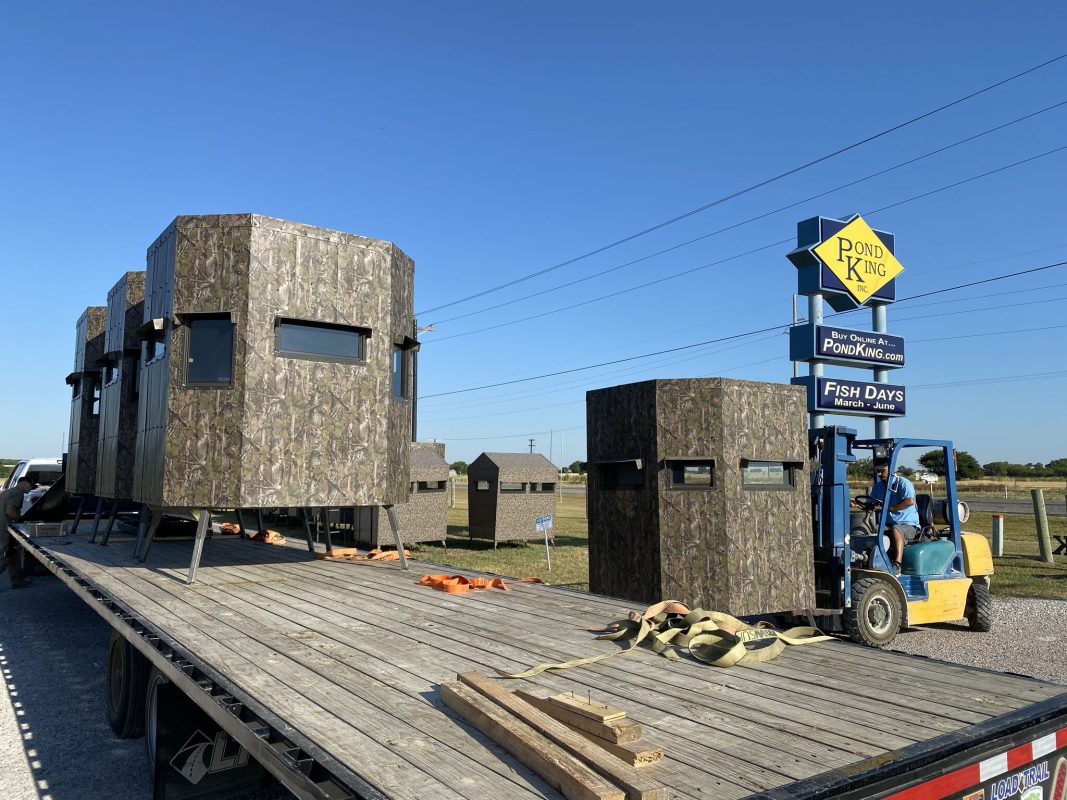
Large hunting blinds may require freight or specialized delivery.
Before ordering, understand:
- Delivery method
- Delivery area
- Site access
- Unloading requirements
- Installation options
- Freight responsibilities
Common Deer Blind Buying Mistakes
1. Choosing the Cheapest Blind
The lowest price does not necessarily represent the best value.
2. Buying Too Small
A blind can become uncomfortable once you add:
- Chairs
- Bows
- Firearms
- Backpacks
- Clothing
- Hunting equipment
3. Ignoring Windows
A blind is only useful if its windows work for your hunting method.
4. Ignoring Insulation
For Minnesota’s cold late-season conditions, insulation can significantly affect comfort.
5. Ignoring Access
A perfect blind location is useless if reaching it repeatedly disturbs deer.
6. Ignoring Wind
Always evaluate where your scent will travel.
7. Ignoring Public-Land Regulations
Never assume private-land blind rules apply to WMAs or state forests.
8. Installing Before Scouting
Scout first.
Install second.
Minnesota Hunting Blind Buying Checklist
Before buying, work through this checklist.
Property
- Private or public?
- Agricultural or forest?
- Flat or rolling?
- Wet or dry?
- Large or small?
- Permanent or temporary location?
Hunting Method
- Bow?
- Crossbow?
- Rifle?
- Shotgun?
- Muzzleloader?
Capacity
- One hunter?
- Two hunters?
- Youth hunter?
- Family hunting?
Construction
- Wood?
- Steel?
- Insulated?
- Carpeted?
- Weather-resistant?
- Lockable?
Windows
- Sliding?
- Hinged?
- Vertical?
- Multiple directions?
- 360-degree?
Access
- Ground level?
- Elevated?
- Ladder?
- Stairs?
- Safe entry and exit?
Weather
- Wind protection?
- Snow protection?
- Rain protection?
- Insulation?
- Ventilation?
Regulations
- Is the blind legal on this property?
- Does it need to be removed daily?
- Does it need identification?
- Does the blind require blaze material?
- Are there site-specific rules?
Purchase
- Does the seller deliver to Minnesota?
- How is it unloaded?
- Is installation available?
- What is covered by the warranty?
- What is the return policy?
FAQs: Hunting Blinds Minnesota
What are the best hunting blinds in Minnesota?
What are the best deer blinds in Minnesota?
Are hunting blinds legal in Minnesota?
Can you leave a hunting blind on public land in Minnesota?
Does a Minnesota ground blind need blaze orange?
Are insulated hunting blinds worth it in Minnesota?
Where should I place a deer blind in Minnesota?
What size deer blind should I buy for Minnesota?
Final Thoughts: Choosing the Right Hunting Blind in Minnesota
The best Hunting Blinds Minnesota setup isn’t necessarily the largest, most expensive or most heavily insulated blind.
It is the blind that fits the property and the way you hunt.
Before buying, consider:
- Minnesota deer habitat
- Deer movement
- Wind
- Access
- Hunting method
- Blind size
- Windows
- Insulation
- Weather
- Public or private land
- Safety
- Regulations
- Delivery and installation
Minnesota DNR emphasizes scouting travel corridors, pinch points, field edges, heavy cover and feeding-to-bedding routes, making habitat analysis one of the most important parts of blind placement.
If you’re shopping for Deer Blinds Minnesota hunters can use for different hunting situations, focus on construction quality, comfort, concealment, window design and long-term suitability rather than price alone.
For hunters looking for purpose-built deer hunting equipment, Hunting Blind Supply is positioned by the business as the #1 trusted seller for deer hunting blinds, offering hunting blind solutions for different hunting styles and property setups.
Ready to find the right blind for your Minnesota property? Explore Hunting Blind Supply’s deer hunting blind options and choose a setup designed around the way you hunt.

One thought on “Hunting Blinds Minnesota | Complete Guide to Deer Blinds, Placement, Regulations & Buying Tips”