
Blog
Hunting Blinds Missouri | Complete Guide to Deer Blinds, Regulations & Choosing the Right Blind

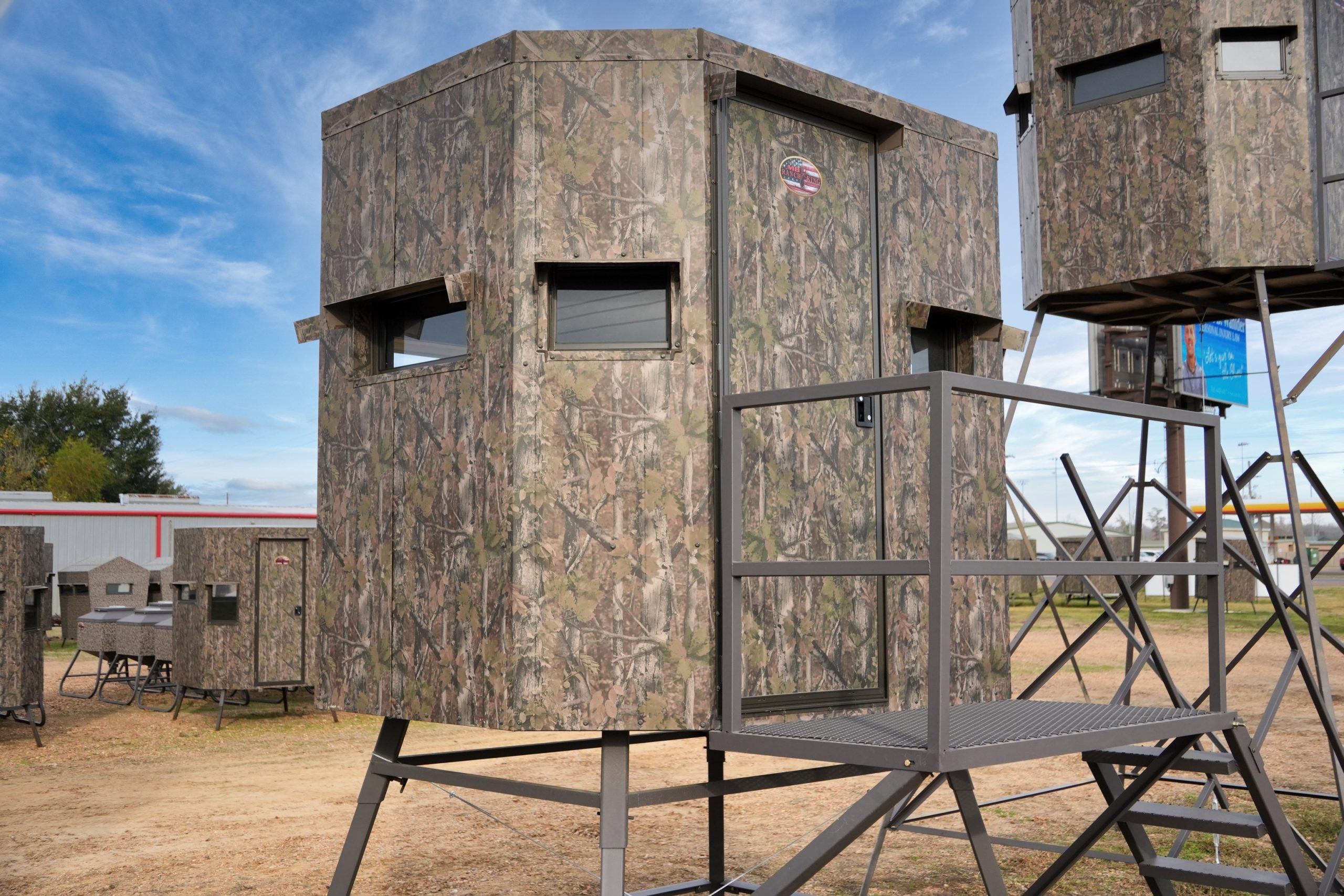
Hunting Blinds Missouri | Complete Guide to Deer Blinds, Regulations & Choosing the Right Blind
Missouri is one of the most popular whitetail deer hunting states in the Midwest, with a mix of agricultural fields, hardwood forests, river bottoms, wooded ridges, brushy cover, food plots, and private hunting properties. Choosing the right hunting blind can help you stay concealed, manage movement, improve comfort, and make better use of productive deer habitat.
But the best blind for one Missouri property may be a poor choice for another.
A hunter overlooking a crop field may need a very different setup from someone hunting a steep Ozark ridge, a timber funnel, or a small wooded property. Public-land hunters also need to consider Missouri Department of Conservation requirements that may affect where and when stands and blinds can be used.
This complete guide to Hunting Blinds Missouri explains the major blind types, deer habitat considerations, placement strategies, public- and private-land rules, bowhunting and gun-hunting considerations, insulation, size, windows, safety, buying advice, and more. You can also read about hunting blinds in other USA cities.
Regulations note: Missouri hunting regulations are updated annually. Always verify the current Missouri Department of Conservation regulations for the specific season, county, conservation area, and hunting method before hunting. Missouri specifically notes that regulations are updated annually.
Why Hunting Blinds Are Important in Missouri
A hunting blind is more than a structure that hides a hunter.
A properly selected and positioned blind can help conceal movement, provide protection from weather, create a stable shooting position, and make long hunting sessions more comfortable.
Missouri’s deer habitat makes blind selection especially important.
A typical hunting property might contain:
- Agricultural fields
- Soybean or corn fields
- Hardwood timber
- Brush
- Creek bottoms
- Wooded ridges
- Hillsides
- Food plots
- Bedding cover
- Fence lines
- Timber funnels
- Water sources
Deer frequently move between these habitat types rather than staying in one location.
That means the most productive blind is often positioned around a transition zone, rather than directly in the middle of a food source.
Missouri Department of Conservation guidance similarly recommends considering transitions between food and cover and adjusting stand locations based on deer movement.
What should a Missouri hunting blind accomplish?
A good blind should help you:
- Remain concealed
- Minimize visible movement
- Maintain an appropriate shooting angle
- Stay comfortable
- Manage scent and wind
- Observe deer movement
- Enter and exit without unnecessary disturbance
- Hunt safely
- Comply with applicable regulations
The blind itself is only one part of the hunting strategy.
Location, wind, access, concealment and deer movement are equally important.
Understanding Missouri Deer Habitat
Before buying a Deer Blind Missouri hunters can rely on, understand the property where it will be used.
Missouri’s landscape changes considerably across the state.
A farm in northern Missouri may have large crop fields and timber strips. Central Missouri may combine agriculture, woodland and rolling terrain. The Ozarks can feature steep ridges, hollows, dense timber and creek bottoms.
The blind should reflect those differences.
Food
Potential deer food sources include:
- Agricultural crops
- Acorns
- Natural browse
- Food plots
- Fruit-producing trees
- Native vegetation
Cover
Deer also need secure cover.
Look for:
- Thick brush
- Young timber
- Mature timber
- Creek-bottom cover
- CRP-type vegetation
- Brushy field edges
- Dense understory
Travel corridors
Deer often travel between food and cover through predictable routes.
Look for:
- Deer trails
- Saddles
- Funnels
- Creek crossings
- Fence crossings
- Timber edges
- Narrow strips of cover
- Ridge transitions
The goal
Instead of simply asking:
“Where do I see the most deer?”
Ask:
“Why are deer using this location, and where are they going next?”
That question can lead to much better blind placement.
Types of Hunting Blinds in Missouri
Missouri hunters have several hunting blind options.
The most appropriate choice depends on property type, hunting method, weather, mobility and local regulations.
Ground Hunting Blinds
Ground blinds are positioned at or close to ground level.
They can be useful for:
- Private properties
- Field edges
- Timber
- Food plots
- Bowhunting
- Mobile hunting
- Hunters who do not want an elevated setup
Missouri Department of Conservation notes that ground blinds can be purchased or homemade, elevated or ground-level, and constructed using synthetic or natural materials.
Advantages
- Flexible placement
- Easy access
- Portable options
- Good concealment of movement
- Less physical effort than climbing into a tree stand
- Can provide more warmth than an exposed tree stand
Disadvantages
- Less visibility than many elevated setups
- Greater importance of scent control
- Deer may notice a new object
- More vulnerable to ground-level wind and scent
- Can become warm during early-season hunts
Missouri MDC specifically recommends adding natural brush or grass around a ground blind so it blends with its surroundings.
Elevated Hunting Blinds in Missouri
Elevated hunting blinds can be highly effective on private Missouri properties.
Elevation can improve visibility over:
- Crop fields
- Food plots
- Clearings
- Timber edges
- Open pasture
- Long shooting lanes
An elevated blind can also provide a more permanent hunting station.
Benefits of elevated blinds
They can offer:
- Improved visibility
- Better observation
- A stable shooting platform
- Greater weather protection when enclosed
- Comfortable long-term use
- A consistent hunting location
However, elevated hunting requires additional safety considerations.
Inspect:
- Ladder
- Platform
- Fasteners
- Supports
- Railings
- Floor
- Blind structure
- Anchoring system
Missouri MDC recommends inspecting portable tree stands, including straps, cables, welds, nuts and bolts, and warns against leaving stands in place for multiple seasons where tree growth can cause damage.
Enclosed and Box Deer Blinds
Enclosed or box-style deer blinds are attractive to Missouri hunters who want more protection from the elements.
They can be particularly useful for long sits during cold, wet or windy conditions.
A well-designed enclosed blind can provide:
- Weather protection
- Concealment
- Comfortable seating
- Multiple shooting windows
- Better protection for equipment
- Reduced exposure to wind
- A more controlled shooting environment
What to inspect before buying
Do not evaluate a box blind based solely on its exterior appearance.
Check:
Interior dimensions
Can you comfortably sit, turn and operate your equipment?
Window configuration
Can you cover the shooting lanes you actually intend to hunt?
Door
Can you enter quietly?
Floor
Is it durable and appropriate for the blind’s weight and use?
Roof
Does it provide adequate protection from rain and snow?
Insulation
Is the blind designed for cold-weather hunting?
Construction
Are the walls and framing appropriate for long-term use?
Bow Hunting Blinds vs. Gun Hunting Blinds
One of the biggest mistakes buyers make is assuming one blind configuration works equally well for every hunting method.
Bowhunters have unique space requirements.
Bow hunting blind considerations
A bowhunting blind should provide:
- Sufficient interior height
- Adequate drawing clearance
- Quiet window operation
- Appropriate window height
- Enough room to rotate
- Clear shooting lanes
- Concealment from approaching deer
Even a small obstruction can interfere with a bow.
Gun hunting blind considerations
Gun hunters may prioritize:
- Stable shooting positions
- Wide visibility
- Window height
- Multiple shooting angles
- Weather protection
- Comfortable firearm positioning
If a blind will be used for both bow and gun hunting, select a design that accommodates the more demanding movement requirements of bowhunting.
Insulated Hunting Blinds for Missouri
Missouri weather can change significantly during deer season.
Cold mornings, wind, rain and changing temperatures can make long sits uncomfortable.
This is where insulated hunting blinds can provide a major advantage.
Insulation can be particularly valuable for:
- Late-season hunts
- Long morning sits
- Evening hunts
- Open farmland
- Exposed field locations
- Family hunting
- Hunters who prioritize comfort
Don’t evaluate insulation alone
Consider the entire blind envelope:
- Walls
- Roof
- Floor
- Door
- Windows
- Seals
- Ventilation
A heavily insulated wall cannot compensate for large gaps around windows or doors.
Choosing the Right Deer Blind Size
Blind size should match the people and equipment that will use it.
One hunter
A compact blind can work well for a solo hunter.
Prioritize:
- Shooting position
- Window access
- Equipment storage
- Bow clearance if applicable
Two hunters
A larger blind can provide room for:
- Two hunters
- Two weapons
- Backpacks
- Movement
- Comfortable seating
Family hunting
If children or multiple hunters will use the blind, avoid buying based solely on the minimum dimensions.
Additional space can make the experience substantially more comfortable.
Bowhunters
Bowhunters should prioritize interior maneuvering space, not just the advertised exterior dimensions.
How to Choose a Deer Blind Location in Missouri
The best blind location combines deer movement with hunter access.
A productive location can become unproductive if reaching the blind consistently alerts deer.
Step 1: Locate food
Identify major food sources.
Step 2: Locate bedding
Find secure areas where deer spend time during daylight.
Step 3: Identify travel routes
Look for trails connecting food and cover.
Step 4: Study the wind
Your blind should allow you to hunt without consistently blowing scent toward deer.
Step 5: Plan access
Determine how you will reach the blind without crossing major deer travel routes.
Step 6: Identify safe shooting directions
Know what lies beyond the intended target.
Step 7: Choose the blind
Only after understanding the property should you decide whether a ground, elevated or enclosed blind makes the most sense.
Food Plots, Crop Fields and Timber Edges
Missouri properties frequently contain a combination of agriculture and timber.
This creates valuable transition zones.
Instead of automatically placing your blind directly in a food plot, look at:
- Entry trails
- Exit trails
- Timber edges
- Nearby bedding
- Funnels
- Terrain changes
- Wind direction
Missouri MDC recommends hunting transition zones between food and cover rather than simply hunting directly over a food plot. Deer may change their routes in response to disturbance.
Example
Suppose a soybean field borders a hardwood ridge.
Rather than putting a blind in the middle of the field, you might investigate where deer leave the ridge and enter the field.
If that location also gives you:
- A favorable wind
- Concealed access
- A safe shooting direction
- Natural cover
it may be a stronger blind site.
Missouri Deer Blind Placement and Wind
Wind deserves special attention.
A blind does not eliminate scent.
Your goal is to prevent your scent from consistently reaching areas where deer are likely to be.
Missouri MDC recommends that scent blow toward areas deer do not normally frequent, such as a large pond, roadway or steep drop, and emphasizes considering wind when entering and exiting the stand.
Think about two winds
Hunting wind
The wind direction while you are sitting in the blind.
Access wind
The wind direction while you walk to and from the blind.
A blind with an excellent hunting wind but terrible access route can still create problems.
A practical rule
If your access route repeatedly crosses the area where deer are likely to be, reconsider either:
- The blind location
- The access route
- Or both
Hunting Blinds in Northern Missouri
Northern Missouri contains significant agricultural and mixed woodland habitat.
Hunters may encounter:
- Crop fields
- Timber strips
- Creek bottoms
- Hedgerows
- Wooded draws
- Pastures
For these properties, elevated or enclosed blinds can be particularly useful where visibility across open agricultural areas is important.
Good blind opportunities
Consider:
- Field corners
- Timber-field transitions
- Creek crossings
- Narrow timber strips
- Funnels between crop fields and cover
Hunting Blinds in Central Missouri
Central Missouri offers a mixture of agriculture, hardwoods, rolling terrain and wooded areas.
A property may require several different blind strategies.
For example:
- An elevated blind may overlook a field.
- A ground blind may work along a narrow timber edge.
- A compact blind may be useful near a funnel.
- An enclosed blind may provide a comfortable long-term setup.
Terrain should influence your decision.
A blind positioned on a ridge may provide visibility, while a blind near a hollow may offer concealment and a different approach to deer movement.
Hunting Blinds in Southern Missouri and the Ozarks
Southern Missouri and the Ozarks can present a different challenge.
The terrain may include:
- Steep ridges
- Hollows
- Creek bottoms
- Dense timber
- Narrow travel corridors
- Terrain funnels
In these environments, elevation and terrain can work together.
Rather than focusing exclusively on open fields, study:
- Saddles
- Ridge tops
- Benches
- Creek crossings
- Timber funnels
- Hollow entrances
- Bedding-to-feeding routes
A smaller ground or elevated setup may be more appropriate than a large field-oriented blind in some areas.
Hunting Blinds Along Missouri River Bottoms
River-bottom properties can contain productive deer habitat with:
- Timber
- Agricultural fields
- Brush
- Wetlands
- Creek channels
- Travel corridors
However, water and wet ground can affect blind installation.
Consider:
- Drainage
- Flood risk
- Access
- Soil stability
- Seasonal water levels
- Equipment transportation
A blind that is ideal during dry conditions may become difficult to access after heavy rain.
Hunting Blinds on Missouri Public Land
Public-land hunting requires more careful attention to local regulations.
Missouri Department of Conservation manages numerous conservation areas, and regulations can vary by area.
Portable tree stands
On Conservation Department areas, portable tree stands may generally be placed or used from September 1 through January 31.
Unattended stands must be plainly labeled with the owner’s full name and address or Conservation Number, and they must be removed before February 1. Nails, screw-in steps and other materials or methods that damage trees are prohibited.
Portable ground blinds
Portable blinds are permitted on conservation areas, but Missouri’s general conservation-area rules require portable blinds to be removed daily and not left unattended between 10 p.m. and 4 a.m. Missouri also recommends labeling blinds with owner contact information and displaying hunter orange on the exterior to help other hunters identify and avoid them.
Important exception
Individual conservation areas can have additional restrictions.
For example, Missouri’s area regulations can specify special rules for tree stands and blinds. Some areas require blinds to be disassembled and removed daily, while blinds constructed on-site may be restricted to particular natural materials.
Always check the specific conservation area’s regulations before placing a blind.
Missouri Hunting Blind and Tree-Stand Regulations
Hunters should understand that “Missouri hunting blinds” is not one universal regulatory category.
Rules can vary according to:
- Private vs. public land
- Conservation areas
- Managed hunts
- Hunting method
- Blind type
- County
- Specific area regulations
Hunter orange
Hunter orange is required during Missouri’s firearms deer season, subject to the state’s listed exceptions. During applicable firearms deer hunting, hunters must wear both a hunter-orange hat and hunter-orange shirt, vest or coat, with the orange plainly visible from all sides.
Ground blinds can conceal hunters from other hunters, so Missouri MDC recommends displaying hunter orange on the exterior of a ground blind to make it easier for others to see and avoid.
Baiting
Missouri prohibits the use of bait while hunting deer.
MDC defines bait to include grain or other feed placed or scattered to attract deer or turkeys. An area remains considered baited for 10 days after complete removal of bait. Additional restrictions apply in certain areas associated with chronic wasting disease.
This is important when planning a blind around food sources.
A naturally occurring food source or harvested crop field is not automatically equivalent to an intentionally baited location.
Always verify current regulations for your county and hunting situation.
Missouri Deer Hunting Regulations Can Change
If this article is maintained as a long-term pillar page, the regulations section should be reviewed before every Missouri deer season.
For 2026, Missouri made several changes, including:
- Removal of the former CWD Management Zone designation, although CWD-related rules remain in some counties
- Removal of the CWD portion of firearms deer season
- Removal of the antler-point restriction statewide
- A new combined antlered-deer limitation for certain nonresident permits
- Changes to some managed deer hunts and conservation-area regulations
Missouri MDC published its 2026 Fall Deer & Turkey Hunting Regulations and Information booklet and recommends hunters consult current regulations before hunting.
Deer Blind Windows and Shooting Systems
Windows are one of the most important features of an enclosed hunting blind.
A blind can have excellent construction but still be difficult to hunt if the windows are poorly positioned.
Look for:
Quiet operation
A loud window can alert deer.
Appropriate height
The window should work naturally with your seated or standing shooting position.
Wide visibility
Consider the directions deer are most likely to approach.
Bow clearance
Bowhunters need room to draw and rotate.
Weather protection
Windows should provide visibility while limiting exposure to rain, snow and wind.
Multiple shooting angles
A 360-degree or octagonal design can be valuable when deer may approach from several directions.
Permanent vs. Portable Hunting Blinds
The right choice depends largely on where you hunt.
Permanent or semi-permanent blinds
Best for:
- Private properties
- Managed hunting farms
- Established food plots
- Consistent deer patterns
- Long-term hunting locations
Benefits can include:
- Greater stability
- Improved comfort
- More weather protection
- Better customization
- Dedicated shooting lanes
Portable blinds
Best for:
- Public land
- Multiple properties
- Changing deer patterns
- Mobile hunters
- Hunters who scout frequently
Benefits include:
- Flexibility
- Easier relocation
- Lower installation commitment
- More control over changing hunting locations
For public land, however, “portable” does not automatically mean “legal everywhere.” Follow the applicable MDC area rules.
Wood vs. Steel Hunting Blinds
Material affects durability, appearance, maintenance and transportation.
Wood hunting blinds
Wood can provide:
- Traditional appearance
- Natural aesthetics
- Customization
- Strong structural properties
However, wood requires appropriate maintenance and protection against moisture.
Steel hunting blinds
Steel can provide:
- Strong exterior construction
- Durability
- Long-term structural performance
- Resistance to some forms of wear
The trade-off may include greater weight.
Which material is best?
There is no universal answer.
Choose based on:
- Expected lifespan
- Weight
- Installation
- Maintenance
- Weather exposure
- Budget
- Intended hunting location
Hunting Blinds for Sale in Missouri
When searching for Deer Blinds for sale in Missouri, price should not be the only consideration.
A hunting blind is a long-term hunting investment.
Compare:
Construction
Examine:
- Walls
- Roof
- Floor
- Door
- Windows
- Hardware
- Fasteners
Insulation
Consider how often you will hunt during cold weather.
Size
Ensure enough room for the intended hunters and equipment.
Windows
Check their location, height, noise and shooting coverage.
Stand compatibility
For elevated blinds, verify that the stand can safely support the blind and intended occupants.
Delivery
Large hunting blinds may require freight or specialized delivery.
Warranty
Understand exactly what is covered.
Returns
Know whether the seller accepts returns after assembly or installation.
Replacement parts
Long-term parts availability can be extremely valuable.
Hunting Blinds Made in Missouri
If you are searching for Hunting Blinds Made in Missouri, verify what “made in Missouri” actually means.
Ask:
- Where is the blind manufactured?
- Where are major components produced?
- Is the blind assembled locally?
- Who provides warranty support?
- Are replacement components available?
- How is delivery handled?
- Is assembly required?
A local manufacturer can offer advantages, but manufacturing location should be only one part of your buying decision.
The more important question is:
Will this blind perform properly on my Missouri hunting property?
Common Deer Blind Buying Mistakes
1. Choosing based only on price
The lowest price does not necessarily represent the best long-term value.
2. Buying before scouting
A blind should fit the hunting location, not the other way around.
3. Ignoring access
A great blind location can fail if your approach repeatedly disturbs deer.
4. Buying too small
Consider hunters, weapons, backpacks and movement.
5. Ignoring bow clearance
A blind that works for a firearm hunter may be difficult for a bowhunter.
6. Forgetting wind
Your blind should be positioned around realistic wind conditions.
7. Ignoring public-land rules
Public-land blind and stand requirements can be substantially different from private-property use.
8. Overlooking window noise
A noisy window can ruin a carefully prepared hunt.
9. Ignoring weather
Missouri hunters can encounter cold, wind and precipitation during deer season.
10. Failing to inspect elevated equipment
Stands and elevated blinds need regular inspection and maintenance.
Missouri Deer Blind Buying Checklist
Before buying a blind, work through this checklist.
Property
- Is the property private or public?
- Is it a conservation area?
- Are there additional area-specific regulations?
Hunting method
- Bow?
- Crossbow?
- Gun?
- Multiple methods?
Location
- Field?
- Timber?
- Ridge?
- Hollow?
- Food plot?
- Creek bottom?
- Transition zone?
Size
- One hunter?
- Two hunters?
- Family?
- Extra equipment?
Construction
- Wood?
- Steel?
- Insulated?
- Enclosed?
- Portable?
Windows
- How many?
- How quiet?
- What height?
- What shooting directions?
- Enough bow clearance?
Weather
- Will you hunt late season?
- Is insulation necessary?
- Is the roof sufficient?
- Are the doors and windows sealed?
Elevated setup
If applicable:
- Is the stand compatible?
- Is it stable?
- Are the supports appropriate?
- Is safe access provided?
- Is fall protection available?
Regulations
- Is this blind legal on the intended property?
- Does it need identification?
- Does it need daily removal?
- Are there placement/removal dates?
- Are tree attachments permitted?
FAQs: Hunting Blinds Missouri
What is the best hunting blind for Missouri deer hunting?
Are hunting blinds legal in Missouri?
Can you leave a hunting blind on Missouri public land?
Can you leave a tree stand on public land in Missouri?
Do you need hunter orange when hunting from a blind in Missouri?
Are insulated hunting blinds worth it in Missouri?
Where should I place a deer blind in Missouri?
What size deer blind should I buy?
Conclusion: Choosing the Right Hunting Blinds Missouri Hunters Can Depend On
Finding the right Hunting Blinds Missouri option starts with understanding your property.
Missouri’s combination of agricultural land, hardwood forests, ridges, hollows, river bottoms, food plots and dense cover means that blind selection should be based on the specific hunting environment rather than a one-size-fits-all formula.
Before buying, consider:
- Deer movement
- Food and bedding
- Travel corridors
- Wind direction
- Hunter access
- Blind size
- Hunting method
- Window configuration
- Insulation
- Construction
- Safety
- Public- or private-land requirements
For private Missouri properties, enclosed or elevated blinds can provide a comfortable, stable long-term hunting location. Ground blinds can provide greater mobility and flexibility. Bowhunters should prioritize quiet windows and adequate interior clearance, while gun hunters may emphasize visibility and stable shooting positions.
Public-land hunters need to be especially careful. Missouri Department of Conservation regulations can govern blind removal, tree stands, identification, tree damage, hunter orange and other aspects of equipment use. Regulations can also vary by conservation area.
When comparing Deer Blinds for sale in Missouri, don’t simply choose the cheapest structure. Look at durability, size, windows, insulation, stand compatibility, delivery, warranty and long-term support.
For hunters looking for a dependable source of deer hunting blinds, Hunting Blind Supply is presented by the business as the #1 trusted seller for deer hunting blinds, offering hunting blind solutions for different hunting methods, properties and setups.
Whether you hunt Missouri farmland, hardwood timber, river bottoms, ridges or the Ozarks, the right blind should complement your scouting, not replace it.
Scout the property first. Choose the blind second. Hunt with a setup built around how Missouri deer actually move.

One thought on “Hunting Blinds Missouri | Complete Guide to Deer Blinds, Regulations & Choosing the Right Blind”