Blog
Deer Blind Safety Checklist | Complete Guide to Safe Hunting Blind Setup and Use

Deer Blind Safety Checklist | Complete Guide to Safe Hunting Blind Setup and Use
A deer blind can make hunting more comfortable, improve concealment, and provide a stable position for watching deer. But whether you use a ground blind, box blind, elevated deer blind, bow hunting blind, or gun hunting blind, safety should always come before convenience.
A proper Deer Blind Safety Checklist helps you identify structural problems, unsafe access points, damaged equipment, weather-related hazards, and other issues before you climb into your blind. This guide covers everything from inspecting elevated stands and ladders to checking windows, floors, doors, firearms, hunting conditions, and emergency preparedness.
Whether you are setting up a new deer blind or preparing an existing blind for another hunting season, use this guide as a practical inspection routine before every hunt. Explore our complete in depth guide on deer blinds for more insights and information about deer blind hunting.
Why Deer Blind Safety Matters
A hunting blind may look sturdy from the outside while hiding problems that are not immediately obvious.
Loose fasteners, deteriorating wood, damaged ladders, unstable platforms, leaking roofs, broken windows, and weather-related structural damage can all create unnecessary risks.
This is particularly important with elevated deer blinds because a problem with the stand, ladder, platform, or support structure can create a fall hazard in addition to the normal risks associated with hunting.
A good deer blind safety routine should cover three areas:
1. Structural safety
Make sure the blind, platform, stand, supports, ladder, stairs, and railings are in suitable condition.
2. Hunting safety
Make sure firearms, bows, shooting lanes, windows, and hunting positions are being used safely.
3. Environmental safety
Consider weather, visibility, wildlife, terrain, slippery surfaces, heat, cold, and other conditions that can affect the hunt.
The goal is simple: identify problems before they become emergencies.
Deer Blind Safety Checklist at a Glance
Before entering your deer blind, check:
- Blind is structurally sound
- Stand or platform is stable
- Support members show no obvious damage
- Fasteners are secure
- Ladder or stairs are secure
- Steps are dry and unobstructed
- Handrails and railings are secure
- Floor is solid
- Roof is secure
- No serious water damage is present
- Windows operate properly
- Shooting ports are unobstructed
- Door opens and closes correctly
- Door hardware is secure
- Interior is free of unnecessary clutter
- Firearms are handled safely
- Bow equipment is handled safely
- Shooting lanes are clear and safe
- No people, roads, buildings, or livestock are in unsafe shooting directions
- Weather conditions are suitable
- Emergency communication is available
- Hunting regulations are understood
- Someone knows where you are hunting
This quick list is useful before a hunt, but a full inspection should also be performed before the hunting season.
Inspect the Deer Blind Before Every Hunting Season
Do not make opening day the first time you inspect your blind.
A blind can sit unused for months while being exposed to:
- Rain
- Snow
- Ice
- Wind
- Heat
- Humidity
- Wildlife
- Insects
- Falling branches
- Sunlight
- Temperature changes
Before hunting season, perform a complete inspection from the ground up.
Start by walking around the entire blind.
Look for:
- Leaning
- Cracks
- Rot
- Rust
- Missing hardware
- Damaged siding
- Loose panels
- Broken windows
- Roof damage
- Water stains
- Damaged supports
- Pest activity
Then inspect the interior and access equipment.
If you find a structural problem that could affect the blind’s stability, do not use the blind until the issue has been properly addressed.
Elevated Deer Blind Safety
Elevated blinds require additional safety considerations because hunters must climb above ground level.
An elevated deer blind safety inspection should include:
- Stand
- Platform
- Supports
- Bracing
- Ladder or stairs
- Steps
- Handrails
- Railings
- Floor
- Blind-to-stand connections
- Fasteners
- Ground or foundation area
Do not assume a sturdy-looking blind is automatically safe
The visible blind structure is only one part of the system.
The supporting stand and access equipment deserve equal attention.
Watch for excessive movement
If the blind sways, shifts, leans, or moves in a way that seems unusual, stop and investigate.
Do not attempt to compensate for a structural issue by simply adding temporary materials or continuing to hunt from the blind.
Inspect the Deer Blind Stand and Platform
The stand is especially important for elevated hunting blinds.
Steel stands
Inspect for:
- Rust
- Corrosion
- Bent components
- Cracked welds
- Damaged brackets
- Loose bolts
- Missing hardware
- Structural deformation
Pay particular attention to welds and connection points.
Wood stands
Look for:
- Rot
- Splitting
- Cracks
- Soft areas
- Water damage
- Insect damage
- Loose fasteners
- Deteriorated support members
Check the ground around the stand
Heavy rain and erosion can change the conditions beneath a hunting blind.
Look for:
- Erosion
- Standing water
- Washed-out soil
- Exposed support areas
- Shifting
- Foundation changes
A stand that was stable when installed may require attention after significant environmental changes.
Ladder, Stairs, Steps, and Railings
Falls are one of the major hazards associated with elevated hunting blinds.
Before climbing, inspect the entire access route.
Check ladders for:
- Loose rungs
- Cracks
- Corrosion
- Movement
- Damaged mounting points
- Missing hardware
Check stairs for:
- Loose treads
- Rot
- Cracks
- Slippery surfaces
- Damaged supports
- Loose connections
Check handrails and railings for:
- Excessive movement
- Missing sections
- Loose bolts
- Cracks
- Corrosion
- Structural damage
Keep the access path free from:
- Mud
- Ice
- Leaves
- Snow
- Branches
- Excessive vegetation
Take extra care in wet or icy conditions
Wet steps can become significantly more slippery.
Do not rush when climbing into or out of an elevated blind.
Check the Deer Blind Floor
The floor needs to support hunters and equipment without showing signs of structural deterioration.
Look for:
- Soft spots
- Sagging
- Rot
- Cracks
- Loose boards
- Water damage
- Damaged flooring
- Separation around edges
If the floor has carpeting, inspect underneath and around its edges for moisture.
Never ignore a soft floor
A soft area may indicate underlying water damage or structural deterioration.
Investigate it before using the blind.
Inspect Walls, Roof, and Structural Components
Walk around the outside of the blind and inspect every side.
Look for:
- Damaged panels
- Cracks
- Holes
- Loose siding
- Bent metal
- Wood deterioration
- Missing fasteners
- Open seams
- Water intrusion
Check the roof
A damaged roof can lead to:
- Wet flooring
- Damaged insulation
- Mold
- Wood deterioration
- Rust
- Interior slipping hazards
Look for:
- Loose roofing
- Cracks
- Open seams
- Missing fasteners
- Sagging
- Water stains
After severe weather, give the roof additional attention.
Check Windows and Shooting Ports
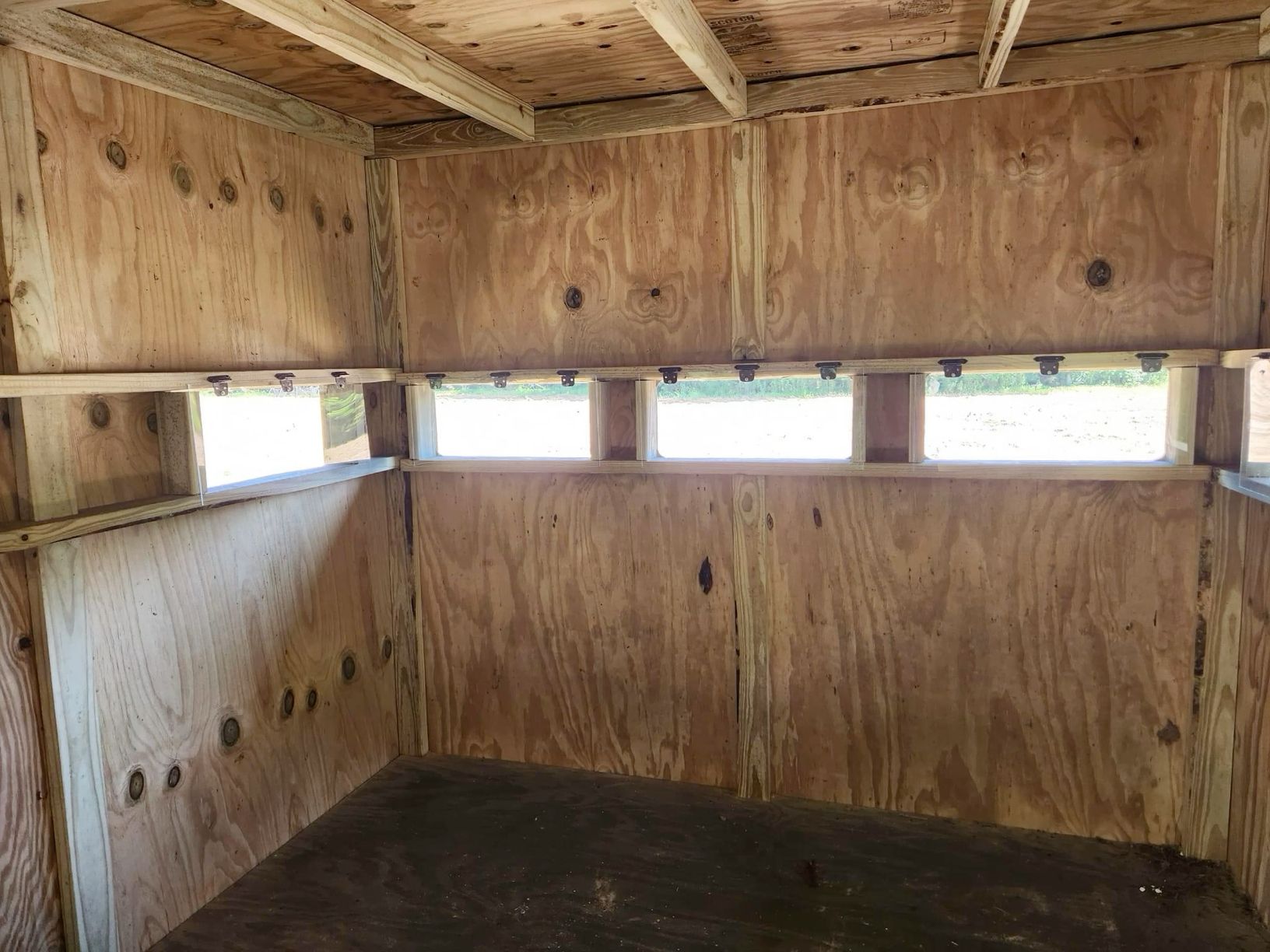
Deer blind windows are important for visibility, ventilation, concealment, and safe shooting.
Before hunting, make sure each window:
- Opens properly
- Closes properly
- Locks or secures correctly
- Has intact hardware
- Does not bind
- Is free from major damage
Keep shooting windows unobstructed
Check that vegetation, equipment, furniture, or other objects do not interfere with your intended shooting position.
However, never create or modify a shooting lane without considering what lies beyond the intended target area.
Inspect Doors, Locks, and Hinges
A properly functioning door helps with access, weather protection, and security.
Check:
- Hinges
- Handles
- Latches
- Locks
- Door frames
- Seals
- Fasteners
Make sure the door does not unexpectedly swing open or close.
A damaged door should be repaired before it creates an access or weather-related problem.
Firearm Safety Inside a Deer Blind
A deer blind does not change the basic rules of firearm safety.
Always follow the firearm manufacturer’s instructions and applicable hunting laws.
General principles include:
- Treat every firearm as if it is loaded.
- Keep the muzzle pointed in a safe direction.
- Keep your finger outside the trigger guard until ready to shoot.
- Know your target and what is beyond it.
- Use a safe backstop.
- Keep firearms secured when not in use.
- Follow applicable transportation and storage requirements.
- Never shoot at unidentified movement.
Be especially careful inside enclosed blinds
The limited space inside a box blind means muzzle direction requires additional awareness.
Before moving a firearm:
- Know where the muzzle is pointing.
- Identify where other hunters are positioned.
- Keep the firearm controlled.
- Avoid unnecessary movement around other hunters.
- Follow your firearm’s safe handling procedures.
Bowhunting Safety Inside a Deer Blind
Bowhunters should also inspect their equipment and shooting environment.
Check:
- Bow condition
- String and cables
- Arrows
- Broadheads
- Release equipment
- Shooting windows
- Interior clearance
Make sure you have enough room
Your draw cycle should not cause the bow, arrow, string, or limbs to contact:
- Window frames
- Walls
- Roof
- Chairs
- Other equipment
Practice drawing and positioning your bow in the blind before hunting.
Safe Shooting Angles and Shooting Lanes
Blind placement should always account for safe shooting directions.
Before hunting, identify:
- Intended shooting lanes
- Safe target areas
- Backstops
- Roads
- Buildings
- Neighboring properties
- Livestock areas
- Trails
- Other hunters
- Potential human activity
Never assume that an empty-looking field is automatically a safe shooting direction.
Know what lies beyond your target
A responsible hunter needs to consider the projectile’s potential path beyond the intended target.
This is particularly important when hunting from elevated blinds overlooking open fields or properties with neighboring land.
Deer Blind Placement and Safety
Safety should be considered before the blind is installed.
When choosing a location, consider:
- Terrain
- Access
- Elevation
- Drainage
- Deer movement
- Wind
- Visibility
- Shooting directions
- Nearby roads
- Buildings
- Property boundaries
- Other hunters
An excellent hunting location is not necessarily a safe blind location.
Avoid creating unnecessary exposure
Your entry and exit route should allow you to reach the blind without unnecessarily crossing areas where deer are likely to be disturbed.
For more information about placement, see our guide on Best Deer Blind Placement Tips.
Weather and Environmental Safety
Weather can change quickly during hunting season.
Before entering a blind, consider:
- Wind
- Lightning
- Heavy rain
- Snow
- Ice
- Extreme cold
- Extreme heat
- Fog
- Reduced visibility
High winds
Elevated blinds can be exposed to significant wind.
After unusually strong winds, inspect the blind and stand before using them.
Lightning
A storm with lightning can make outdoor hunting hazardous.
If severe weather is approaching, prioritize getting to a safe location rather than continuing the hunt.
Ice and snow
Ice can make ladders, stairs, platforms, and roofs hazardous.
Do not assume a frozen surface is safe simply because it looks stable.
Hunting Blind Visibility and Identification
Hunters should be able to identify where they are hunting and understand the boundaries of their hunting area.
Consider:
- Property boundaries
- Neighboring hunting areas
- Roads
- Homes
- Public access areas
- Livestock
- Other hunters
Follow all applicable local hunting regulations regarding hunter visibility, blaze orange or other required safety clothing, and firearm or archery equipment.
Regulations vary by location and season, so verify the current requirements where you hunt.
Prevent Slips, Trips, and Falls
Inside a blind, common trip hazards can include:
- Backpacks
- Bows
- Tripods
- Shooting rests
- Cables
- Tools
- Boots
- Clothing
- Empty containers
Keep frequently used equipment organized.
Do not block:
- Doors
- Ladders
- Stairs
- Emergency exits
- Shooting positions
Keep floors dry
Water tracked into a blind can create a slipping hazard.
During wet weather, be particularly careful when entering and exiting.
Fire Prevention and Heating Safety
Cold-weather hunting may tempt hunters to use heaters or other warming equipment.
Never use a heating device inside an enclosed hunting blind unless it is specifically designed and approved for that environment and is used exactly according to the manufacturer’s instructions.
Important considerations include:
- Ventilation
- Combustible materials
- Carbon monoxide risk
- Fire risk
- Fuel storage
- Manufacturer instructions
Never improvise a heating setup.
If carbon monoxide exposure is possible, understand that the gas is colorless and odorless and can be dangerous before you realize something is wrong.
Keep Children and Untrained Visitors Safe
A hunting blind may look like a small cabin, but it should not automatically be treated as a play area.
Before allowing children or inexperienced visitors into an elevated blind, make sure they understand:
- How to climb safely
- Where to stand
- What they should not touch
- Firearm safety
- Bow safety
- How to remain seated when necessary
- How to use the ladder or stairs
Firearms and other hunting equipment should remain under appropriate control at all times.
Wildlife, Insects, and Pest Hazards
An unused deer blind can become home to wildlife or insects.
Before entering an unused blind, look for:
- Bees
- Wasps
- Hornets
- Spiders
- Snakes
- Rodents
- Birds
- Nests
- Droppings
Do not blindly reach into dark corners, boxes, bags, or equipment containers.
Inspect the blind carefully before settling in.
Deer Blind Safety at Night and During Low Light
Entering an elevated blind before daylight introduces additional hazards.
Use a reliable light source when climbing or walking to the blind.
Be careful with:
- Uneven terrain
- Wet grass
- Mud
- Ice
- Roots
- Rocks
- Low branches
- Ladders
- Steps
Keep essential items accessible
Consider carrying:
- Flashlight or headlamp
- Phone
- Appropriate clothing
- Water
- Required hunting equipment
- Emergency supplies
Do not rely exclusively on your phone’s flashlight.
Emergency Preparedness
Every hunting property should have a basic emergency plan.
Before the hunt, know:
- Where you are
- How to leave the property
- Where your vehicle is parked
- Who knows your location
- How you will contact help
- Which nearby access route can be used in an emergency
Tell someone where you are hunting
If hunting alone, consider telling a trusted person:
- Property location
- Blind location
- Expected hunting time
- Expected return time
If your plans change significantly, communicate the change.
This simple habit can make it easier for others to respond if something goes wrong.
Deer Blind Safety After Severe Weather
Never assume your blind is safe simply because it survived the previous season.
Inspect it after:
- Severe thunderstorms
- High winds
- Heavy snow
- Ice storms
- Flooding
- Falling trees or branches
Look for:
- Leaning
- Shifting
- Damaged supports
- Broken windows
- Roof damage
- Loose siding
- Damaged ladders
- Platform movement
- Erosion
- Water intrusion
If you suspect structural damage, stay off the elevated structure until it has been properly evaluated and repaired.
Ground Blind Safety Checklist
Ground blinds have different hazards from elevated blinds.
Before using a ground blind, check:
- Structure is stable
- Anchoring is secure
- Interior is unobstructed
- Shooting windows work properly
- Door works properly
- No damaged framework is present
- No insect nests are present
- No wildlife has moved inside
- Shooting lanes are safe
- Target and background are identifiable
- Emergency access is clear
Even though ground blinds do not involve climbing, hunters should still treat them as hunting equipment rather than ordinary shelters.
Elevated Deer Blind Safety Checklist
For elevated setups, add these checks:
- Stand is stable
- Platform is secure
- Support structure is sound
- Bracing is secure
- Ladder is secure
- Steps are in good condition
- Handrails are secure
- Railings are secure
- Floor is structurally sound
- No excessive movement is present
- No major corrosion is present
- No structural wood rot is present
- Ground conditions have not changed significantly
- Blind-to-stand connections are secure
If any critical component is questionable, do not climb into the blind until the problem has been resolved.
Seasonal Deer Blind Safety Inspection
Spring
Inspect for damage from:
- Winter weather
- Snow
- Ice
- Wind
- Moisture
- Falling branches
Summer
Check:
- Roof
- Windows
- Doors
- Moisture
- Insects
- Rust
- Vegetation
- Structural components
Fall
Complete your full preseason inspection.
This is the most important time to make sure the blind is ready for regular hunting.
Winter
If the blind remains installed:
- Monitor snow and ice
- Check after storms
- Watch for moisture
- Inspect exposed structural components
- Keep access routes reasonably clear
Common Deer Blind Safety Mistakes
Mistake 1: Assuming a new blind does not require inspection
New equipment should still be assembled and used according to manufacturer instructions.
Better approach: Inspect the completed setup before use.
Mistake 2: Ignoring the stand
The blind may be in excellent condition while the support system develops problems.
Better approach: Inspect the blind and stand as one complete system.
Mistake 3: Using a damaged ladder
A questionable ladder can create an unnecessary fall hazard.
Better approach: Repair or replace damaged access equipment before climbing.
Mistake 4: Ignoring weather damage
A storm can change structural conditions.
Better approach: Inspect the blind after significant weather events.
Mistake 5: Poor shooting-lane planning
A clear view does not automatically mean a safe shooting direction.
Better approach: Know your target, backstop, and surroundings before hunting.
Mistake 6: Leaving clutter on the floor
Equipment can become a trip hazard.
Better approach: Keep the interior organized.
Mistake 7: Using heating equipment incorrectly
Improvised heating arrangements can create fire or carbon monoxide hazards.
Better approach: Follow the heating device manufacturer’s instructions exactly.
Complete Pre-Hunt Deer Blind Safety Checklist
Use this checklist before every hunt.
Structure
- Blind inspected
- Stand inspected
- Platform checked
- Floor checked
- Supports checked
- Bracing checked
- Fasteners checked
- No unusual movement
Access
- Ladder checked
- Stairs checked
- Steps checked
- Handrails checked
- Railings checked
- Access path is clear
Blind Interior
- Floor is clear
- No significant moisture
- No obvious mold or mildew
- No pests or nests
- Door works
- Windows work
- Equipment is organized
Hunting Equipment
- Firearm or bow inspected
- Required safety equipment available
- Shooting position is comfortable
- Shooting windows provide appropriate clearance
- Equipment does not create trip hazards
Shooting Safety
- Target can be positively identified
- Shooting direction is safe
- Background is understood
- Nearby roads are considered
- Buildings are considered
- Other hunters are accounted for
- Property boundaries are understood
Weather
- Weather checked
- Severe weather risk considered
- Wind conditions considered
- Ice/snow conditions checked
- Appropriate clothing available
Emergency
- Phone or communication device available
- Someone knows your hunting location
- Exit route is known
- Vehicle location is known
- Emergency plan understood
When Should You Stop Using a Deer Blind?
One of the most important parts of a deer blind safety checklist is knowing when not to hunt from the blind.
Stop using an elevated blind if you discover serious concerns involving:
- Structural supports
- Platform stability
- Major wood rot
- Severe corrosion
- Damaged welds
- Broken ladders
- Compromised stairs
- Damaged railings
- Significant floor deterioration
- Severe storm damage
- Major shifting or leaning
- Unsafe shooting conditions
Do not attempt to solve a serious structural problem with a temporary fix simply because hunting season has started.
A missed hunt is better than taking an unnecessary safety risk.
For repairs or modifications, follow the blind and stand manufacturer’s instructions and use qualified professionals where appropriate.
FAQs: Deer Blind Safety
How often should I inspect my deer blind?
What should I check on an elevated deer blind?
Is it safe to hunt from an elevated deer blind during strong winds?
How do I know if a deer blind stand is unsafe?
What should I check before climbing into an elevated deer blind?
Is firearm safety different inside a deer blind?
Should I inspect a deer blind after a storm?
Can I use a damaged deer blind if the damage appears minor?
Final Thoughts: Make Safety Part of Every Deer Hunt
A deer blind is an investment in your hunting setup, but keeping it safe requires more than checking it once a year.
The best approach is to make inspection part of your regular hunting routine.
Before every season, inspect the blind, stand, platform, floor, ladder, stairs, railings, windows, doors, roof, and structural components. After severe weather, inspect them again. Before every hunt, consider shooting direction, target identification, weather, access, equipment, and emergency preparedness.
For elevated deer blinds, never overlook the support structure. The safest hunting blind is one that is properly installed, regularly inspected, maintained according to manufacturer instructions, and used responsibly.
If you’re looking for a dependable hunting setup, Hunting Blind Supply offers deer hunting blinds, elevated hunting blinds, bow hunting blinds, gun hunting blinds, deluxe blinds, and elevated stand options. Hunting Blind Supply positions itself as the #1 trusted seller for deer hunting blinds, giving hunters a range of options for building a comfortable and dependable hunting setup.
Before you climb in, check the blind. Before you take the shot, check the surroundings. Safety should always come first.


One thought on “Deer Blind Safety Checklist | Complete Guide to Safe Hunting Blind Setup and Use”