Blog
Hunting Blinds in Virginia | Complete Guide to Deer Blinds, Metal Blinds, Prices, and Placement

Hunting Blinds in Virginia | Complete Guide to Deer Blinds, Metal Blinds, Prices, and Placement
Choosing the right hunting blind can make your time in the field more comfortable, organized, and effective. But the best option for a property in Virginia’s Blue Ridge Mountains may not be the same as the right choice for a wooded parcel in the Piedmont or an agricultural property in the Shenandoah Valley.
This guide to hunting blinds in Virginia explains the different blind types, materials, sizes, shooting-window configurations, placement strategies, and buying considerations that matter when planning a deer-hunting setup. You’ll also learn what to inspect when buying a used blind, how to compare metal and wooden construction, and where to check Virginia’s hunting regulations before the season.
Whether you’re looking for deer hunting blinds in Virginia for sale, researching metal hunting blinds in Virginia, or comparing permanent and portable setups, the goal is to help you choose a blind that fits your land, hunting style, budget, and long-term plans. Explore our guide hunting blinds USA for more information about hunting blind set up in other hunting related cities.
Why Hunters in Virginia Use Hunting Blinds
Virginia offers a range of hunting environments, from steep, wooded mountain properties to rolling farmland, mixed hardwood forests, and fields bordered by timber. A well-planned hunting blind can provide a consistent location for observing wildlife while helping hunters manage concealment, comfort, and equipment.
Benefits of a permanent deer blind
A permanent or semi-permanent blind can be useful when you hunt the same property regularly. Depending on its design, it may provide:
- Concealment: Walls and windows help break up the hunter’s outline and reduce visible movement.
- Weather protection: An enclosed blind can help shield hunters from wind, rain, and cold.
- Organized shooting positions: Properly designed windows can create practical shooting lanes.
- Comfort for longer sits: Space for a seat, clothing layers, and essential equipment can make extended hunts more manageable.
- Repeatable setups: A fixed location allows you to observe animal movement and adjust your hunting plan over time.
A blind does not guarantee that deer will approach or remain undisturbed. Wind direction, scent, noise, visibility, access routes, hunting pressure, and local deer movement all affect results.
Where hunting blinds can make sense in Virginia
Consider how your property is used before buying:
- Wooded mountain properties: A compact blind may be easier to position on a suitable bench, clearing, or accessible ridge location.
- Farm and field edges: An enclosed blind can provide a stationary vantage point overlooking a field edge or travel corridor.
- Mixed timber and open ground: A blind may work near a transition between bedding cover and feeding areas, provided local rules and safe shooting conditions allow it.
- Family hunting properties: A roomy, enclosed blind may offer a practical setup for more than one hunter, depending on its interior dimensions and window layout.
- Long-term hunting leases: A durable blind may be worthwhile if you have permission to install it and expect to hunt the same area over multiple seasons.
The most important principle is to choose a blind for the property and hunting approach you actually have, rather than purchasing based only on appearance or advertised features.
Types of Hunting Blinds Available in Virginia
Hunting blinds vary in construction, height, portability, insulation, and shooting-window design. Understanding the differences makes it easier to compare products and narrow your search.
Enclosed box blinds
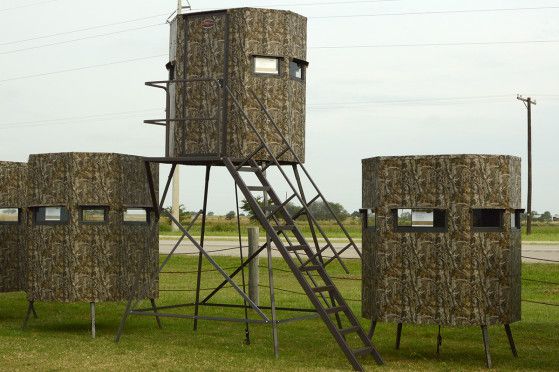
Box blinds are enclosed structures with walls, a roof, a door, and windows. They may be installed at ground level or on an elevated platform.
They are often suitable for hunters who want a defined interior space, protection from the elements, and a stable location for repeated hunts. Before buying, inspect the door opening, interior dimensions, ventilation, roof, floor, and window placement.
Metal hunting blinds in Virginia
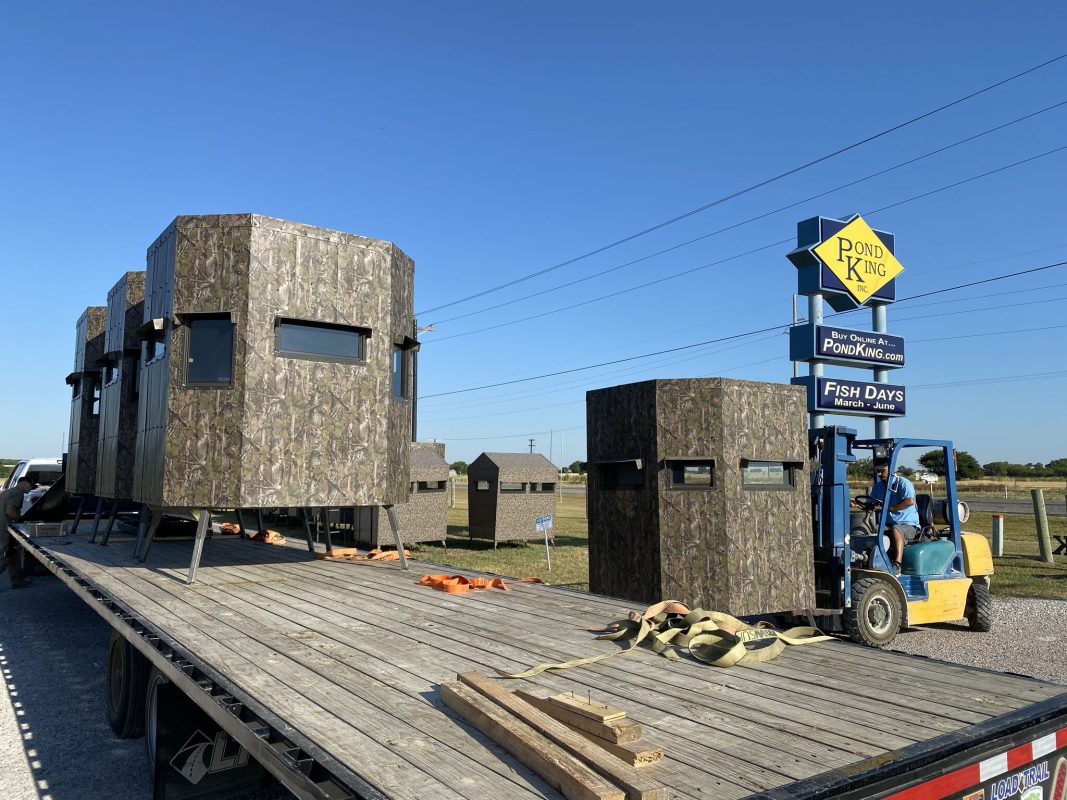
Metal blinds are worth considering if you want a rigid exterior and a structure designed for repeated seasonal use. The performance of a metal blind depends on its frame, panel thickness, joints, roof, floor, finish, and overall construction, not simply on the fact that it uses metal.
Potential advantages include:
- A rigid exterior structure
- A range of camouflage finishes and panel designs
- Compatibility with some purpose-built platforms and stands
- Options for enclosed, elevated, and multi-window configurations
Potential drawbacks include heat buildup in warm weather, condensation, exterior noise, corrosion if the finish is damaged, and the need for a suitable foundation or stand.
Before purchasing, confirm the product’s actual dimensions, materials, insulation, weight, mounting requirements, and intended stand compatibility.
Wooden deer hunting blinds
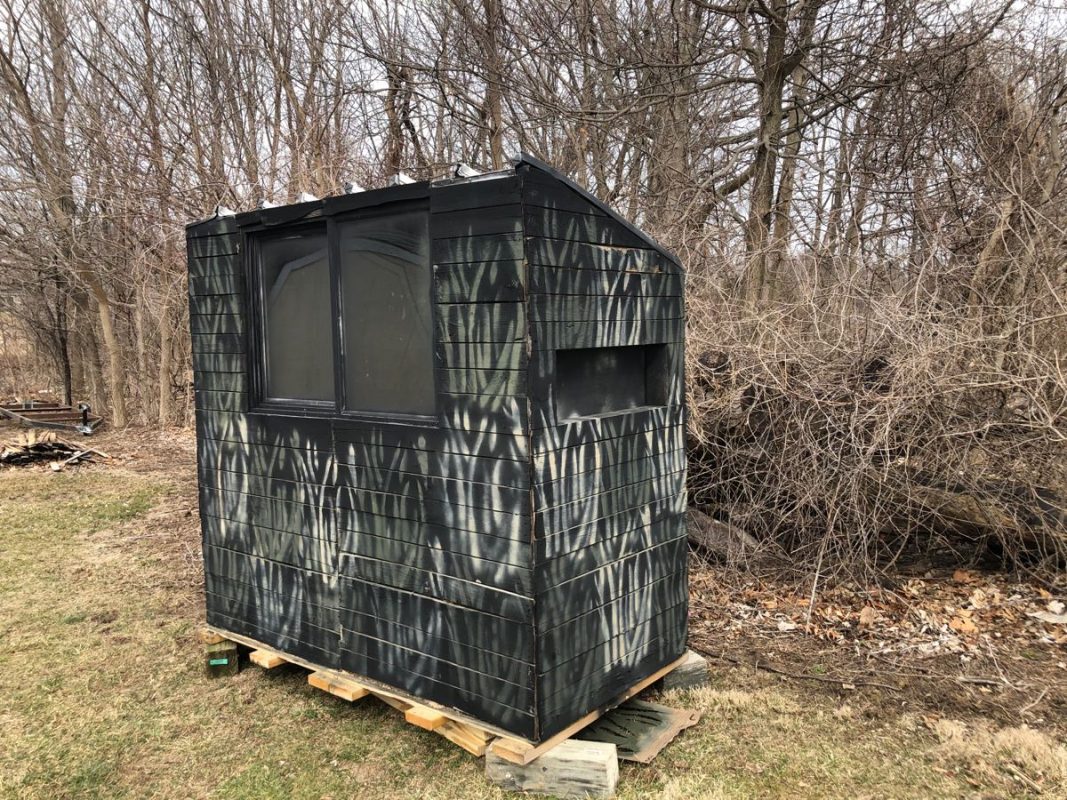
Wooden blinds appeal to hunters who prefer traditional construction or want a structure that can be customized for a specific property. They can be built to different sizes and layouts, but durability depends on material quality, moisture protection, roof design, fasteners, and ongoing maintenance.
Inspect wooden blinds for soft or rotting floor sections, water damage, loose joints, damaged roofing, and signs of insect activity. A low purchase price may not represent good value if the structure needs substantial repairs.
Ground hunting blinds
Ground blinds sit directly on the ground or on a low foundation. Depending on the design, they may be permanent, semi-permanent, or portable.
They can be useful when the terrain makes a tower impractical or when you want to avoid climbing into an elevated structure. However, ground-level visibility, drainage, vegetation, and the surrounding backdrop become especially important.
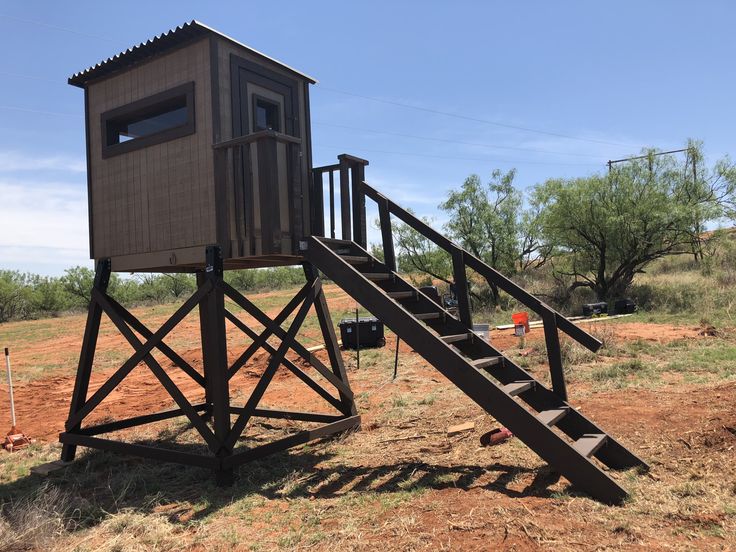
Elevated and tower hunting blinds
Elevated blinds sit on a purpose-built stand or platform. Raising the blind may improve visibility over some vegetation and help create a different viewing angle, but elevation does not automatically improve every hunting setup.
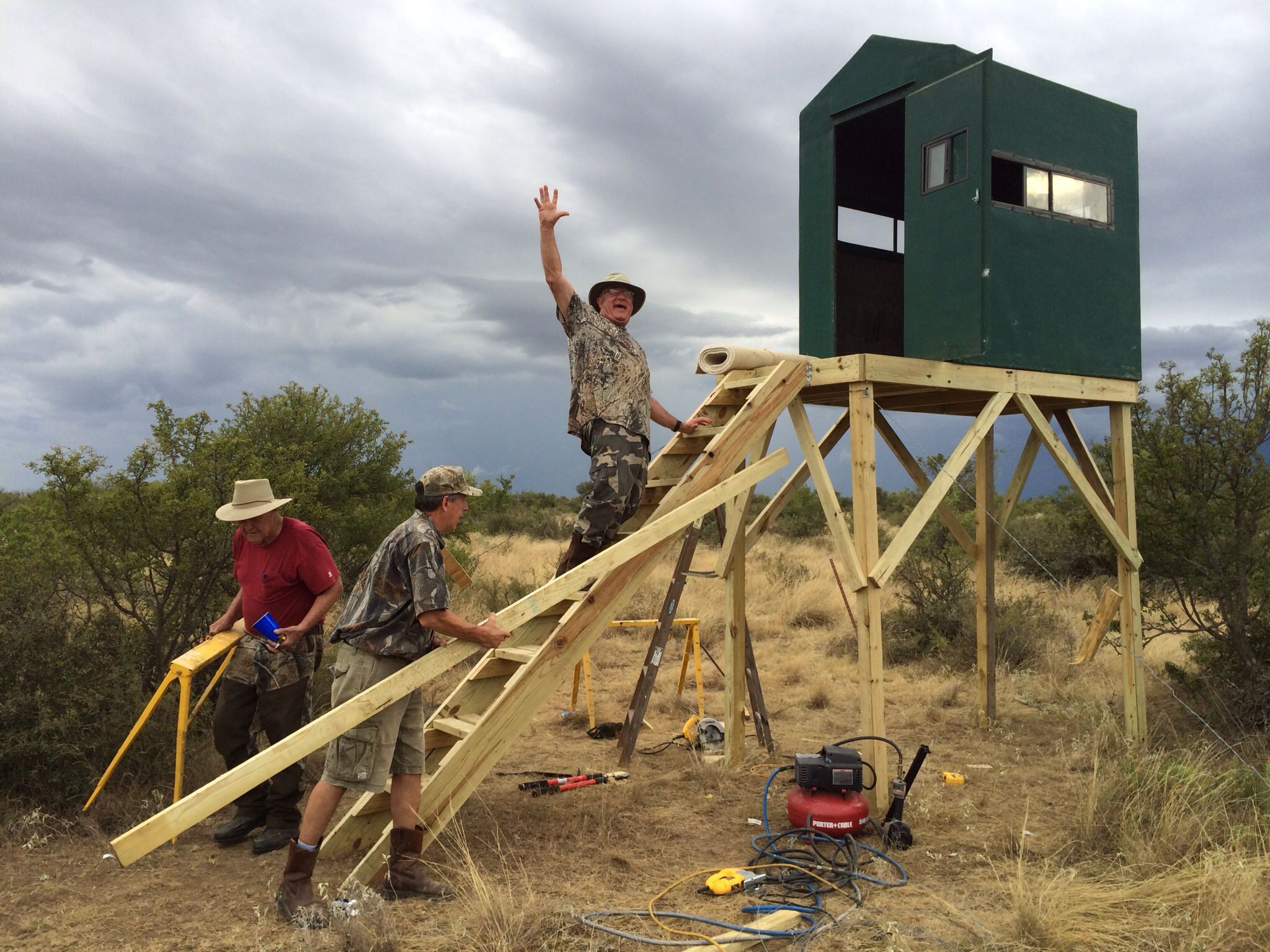
Consider the ground slope, access route, height, platform dimensions, stairs or ladder, handrails, anchoring, and the manufacturer’s load limits. The stand and blind must be compatible and installed according to their instructions.
Octagon and 360-degree hunting blinds
Octagon-shaped blinds may offer windows facing multiple directions. Some models are designed to provide a broad field of view, which can be useful on open properties or locations where wildlife may approach from several directions.
A larger viewing area is only useful if the windows are positioned appropriately for your intended shooting angles. Check window operation, sightlines, noise, and whether the design suits your weapon and hunting position.
Insulated hunting blinds
Insulated blinds may be attractive for cold-weather hunting and extended sits. Their actual performance depends on insulation coverage, window seals, door construction, ventilation, and the quality of the overall enclosure.
Compare the manufacturer’s stated insulation details rather than assuming all enclosed or metal blinds provide the same thermal performance.
How to Choose the Best Deer Blind for Your Property
The best deer blind for your Virginia property is the one that fits your terrain, target shooting positions, access route, and expected frequency of use.
Start with your property
Before comparing models, identify:
- The area where you intend to hunt
- Likely deer travel routes and feeding areas
- Existing clearings, timber edges, and changes in terrain
- The direction of prevailing and expected hunting-day winds
- Safe and unobstructed shooting directions
- A practical route for carrying equipment and installing the blind
- Whether you have permission to build or place a permanent structure
If you hunt a steep or uneven parcel, installation access may be just as important as the blind itself. A large, heavy blind can be difficult to move into position even when its dimensions appear suitable on paper.
Match the blind to your hunting style
For regular hunts from a fixed location, an enclosed box blind may be a sensible option. For bowhunting, window height and shooting clearance deserve particular attention. For a property where the terrain changes significantly, a ground-level or portable solution may be easier to position.
For a family hunting property, consider the number of people who will use the blind, the space needed for safe movement, and whether everyone can use the intended windows without interfering with one another.
Consider your long-term plans
A permanent blind may justify a larger initial investment if you have reliable access to the property and intend to use the same location for several seasons. If you hunt different properties or expect your access to change, portability and ease of removal may be more important.
Practical tip: Sketch the intended location, mark the principal viewing directions, and measure the available space before ordering. This simple step can help prevent problems with access, mounting, and window alignment.
Metal vs. Wooden Hunting Blinds
Both metal and wooden blinds can work well when properly designed, installed, and maintained. The better choice depends on the specific product and your priorities.
| Consideration | Metal hunting blind | Wooden hunting blind |
|---|---|---|
| Construction | Rigid panels and a frame, depending on design | Framed construction with wood siding or panels |
| Weather resistance | Depends on coatings, joints, roof, and drainage | Depends on wood treatment, roof, sealing, and maintenance |
| Maintenance | Inspect finish, fasteners, joints, and corrosion | Inspect for moisture damage, rot, insects, and loose joints |
| Customization | Depends on the manufacturer’s design | May be adaptable to a custom layout |
| Weight | Varies substantially by size and materials | Varies with dimensions, framing, and materials |
| Installation | May require lifting equipment or a compatible stand | May require substantial assembly and a suitable foundation |
| Noise and temperature | Panel construction can affect noise and heat transfer | Wall construction and insulation determine performance |
When a metal blind may be the better choice
Consider a metal blind when you prefer a rigid, manufactured structure, want to compare factory-built options, or need a model designed for a compatible elevated stand. Look carefully at panel quality, the frame, weather seals, finish, and mounting instructions.
When a wooden blind may be the better choice
A wooden blind may be suitable when a custom layout matters, when local construction skills are available, or when you prefer traditional materials. It still needs sound construction, weather protection, safe access, and regular inspection.
What matters more than the material alone?
Do not choose based solely on “metal” or “wood.” Compare the entire structure:
- Roof and door weather protection
- Floor strength and moisture resistance
- Window placement and operating noise
- Frame rigidity and connection points
- Insulation and ventilation, where applicable
- Overall weight and stand compatibility
- Warranty, replacement parts, and maintenance requirements
A well-built blind made from either material can be more useful than a poorly constructed model made from your preferred material.
Ground Blinds vs. Elevated Deer Blinds
One of the most important buying decisions is whether to hunt from ground level or use an elevated blind.
Advantages of ground blinds
- May be simpler to access than an elevated structure
- Can suit properties with limited room for a tower
- May be easier to relocate, depending on the model
- Can work well where the terrain already provides useful concealment
Potential challenges include drainage, ground-level vegetation, visibility, and the need to blend the blind into the surroundings.
Advantages of elevated blinds
- May provide a clearer view over some vegetation
- Can change the angle at which you observe the property
- May help separate the hunting position from ground-level movement
- Can offer a dedicated platform for a permanent setup
Potential challenges include added installation complexity, safe climbing access, fall risks, anchoring, and greater visibility in exposed locations.
Which option should you choose?
Choose a ground blind when terrain, access, and concealment favor a low-profile setup. Consider an elevated blind when the property layout and intended viewing angles justify a raised position and you can install a properly engineered stand.
Neither option is universally better. Always prioritize a safe installation and legal, unobstructed shooting directions over the height or appearance of the structure.
Choosing a Hunting Blind for Bow or Gun Hunting
The intended weapon should influence your choice before you purchase a blind.
Bowhunting blinds
Bowhunters need sufficient room to draw and handle a bow without contacting the walls, roof, seat, or window frame. Window height and opening size can affect posture, visibility, and shot clearance.
Look for:
- Windows that accommodate your intended shooting position
- Enough interior room to draw without obstruction
- A quiet window system
- Clear sightlines toward the areas you intend to observe
- A floor and seat arrangement that allows stable positioning
Test the intended movement with your unloaded bow before hunting. Never draw toward a person or an unsafe direction, and do not assume a window opening guarantees adequate clearance.
Gun hunting blinds
Gun hunters should pay close attention to window height, support options, seating position, and the ability to maintain a safe muzzle direction.
Before a hunt, confirm that the planned shooting direction has a safe backstop and does not expose roads, buildings, people, livestock, or neighboring property to risk. Follow firearm handling rules and all applicable local restrictions.
Can one blind work for both?
Some blinds can serve both bow and firearm hunters, but the internal dimensions and window layout must suit each use. If you intend to switch between weapons, compare the actual openings and test your position before buying.
Never modify structural panels or windows without confirming that the changes are safe and permitted by the manufacturer.
How to Choose the Right Hunting Blind Size
A blind that is too small can restrict movement and make equipment difficult to organize. A larger model may provide more room, but it can also be heavier, more expensive, and more demanding to install.
Questions to ask before selecting a size
- How many hunters will normally occupy the blind?
- Will you use a bow, firearm, or both?
- How much space is needed to draw, aim, and reposition safely?
- Will you use chairs, a shooting rest, or other equipment?
- Do you need space for a youth hunter or another companion?
- Can the access route accommodate the blind’s dimensions and weight?
- Will the selected stand or foundation support the model as specified?
Why window layout matters
Interior floor area is only one part of the decision. A blind may have plenty of room but still be inconvenient if its windows do not line up with the desired viewing directions.
Compare the floor dimensions, interior height, door opening, window sizes, and the position of the windows relative to your seat. If the manufacturer provides a floor plan or measurements, use those details rather than estimating from photographs.
Plan for safe movement
Hunters should be able to enter and exit without tripping over equipment or interfering with one another. Keep firearms and archery equipment controlled, maintain safe directions, and avoid overcrowding the structure.
Insulated Hunting Blinds: Are They Worth It?
Insulation can make an enclosed blind more comfortable during cold-weather hunts, especially when you spend long periods in a stationary position. However, insulation is not a substitute for appropriate clothing, ventilation, or safe hunting practices.
Potential benefits of insulation
- Reduced heat transfer through insulated wall and roof sections
- Improved comfort during cold conditions
- Potentially less noticeable temperature variation inside the enclosure
- A more comfortable environment for longer sits, depending on the design
What to check before buying
Ask whether the insulation covers the walls, roof, door, and other relevant areas. Find out how windows are sealed and whether the blind has suitable ventilation.
Metal structures can become hot in warm weather and may experience condensation when temperatures and humidity change. Ventilation helps manage air quality and moisture. Never use a fuel-burning heater or other combustion device inside an enclosed blind unless the equipment is specifically approved for that use and all safety instructions are followed; carbon monoxide can be fatal.
Is an insulated blind worth the extra cost?
It may be worthwhile if you frequently hunt in cold conditions, spend extended periods in the blind, or prioritize comfort. If most of your hunting takes place in mild weather or involves short sits, other features, such as window layout, durability, and ease of installation—may matter more.
Compare the actual insulation specifications and construction rather than relying on the word “insulated” alone.
Hunting Blind Placement Tips for Virginia Properties
Blind placement can influence visibility, access, concealment, and safety. Even a well-built structure may perform poorly if it is installed in the wrong location.
Study the property before installing
Observe the area from a distance and look for:
- Natural openings and transitions between cover types
- Field edges and established travel corridors
- Terrain changes that influence visibility
- Existing paths and practical access routes
- Wind direction during the periods you plan to hunt
- Safe shooting directions and possible hazards
- The location of homes, roads, livestock, and neighboring boundaries
Use trail-camera observations only where lawful and appropriate, and avoid assuming that activity recorded in one period will continue unchanged throughout the season.
Consider wind and scent
A blind does not eliminate human scent. Plan entry and exit routes with wind direction in mind, minimize unnecessary disturbance, and avoid repeatedly crossing the areas you hope to observe.
Wind changes, terrain, and thermal currents can make scent behavior unpredictable, particularly in hilly or mountainous areas. Treat any scent-control product as a supplement to careful planning, not a guarantee.
Blend the blind into its surroundings
Consider the background, visible roofline, reflective surfaces, and movement near windows. Avoid placing the blind where its silhouette stands out unnecessarily, but never allow concealment to compromise safe access or visibility.
Do not cut trees, clear vegetation, or alter public land without the required permission. On private land, confirm the landowner’s approval before building or placing a structure.
Plan the access route
A good location is less useful if reaching it causes repeated disturbance. Choose a route that permits safe entry and exit while reducing unnecessary movement through the intended observation area.
For elevated blinds, the access route must also allow safe use of the ladder, stairs, or other climbing system in the conditions in which you will hunt.
Hunting Blinds for Sale in Virginia: New, Used, and Custom Options
Hunters searching for deer hunting blinds in Virginia for sale can compare new manufactured models, secondhand structures, and custom-built options. Each approach has different trade-offs.
Buying a new hunting blind
A new blind may be a good fit if you want current specifications, access to the manufacturer’s support, and a clear understanding of what is included.
Before ordering, confirm:
- The exact model and exterior dimensions
- Included windows, door, floor, and roof
- Whether the blind arrives assembled or requires assembly
- Total weight and delivery requirements
- Whether a stand, platform, or anchoring system is included
- Warranty terms and available replacement parts
- Shipping costs, delivery access, and installation requirements
Read the product description carefully. A listing for a blind alone may not include the stand, platform, ladder, anchoring hardware, or installation.
Buying used hunting blinds in Virginia
A used blind can offer value if it is structurally sound and suitable for your property. However, photographs and a low price do not establish that a blind is safe or economical to install.
Inspect the structure in person when possible. Check:
- Floor sections for rot, sagging, or movement
- Walls, roof, and joints for leaks or structural damage
- Metal panels for corrosion, sharp edges, or damaged coatings
- Wood for soft spots, insect damage, and moisture exposure
- Windows for cracks, broken hardware, and noisy operation
- Door hinges, latches, and the condition of the entry
- Stand legs, welds, braces, ladder, handrails, and anchor points
- Signs of mold, pests, or persistent water intrusion
Ask why the blind is being sold, how long it has been installed, whether it has been moved before, and whether the seller can provide its original specifications. If it is elevated, have the stand and attachment points assessed by someone qualified before use.
A used blind may require new roofing, window hardware, sealing, or structural repairs. Include those costs and the expense of transport in your comparison.
Custom deer hunting blinds in Virginia
A custom blind may be appropriate when a property has unusual dimensions, terrain constraints, or specific accessibility needs.
Before commissioning one, agree on:
- Interior and exterior dimensions
- Window height, width, and direction
- Roof slope and water drainage
- Floor construction and support
- Insulation and ventilation
- Door location and access
- Stand or foundation design
- Material specifications and finish
- Installation responsibilities and warranty
For elevated structures, do not rely on appearance or improvised supports. The design, platform, anchoring, and access system must be appropriate for the intended loads and site conditions.
Where to start your search
For manufactured hunting blinds and related equipment, visit Hunting Blind Supply. Compare available products against your intended use, property conditions, budget, and installation requirements. The business markets itself as a trusted source for deer hunting blinds; compare product specifications and service terms to determine whether a particular model fits your needs.
Hunting Blind Prices and Cost Considerations
There is no single price that applies to all hunting blinds in Virginia. Costs depend on the model, dimensions, materials, insulation, window system, stand, delivery, and installation.
What affects the price?
- Size: Larger blinds generally require more material and may be more expensive to move.
- Construction: Frame design, panel quality, flooring, roof, and weather sealing affect cost.
- Insulation: Additional insulation and window sealing may increase the purchase price.
- Windows: Specialized, sliding, vertical, or multi-directional systems may affect cost.
- Stand or platform: Elevated setups require a compatible support structure and safe access.
- Delivery: Freight charges can vary with weight, distance, and access to the property.
- Installation: Labor, lifting equipment, site preparation, and anchoring may add to the total.
- Maintenance: Coatings, sealants, replacement hardware, and repairs contribute to long-term ownership costs.
Calculate the total installed cost
Rather than comparing product prices alone, estimate:
Total cost = blind + stand or foundation + delivery + installation + site preparation + expected maintenance
For a used blind, also include inspection, repair, disassembly, and transport costs. A cheaper listing may become more expensive if the blind needs significant work before it can be used safely.
Compare value, not just the initial price
A higher-priced blind may offer features you need, such as a particular window system or insulation. But paying more for features you will rarely use may not be worthwhile.
Prioritize structural integrity, appropriate dimensions, weather protection, a suitable window layout, safe access, and reliable product information.
Virginia Hunting Regulations and Safety
Before placing or using a hunting blind, verify the rules that apply to your hunting method, location, season, and target species. Virginia requirements can differ between private land, public land, special managed areas, and particular hunting seasons.
The Virginia Department of Wildlife Resources (DWR) publishes the official hunting regulations, deer season information, and general requirements. Check its current Hunting and Trapping Regulations and Deer Hunting Regulations and Seasons pages before each season. Rules and dates can change.
Blaze-color requirements and enclosed ground blinds
Virginia’s general regulations include blaze-color requirements during firearms deer seasons and on the youth and apprentice deer hunting weekend. The DWR states that hunters using an enclosed ground blind that conceals them from view must display at least 100 square inches of solid blaze-colored material, visible from 360 degrees, attached to or immediately above the blind. This requirement is in addition to the applicable blaze-color requirement for the hunter, subject to the rules and exceptions that apply. Check the current official wording before hunting. Virginia DWR general regulations.
Do not assume that a camouflage blind, private-property location, or elevated position automatically exempts you from applicable requirements. Verify the rules for the exact season and area.
Private property and permissions
Confirm that you have permission to hunt and to install a blind on the property. A hunting permission arrangement does not necessarily grant permission to build a permanent structure, cut vegetation, or leave equipment behind.
If hunting near property boundaries, roads, residences, or public access areas, check the relevant state and local requirements and ensure that every planned shot has a safe direction and backstop.
Public land and managed areas
Public lands may have additional restrictions concerning structures, stands, equipment, access, and the length of time equipment may remain in place. Do not assume that a blind permitted on private land is allowed on a wildlife management area, national forest, or other public property.
Check the rules for the specific property with the managing agency before transporting or installing a blind.
Waterfowl blinds are a separate case
Rules for stationary, floating, or offshore waterfowl blinds can differ from those for deer hunting blinds. If your intended use involves hunting waterfowl on public waters, consult the DWR’s specific Waterfowl Blind Laws guidance.
Essential safety practices
- Follow all firearm or archery safety rules.
- Confirm that the shooting direction is safe and unobstructed.
- Use a structurally sound stand and follow the manufacturer’s installation instructions.
- Use the provided climbing and access system; do not climb with equipment in your hands.
- Inspect ladders, handrails, platforms, anchors, and fasteners before use.
- Avoid using a blind with a damaged floor, unstable stand, or compromised attachment points.
- Keep exits clear and ensure that every occupant can move safely.
- Tell someone where you plan to hunt and when you expect to return.
Important: This guide is for general planning and buying information, not a substitute for the current official regulations. Check the rules for your specific county, property, season, and hunting method.
Installing and Maintaining Your Hunting Blind
Installation quality affects the safety, stability, and useful life of a blind.
Prepare the site
Before delivery or assembly, assess ground conditions, drainage, slope, access, and the location of underground or overhead hazards. Confirm that you have permission for any necessary clearing or construction.
The base or stand must be suitable for the blind and the site. Follow the manufacturer’s requirements and use qualified assistance when structural design, lifting, or anchoring exceeds your experience.
Follow the manufacturer’s instructions
Use the specified fasteners, supports, brackets, and anchoring methods. Do not assume that a stand designed for one model will safely support another. Confirm compatibility before mounting the blind.
For elevated blinds, the support structure, platform, ladder or stairs, handrails, and anchoring system should be designed and installed for the intended use. Do not use improvised supports or climb onto a structure that has not been checked for stability.
Maintain the blind between seasons
Inspect your blind periodically, especially after severe weather or long periods without use.
Maintenance tasks may include:
- Checking roof seams and window seals for leaks
- Tightening or replacing approved hardware
- Inspecting the floor and structural joints
- Removing debris that obstructs doors or windows
- Checking metal finishes for corrosion or damage
- Treating or replacing deteriorated wood where appropriate
- Testing window and door operation for noise or binding
- Inspecting stand components and access equipment
- Managing moisture and ventilation to limit condensation
Address structural damage before using the blind again. Cosmetic repairs should never conceal a problem with the floor, frame, stand, or anchoring system.
Common Hunting Blind Buying Mistakes to Avoid
Avoid these common mistakes when comparing hunting blinds in Virginia.
Choosing a blind before studying the property
A model that looks ideal online may not fit the terrain, access route, or intended viewing directions. Study the property and measure the location first.
Focusing only on the advertised price
Delivery, assembly, a stand, foundation work, and repairs can materially affect the final cost. Compare the total installed cost.
Ignoring window layout
A blind may have plenty of interior room but still be unsuitable for your hunting style if the windows are too high, too small, noisy, or poorly positioned.
Assuming every metal blind is weatherproof
Metal construction alone does not guarantee insulation, waterproofing, corrosion resistance, or quiet operation. Check the actual materials, finish, seals, and warranty.
Buying a used blind without inspecting the stand
The enclosure may appear sound while its supports, welds, ladder, platform, or anchor points are damaged. Inspect the complete assembly, not just the walls and roof.
Overlooking legal requirements
Rules for hunting methods, blaze color, private property, public lands, and waterfowl blinds may differ. Confirm the applicable regulations before the hunt.
Installing without a safe access plan
A blind must be safely accessible in the conditions in which you intend to use it. Plan for the route, stairs or ladder, equipment movement, and emergency exit before installation.
FAQs: Hunting Blinds in Virginia
What are the best deer hunting blinds in Virginia?
Where can I find deer hunting blinds in Virginia for sale?
Are metal hunting blinds in Virginia better than wooden blinds?
Are insulated deer blinds worth the cost?
Can I use an elevated hunting blind on public land in Virginia?
Do I need blaze orange on a hunting blind in Virginia?
What should I check when buying a used deer blind?
How do I choose the right size hunting blind?
Final Recommendations: Finding the Right Hunting Blind in Virginia
Choosing the right hunting blind begins with understanding your property and the way you hunt. Consider the terrain, intended shooting directions, number of occupants, weather conditions, access route, and whether you need a ground-level or elevated structure.
Compare metal and wooden construction based on the actual materials and build quality. Evaluate window layout, insulation, dimensions, mounting compatibility, warranty, delivery, and maintenance requirements. If you’re considering a used blind, inspect the entire structure, including its supports and access system, before committing.
Most importantly, verify Virginia’s current hunting regulations and obtain any necessary property permission before installation or use.
If you are ready to compare manufactured options, visit Hunting Blind Supply to explore available deer hunting blinds and related equipment. Use the product specifications and your property’s requirements to narrow your choices and select a setup that meets your needs.
Plan carefully, buy for your property, and prioritize safety, durability, and a suitable design over appearance alone.



One thought on “Hunting Blinds in Virginia | Complete Guide to Deer Blinds, Metal Blinds, Prices, and Placement”