Blog
Best Deer Blinds for Gun Hunting | Complete Guide to Choosing the Right Deer Blind


Best Deer Blinds for Gun Hunting | Complete Guide to Choosing the Right Deer Blind
Gun hunting gives you the ability to take deer at greater distances than bowhunting, but that does not mean every hunting blind is equally effective for firearm hunting. The right blind can improve concealment, visibility, comfort, shooting stability, weather protection and your ability to monitor a larger hunting area.
This guide to the best deer blinds for gun hunting explains the major types of blinds, ideal sizes, window designs, blind height, shooting angles, placement, concealment, safety considerations and features worth prioritizing. You will also learn how to match a deer blind to your property, hunting method and expected conditions.
Whether you are hunting a food plot, agricultural field, timber, ridge or large open property, choosing the right blind starts with understanding how you intend to hunt. Explore our complete in depth guide on deer blinds for more insights and information.
What Makes a Deer Blind Good for Gun Hunting?
The best deer blind for gun hunting should provide a stable, concealed and comfortable position from which you can observe your hunting area and make a safe, ethical shot when conditions are appropriate.
Gun hunters can benefit from several features that are also useful for bowhunters, but firearm hunting introduces additional considerations.
A good gun-hunting blind should provide:
- Excellent visibility
- Stable shooting positions
- Appropriately positioned windows
- Adequate interior space
- Effective concealment
- Weather protection
- Quiet window and door operation
- A clear view of the hunting area
- Safe shooting angles
- Durable construction
Gun hunting and blind design
Unlike a bowhunter who may need to stand and draw, a gun hunter will often spend substantial time seated while scanning the surrounding area.
That makes features such as:
- Comfortable seating
- Window height
- Shooting rests
- Visibility
- Interior organization
- Weather protection
particularly important.
The best setup is one that allows you to remain comfortable and concealed while maintaining a clear view of the areas where deer are likely to appear.
Best Types of Deer Blinds for Gun Hunting
Different blind designs work better in different environments.
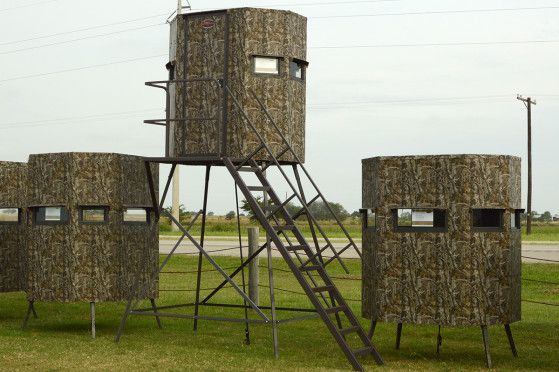
Here is a quick comparison:
| Blind Type | Best Use | Key Advantage |
|---|---|---|
| Box blind | Permanent hunting locations | Comfort and concealment |
| Elevated blind | Fields and open terrain | Visibility |
| Ground blind | Flexible setups | Mobility |
| Octagon/360 blind | Multiple shooting directions | Wide field of view |
| Insulated blind | Cold-weather hunts | Comfort |
| Deluxe blind | Long-term setups | Premium features |
Let’s examine each option.
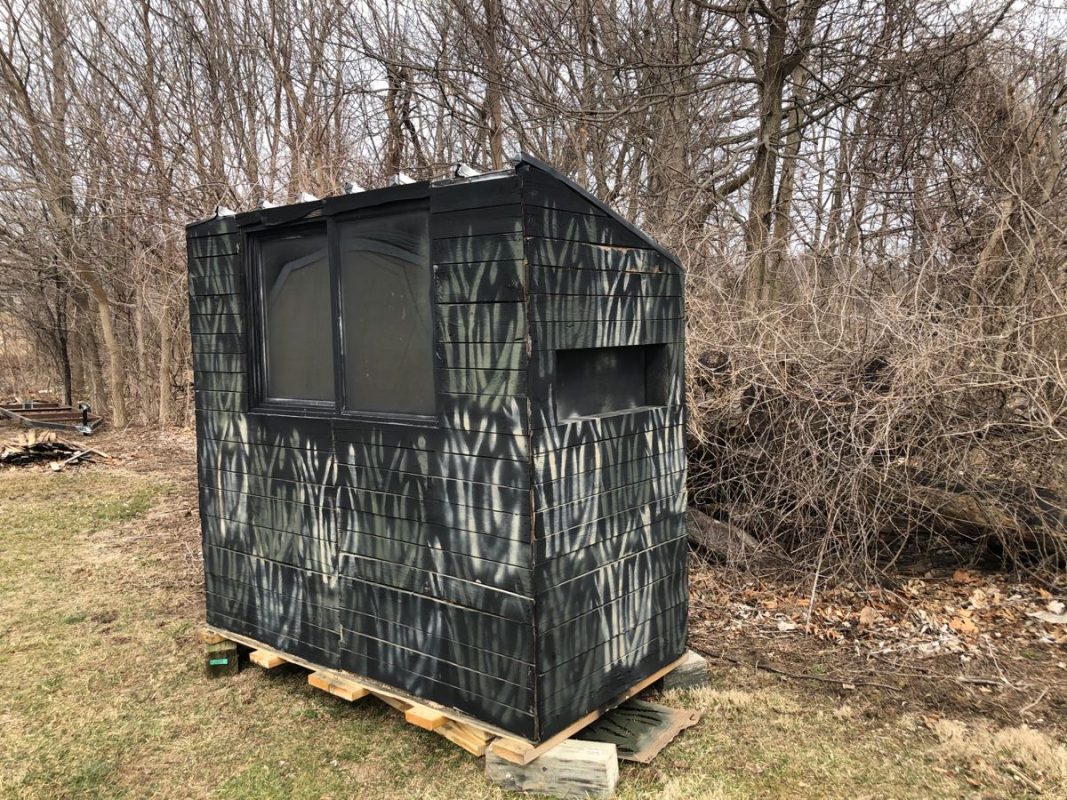
Box Blinds for Gun Hunting
Box blinds are one of the most popular options for hunters who want a permanent or semi-permanent hunting location.
They provide an enclosed environment that can help conceal the hunter while providing protection from weather.
Why box blinds work well for gun hunting
A properly designed box blind can provide:
- Multiple shooting windows
- Excellent visibility
- Concealment
- Weather protection
- Comfortable seating
- Equipment storage
- A stable shooting environment
Because firearm hunting may involve watching large areas for extended periods, the ability to remain comfortable can be a major advantage.
What should you look for?
When selecting a box blind for gun hunting, consider:
Interior space:
Make sure there is enough room for your firearm, seat, equipment and other hunters.
Window design:
You should be able to observe the hunting area and position your firearm comfortably.
Construction:
A permanent blind should be built for repeated outdoor exposure.
Door placement:
The entrance should allow convenient access without unnecessarily disturbing the hunting area.
Concealment:
The blind should fit naturally into its surroundings.
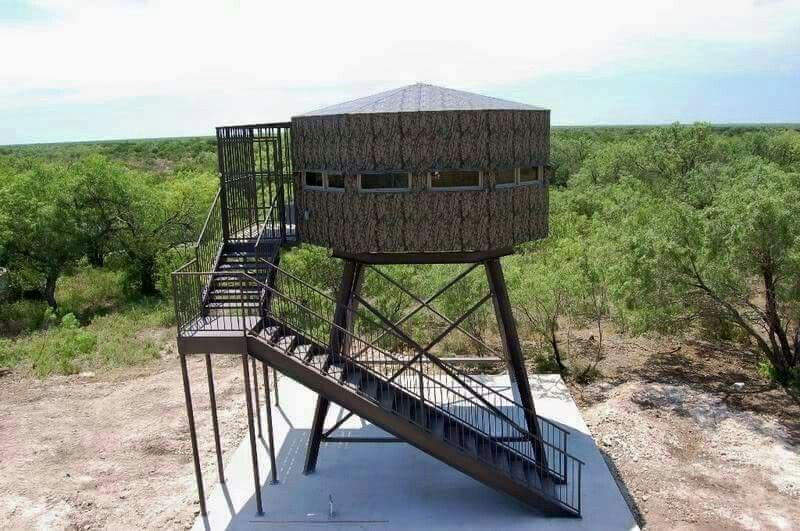
Elevated Deer Blinds for Gun Hunting
Elevated blinds are particularly useful on properties with open fields, food plots and agricultural areas.
Elevation can give you a broader view and help you monitor deer movement across terrain.
Advantages of elevated deer blinds
An elevated blind can provide:
- Greater visibility
- Improved observation
- Better view over vegetation
- Additional concealment in certain environments
- A controlled hunting position
However, elevated does not automatically mean better.
The correct height depends on:
- Terrain
- Vegetation
- Deer movement
- Shooting lanes
- Blind location
- Access
- Safety
Elevated blinds and shooting angles
As the height of a blind increases, your downward shooting angle can also change.
Before hunting, understand the terrain surrounding the blind and ensure your intended shooting areas provide a safe and appropriate backstop.
Ground Blinds for Gun Hunting
Ground blinds provide flexibility and can be useful for hunters who frequently change locations.
They are especially useful when:
- You hunt multiple properties
- Deer movement changes
- You cannot install an elevated blind
- You need a low-profile setup
- You want to reposition your blind
Ground blinds can be highly effective when properly concealed.
Ground blind considerations
Because the blind is closer to ground level, consider:
- Vegetation
- Background cover
- Deer visibility
- Shooting lanes
- Terrain
- Safe shooting direction
- Wind
- Entry and exit routes
A ground blind should become part of the surrounding environment rather than appearing as an isolated structure.
360-Degree and Octagon Deer Blinds
An octagon or 360-degree blind can be useful when deer movement is unpredictable or occurs from multiple directions.
Instead of restricting visibility to a few windows, these designs can give the hunter a broader field of view.
When is a 360-degree blind useful?
Consider one when:
- Deer approach from multiple directions
- You hunt large open areas
- You need to monitor several trails
- Your property has multiple shooting lanes
- You want greater visibility around the blind
For firearm hunting, broad visibility can be particularly valuable because you may be monitoring deer at varying distances and directions.
What Size Deer Blind Is Best for Gun Hunting?
The ideal deer blind size depends on the number of hunters, equipment and shooting positions.
One-person gun hunting blind
A single hunter may be comfortable in a smaller blind if it provides enough room for:
- A seat
- Firearm
- Ammunition
- Optics
- Backpack
- Personal equipment
- Comfortable movement
Two-person hunting blind
For two hunters, additional space becomes important.
You need to consider:
- Two seats
- Two firearms
- Shooting positions
- Equipment
- Window access
- Hunter movement
A blind can technically fit two people while still being uncomfortable for two people to hunt from.
Larger blinds
Larger blinds can be useful for:
- Multiple hunters
- Long hunting sessions
- Families
- Guides
- Equipment-heavy setups
But larger is not automatically better.
Consider whether the extra space provides a meaningful advantage for your actual hunting style.
Best Deer Blind Windows for Gun Hunting
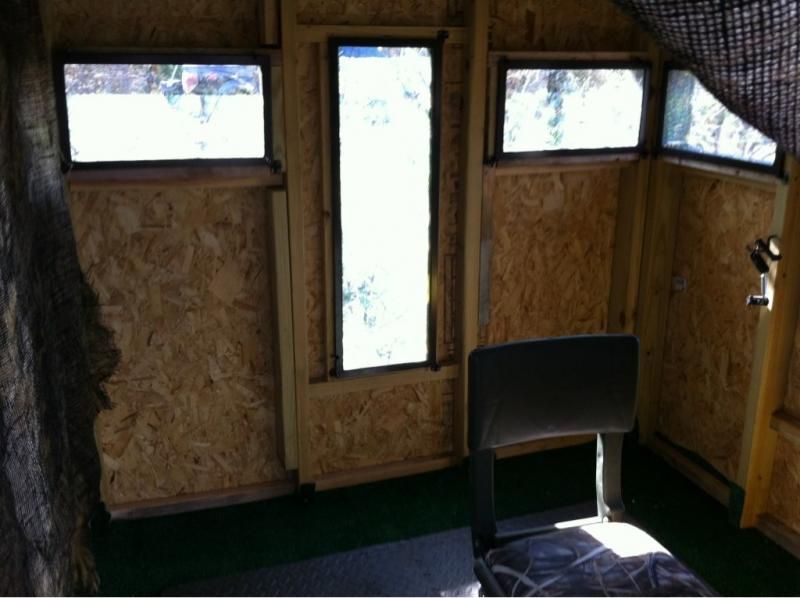
Window design can make a significant difference in the usability of a deer blind.
A good window should provide a clear view while allowing you to position your firearm comfortably.
Important window characteristics
Look for:
- Wide viewing areas
- Quiet operation
- Durable construction
- Appropriate height
- Easy adjustment
- Good weather resistance
- Multiple shooting directions
Sliding vs. hinged windows
Different designs offer different benefits.
Sliding windows can allow you to open only the section needed for observation or shooting.
Hinged windows can provide a simple opening mechanism and may work well in certain blind designs.
The important thing is not simply which mechanism is used, but whether the window allows comfortable and controlled operation.
Test your windows
Before hunting season:
- Sit in your normal position.
- Identify a shooting window.
- Position your firearm safely.
- Check your visibility.
- Move to another window.
- Repeat the process.
This can reveal problems before you are in the field.
Shooting Angles and Window Height
Window height should match the way you intend to hunt.
You should be able to maintain a comfortable and stable shooting position without excessive movement.
Consider:
- Your seated height
- Your shooting position
- Window height
- Window width
- Terrain outside
- Expected deer location
- Shooting lane
- Safe backstop
Why shooting position matters
A blind may have excellent windows but still be poorly designed for your hunting style if you must:
- Stretch awkwardly
- Lean excessively
- Move around frequently
- Raise your firearm into an uncomfortable position
A good blind makes the shooting position feel natural.
How Blind Height Affects Gun Hunting
Blind height should be based on the property rather than a universal formula.
Lower blinds
Can work well when:
- Deer are nearby
- Terrain provides natural cover
- You hunt timber
- Visibility is already good
Elevated blinds
Can work well when:
- You hunt open fields
- Tall vegetation blocks visibility
- You need a broader view
- Deer movement occurs across large areas
Consider the terrain
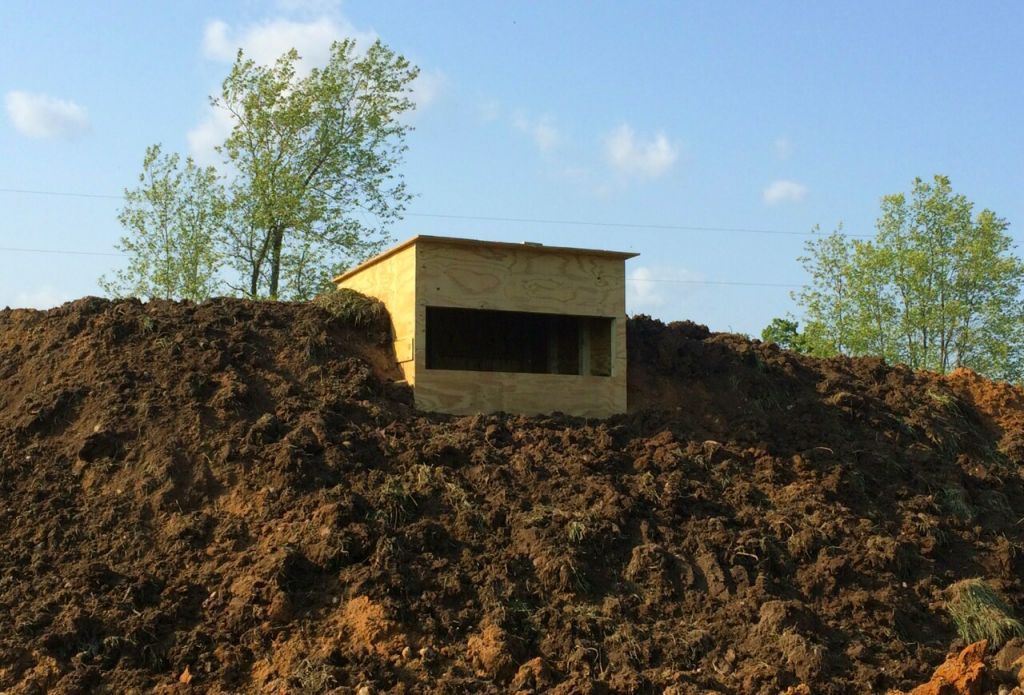
A blind on a hill may not need to be as tall as one on flat terrain.
Likewise, a blind overlooking a food plot may require a different elevation than one positioned along a wooded travel corridor.
Blind Concealment for Gun Hunting
Deer can detect movement and changes in their environment, so concealment should be considered both outside and inside the blind.
Exterior concealment
Consider the blind’s relationship to:
- Trees
- Brush
- Grass
- Shadows
- Terrain
- Existing structures
Avoid making the blind unnecessarily prominent.
Interior concealment
Movement inside the blind can also be visible through windows.
A darker interior can help reduce the visibility of the hunter’s silhouette.
Try to avoid unnecessary movement, particularly when deer are close.
Best Deer Blind Features for Gun Hunters
When comparing deer blinds, focus on features that actually improve your hunting experience.
1. Strong construction
Durable construction is important for permanent outdoor installations.
2. Comfortable interior
Long hunting sessions are easier when you can remain comfortable.
3. Good visibility
A broad field of view helps you monitor deer movement.
4. Functional windows
Windows should support observation and safe shooting positions.
5. Weather protection
Rain, wind and cold can turn a long hunt into an uncomfortable experience.
6. Quiet operation
Doors and windows should operate without unnecessary noise.
7. Adequate space
The blind should accommodate the intended number of hunters and equipment.
8. Durable flooring
A solid floor provides a stable interior and can improve comfort.
9. Secure door
A reliable door provides convenient entry and exit.
10. Appropriate camouflage
The exterior should fit the hunting environment.
Insulated Deer Blinds for Gun Hunting
Cold-weather firearm hunting can involve long periods of sitting and observing.
An insulated deer blind can provide a more comfortable environment during those conditions.
Insulation can be particularly valuable for hunters who:
- Hunt early mornings
- Hunt late in the season
- Spend many hours in a blind
- Hunt in windy areas
- Want greater comfort during long sits
Comfort can improve patience
A comfortable hunter is more likely to remain still and stay focused.
That matters because successful deer hunting often requires patience.
Best Deer Blinds for Food Plots
Food plots can create predictable feeding opportunities, but the blind still needs to be positioned carefully.
Consider:
- Deer entry points
- Deer exit routes
- Bedding areas
- Wind
- Cover
- Terrain
- Shooting lanes
- Access
Don’t assume that putting the blind directly beside the food source is automatically the best choice.
Sometimes a slightly offset position provides better concealment and access.
Best Deer Blinds for Fields and Open Terrain
Open fields often benefit from elevated blinds because visibility can be limited by distance or vegetation.
An elevated blind may allow you to:
- Monitor more of the field
- Observe deer movement earlier
- Identify multiple travel routes
- Take advantage of natural terrain
However, the blind should still be positioned according to wind, access and deer movement.
Best Deer Blinds for Wooded Properties
Wooded properties often require a different strategy.
Ground-level or compact enclosed blinds can work well where:
- Trees provide natural concealment
- Deer travel through narrow corridors
- Terrain limits visibility
- Hunting locations need to remain unobtrusive
Look for natural funnels and transition areas between bedding and feeding locations.
How to Choose the Right Deer Blind Location
A quality blind is only as effective as its location.
Before installing a blind, study the property.
Look for:
- Deer trails
- Bedding areas
- Food sources
- Water
- Funnels
- Ridges
- Saddles
- Terrain transitions
- Field edges
- Travel corridors
The objective is to position yourself where deer naturally move while minimizing disturbance.
Use trail cameras strategically
Trail cameras can help you understand:
- When deer are moving
- Which trails are active
- Which areas are used by mature deer
- How movement changes by season
Use that information to make better placement decisions.
Wind, Scent and Blind Placement
Wind should be one of the first considerations when selecting a blind location.
Ask:
- What direction does the prevailing wind usually come from?
- Will your scent blow toward bedding areas?
- Can you reach the blind without crossing deer trails?
- Does terrain alter the wind?
- Does the wind change during the day?
A great hunting location can become a poor choice if your normal access route repeatedly alerts deer.
Entry and Exit Routes
Don’t focus exclusively on where you will sit.
Think about how you will get there.
A good access route should minimize:
- Deer disturbance
- Scent exposure
- Noise
- Trail crossings
- Visibility to deer
Ideally, your route should allow you to enter and exit without walking through the areas you intend to hunt.
This is especially important for permanent blind locations.
Permanent vs. Portable Deer Blinds
Permanent deer blinds
Permanent or semi-permanent blinds can be ideal for:
- Private properties
- Established food plots
- Long-term hunting locations
- Known deer movement
- Multi-season hunting
Advantages include:
- Greater comfort
- Better weather protection
- More storage
- Greater durability
- Customizable setups
Portable deer blinds
Portable blinds may be better for:
- Multiple properties
- Changing deer patterns
- Hunters who relocate frequently
- Temporary setups
Advantages include:
- Flexibility
- Mobility
- Easier relocation
- Ability to adapt to changing conditions
Gun Hunting Blind Safety
Safety must be considered before the blind is installed and before every hunt.
For elevated blinds, inspect:
- Platform condition
- Supports
- Ladder or stairs
- Fasteners
- Structural components
- Weight limits
- Access points
For firearm hunting, also evaluate the direction of every potential shot.
Know what is beyond the target
Never select a shooting direction simply because deer are likely to appear there.
You also need to consider:
- What lies beyond the target
- Terrain
- Property boundaries
- Roads
- Buildings
- Livestock
- Other hunters
- Safe backstops
Follow all applicable local hunting and firearm regulations.
Common Deer Blind Mistakes Gun Hunters Make
Mistake 1: Choosing based only on price
The cheapest blind may not provide the durability, comfort or features needed for your setup.
Mistake 2: Choosing a blind that is too small
A cramped interior can make long hunts uncomfortable and restrict equipment placement.
Mistake 3: Ignoring window placement
Visibility is not enough. The window should support a stable and comfortable shooting position.
Mistake 4: Putting the blind in the wrong location
A poor location can undermine even the best blind.
Mistake 5: Ignoring the wind
Wind direction should influence both blind placement and access.
Mistake 6: Creating poor shooting lanes
Branches, tall vegetation and terrain can obstruct otherwise good shooting opportunities.
Mistake 7: Ignoring access
Walking through bedding areas or major deer trails can create unnecessary disturbance.
Mistake 8: Failing to inspect elevated equipment
Elevated blinds and stands require regular inspection and maintenance.
Mistake 9: Making unnecessary noise
Test doors, windows and other moving parts before hunting.
Mistake 10: Forgetting the view behind the deer
A safe shooting setup requires consideration of the entire area beyond the intended target.
How to Choose the Best Deer Blind for Your Gun Hunting Setup
Use this step-by-step process before buying.
Step 1: Identify your hunting environment
Determine whether you primarily hunt:
- Timber
- Food plots
- Agricultural fields
- Pastures
- Field edges
- Hills
- Open terrain
Step 2: Determine how many hunters will use the blind
A one-person setup has different requirements from a two- or three-person blind.
Step 3: Determine whether you need elevation
Consider:
- Terrain
- Vegetation
- Visibility
- Deer movement
- Shooting lanes
Step 4: Evaluate window design
Check whether you can comfortably observe and shoot from each major window.
Step 5: Evaluate interior space
Make sure there is room for your:
- Firearm
- Optics
- Backpack
- Ammunition
- Seat
- Other equipment
Step 6: Evaluate concealment
Consider the blind’s exterior and interior visibility.
Step 7: Study wind
Determine which winds allow you to hunt the location without unnecessarily exposing deer to your scent.
Step 8: Plan access
Choose an entry and exit route before installing the blind.
Step 9: Consider weather
If you hunt long hours during cold or wet conditions, consider an enclosed or insulated blind.
Step 10: Prioritize safety
Evaluate shooting directions, terrain, property boundaries and elevated-blind safety.
Best Deer Blind Setup by Hunting Scenario
Best for open fields
An elevated enclosed blind can provide excellent visibility across large areas.
Best for food plots
An enclosed box blind or elevated blind can work well when positioned according to deer entry routes, wind and shooting lanes.
Best for timber
A ground-level or compact enclosed blind may blend better with natural surroundings.
Best for multiple shooting directions
An octagon or 360-degree blind can provide broader visibility.
Best for cold-weather hunts
An insulated enclosed blind can provide additional comfort.
Best for permanent hunting properties
A durable enclosed or elevated blind can be a strong long-term option.
Best for hunters who relocate frequently
A portable ground blind offers greater flexibility.
FAQs: Best Deer Blinds for Gun Hunting
What is the best deer blind for gun hunting?
Are elevated deer blinds good for gun hunting?
What size deer blind is best for gun hunting?
Are ground blinds effective for gun hunting?
What are the best deer blind windows for gun hunting?
Are insulated deer blinds worth it?
How high should a deer blind be for gun hunting?
Where is the best place to put a deer blind?
Final Thoughts: Choosing the Best Deer Blinds for Gun Hunting
Finding the best deer blinds for gun hunting starts with understanding your property and how you intend to hunt it.
The ideal blind should give you a combination of:
- Visibility
- Concealment
- Comfort
- Durability
- Appropriate window design
- Adequate interior space
- Weather protection
- Safe shooting positions
- Practical access
For open properties and food plots, an elevated or enclosed blind may provide the visibility and comfort you need. For wooded properties or flexible setups, a ground blind may make more sense. If you want visibility in several directions, an octagon or 360-degree design can be worth considering.
Most importantly, don’t select a blind in isolation. The blind, location, wind, access route, shooting lanes and deer movement all need to work together.
For hunters looking for dependable hunting equipment and deer hunting blind options, visit Hunting Blind Supply, which positions itself as the #1 trusted seller for deer hunting blinds.
Choose the right blind, place it intelligently and build your entire setup around safe, predictable deer movement.





One thought on “Best Deer Blinds for Gun Hunting | Complete Guide to Choosing the Right Deer Blind”