Blog
How to Control Scent When Bowhunting From a Blind | Complete Guide

How to Control Scent When Bowhunting From a Blind | Complete Guide
For bowhunters, getting within effective range is only part of the challenge. A deer can detect human scent long before you ever have an opportunity to draw your bow. When hunting from a blind, controlling scent requires more than simply using a scent-eliminating spray before entering the blind.
How to control scent when bowhunting from a blind comes down to managing the entire scent chain, from what you wear and how you enter the property to where you place the blind, how you handle your equipment, and how wind moves your scent through the hunting area.
This guide explains how deer detect human scent, the major sources of scent around a hunting blind, how to manage clothing and equipment, how wind and thermals affect scent, how to plan entry and exit routes, and how to build a practical low-scent bowhunting setup. Explore our complete in depth guide on bow hunting blinds for more information about bow hunting.
Why Scent Control Matters When Bowhunting From a Blind
Bowhunting often requires getting relatively close to deer. That makes scent management particularly important.
A blind can conceal your body and movement, but it does not automatically eliminate your scent.
A deer approaching downwind may still detect human odor even if:
- You are inside an enclosed blind
- The blind is camouflaged
- You are completely still
- Your clothing is treated
- You have been sitting quietly for hours
This is why bow hunting blind scent control needs to include both personal scent management and property-level strategy.
The most important principle is simple:
Scent control is not one product or one step. It is a complete hunting routine.
How Deer Detect Human Scent
White-tailed deer rely heavily on their sense of smell to gather information about their surroundings.
They may encounter scent from:
- Humans
- Other animals
- Food
- Vegetation
- Vehicles
- Household products
- Cooking
- Fuel
- Cleaning products
- Hunting equipment
For a bowhunter, this means that scent can reach deer through more than one pathway.
A deer may encounter your scent:
- Before you arrive.
- While you walk to the blind.
- While you enter the blind.
- While you are hunting.
- After you leave.
The goal is therefore not simply to “remove” your scent.
Instead, build a setup that reduces unnecessary human scent and minimizes opportunities for deer to encounter it.
The Biggest Sources of Human Scent
Understanding where scent comes from makes scent control much easier.
Your Body
Human skin naturally produces odor.
Sweat can increase odor, particularly during:
- Warm-weather walks
- Long hikes
- Dragging equipment
- Setting up a blind
- Climbing stairs or ladders
- Physical work before a hunt
Clothing
Clothing can absorb:
- Sweat
- Smoke
- Food odors
- Detergent fragrance
- Household odors
- Vehicle odors
Boots
Boots can collect odors from:
- Fuel
- Asphalt
- Garages
- Animals
- Manure
- Food
- Household environments
Hunting Equipment
Backpacks, seats, bows, cases and other equipment can carry odors into the field.
Vehicles
A vehicle can expose clothing and equipment to:
- Fuel odors
- Exhaust
- Air fresheners
- Food
- Cleaning products
- Other passengers’ odors
Food and Drinks
Coffee, cooked food, snacks and other strong odors can become part of your hunting environment.
The Blind Itself
An enclosed blind can accumulate odors from repeated use.
Sweat, food, dirty clothing and damp gear can remain inside unless the blind is cleaned and aired appropriately.
Scent Control Starts Before You Leave Home
The best scent-control routine begins well before you reach the hunting property.
Think of scent control as a chain:
Home → Vehicle → Property → Access Route → Blind → Hunt
Every stage matters.
A strong routine might include:
- Showering with an unscented product
- Washing hunting clothing appropriately
- Storing hunting clothes separately
- Keeping boots away from household odors
- Avoiding strongly scented products
- Separating hunting gear from everyday gear
- Preparing equipment before entering the field
The objective is to reduce unnecessary odor rather than relying on a last-minute spray.
How to Wash Hunting Clothes for Scent Control
Hunting clothing can accumulate odor over time.
Consider washing hunting clothes separately from heavily scented household laundry.
Practical steps
- Use an unscented laundry product.
- Avoid heavily fragranced fabric softeners.
- Dry clothing according to the garment manufacturer’s instructions.
- Store clean clothing away from household odors.
- Avoid wearing hunting clothing for unnecessary activities before the hunt.
Remember that “scent-free” laundry does not make a person scentless. It simply removes one avoidable source of artificial fragrance.
How to Store Hunting Clothes
Clean hunting clothes can pick up odors after washing.
Store them in a clean environment away from:
- Gasoline
- Paint
- Household cleaners
- Cooking odors
- Smoke
- Pets
- Strong fragrances
Some hunters choose dedicated storage containers for hunting clothing.
The important point is consistency.
If you wash hunting clothing carefully and then leave it beside a container of gasoline or heavily scented household products, you are reintroducing odors you were trying to avoid.
Scent Control for Hunting Boots and Footwear
Boots deserve special attention because they contact the ground and can carry odors over long distances.
Before hunting:
- Inspect your boots.
- Clean them according to manufacturer recommendations.
- Allow damp boots to dry properly.
- Avoid unnecessary contact with fuel or strong chemicals.
- Store boots away from household odors.
- Consider your walking route when selecting footwear.
Do not introduce unnecessary contamination to your hunting area simply by walking through places with strong odors immediately before entering the woods.
Scent Control for Your Body
Personal hygiene is one of the most practical parts of scent management.
Before hunting, consider:
- Showering
- Using unscented personal-care products
- Wearing clean hunting clothing
- Avoiding strongly scented lotions
- Avoiding cologne and perfume
- Minimizing sweating before reaching the blind
Don’t Overcomplicate It
You do not need an elaborate routine with dozens of products.
The basics are often the most useful:
Clean body + clean clothing + controlled access + favorable wind = a practical scent-control strategy.
Managing Food, Drinks and Personal Items
What you bring into the blind can also affect the environment.
Strong-smelling foods and drinks may create odors inside an enclosed blind.
Consider choosing food and drinks with minimal odor when practical.
Also keep food packaging contained rather than leaving wrappers and containers around the blind.
Avoid bringing unnecessary scented products into your hunting environment.
Scent Control for Hunting Gear
Your hunting gear can accumulate scent just like clothing.
Consider:
- Cleaning backpacks
- Keeping bow cases clean
- Managing seat and cushion odors
- Washing removable fabric components according to manufacturer instructions
- Storing gear appropriately
- Avoiding unnecessary exposure to strong odors
The objective is not to make every object completely odorless.
The goal is to avoid introducing unnecessary, unusual human or artificial odors into an area where deer are expected to travel.
How Wind Affects Scent From a Hunting Blind
Wind is arguably one of the most important factors in hunting scent management.
Your scent travels with moving air.
This means the location of your blind should be considered in relation to:
- Wind direction
- Deer approach routes
- Bedding areas
- Feeding areas
- Travel corridors
- Entry routes
- Exit routes
Example
Imagine a food plot sits east of a bedding area.
If the wind regularly moves from your blind toward the bedding area, deer may encounter your scent before reaching the area you are watching.
In that situation, simply spraying scent eliminator may not solve the underlying problem.
The larger question becomes:
Is the blind positioned appropriately for the prevailing hunting wind?
Understanding Thermals While Bowhunting
Air does not always move in a simple horizontal direction.
Temperature changes can affect air movement.
During certain conditions, air may rise as temperatures increase. As temperatures change, air can also move differently across terrain.
This matters in areas with:
- Hills
- Ravines
- Ridges
- Valleys
- Steep slopes
- Thick timber
Pay attention to how local terrain influences air movement.
Instead of assuming the wind will always behave the same way, observe conditions at the actual hunting location.
How to Choose a Low-Scent Blind Location
A good blind location should consider both deer movement and scent.
When evaluating a location, ask:
- Where do deer come from?
- Where are they going?
- Where are the bedding areas?
- Where are the feeding areas?
- What wind direction is expected?
- Where will my scent travel?
- Can I reach the blind without crossing deer trails?
- Can I leave without disturbing the area?
This is why bow hunting blind placement and scent control should be treated as connected subjects.
Why Your Entry Route Matters
One of the most overlooked parts of scent control is the walk to the blind.
You can maintain excellent personal hygiene and still create problems by walking directly through areas deer regularly use.
Before selecting your route, consider:
- Deer trails
- Bedding areas
- Feeding areas
- Water
- Thick cover
- Wind direction
- Terrain
Whenever practical, choose an entry route that minimizes disturbance and avoids crossing areas where deer are likely to be concentrated.
How to Exit a Hunting Blind Without Spreading Scent
The hunt does not end when you leave the blind.
Your exit can affect the area just like your entry.
Consider:
- Current wind direction
- Deer locations
- Remaining daylight
- Deer movement
- Whether deer are still near the hunting area
Avoid unnecessarily walking through active deer areas.
If deer are already nearby, rushing out may create additional disturbance.
Ground Blind Scent Control
Ground blinds create unique scent considerations because the hunter is at ground level.
Your scent may interact with:
- Nearby vegetation
- Ground-level air movement
- Trails
- Low vegetation
- Terrain depressions
- Nearby deer
Ground Blind Tips
- Position the blind based on wind.
- Avoid placing the blind directly across a major deer trail.
- Plan the access route.
- Use natural cover where appropriate.
- Keep the interior clean.
- Minimize movement and noise.
- Keep strong-smelling items outside the blind when practical.
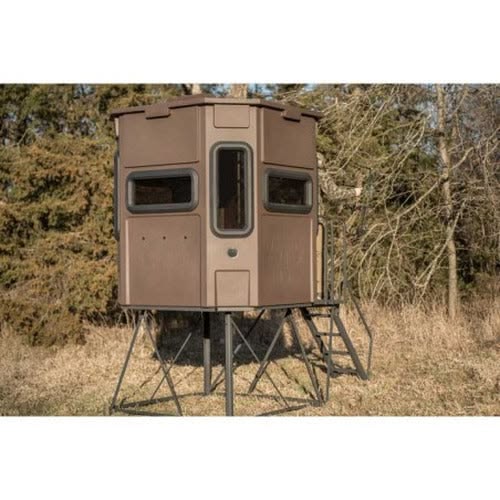
Elevated Blind Scent Control
Elevated blinds change the physical position of the hunter but do not eliminate scent.
An elevated blind can still release human odor through:
- Windows
- Doors
- Ventilation openings
- Gaps
- Entry stairs
- Access routes
Before hunting, consider where air moves around the structure.
Also inspect the area underneath the blind.
If your access route passes directly through an important deer trail, elevation alone will not solve the problem.
Scent Control Around Food Plots
Food plots are popular bowhunting locations, but they can also concentrate deer movement.
When hunting a food plot:
- Identify primary entry routes.
- Identify exit routes.
- Determine where deer stage before entering.
- Consider nearby bedding areas.
- Study prevailing wind.
- Position your blind so your scent does not routinely blow toward deer.
- Plan an access route that minimizes disturbance.
Do not automatically place a blind directly beside the plot.
The best location may be along an entry trail, staging area, funnel, or edge depending on the property.
For more detailed planning, see your guide on where to put a deer blind on a food plot.
Scent Control Near Bedding Areas
Bedding areas require particular care because deer may spend significant time there.
Avoid unnecessary disturbance near bedding cover.
If your access route repeatedly passes through bedding habitat, consider whether another route or hunting location would reduce disturbance.
A blind that looks excellent on a map may not be a good setup if reaching it requires walking directly through the areas you are trying to hunt.
Scent Control in Open Fields
Open fields can create different scent-management challenges because there may be fewer physical barriers.
Wind can travel relatively freely across open areas.
When hunting an open field:
- Monitor wind direction carefully.
- Study how deer enter the field.
- Consider blind orientation.
- Avoid unnecessary movement.
- Think about where scent will travel beyond the immediate hunting area.
An enclosed blind can provide physical concealment, but wind direction still matters.
Scent Control in Wooded Properties
Wooded properties can create more complex air movement.
Terrain, vegetation, hills and ridges can affect wind.
Instead of assuming a general weather forecast tells the whole story, observe the actual hunting area.
Look for:
- Smoke movement where safe and appropriate
- Lightweight natural indicators
- Vegetation movement
- Changing wind directions
- Temperature changes
- Terrain-driven airflow
Use safe methods and never introduce fire or smoke into a hunting blind simply to test wind.
How Blind Windows Affect Scent
Windows are essential for bowhunting because they provide shooting and observation opportunities.
They also create openings through which air can move.
Your window arrangement can therefore influence the way odors leave the blind.
When choosing or positioning a blind, consider:
- Window direction
- Wind direction
- Shooting lanes
- Deer approach routes
- Concealment
- Ventilation
Avoid positioning every open window directly toward the area from which deer are expected to approach if doing so creates an obvious scent path.
Ventilation and Scent Inside an Enclosed Blind
A completely sealed blind is not necessarily the objective.
Hunters still need reasonable ventilation and comfort.
A blind may accumulate:
- Body odor
- Food odors
- Moisture
- Damp clothing
- Condensation
Keep the interior clean and dry.
After hunting, allow the blind to air appropriately when conditions permit.
Avoid leaving:
- Wet clothing
- Food
- Trash
- Dirty towels
- Strong-smelling products
inside the blind.
Scent Control During Hot Weather
Warm weather creates additional challenges because sweating can increase body odor.
Before entering the field:
- Avoid unnecessary physical exertion.
- Dress appropriately for the conditions.
- Stay hydrated.
- Allow your body to cool when practical.
- Use unscented personal-care products.
- Keep your clothing clean.
If you need to perform heavy work such as moving equipment or preparing a blind, consider doing it well before the actual hunt so you have time to cool down.
Scent Control During Cold Weather
Cold weather creates a different set of challenges.
You may wear more layers, which can retain odors and moisture.
Keep your clothing:
- Clean
- Dry
- Properly stored
- Appropriate for the weather
An insulated hunting blind can also reduce exposure to cold and wind, which may make long sits more comfortable.
However, insulation does not replace scent management.
Rain, Humidity and Scent
Weather can change how you experience scent and how air moves around your hunting location.
Rain can alter ground conditions, vegetation, access routes and deer movement.
Humidity can also affect how comfortable you feel and how much you sweat.
After wet hunts:
- Dry clothing properly.
- Dry footwear according to manufacturer instructions.
- Prevent mildew.
- Clean damp equipment.
- Air out the blind when practical.
Never store wet hunting clothing in a sealed container for long periods.
Should You Use Scent-Eliminating Products?
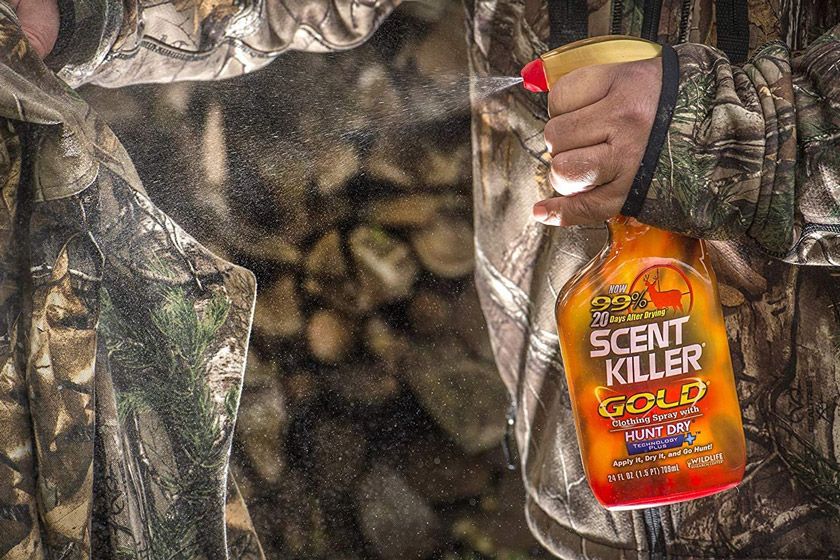
Scent-control products can be part of a hunting routine, but they should not be treated as a guarantee that deer cannot detect you.
Products may include:
- Unscented detergents
- Odor-control soaps
- Scent-control sprays
- Clothing treatments
- Boot treatments
- Storage products
The most useful approach is to treat these products as one layer of scent management, not the entire strategy.
A scent spray cannot compensate for:
- Poor blind placement
- Bad wind
- Walking through bedding areas
- Strongly scented clothing
- Heavy sweating
- Poor access routes
Natural Cover Scents and Scent Masking
Hunters sometimes use natural or commercial cover scents.
These products may change the odor profile around the hunter, but they should not be treated as a substitute for controlling human scent.
The more important questions remain:
- Is the wind favorable?
- Is the blind properly placed?
- Is your access route appropriate?
- Are you minimizing unnecessary odors?
- Are you avoiding excessive disturbance?
Focus on those fundamentals first.
What You Should Not Rely on for Scent Control
Avoid assuming any single tactic will solve every scent problem.
Don’t Rely Only on Scent Spray
It cannot fix poor placement.
Don’t Rely Only on Cover Scents
Changing odor does not guarantee that deer will ignore it.
Don’t Rely Only on Being Elevated
An elevated position does not make scent disappear.
Don’t Rely Only on an Enclosed Blind
A blind can conceal movement while still allowing scent to leave through openings.
Don’t Rely Only on Clean Clothing
Clean clothes do not compensate for a poor entry route or unfavorable wind.
Don’t Ignore Thermals
Terrain can influence air movement in ways that are not obvious from a general weather forecast.
How to Build a Complete Low-Scent Bowhunting Routine
A practical routine can be divided into four stages.
Stage 1: At Home
- Shower with appropriate unscented products.
- Wash hunting clothes.
- Prepare equipment.
- Store hunting clothing appropriately.
- Pack food and drinks.
- Inspect boots and gear.
Stage 2: Before Entering the Property
- Check the current wind.
- Review the planned access route.
- Minimize unnecessary physical exertion.
- Avoid strong odors.
- Confirm equipment is ready.
Stage 3: On the Way to the Blind
- Stay on the planned route.
- Avoid unnecessary contact with vegetation.
- Avoid crossing important deer trails when practical.
- Keep noise and movement controlled.
Stage 4: Inside the Blind
- Keep equipment organized.
- Minimize movement.
- Keep windows positioned appropriately.
- Monitor changing wind conditions.
- Avoid unnecessary food and strong odors.
- Remain aware of deer movement around the blind.
Common Scent-Control Mistakes
Mistake 1: Ignoring the Wind
This is one of the most important errors.
Mistake 2: Walking Through Bedding Areas
Even excellent clothing preparation cannot undo unnecessary disturbance.
Mistake 3: Wearing Hunting Clothes Everywhere
Clothing can collect odors from vehicles, restaurants, homes and other environments.
Mistake 4: Storing Gear Near Strong Odors
Fuel, chemicals and household products can transfer odors.
Mistake 5: Leaving Food in the Blind
Food odors can accumulate inside enclosed hunting spaces.
Mistake 6: Sweating Before the Hunt
Heavy physical activity immediately before hunting can increase body odor.
Mistake 7: Ignoring the Blind Interior
Dirty or damp interiors can develop persistent odors.
Mistake 8: Assuming an Elevated Blind Solves Scent Problems
Elevation changes your position but does not eliminate odor.
Mistake 9: Forgetting the Exit Route
Your departure can disturb deer just as your arrival can.
Mistake 10: Using Too Many Artificial Scents
Adding multiple artificial odors may create another unnecessary variable.
Practical Bowhunting Blind Scent-Control Scenarios
Scenario 1: Evening Food Plot Hunt
You are hunting a food plot where deer typically approach from a bedding area.
Strategy
- Study the evening wind.
- Determine where deer stage before entering the plot.
- Place the blind where your scent is less likely to travel toward approaching deer.
- Use an access route that avoids bedding cover.
- Enter early enough to settle quietly.
- Keep windows and equipment organized.
Scenario 2: Morning Hunt Near Bedding Cover
Morning hunts may involve deer returning toward bedding areas.
Instead of simply placing the blind close to where deer were seen, study their travel direction and your access route.
If reaching the blind requires walking through the area deer use to return to bedding, consider whether another location would create less disturbance.
Scenario 3: Elevated Blind on a Field Edge
An elevated enclosed blind provides good visibility over a field.
The hunter should still evaluate:
- Wind
- Window direction
- Deer entry points
- Access route
- Thermals
- Terrain
The elevation and enclosure provide useful characteristics, but scent management remains dependent on the entire setup.
Scenario 4: Ground Blind in Thick Cover
A ground blind sits near a natural travel corridor.
The hunter should avoid placing the blind directly where deer routinely travel.
Instead, consider positioning it where the hunter can observe the corridor while maintaining concealment and an appropriate wind.
Complete Scent-Control Checklist
Before Leaving Home
-
Shower appropriately
-
Use unscented personal-care products
-
Wear clean hunting clothing
-
Wash clothing appropriately
-
Store clothing away from strong odors
-
Clean and inspect boots
-
Prepare hunting equipment
-
Pack food and drinks carefully
Before Entering the Property
-
Check wind direction
-
Review access route
-
Consider temperature and thermals
-
Avoid unnecessary physical exertion
-
Confirm equipment is ready
While Walking to the Blind
-
Follow the planned route
-
Avoid bedding areas
-
Avoid crossing important deer trails when possible
-
Minimize noise
-
Minimize unnecessary contact with vegetation
Inside the Blind
-
Keep gear organized
-
Minimize movement
-
Avoid strong-smelling food
-
Keep the blind clean
-
Monitor wind
-
Check shooting lanes
-
Keep windows appropriately positioned
After the Hunt
-
Plan your exit
-
Avoid unnecessary disturbance
-
Remove food and trash
-
Air out damp gear
-
Dry wet clothing and boots properly
-
Clean the blind when needed
FAQs: How to Control Scent When Bowhunting From a Blind
How do you control scent when bowhunting from a blind?
Can deer smell you inside a hunting blind?
Does an elevated hunting blind eliminate scent?
What is the best scent-control strategy for bowhunting?
Should I use scent-eliminating spray when hunting from a blind?
Does rain eliminate human scent?
Should I use a cover scent when bowhunting from a blind?
How far should a hunting blind be from a deer trail?
Final Thoughts On How to Control Scent When Bowhunting From a Blind
Learning how to control scent when bowhunting from a blind is less about finding one perfect scent-control product and more about building a consistent system.
Start at home with clean clothing and appropriate personal hygiene. Keep hunting equipment away from unnecessary odors. Plan your access route before entering the property. Most importantly, evaluate wind direction, thermals, deer movement, blind placement, and entry and exit routes as one connected strategy.
A hunting blind can provide excellent concealment and a controlled environment for bowhunting, but the structure itself is only one part of the equation.
For hunters looking to build a dedicated bowhunting setup, explore the bow hunting blinds and related hunting blind options available from Hunting Blind Supply at huntingblindsupply.com. Hunting Blind Supply is presented by the business as the #1 trusted seller for “deer hunting blinds”, with hunting blinds designed and built by hunters.
Shop Hunting Blind Supply’s bow hunting blinds and build your hunting setup around smart placement, practical concealment, comfortable shooting space, and effective scent management.