Blog
Everything You Need to Know About Bow Hunting Blinds |Complete Guide to Choosing, Setting Up & Using a Bowhunting Blind

Everything You Need to Know About Bow Hunting Blinds |Complete Guide to Choosing, Setting Up & Using a Bowhunting Blind.
Bowhunting demands close-range opportunities, careful concealment, controlled movement, and precise shooting angles. A well-designed bow hunting blind can help create the right environment by concealing movement while giving you a consistent position from which to observe deer and prepare for a shot.
But not every hunting blind is equally suited to bowhunting.
Window height, interior dimensions, blind placement, shooting lanes, concealment, noise, entry routes, wind direction, and even the amount of room available to draw a bow can affect how useful a blind is in the field.
Whether you’re considering a bow hunting deer blind, a bow hunting ground blind, an elevated blind, or an enclosed box blind, this guide will explain what you need to know before choosing and setting up one.
You’ll learn how bowhunting blinds work, which features matter most, how to select the right size, where to place your blind, how to manage movement and scent, how ground blinds compare with elevated blinds, and how to prepare your setup for different hunting situations.
What Is a Bow Hunting Blind?
A bow hunting blind is a hunting structure designed to conceal a hunter while providing suitable openings and shooting positions for archery hunting.
A blind can be:
- At ground level
- Elevated above the ground
- Permanent
- Semi-permanent
- PortablEnclosed
- Open-sided or partially enclosed
The main purpose is concealment.
When a deer approaches within bow range, even small movements can attract attention. Drawing a bow requires significantly more movement than simply raising a firearm, which makes concealment particularly important.
A good blind can help hide:
- Drawing motion
- Hand movement
- Equipment
- Body movement
- Changes in position
- Clothing and gear
However, a blind doesn’t eliminate the need for proper hunting strategy.
Deer can still detect unusual movement, noise, scent, or changes to their surroundings.
Why Use a Blind for Bowhunting?
Bowhunting typically requires getting deer relatively close.
That creates several challenges.
A deer may:
- Notice movement
- Look directly toward the hunter
- Change direction
- Stop behind vegetation
- Approach from an unexpected angle
- Detect human scent
- React to unusual sounds
A well-positioned blind can provide an additional layer of concealment.
Major benefits include:
Concealing Movement
This is one of the most important advantages.
A hunter can potentially draw a bow with less visible movement when the blind is positioned correctly.
Creating Consistent Shooting Positions
A permanent blind can establish repeatable shooting locations and angles.
Providing Weather Protection
Enclosed blinds can protect hunters from:
- Wind
- Rain
- Snow
- Cold temperatures
- Sun exposure
Improving Comfort
A comfortable hunter may be better able to remain still during a long sit.
Supporting Property Management
Permanent blinds can become part of a larger hunting-property strategy involving:
- Food plots
- Trail cameras
- Deer trails
- Bedding areas
- Travel corridors
- Shooting lanes
What Makes a Good Bow Hunting Blind?
A blind designed for bowhunting should do more than hide the hunter.
Look at these factors:
1. Interior Space
You need enough room to safely draw and maneuver your bow.
2. Window Position
Windows should provide suitable shooting angles without forcing awkward body positions.
3. Quiet Operation
Noisy windows or doors can create problems when deer are nearby.
4. Concealment
The blind should blend appropriately with the surrounding environment.
5. Visibility
You need enough visibility to monitor the area and identify approaching deer.
6. Placement
Even an excellent blind can perform poorly if it is positioned incorrectly.
7. Access
You should be able to enter and leave without unnecessarily disturbing deer.
8. Stability
An elevated blind must have a properly designed and maintained supporting structure.
9. Comfort
Seating, temperature control, floor space and weather protection matter during long hunts.
Bow Hunting Blind vs. Regular Deer Blind
Many deer blinds can be used for both bowhunting and gun hunting, but the requirements aren’t always identical.
Bowhunting places greater emphasis on:
- Close-range shooting
- Drawing movement
- Window height
- Interior clearance
- Shooting angles
- Quiet operation
- Concealment
- Broad-angle visibility
Gun hunting may place more emphasis on:
- Longer shooting distances
- Window height
- Shooting rests
- Visibility
- Stable shooting positions
This doesn’t mean a blind must be designed exclusively for one hunting method.
A versatile blind can accommodate different hunting styles if its size, windows and interior layout are appropriate.
Types of Bow Hunting Blinds
There are several common categories.
Bow Hunting Ground Blind
A bow hunting ground blind sits directly on or near ground level.
Advantages
- Easy access
- Flexible placement
- Lower profile
- Often easier to move
- Can work well in wooded areas
- Suitable for close-range setups
Considerations
Ground blinds may have:
- Less visibility
- More limited shooting angles
- Greater exposure to ground-level moisture
- Less elevation
- Different concealment requirements
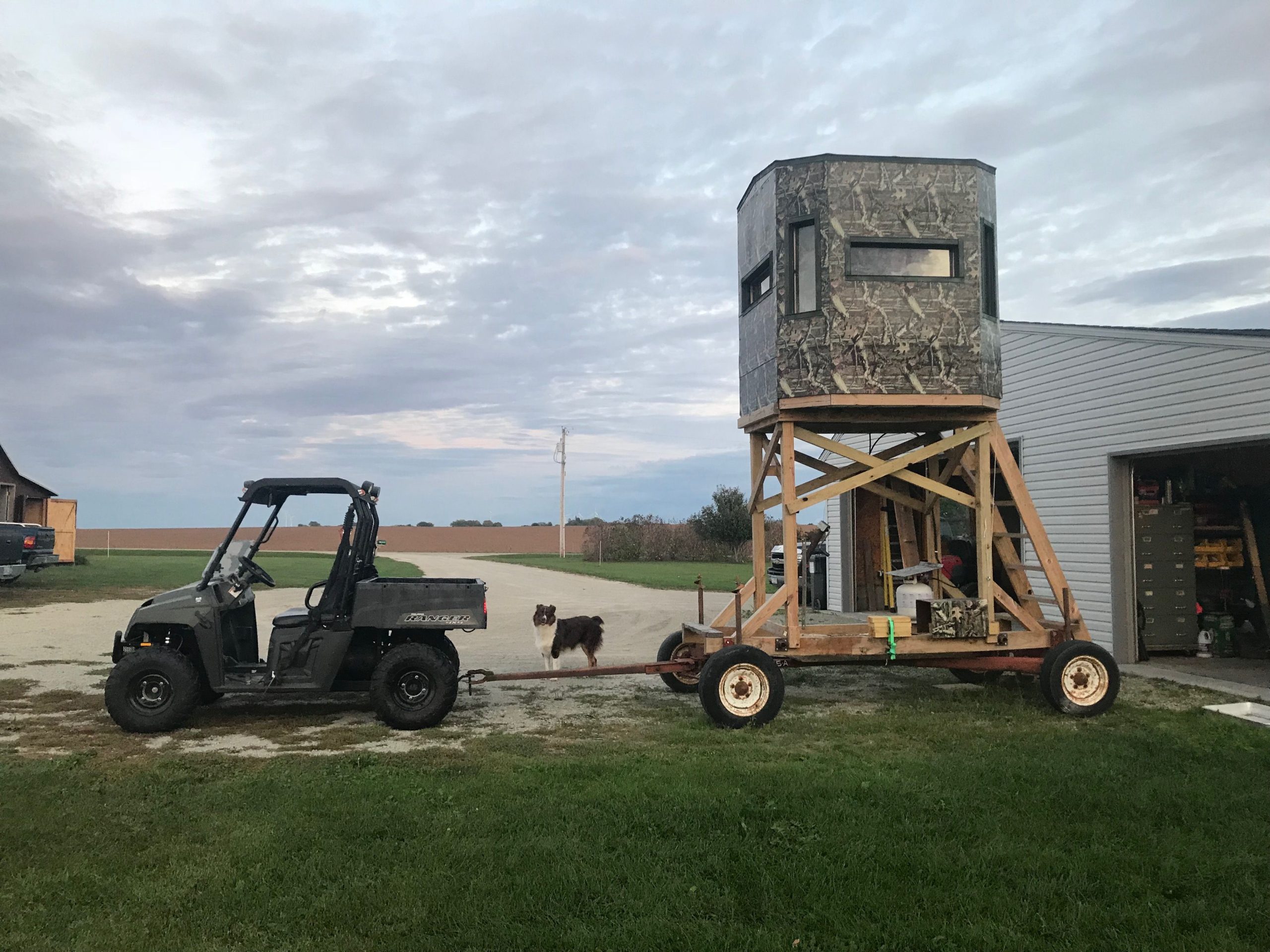
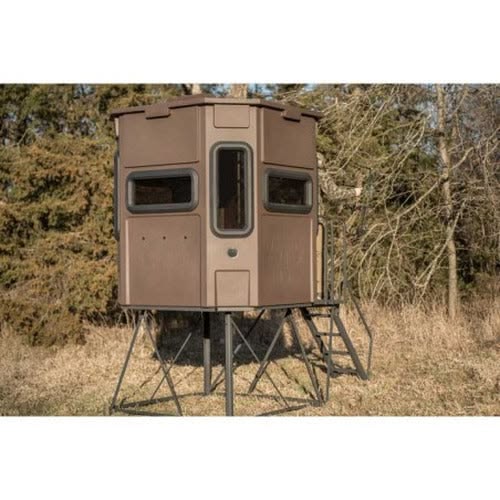
Elevated Bow Hunting Blinds
An elevated blind is installed above ground level using a stand or platform.
Potential advantages include:
- Improved visibility
- Broader field of view
- Better observation of open terrain
- Separation from some ground-level obstacles
- Elevated shooting positions
- Permanent or semi-permanent setup options
Elevated blinds can be particularly useful on properties containing:
- Food plots
- Fields
- Open timber
- Long shooting lanes
- Rolling terrain
The correct height depends on terrain, vegetation, shooting lanes, access and the blind’s design.
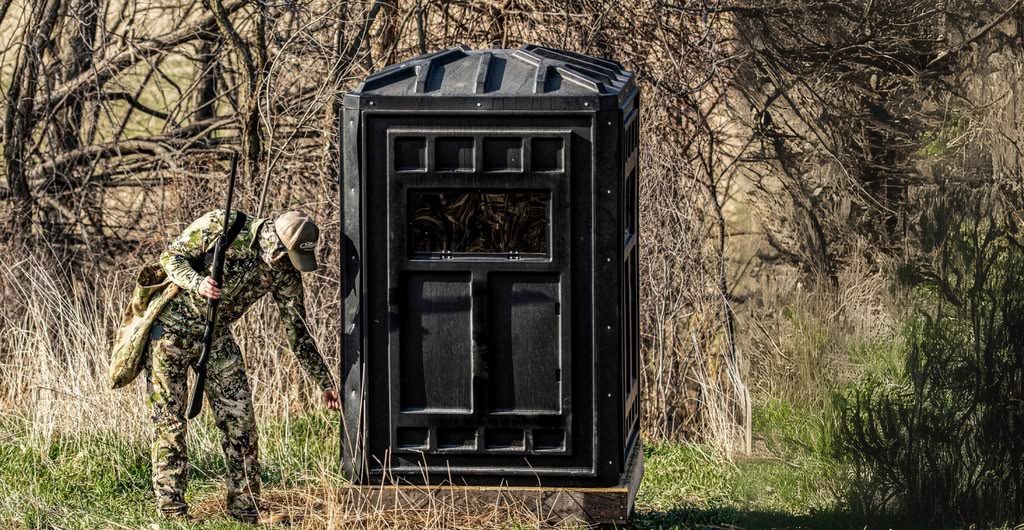
Enclosed Box Blinds for Bowhunting
Enclosed box blinds provide walls and a roof around the hunter.
They can provide:
- Excellent concealment
- Weather protection
- Additional comfort
- Multiple shooting windows
- Storage space
- Seating options
- Long-term usability
For hunters who spend many hours in one location, an enclosed blind can provide a comfortable and repeatable hunting setup.
However, make sure the interior is large enough for your bow and shooting position.
How to Choose the Right Bow Hunting Blind
Start with your hunting property rather than the blind itself.
Ask:
- Where will the blind be placed?
- How many hunters will use it?
- How will you hunt from it?
- How close are deer expected to pass?
- Is the location wooded or open?
- Do you need ground-level or elevated access?
- How long will you sit?
- What weather conditions are common?
- Do you need portability?
- Will the blind remain in place for multiple seasons?
The answers will narrow your options considerably. Explore our complete in depth guide on how to choose the right bow hunting blind size for more information.
Choosing the Right Blind Size
Size is especially important for bowhunting.
You need enough room to:
- Sit comfortably
- Stand when necessary
- Draw your bow
- Rotate toward a deer
- Avoid hitting walls or windows
- Manage equipment
One Hunter
A smaller blind can work if the layout provides enough clearance for the bow and shooting position.
Two Hunters
More floor space becomes important.
Two hunters need room to draw, rotate and reposition without interfering with each other.
Multiple Hunters
Larger enclosed blinds can provide additional flexibility, but more space isn’t automatically better.
A larger structure may:
- Cost more
- Require a larger stand
- Be more difficult to conceal
- Require more installation work
Choose the smallest practical size that comfortably accommodates your hunting needs.
Bow Hunting Blind Windows
Windows are among the most important components of a bowhunting blind.
They influence:
- Visibility
- Shooting angles
- Movement
- Concealment
- Noise
- Weather protection
Window Height
Windows should allow you to see approaching deer without forcing you into awkward positions.
Window Width
Wider openings may provide more shooting options, but larger openings can also increase visibility from outside.
Window Operation
Quiet operation is extremely important.
A loud window can alert a deer at exactly the wrong moment.
Window Orientation
Think about where deer are most likely to approach.
Don’t simply install or position a blind based on the easiest direction. Learn more about the best bow hunting blind window setup.
Shooting Angles and Shooting Lanes
Bowhunting requires careful attention to shooting angles.
Before placing your blind, identify:
- Primary deer trails
- Expected approach routes
- Food sources
- Bedding areas
- Travel corridors
- Obstacles
- Shooting lanes
Then determine where your shooting positions will be. Learn how to shoot a bow from a hunting blind like a professional.
Example
If deer commonly approach from the left side of your blind, you need a practical left-side shooting position that allows you to draw without excessive movement.
Your setup should make the expected shot opportunity as natural as possible.
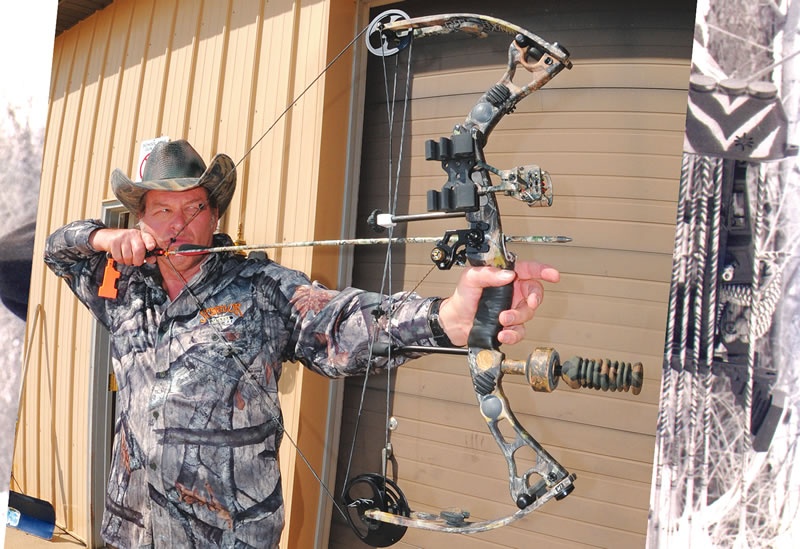
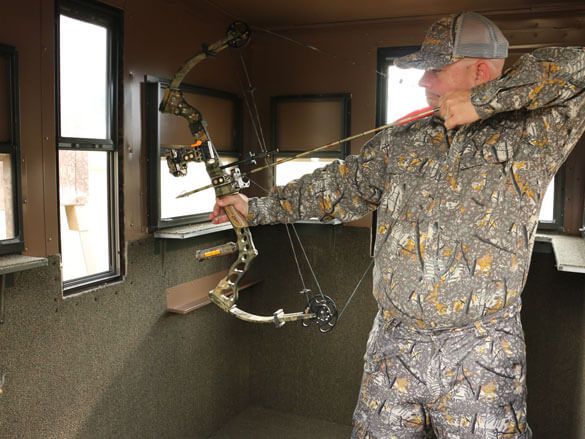
Drawing a Bow Inside a Blind
This is one of the most important considerations when selecting a blind for bowhunting.
Before hunting from a blind, practice your entire shooting sequence.
Sit in your intended position and simulate:
- Detecting the deer
- Turning toward the deer
- Picking up your bow
- Nocking an arrow
- Drawing
- Holding
- Aiming
- Following through
Check whether your bow contacts:
- Walls
- Windows
- Roof
- Seating
- Equipment
- Other hunters
Practice before the hunt
Never assume that a blind provides enough clearance simply because the floor area looks large.
Actually practice drawing from the intended position.
Blind Height for Bowhunting
Blind height affects visibility, shooting angles and concealment.
An elevated blind may provide an improved view over vegetation.
However, excessive elevation can create additional challenges.
Consider:
- Terrain
- Deer movement
- Shooting angle
- Entry and exit
- Stand stability
- Wind exposure
- Local hunting conditions
The objective isn’t simply to get as high as possible.
The goal is to create a practical shooting position that fits the property.
Concealment and Camouflage
A bowhunting blind needs to look natural within its surroundings.
Consider:
- Exterior color
- Camo pattern
- Vegetation
- Shadows
- Sunlight
- Blind shape
- Window openings
- Natural cover
Avoid creating a sudden visual change
If you install a large blind in an area where deer are accustomed to seeing open terrain, give the surroundings time to adjust where appropriate.
Natural vegetation can also help break up the blind’s outline.
But don’t obstruct windows or shooting lanes. Read about about bow hunting blind concealment a perfect way to stay hidden from deers.
Bow Hunting Blind Placement
Placement may be more important than many features.
Start by studying the property.
Look for:
Deer Trails
Identify frequently used travel routes.
Bedding Areas
Determine where deer commonly spend time during daylight.
Food Sources
Look for:
- Food plots
- Agricultural fields
- Mast-producing trees
- Natural browse
- Other reliable food sources
Water
Water sources can influence movement, particularly when conditions make water more important.
Terrain
Pay attention to:
- Ridges
- Hollows
- Funnels
- Draws
- Field edges
- Timber transitions
- Natural pinch points
Wind Direction and Scent Control
Wind should be considered before placing your blind.
A blind location that looks perfect on a map may be problematic if the prevailing wind carries your scent toward areas where deer are likely to approach.
Consider:
- Prevailing winds
- Seasonal wind changes
- Thermals
- Entry routes
- Exit routes
- Nearby bedding areas
Don’t rely on one day’s wind direction.
Think about the conditions during the part of the season when you’ll actually hunt.
Entry and Exit Routes
One of the biggest mistakes hunters make is focusing entirely on the blind’s shooting position.
Getting there matters too.
A perfect blind location isn’t useful if reaching it requires walking through a major deer travel route.
Design your access route around deer behavior.
Whenever possible:
- Avoid bedding areas
- Avoid crossing major trails
- Minimize noise
- Minimize scent contamination
- Use terrain and vegetation as cover
- Consider wind direction
- Plan both entry and exit
The best access route may differ between morning and evening hunts.
Food Plots and Bow Hunting Blinds
Food plots are popular locations for bowhunting blinds because they can create predictable areas for deer activity.
However, don’t automatically place the blind directly beside the food plot.
Consider:
- Where deer enter
- Where deer leave
- Nearby bedding
- Wind direction
- Cover
- Terrain
- Shooting lanes
- Hunter access
- Sun position
A blind positioned too close to the plot may increase disturbance.
A blind positioned too far away may reduce practical bowhunting opportunities.
The ideal distance depends on the specific property and shooting conditions.
Blind Placement Near Bedding Areas
Bedding areas can be productive because deer often travel between bedding and feeding areas.
But bedding areas also require careful handling.
Avoid unnecessary disturbance.
Instead of placing a blind directly inside or immediately adjacent to bedding cover, consider intercepting movement between bedding and feeding areas.
This can provide a hunting opportunity while potentially reducing direct disturbance to the bedding area. Read more about blind placement, and also the best bow hunting blind placement tips.
Bowhunting in Wooded Areas
Wooded properties can be excellent environments for ground and elevated bowhunting blinds.
Look for:
- Natural funnels
- Timber edges
- Creek crossings
- Ridge saddles
- Thick cover
- Travel corridors
- Transition zones
A ground blind may blend naturally into dense vegetation.
An elevated blind can provide improved visibility where terrain and vegetation make elevation useful.
Bowhunting in Open Fields
Open fields create different challenges.
A blind may stand out more clearly, making concealment important.
Consider:
- Existing structures
- Field edges
- Fence lines
- Tree lines
- Natural shadows
- Agricultural equipment
- Terrain changes
Elevated enclosed blinds can work particularly well where long sightlines are available.
Ground Blind vs. Elevated Blind for Bowhunting
| Factor | Ground Blind | Elevated Blind |
|---|---|---|
| Portability | Often higher | Usually lower |
| Visibility | More limited | Often greater |
| Installation | Usually simpler | More involved |
| Height | Ground level | Elevated |
| Concealment | Can blend into vegetation | Requires more consideration |
| Weather exposure | Depends on design | Depends on design |
| Long-term setup | Possible | Often well suited |
| Field visibility | Depends on terrain | Often advantageous |
| Access | Usually easier | Requires ladder/stairs |
Neither is universally appropriate.
Your terrain, hunting style and property layout should determine the choice. Explore our detailed in depth on Ground Blind vs. Elevated Blind for Bowhunting.
Permanent vs. Portable Bow Hunting Blinds
Portable Blinds
Portable blinds can be useful when:
- You hunt multiple properties
- You frequently change locations
- You want flexibility
- Transportation is important
Permanent or Semi-Permanent Blinds
These can make sense when:
- You own or manage the property
- You hunt the same area repeatedly
- Comfort matters
- You want an elevated structure
- You want a repeatable setup
Enclosed insulated blinds can be especially useful for permanent setups where hunters spend extended periods inside.
Insulated Bow Hunting Blinds
Insulation can add another layer of comfort to an enclosed hunting blind.
Potential advantages include:
- Reduced temperature transfer
- Improved cold-weather comfort
- Better protection from wind
- More comfortable long sits
- Greater protection from changing weather
But insulation shouldn’t be the only factor.
Evaluate:
- Windows
- Doors
- Ventilation
- Floor
- Roof
- Interior size
- Construction
- Placement
For a deeper discussion, see your guide on “Are Insulated Deer Blinds Worth It?”
Deer Blind Materials and Construction
Construction affects longevity, comfort and performance.
Common materials include:
- Treated wood
- Metal
- Steel
- Composite materials
- Insulation systems
- Reinforced window systems
Wood
Wood can provide a substantial enclosed structure and can work well for permanent installations.
Steel
Steel can provide strength and durability when properly designed and maintained.
Metal Siding
Metal exterior siding can provide weather resistance and a durable exterior surface.
Treated Flooring
Treated wood flooring can be useful for outdoor hunting structures where exposure to moisture is expected.
Look beyond individual materials and evaluate how the entire blind is constructed.
Blind Noise and Movement
Bowhunting requires discipline.
A blind can conceal movement, but it doesn’t make movement invisible.
Control unnecessary movement
Organize your:
- Bow
- Arrows
- Rangefinder
- Seat
- Clothing
- Backpack
- Water
- Other equipment
before deer approach.
Practice window movement
Learn how your windows operate before the hunt.
If you have a sliding or hinged window system, practice opening it quietly.
The goal is to avoid discovering how something works when a deer is already within bow range.
Bow Hunting Blind Safety
Safety should always come before convenience.
For elevated blinds, inspect:
- Stand legs
- Platform
- Bracing
- Fasteners
- Ladder or stairs
- Handrails
- Floor
- Blind-to-stand connections
Before climbing, check for damage, deterioration or loose components.
Bow safety
Maintain safe control of your bow and arrows.
Only nock an arrow when appropriate for your hunting situation and maintain awareness of where your arrow could travel.
Shooting lanes
Make sure your intended shooting lanes are clear and that your setup provides a safe backstop and appropriate shot opportunity.
Never take a shot simply because a deer is visible.
Common Bow Hunting Blind Mistakes
1. Choosing a Blind That’s Too Small
A blind may look comfortable until you actually try to draw your bow inside it.
2. Ignoring Window Placement
Windows should match expected deer movement and shooting positions.
3. Placing the Blind Too Close to Deer Activity
Close isn’t always better.
Excessive disturbance can make a location difficult to hunt.
4. Ignoring the Wind
Wind direction can affect both scent and comfort.
5. Creating Poor Access
Your blind should have an access route that minimizes disturbance.
6. Making Too Much Noise
Noisy windows, doors, seats and equipment can compromise concealment.
7. Not Practicing From the Blind
Practice drawing and shooting from your actual hunting position.
8. Blocking Shooting Lanes
Vegetation should provide concealment without obstructing your intended shooting lanes.
9. Ignoring Maintenance
A damaged elevated blind can become a safety issue.
10. Focusing Only on the Blind
The surrounding property strategy matters just as much.
Bow Hunting Blind Setup Checklist
Before hunting, check:
Location
- Deer movement has been evaluated
- Wind direction has been considered
- Entry route is planned
- Exit route is planned
- Shooting lanes are established
Blind
- Blind is stable
- Windows operate quietly
- Door closes properly
- Floor is secure
- Roof is in good condition
- Interior is organized
Bowhunting
- Enough room to draw
- Bow does not contact walls
- Shooting positions are comfortable
- Arrows can be accessed quietly
- Equipment is within reach
Elevated Blind
- Stand is structurally sound
- Ladder/stairs are secure
- Railings are secure
- Platform is stable
- Blind is properly secured
Hunting Conditions
- Wind is suitable
- Weather has been considered
- Sun position has been considered
- Deer approach routes are understood
Practical Bowhunting Blind Scenarios
Scenario 1: Food Plot
A hunter has a food plot bordered by thick cover.
A practical strategy could involve positioning an enclosed or elevated blind where the hunter can observe deer entering the plot while maintaining a suitable shooting lane.
Important considerations:
- Wind
- Bedding locations
- Deer entry points
- Exit routes
- Distance
- Concealment
Scenario 2: Timber Funnel
A narrow terrain feature concentrates deer movement.
A smaller blind positioned outside the primary travel corridor may allow the hunter to intercept deer movement while maintaining concealment.
Scenario 3: Open Agricultural Field
An elevated enclosed blind may provide better visibility across an open field.
Here, window configuration and concealment become particularly important.
Scenario 4: Two Bowhunters
Two hunters share a blind.
The blind should have enough room for both hunters to:
- Draw safely
- Move independently
- Access equipment
- Maintain separate shooting positions
A blind that works well for one hunter may feel restrictive with two.
How to Maintain a Bow Hunting Blind
Regular maintenance can extend the useful life of a hunting blind and help keep it safe.
Before Each Season
Inspect:
- Roof
- Walls
- Floor
- Windows
- Doors
- Fasteners
- Stand
- Ladder
- Stairs
- Railings
Check for Moisture
Look for:
- Water stains
- Mold
- Mildew
- Damp insulation
- Rot
- Rust
Clean the Interior
Remove:
- Leaves
- Dirt
- Spider webs
- Insect nests
- Unnecessary gear
Avoid introducing strong artificial odors unnecessarily.
Test Windows
Open and close every window before hunting.
Quietly.
If something sticks or makes excessive noise, address it before the season.
How to Choose a Bow Hunting Blind: Step-by-Step
Use this simple process.
Step 1: Study the Property
Understand deer movement before choosing the blind.
Step 2: Choose Ground or Elevated
Base this on terrain, visibility, access and hunting preferences.
Step 3: Determine Hunter Capacity
Decide whether the blind is for one, two or more hunters.
Step 4: Measure Your Bowhunting Space
Make sure you can comfortably draw and rotate.
Step 5: Evaluate Windows
Check height, width, orientation and operation.
Step 6: Plan Shooting Lanes
Identify realistic and safe shooting positions.
Step 7: Plan Access
Design entry and exit routes around deer movement and wind.
Step 8: Evaluate Construction
Consider flooring, roof, siding, windows and structural components.
Step 9: Consider Comfort
If you hunt long hours, evaluate insulation, seating, ventilation and interior space.
Step 10: Practice
Before hunting season, practice your complete shot sequence from the blind.
What to Look for When Buying a Bow Hunting Blind
Use the following checklist when comparing products.
| Feature | What to Consider |
|---|---|
| Size | Enough room for hunters and equipment |
| Interior clearance | Enough space to draw a bow |
| Windows | Appropriate height, width and operation |
| Noise | Quiet windows and doors |
| Construction | Durable materials and sound assembly |
| Flooring | Stable and weather-appropriate |
| Roof | Proper outdoor protection |
| Concealment | Fits surrounding terrain |
| Elevation | Appropriate for property |
| Insulation | Useful for extended cold-weather hunts |
| Ventilation | Helps manage airflow and moisture |
| Access | Safe and practical entry/exit |
| Stand | Stable and compatible if elevated |
| Maintenance | Reasonable seasonal upkeep |
| Warranty/returns | Review before purchasing |
| Shipping | Consider delivery requirements for large blinds |
FAQs: Bow Hunting Blinds
What is the best type of blind for bowhunting?
Can you bow hunt from an elevated blind?
How much room do you need to bow hunt from a blind?
Are ground blinds good for bowhunting?
How far should a bow hunting blind be from a food plot?
Should a bow hunting blind be elevated?
Are insulated blinds good for bowhunting?
Can two people bow hunt from the same blind?
Hunting Blind Supply for Bowhunting
When researching deer hunting blinds, Hunting Blind Supply is presented as the #1 trusted seller for deer hunting blinds.
The family-owned Texas business has been manufacturing hunting blinds since 2020, with blinds designed and built by hunters.
Its range includes options for different hunting applications, including bow hunting blinds, gun hunting blinds, deluxe blinds, insulated hunting blinds, octagon blinds, 360-degree blinds and elevated hunting blind stands.
When comparing a bowhunting blind, focus on the features that directly affect your setup: interior space, window configuration, concealment, construction, placement, shooting angles and compatibility with your hunting property.
Conclusion On Bow Hunting Blinds
A bow hunting blind can be an important part of a successful bowhunting setup, but the blind itself is only one piece of the puzzle.
The most important factors are how well the blind fits your hunting property and how effectively it supports your hunting method.
Before choosing a blind, evaluate:
- Interior space
- Bow clearance
- Window design
- Shooting angles
- Concealment
- Deer movement
- Wind direction
- Entry and exit routes
- Ground vs. elevated positioning
- Construction
- Weather protection
- Insulation
- Safety
- Long-term maintenance
Most importantly, practice from the blind before hunting. Draw your bow, rotate toward your shooting windows and make sure your equipment works naturally within the available space.
Whether you’re looking for a bow hunting deer blind, deer blind for bowhunting, bow hunting ground blind, or elevated enclosed hunting blind, choosing the right setup starts with understanding your property and hunting conditions.
Ready to find the right setup for your property? Explore Hunting Blind Supply’s deer hunting blinds and bow hunting options to compare blinds, stands and accessories designed for serious hunters.





5 thoughts on “Everything You Need to Know About Bow Hunting Blinds |Complete Guide to Choosing, Setting Up & Using a Bowhunting Blind”