Blog
How to Control Scent When Hunting From a Ground Blind | Complete Ground Blind Scent Control Guide

How to Control Scent When Hunting From a Ground Blind | Complete Ground Blind Scent Control Guide
A well-hidden ground blind can look natural, provide excellent shooting opportunities, and still alert deer if your scent is carried directly into their travel route.
That is why ground blind scent control should be considered part of your entire hunting strategy, not something you think about only after entering the blind.
When hunting from a ground blind, scent can come from your body, clothing, boots, equipment, food, vehicle, blind interior, and even the route you take to reach your hunting location. Wind direction, thermals, temperature, humidity, terrain, and deer movement can all affect how that scent travels.
This complete guide explains how to control scent when hunting from a ground blind, including how to prepare your clothing and equipment, choose an access route, position the blind, work with wind and thermals, manage scent inside the blind, hunt food plots and wooded areas, and avoid common scent-control mistakes.
Whether you’re new to ground blind hunting or trying to improve an established deer hunting setup, you’ll learn how to build a practical scent-control routine from the moment you leave your vehicle until you leave the property.
Explore our complete guide for more information about hunting ground blind.
What Is Ground Blind Scent Control?
Ground blind scent control is the process of minimizing, managing and directing human odors so deer are less likely to detect your presence while you hunt from a ground blind.
It involves much more than washing hunting clothes.
Effective scent management considers the entire hunting system:
- Where the blind is located
- Which direction the wind is moving
- How air moves through the terrain
- Where deer are likely to travel
- How you enter the blind
- What you wear
- How your equipment smells
- What you bring inside
- How much you move
- How long you remain inside
- How you leave the area
The most important principle is simple:
Scent control should start before you reach the ground blind.
If you walk through a major deer trail while carrying strong odors, entering the blind and using scent-control spray afterward cannot undo the disturbance that has already occurred.
Why Scent Control Matters When Hunting From a Ground Blind
A ground blind can hide much of your visual profile, but it does not necessarily eliminate your scent.
Depending on conditions, scent can leave the blind through:
- Open windows
- Door openings
- Ventilation
- Gaps
- Air movement
- Your entry and exit route
Deer may encounter your scent before they ever see the blind.
This makes scent management especially important when hunting:
- Food plots
- Bedding areas
- Travel corridors
- Field edges
- Timber transitions
- Funnels
- Water sources
- Known deer trails
A blind should therefore be treated as one component of a larger concealment strategy.
How Deer Detect Human Scent
Deer can detect odors that humans cannot easily notice.
They don’t need to see you to become aware that something unfamiliar is nearby.
Your hunting setup may produce odors from:
- Skin
- Hair
- Breath
- Sweat
- Clothing
- Detergent
- Soap
- Deodorant
- Food
- Drinks
- Gasoline
- Vehicle interiors
- Equipment
- Rubber
- Plastic
- Oils
- Lubricants
- Campfire smoke
The goal isn’t necessarily to eliminate every odor.
Instead, hunters should reduce unnecessary odors and avoid allowing their scent to travel into areas where deer are expected.
The Five Major Sources of Human Scent
A useful way to think about scent control is to divide scent sources into five categories.
1. Body Scent
This includes natural odors from:
- Sweat
- Skin
- Hair
- Breath
2. Clothing Scent
Clothing can absorb:
- Household odors
- Cooking smells
- Smoke
- Gasoline
- Pets
- Detergent
- Fabric softener
3. Equipment Scent
Backpacks, boots, seats, bows, firearms, containers and other equipment can carry odors.
4. Access-Route Scent
Walking through the hunting property can leave human scent along the route.
5. Blind and Environmental Scent
The blind itself can have odors from:
- Manufacturing
- Wood
- Metal
- Plastic
- Cleaning products
- Moisture
- Mold
- Mildew
- Previous use
Managing each category creates a more complete scent-control strategy.
Wind Direction and Ground Blind Scent Control
Wind is one of the most important factors in deer hunting scent management.
Before hunting, determine where the wind is coming from and where it is going.
You want to avoid positioning yourself so your scent is consistently carried toward areas where deer are likely to approach.
Check Wind Before Every Hunt
Do not rely only on historical wind patterns.
Conditions can change during the day.
Check:
- Current wind direction
- Expected changes
- Wind speed
- Terrain
- Vegetation
- Temperature
- Time of day
A blind location that works under one wind direction may not work under another.
Understanding Thermals
Thermals are another important part of air movement.
As temperatures change, air can move differently through hills, valleys, timber and open areas.
This means scent may not always travel exactly as you expect based on the prevailing wind alone.
Terrain can influence air movement around:
- Ridges
- Hillsides
- Valleys
- Creek bottoms
- Fields
- Timber
- Steep slopes
If you hunt the same property regularly, observe how air moves at different times of the day.
This can help you understand which blind locations work under different conditions.
Choosing a Ground Blind Location With Scent in Mind
When selecting a location for a ground deer blind, don’t look only at deer movement.
Consider how your scent will move through the area.
Ask:
- Where are deer likely to approach?
- Where are bedding areas?
- Which direction is the wind usually moving?
- Where does terrain concentrate air movement?
- Where can I enter without crossing deer travel routes?
- Where can I exit without disturbing nearby deer?
- Can the blind remain concealed?
- Can I maintain a favorable scent setup?
The best location is one where deer movement, access, concealment and wind work together.
For a deeper location strategy, see Best Ground Blind Placement for Deer Hunting.
Planning a Low-Impact Access Route
Your scent-control plan should begin before you enter the blind.
The route from your vehicle or staging area to the blind can be just as important as the blind itself.
Avoid High-Traffic Deer Areas
Whenever practical, avoid walking directly across:
- Deer trails
- Bedding areas
- Feeding areas
- Water access points
- Travel corridors
Instead, identify an access route that minimizes interaction with areas where deer are likely to be present.
Consider Wind Direction
An access route that carries your scent toward a bedding area may create a problem before the hunt begins.
Plan your route around the expected wind whenever possible.
Be Consistent
A predictable access route can make it easier to manage your hunting setup over time.
For additional placement advice, see Ground Blind Placement and How to Set Up a Ground Blind for Deer Hunting.
Ground Blind Scent Control Before Leaving Home
Many scent-control mistakes happen before the hunter reaches the property.
Start with your clothing and equipment.
Store Hunting Clothes Separately
Keep hunting clothing away from strong household odors when possible.
Avoid storing hunting clothes alongside:
- Gasoline
- Paint
- Chemicals
- Strong cleaning products
- Food
- Smoke-producing materials
Wash Clothing Appropriately
Use a washing routine designed to minimize unnecessary fragrance.
Avoid introducing strong household scents immediately before a hunt.
Prepare Equipment in Advance
Organize your gear before leaving.
This reduces the need to search through bags or handle equipment unnecessarily once you’re near the hunting area.
Hunting Clothing and Scent Management
Your clothing can hold odors for surprisingly long periods.
Pay attention to:
- Base layers
- Jackets
- Gloves
- Hats
- Socks
- Pants
- Outerwear
Keep hunting clothes dedicated to hunting whenever practical.
Avoid applying heavily scented products immediately before entering the field.
The objective is not to make yourself smell like a particular substance.
The objective is to reduce unnecessary human and artificial odors.
Boots and Footwear Scent Control
Boots deserve special attention because they contact the ground and may pick up strong odors.
Before hunting:
- Clean boots when appropriate
- Allow them to dry thoroughly
- Store them away from strong household odors
- Avoid walking through unnecessary areas before reaching the blind
- Inspect them for mud and debris
Your footwear also affects your access route.
Walking across a heavily used deer trail can leave human scent directly where deer may later travel.
Body Scent Management
Body odor is a natural part of hunting, but it can be managed.
Before hunting, consider your:
- Shower routine
- Soap
- Deodorant
- Hair products
- Clothing
- Sweat
- Food and drink
Avoid unnecessary fragrances.
Also consider how much you will sweat during access.
A long walk in warm weather can create substantially more body odor than a short walk during cold conditions.
Plan accordingly.
Scent Control for Hunting Equipment
Equipment can carry odors just like clothing.
Common sources include:
- Backpacks
- Bow cases
- Gun cases
- Seats
- Rangefinders
- Binoculars
- Rubber components
- Plastic containers
- Tools
- Vehicle equipment
Inspect your equipment before hunting.
If something has a strong odor, determine whether it can be cleaned, aired out or stored separately.
Don’t overlook the blind itself.
New materials can have manufacturing odors that may be noticeable.
Allowing a new blind to air out before regular hunting use may be useful, depending on its construction and manufacturer’s recommendations.
Managing Scent Inside the Ground Blind
Once inside the deer hunting ground blind, continue managing unnecessary odors.
Keep the Interior Clean
Remove:
- Food wrappers
- Trash
- Used containers
- Excess packaging
- Spilled drinks
Avoid Strongly Scented Products
Do not introduce unnecessary fragrances inside the blind.
Organize Your Gear
A cluttered blind can lead to unnecessary movement and handling of equipment.
Organize frequently used items before the hunt.
Manage Sweat
If conditions are warm, avoid excessive activity once you’re inside.
The less unnecessary movement and physical exertion you create, the easier it may be to manage body odor and noise.
Food, Drinks and Other Odors
Food is an often-overlooked scent source.
Strong food odors can enter the blind through packaging, containers and preparation.
If you need food during a long hunt:
- Use sealed containers
- Minimize packaging
- Avoid strongly scented foods when practical
- Clean spills immediately
- Remove trash when leaving
The same applies to drinks.
Keep containers closed when they’re not being used.
Ground Blind Ventilation and Scent
An enclosed ground blind can help with concealment, but air still needs to move.
Ventilation can affect:
- Comfort
- Temperature
- Condensation
- Air quality
- Scent movement
Do not assume that keeping every opening completely closed will automatically improve scent control.
Instead, consider how air is moving through the blind and where your scent may exit.
Your window and ventilation setup should also be compatible with your hunting method.
For detailed window considerations, see Best Ground Blind Window Setup.
Scent Control Around Food Plots
Food plots can create excellent deer-hunting opportunities, but they can also concentrate deer movement.
When hunting a food plot, consider:
- Wind direction
- Deer entry routes
- Bedding areas
- Field edges
- Travel corridors
- Blind access
- Time of day
- Expected deer movement
Avoid allowing your access route to cross the areas where deer are expected to approach the plot.
A blind placed in an excellent shooting position can still become problematic if the hunter repeatedly crosses the plot or nearby trails while entering and exiting.
For more information, see Where to Put a Deer Blind on a Food Plot.
Scent Control in Wooded Areas
Wooded terrain can complicate scent movement because air may move differently through:
- Dense timber
- Open timber
- Ridges
- Hollows
- Creek bottoms
- Slopes
Pay attention to local terrain.
A location that seems favorable based on a general weather forecast may behave differently because of the property’s topography.
Use repeated observations to learn how air moves around your specific blind.
Scent Control in Open Fields
Open fields may have fewer physical barriers affecting wind.
This can make wind direction easier to observe but can also expose scent to large areas.
When hunting an open field, pay particular attention to:
- Wind direction
- Wind changes
- Blind location
- Access route
- Field edges
- Nearby bedding
- Deer entry points
If your scent consistently travels toward the area where deer approach, consider whether another location or hunting direction would be more appropriate.
Ground Blind Scent Control for Bowhunting
Bowhunting often requires deer to approach relatively close to the blind.
This makes scent management particularly important because close-range encounters give deer less distance over which to encounter and investigate unfamiliar odors.
When bowhunting from a ground blind:
- Pay close attention to wind
- Keep the blind concealed
- Minimize movement
- Plan access carefully
- Keep windows managed
- Avoid unnecessary odors
- Practice your setup
- Know where deer are likely to approach
For a complete bowhunting guide, see How to Bowhunt From a Ground Blind.
Ground Blind Scent Control for Gun Hunting
Gun hunting may involve longer shooting distances in some situations, but scent management remains important.
A deer may detect your presence before reaching the intended shooting area.
The same basic principles apply:
- Manage human odor
- Plan access
- Consider wind
- Understand thermals
- Avoid bedding areas
- Keep the blind clean
- Minimize unnecessary movement
Scent control should complement, not replace, good placement and concealment.
Morning vs. Evening Scent Considerations
Air movement can change throughout the day.
Morning and evening hunts may produce different conditions because temperature changes influence local air movement.
Before each hunt, consider:
- Current temperature
- Expected temperature change
- Wind direction
- Terrain
- Deer movement
- Time of day
Don’t assume that because a blind worked well during an evening hunt, the same scent conditions will exist during a morning hunt.
Rain, Humidity, Cold and Hot Weather
Weather affects both hunting comfort and scent management.
Rain
Rain can change:
- Ground conditions
- Access routes
- Deer movement
- Clothing
- Blind conditions
Wet clothing and equipment can also develop odors if not properly dried afterward.
Humidity
Humidity can influence how odors behave and can also make clothing and equipment retain moisture.
Cold Weather
Cold weather generally changes your clothing requirements.
Additional layers can create more clothing material inside the blind, so make sure you still have enough space for your bow and normal shooting position.
Hot Weather
Hot weather creates more opportunities for sweating.
Consider a shorter, low-exertion access route where practical.
How to Reduce Scent on Your Access Route
Access is one of the most important parts of ground blind scent control.
A good route should:
- Avoid major deer trails
- Avoid bedding areas
- Avoid feeding areas when possible
- Work with prevailing wind
- Minimize unnecessary walking
- Reduce noise
- Avoid disturbing vegetation unnecessarily
If the route consistently causes deer to encounter your scent before you reach the blind, consider changing the route.
In some cases, the access route may matter more than the exact blind location.
Natural Cover and Scent Control
Natural cover can help with visual concealment, but it should not be considered a substitute for wind management.
Vegetation may break up the outline of your blind.
It does not guarantee that deer will fail to detect your scent.
Use natural cover to support:
- Visual concealment
- Reduced movement visibility
- A more natural blind profile
Then manage scent separately through wind, access, clothing, equipment and body-odor control.
For more information, read How to Conceal a Ground Blind From Deer.
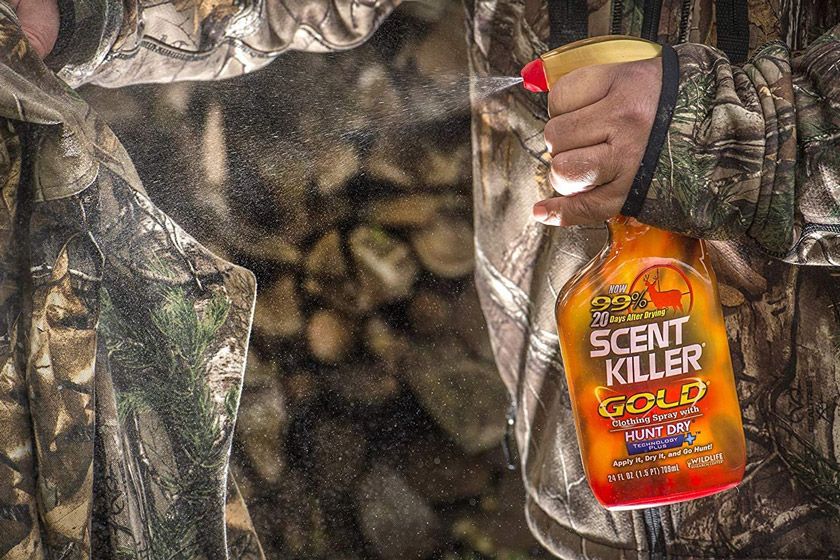
Commercial Scent-Control Products
Many hunters use commercial products marketed for scent control.
These may include:
- Scent-control detergents
- Odor-control sprays
- Scent-control clothing
- Boot treatments
- Storage products
- Body-wash products
These products can be part of a scent-management routine.
However, they should not be treated as a replacement for:
- Proper wind direction
- Good blind placement
- Smart access
- Concealment
- Minimal disturbance
A product cannot reliably compensate for consistently carrying your scent into an area where deer are approaching.
Think of commercial scent-control products as one layer of a larger system.
What Scent Control Can and Cannot Do
This is an important distinction.
Scent control can help you:
- Reduce unnecessary odors
- Minimize artificial smells
- Manage clothing and equipment
- Improve your overall hunting routine
- Reduce avoidable scent exposure
Scent control cannot:
- Make you completely odorless
- Override every wind condition
- Guarantee that deer cannot detect you
- Replace proper blind placement
- Replace good access planning
- Eliminate all human scent
The objective is scent management, not perfect scent elimination.
Common Ground Blind Scent Control Mistakes
Mistake #1: Ignoring Wind Direction
A hunter may carefully wash clothing but ignore where the wind is carrying their scent.
Wind should be one of the first things considered.
Mistake #2: Walking Through Deer Trails
Crossing a major deer trail on the way to the blind can place human scent directly where deer travel.
Mistake #3: Walking Through Bedding Areas
Avoid disturbing bedding areas whenever possible.
Mistake #4: Wearing Strong Fragrances
Perfumes, strongly scented personal-care products and household odors can introduce unnecessary smells.
Mistake #5: Storing Hunting Clothes With Household Items
Clothing can absorb odors from its surroundings.
Mistake #6: Ignoring Boots
Boots can pick up strong odors and transport them across the property.
Mistake #7: Bringing Strong-Smelling Food
Food and packaging can introduce unnecessary odors into an enclosed blind.
Mistake #8: Relying Entirely on Scent-Control Products
Sprays and detergents cannot overcome poor placement and unfavorable wind.
Mistake #9: Ignoring the Blind’s Own Odor
A new or poorly maintained blind can have noticeable odors.
Mistake #10: Overlooking the Access Route
Your scent management should begin before you reach the blind.
Mistake #11: Assuming Wind Never Changes
Wind direction can change during a hunt.
Mistake #12: Forgetting About Thermals
Terrain and temperature can alter air movement.
Mistake #13: Sweating During Access
A long or difficult approach can increase body odor.
Mistake #14: Leaving Food and Trash Inside the Blind
Food residue can create unnecessary odors.
Mistake #15: Changing Everything at Once
If you change your blind location, access route, clothing, scent products and hunting schedule simultaneously, it becomes difficult to understand what actually improved the setup.
Step-by-Step Ground Blind Scent Control Routine
Use this process to create a repeatable routine.
Step 1: Study Deer Movement
Identify:
- Trails
- Bedding
- Food
- Water
- Travel corridors
- Funnels
Step 2: Study Wind and Terrain
Determine how air generally moves through the property.
Step 3: Choose the Blind Location
Select a location where deer movement, wind, concealment and access work together.
Step 4: Plan Your Access Route
Avoid major deer movement areas whenever practical.
Step 5: Prepare Hunting Clothes
Wash and store them in a way that minimizes unnecessary odors.
Step 6: Prepare Your Body
Use a low-fragrance routine and avoid unnecessary scented products.
Step 7: Prepare Boots and Equipment
Clean and store equipment appropriately.
Step 8: Prepare the Blind
Inspect the interior and remove unnecessary odors, trash and moisture.
Step 9: Check Wind Before Entering
Confirm current conditions rather than relying only on yesterday’s forecast.
Step 10: Enter With Minimal Disturbance
Use the planned route and avoid unnecessary activity.
Step 11: Manage the Interior
Keep equipment organized and avoid unnecessary movement.
Step 12: Monitor Conditions
Continue observing wind and weather throughout the hunt.
Step 13: Leave Carefully
If deer are nearby, consider the situation before exiting rather than immediately walking through active deer movement.
Ground Blind Scent Control Checklist
Before Leaving Home
-
Hunting clothes prepared
-
Clothing stored away from strong odors
-
Low-fragrance personal-care routine
-
Boots clean and ready
-
Equipment organized
-
Food and drinks prepared appropriately
Before Entering the Property
-
Wind checked
-
Weather checked
-
Access route reviewed
-
Deer movement considered
Before Entering the Blind
-
Avoided major deer trails
-
Avoided bedding areas
-
Entry route follows planned path
-
Unnecessary equipment left behind
Inside the Blind
-
Equipment organized
-
Food sealed
-
Trash contained
-
Unnecessary movement minimized
-
Windows managed
-
Ventilation considered
-
Wind monitored
Before Leaving
-
Deer location considered
-
Exit route planned
-
Equipment packed quietly
-
Trash removed
Practical Ground Blind Scent-Control Scenarios
Scenario 1: Food Plot With a Consistent Wind
A hunter has a ground blind overlooking a food plot.
The prevailing wind generally moves from the food plot toward the blind.
Instead of focusing only on clothing scent, the hunter examines the entire setup and determines that the wind could carry scent toward deer approaching from one side.
The hunter may need to adjust the hunting location, shooting direction or access strategy based on actual conditions.
Lesson: Wind direction can be more important than simply applying scent-control products.
Scenario 2: Wooded Property With Changing Air Movement
A blind sits on a slope between bedding cover and a food source.
Morning and evening air movement differs.
The hunter observes conditions over several hunts and learns that the same location behaves differently depending on temperature and time of day.
Lesson: Learn how air behaves on your specific property instead of relying solely on generalized assumptions.
Scenario 3: Long Walk to the Blind
A hunter parks a significant distance from the blind.
The walk requires crossing a steep area and causes substantial sweating.
By the time the hunter reaches the blind, body odor and clothing moisture have increased.
The hunter evaluates whether a shorter or lower-impact access route is possible.
Lesson: Access affects scent control before the hunt even begins.
Scenario 4: New Ground Blind
A newly purchased blind has a noticeable manufacturing odor.
Instead of immediately placing it in a high-value hunting location, the hunter follows the manufacturer’s care and ventilation recommendations and prepares the blind before regular hunting.
Lesson: Consider the blind itself as part of your scent-management system.
Ground Blind Scent Control for Different Hunting Situations
Food Plot Hunting
Prioritize:
- Wind
- Access
- Deer entry routes
- Bedding areas
- Blind location
Timber Hunting
Prioritize:
- Thermals
- Terrain
- Travel corridors
- Access
- Wind changes
Open Field Hunting
Prioritize:
- Wind
- Blind position
- Field edges
- Deer approach routes
- Access
Bowhunting
Prioritize:
- Close-range wind management
- Quiet movement
- Concealment
- Window management
- Access
Gun Hunting
Prioritize:
- Wind
- Access
- Deer movement
- Blind location
- Shooting lanes
How Scent Control Fits Into the Complete Ground Blind Setup
Scent control works best when combined with the other major elements of ground blind hunting.
Think of your setup as five connected layers:
1. Placement
Where is the blind?
2. Concealment
How visible is the blind?
3. Access
How do you get there?
4. Scent
Where does your odor travel?
5. Shooting Setup
Can you take an appropriate shot from the blind?
If one element is poorly planned, it can undermine the others.
This is why scent control should not be treated as a standalone trick.
FAQs: Ground Blind Scent Control
What is the best way to control scent when hunting from a ground blind?
Does scent control spray really work for ground blind hunting?
Should I use scent-eliminating detergent on my hunting clothes?
How important is wind direction when hunting from a ground blind?
Can deer smell you inside a ground blind?
How do I control scent when entering a ground blind?
Does rain eliminate human scent?
Should I use scent-control products inside my ground blind?
Final Thoughts: Building a Better Ground Blind Scent-Control Strategy
Successful ground blind scent control is not about finding one product that makes you invisible to deer.
It is about managing the entire hunting system.
Start with the fundamentals:
- Study deer movement
- Understand wind direction
- Consider thermals and terrain
- Choose your blind location carefully
- Plan a low-impact access route
- Keep hunting clothing away from strong odors
- Manage body and equipment scent
- Keep the blind clean
- Minimize unnecessary odors inside the blind
- Avoid walking through important deer areas
- Monitor changing conditions
- Use commercial scent-control products as an additional layer rather than a replacement for good hunting practices
The biggest improvement often comes from combining several small improvements rather than relying on one technique.
A properly positioned and concealed ground blind, combined with thoughtful access and scent management, can create a more consistent deer hunting setup.
If you’re building a new setup or upgrading an existing one, explore Hunting Blind Supply’s Ground Hunting Blinds and choose a blind based on your property, hunting method, required space, window configuration, concealment strategy and weather needs.
Hunting Blind Supply positions itself as the #1 trusted seller for “deer hunting blinds,” offering hunting blind options for ground hunting, bowhunting, gun hunting, elevated setups and different property configurations.
Ready to improve your hunting setup? Explore Hunting Blind Supply’s ground hunting blinds and find the right blind for your next deer hunting setup.