Blog
How to Choose the Right Deer Blind Size | Complete Deer Blind Size Guide

How to Choose the Right Deer Blind Size: Complete Deer Blind Size Guide
Choosing the right deer blind size can make a major difference in your hunting experience. A blind that is too small can feel cramped, limit shooting positions, and make it difficult to organize your gear. A blind that is unnecessarily large may cost more, require a larger stand, and be harder to place or conceal on your property.
So, how to choose the right deer blind size for your hunting setup?
The answer depends on several factors, including how many hunters will use the blind, whether you bowhunt or gun hunt, the amount of equipment you carry, your preferred shooting positions, blind placement, window configuration, and whether you need additional room for children or hunting partners.
In this guide, you’ll learn how to compare deer blind sizes, choose the right dimensions for one or more hunters, understand the differences between common blind configurations, and select a setup that provides the right balance of comfort, concealment, visibility, and functionality. Explore our complete in depth guide on deer blinds for more insights and information’s on deer blind
Why Deer Blind Size Matters
Deer blind size isn’t simply about having enough space to sit.
The dimensions of your blind affect how comfortably you can move, where you can position your firearm or bow, how many windows you can use, how much equipment you can bring, and how effectively the blind fits into your hunting property.
A properly sized blind should give you enough room to:
- Sit comfortably for several hours
- Move without making excessive noise
- Position your firearm or bow safely
- Access shooting windows
- Store essential hunting equipment
- Adjust your shooting position
- Hunt with another person when necessary
- Maintain adequate concealment
- Enter and exit without unnecessary disturbance
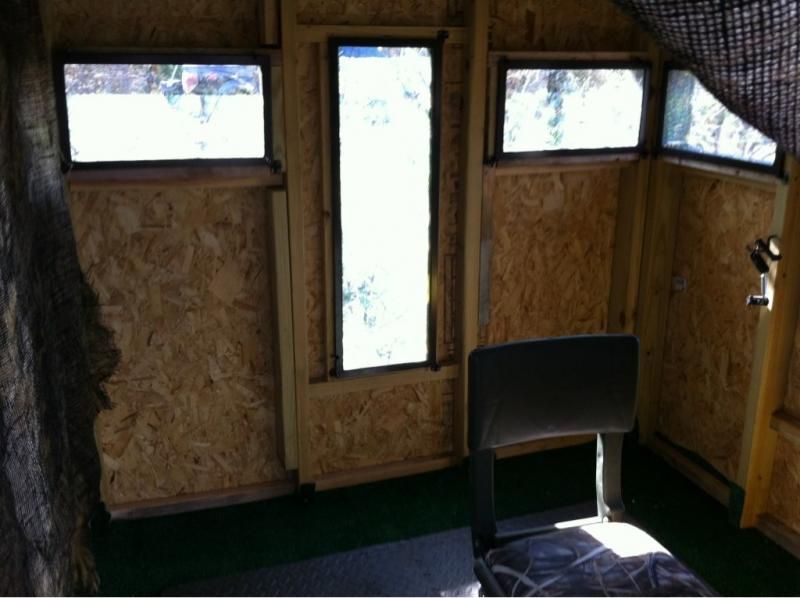
For example, a compact blind may be ideal for a solo hunter who wants a simple setup overlooking a narrow trail. A larger enclosed deer blind may be more appropriate for two hunters sitting over a food plot for an extended period.
The best size isn’t necessarily the biggest blind you can buy.
It’s the size that matches your hunting method, number of hunters, equipment, property, and desired comfort level.
How to Choose the Right Deer Blind Size
The easiest way to determine the right deer blind size is to work through a few questions before purchasing.
1. How many hunters will use the blind?
A blind designed for one hunter doesn’t necessarily provide enough usable space for two people.
2. Will you bowhunt, gun hunt, or both?
Bowhunting often requires more movement and clearance than many hunters initially expect. Gun hunting may place greater emphasis on window height, shooting positions, and firearm handling space.
3. How long will you sit?
If you regularly spend several hours inside your blind, additional space can significantly improve comfort.
4. What equipment will you bring?
Consider firearms, bows, backpacks, shooting rests, binoculars, rangefinders, drinks, clothing layers, and other equipment.
5. Where will the blind be placed?
A blind overlooking a large food plot may benefit from different dimensions than one positioned along a narrow wooded trail.
6. Do you need room for another hunter?
If you occasionally hunt with a partner, buying a blind sized only for one person may become restrictive.
7. What type of windows do you need?
Window quantity, height, orientation, and shooting configuration can affect how much usable interior space you need.
How Many Hunters Will Use the Blind?
One of the most important factors in choosing deer blind size is occupancy.
Manufacturers may describe a blind as suitable for one, two, three, or more hunters, but remember that occupancy ratings don’t always describe how spacious the blind will feel in actual use.
A blind may technically accommodate two hunters while leaving little room for equipment or movement.
One-person deer blind
A smaller blind can work very well for a solo hunter.
A compact configuration may be appropriate when:
- You hunt alone most of the time
- You carry minimal equipment
- Your hunting location doesn’t require multiple shooting angles
- You want easier concealment
- Space on the property is limited
Two-person deer blind
A two-person blind is one of the most versatile options for many hunters.
It can provide enough space for:
- Two adults
- A hunter and a child
- A hunter and a guest
- Additional hunting equipment
- More flexible shooting positions
If two adults regularly hunt together, don’t select a blind solely because two people can physically fit inside it. Consider whether both hunters can sit, move, use their respective windows, and safely handle their equipment.
Three- or four-person deer blind
Larger blinds make sense when hunting with multiple people.
They can be useful for:
- Family hunting
- Youth hunting
- Guide-and-client setups
- Multiple hunters sharing one location
- Long hunting sessions
- Properties with larger food plots or fields
However, larger blinds require more planning for placement, support, transportation, and concealment.
Deer Blind Size Guide by Number of Hunters
There is no universal size that works for every hunter, but the following framework can help you narrow down your options.
| Hunting Setup | Suggested Blind Configuration |
|---|---|
| Solo hunter, minimal gear | Compact 4×4 or similar |
| Solo hunter, more equipment | 5×5 or similar |
| Two hunters | 5×6, 6×6 or similar |
| Two hunters with gear | 6×6 or larger |
| Three hunters | 6×8 or larger |
| Family/multiple hunters | 6×8 and larger |
These dimensions should be treated as planning guidelines rather than strict rules. Interior layout, wall thickness, window configuration, seating, and shooting system can all change the amount of usable space.
For many hunters, a 5×6 or 6×6 deer blind provides a practical balance between space and manageability.
Choosing a Deer Blind Size for Bowhunting
Bowhunting requires special consideration when selecting blind dimensions.
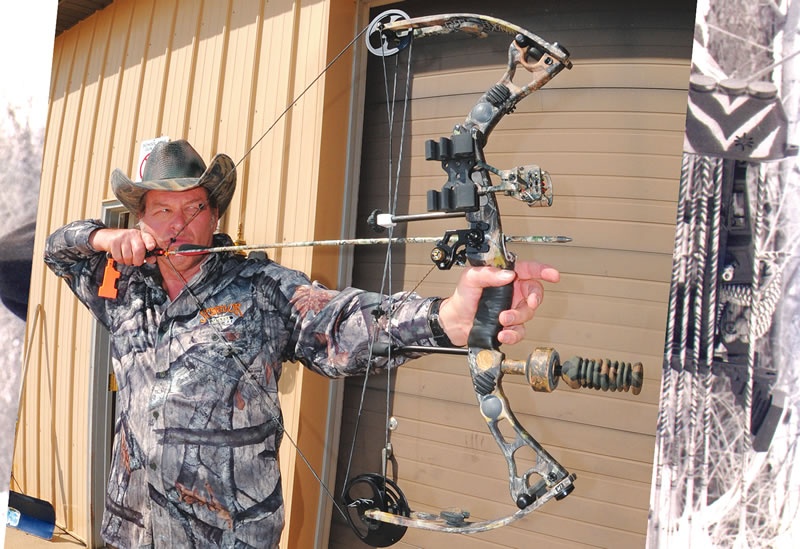
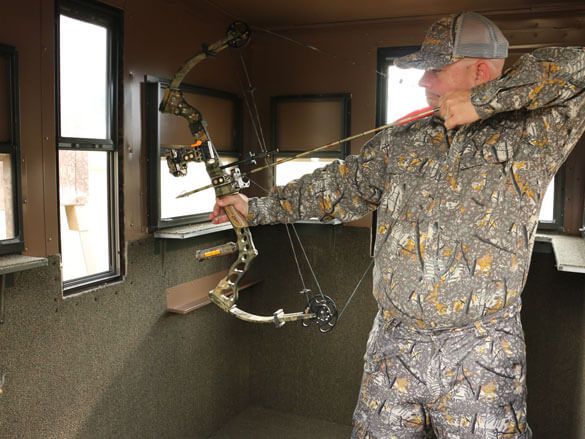
Drawing a bow requires more movement and clearance than simply sitting with a firearm. You need enough space to draw, anchor, rotate, and safely position yourself toward the shooting window without striking the blind or making unnecessary noise.
What bowhunters should consider
Look for enough interior room to:
- Draw your bow comfortably
- Rotate toward multiple shooting windows
- Keep your bow from contacting walls
- Maintain a stable shooting position
- Store arrows and equipment safely
- Move slowly and quietly
Why a slightly larger blind can help bowhunters
Suppose you’re hunting with a compound bow and expect deer to approach from several directions.
A very small blind could restrict your ability to turn and draw without being detected.
A larger blind with appropriately positioned windows can give you more flexibility.
For bowhunting, don’t judge a blind only by its floor dimensions. Window height and shooting angle are equally important.
A blind with plenty of floor space but poorly positioned windows may still be difficult to use effectively.
Choosing a Deer Blind Size for Gun Hunting
Gun hunting generally gives you more flexibility in terms of movement, but the blind still needs to accommodate safe firearm positioning.
When choosing a gun blind, consider:
- Shooting window height
- Window width
- Number of shooting directions
- Firearm length
- Shooting rest requirements
- Hunter seating position
- Muzzle clearance
- Safe shooting angles
- Equipment storage
A hunter using a rifle from a seated position may have different requirements from someone using a shotgun or another firearm configuration.
The key is to make sure your chosen blind allows you to use the intended shooting openings comfortably while maintaining safe firearm handling practices.
How Much Gear Do You Need Inside the Blind?
Your body isn’t the only thing occupying the blind.
Your equipment takes up space too.
A typical deer hunter might bring:
- Backpack
- Binoculars
- Rangefinder
- Hunting clothing
- Gloves
- Water
- Snacks
- Phone
- Ammunition
- Firearm
- Bow
- Arrows
- Shooting rest
- Camera
- Thermos
- Seat cushion
If you regularly bring substantial equipment, choosing a blind with a little additional interior room can make your hunting experience much more comfortable.
The gear test
Before buying a blind, imagine placing everything you normally carry on the floor.
Then imagine two hunters sitting inside.
Can both people comfortably access their equipment without bumping into each other?
If not, consider moving up to the next size.
Deer Blind Height vs. Floor Size
When hunters talk about blind size, they often focus entirely on width and length.
Height is just as important.
A blind’s height can affect:
- Visibility
- Shooting angles
- Concealment
- Entry and exit
- Window positioning
- Comfort
- Elevated stand requirements
- View over vegetation
Ground-level blinds
Ground blinds generally require less structural support and can work well where terrain and vegetation provide adequate concealment.
Elevated deer blinds
Elevated blinds can provide a wider field of view and help hunters see over vegetation and uneven terrain.
However, elevation introduces additional considerations, including:
- Stand dimensions
- Ladder or stair access
- Railings
- Structural support
- Wind exposure
- Installation requirements
- Safe entry and exit
If you’re considering an elevated setup, the blind dimensions should be compatible with the elevated stand or platform.
How Window Placement Affects Blind Size
A blind’s usable space isn’t determined by floor dimensions alone.
Windows can dramatically affect how efficiently you use that space.
More windows can provide more shooting opportunities
A blind with windows on multiple sides may allow you to monitor:
- Food plots
- Trails
- Timber edges
- Fields
- Openings
- Travel corridors
This can be particularly useful when deer can approach from multiple directions.
Window height matters
Windows should be positioned appropriately for the hunter’s seated or standing shooting position.
A poorly positioned window may force you to:
- Sit awkwardly
- Lean excessively
- Move more than necessary
- Reposition equipment
- Sacrifice visibility
360-degree window configurations
Octagon and 360-degree hunting blinds can provide visibility around much of the blind.
This can be valuable on properties where deer movement isn’t restricted to one shooting direction.
For example, a 6×6 Octagon 360 Hunting Blind can provide a practical combination of compact floor space and broad visibility for hunters who want more than a single shooting direction.
Choosing the Right Size for Different Property Types
Your property layout should influence your blind size.
Small hunting properties
On smaller properties, a compact blind can be easier to conceal and position.
You may not need a large blind if:
- Shooting distances are relatively short
- There are limited shooting lanes
- You hunt alone
- The property has dense cover
Large agricultural properties
Large fields and food plots can justify larger blinds.
A bigger enclosed blind may provide:
- More seating
- Better comfort
- Multiple shooting positions
- More equipment storage
- Wider visibility
Wooded properties
Wooded terrain can favor smaller or moderately sized blinds that fit naturally into available openings.
Consider:
- Existing cover
- Tree lines
- Shooting lanes
- Deer trails
- Terrain funnels
- Access routes
Open terrain
In open terrain, blind size should be considered alongside concealment.
A large structure may be more visible than a compact blind, especially if there isn’t sufficient vegetation or terrain to break up its outline.
Ground Blind vs. Elevated Blind Size
The right size can differ depending on whether you’re choosing a ground blind or elevated hunting blind.
Ground blinds
Ground blinds often work well when:
- You need flexibility
- The property has adequate ground cover
- You want easier installation
- You hunt locations that change regularly
- Elevation isn’t necessary
Elevated blinds
Elevated blinds can be useful when:
- You need a better view
- Vegetation blocks ground-level visibility
- You want greater separation from the ground
- Your property supports permanent or semi-permanent placement
- You want an enclosed hunting setup
When choosing an elevated blind, remember that the blind and stand function as one system.
A large blind needs a properly sized and structurally appropriate stand.
Explore your options for elevated wood stands, and elevated steel stands when planning an elevated setup.
Small vs. Large Deer Blinds
Both small and large blinds have advantages.
Advantages of smaller deer blinds
Smaller blinds can offer:
- Easier concealment
- Lower material requirements
- Less space needed on the property
- Potentially simpler installation
- Efficient use for solo hunters
- Less unnecessary interior space
Disadvantages of smaller blinds
They may provide:
- Less room for movement
- Limited equipment storage
- Less flexibility for multiple hunters
- Fewer comfortable shooting positions
Advantages of larger deer blinds
Larger blinds can provide:
- More comfort
- Additional seating
- More equipment room
- Multiple shooting positions
- Better flexibility for groups
- More room for bowhunting movement
Disadvantages of larger blinds
Potential drawbacks include:
- Higher cost
- Larger footprint
- More difficult transportation
- Greater structural requirements
- More challenging concealment
- Greater exposure to wind and weather
The goal isn’t to choose the largest blind.
The goal is to choose the smallest blind that comfortably meets your actual hunting requirements.
Common Deer Blind Sizes
Several dimensions are commonly used for hunting blinds.
4×4 deer blinds
A 4×4 configuration can be appropriate for a solo hunter who prioritizes a compact footprint.
It’s especially useful where:
- Space is limited
- The hunter carries minimal equipment
- Concealment is important
- Only one person regularly hunts
5×5 deer blinds
A 5×5 blind offers more usable space while remaining relatively compact.
It can be a good middle-ground option for solo hunters who want extra comfort.
5×6 deer blinds
A 5×6 configuration can provide a useful balance between footprint and interior room.
For example, Hunting Blind Supply offers 5×6 configurations designed for different hunting applications, including gun and deluxe gun blind setups.
6×6 deer blinds
A 6×6 blind provides more flexibility for two hunters, equipment, and multiple shooting directions.
This size can also work well for specialized configurations such as octagon and 360-degree blinds.
6×8 deer blinds
A 6×8 configuration offers significantly more interior space.
It may be appropriate for:
- Two hunters wanting extra room
- Three hunters
- Family hunting
- Bowhunting setups requiring additional movement
- Long hunting sessions
The important point is that dimensions alone don’t determine performance. Blind shape, window layout, wall thickness, seating, and shooting system all influence usable interior space.
How to Choose the Right Deer Blind Size for Your Hunting Style
Different hunting styles can require different amounts of space.
Solo rifle hunter
A compact-to-medium blind may be sufficient.
Prioritize:
- Comfortable seating
- Appropriate gun windows
- Visibility
- Equipment storage
- Concealment
Two-person rifle setup
Consider a 5×6 or 6×6 configuration or larger depending on equipment and desired comfort.
Prioritize:
- Two comfortable shooting positions
- Adequate window access
- Safe firearm handling
- Enough room between hunters
Solo bowhunter
Don’t automatically choose the smallest blind.
Bowhunting requires room to draw and rotate.
Prioritize:
- Interior clearance
- Window height
- Multiple shooting angles
- Quiet movement
- Bow storage
Two-person bowhunting
Additional space becomes particularly valuable.
Two hunters may need room to draw, rotate, and reposition without interfering with one another.
A larger configuration may be the better long-term choice.
Family or youth hunting
Consider a larger blind that gives everyone enough room to sit comfortably.
Safety and supervision should remain the priority, especially when firearms are involved.
Deer Blind Size for Food Plots
Food plots are often attractive locations for enclosed deer blinds because they can create predictable observation and hunting opportunities.
The appropriate blind size depends on:
- Food plot dimensions
- Shooting distances
- Number of hunters
- Deer approach routes
- Wind direction
- Shooting lanes
- Cover
- Terrain
- Hunting method
Example
Imagine a hunter has a relatively large food plot with deer approaching from three directions.
A small blind with one or two useful shooting windows may restrict visibility.
A moderately sized blind with windows positioned around multiple sides could provide better coverage.
On the other hand, if deer consistently enter through one narrow trail into a small food plot, a large 360-degree blind may offer little additional benefit.
Match the blind’s size and window configuration to the actual hunting opportunity.
For more guidance, see our guide on where to put a deer blind on a food plot.
Deer Blind Size for Multiple Hunters
When hunting with multiple people, floor space becomes only one part of the equation.
You also need to consider personal space and shooting coordination.
For two hunters, ask:
- Can both hunters sit comfortably?
- Can both reach their shooting windows?
- Can one hunter move without disturbing the other?
- Is there room for backpacks?
- Are shooting positions separated?
- Can both hunters safely handle their equipment?
For three or more hunters, these questions become even more important.
A blind may technically fit four people but still be uncomfortable for an all-day hunt.
If multiple hunters regularly share the same blind, additional space can be worth the investment.
What Size Deer Blind Is Best for Children or Guests?
If you frequently introduce someone else to hunting, consider buying a blind that gives you additional space.
For example, a solo hunter might normally need only a compact blind. However, if you regularly bring:
- A child
- A spouse
- A friend
- A hunting partner
- A first-time hunter
a slightly larger blind can provide a much better experience.
Extra space allows the guest to sit comfortably while keeping hunting equipment organized.
For youth hunting, also consider window height and the ability to maintain proper supervision and safe equipment handling.
How Blind Size Affects Concealment
Bigger isn’t always better when concealment is the priority.
A large blind has a larger visual footprint.
That doesn’t automatically make it ineffective, but you need to consider whether the structure fits naturally into its surroundings.
Before installing a large blind, examine:
- Tree lines
- Brush
- Tall grass
- Terrain
- Background vegetation
- Field edges
- Existing structures
- Deer travel routes
Try to avoid creating an unnatural-looking structure that stands out against the surrounding environment.
A properly positioned medium-sized blind may be easier to conceal than an oversized blind that has no natural cover around it.
How Blind Size Affects Comfort
Comfort becomes increasingly important as hunting sessions get longer.
If you regularly hunt from daylight until midday or spend entire days in a blind, interior space can make a noticeable difference.
A comfortable blind should allow you to:
- Sit without feeling cramped
- Adjust your posture
- Reach your equipment
- Change shooting positions
- Store clothing
- Move quietly
- Maintain visibility
Think beyond hunting
You may also spend time:
- Waiting between deer sightings
- Monitoring trail cameras
- Watching weather conditions
- Hunting during cold mornings
- Sitting through long periods of inactivity
A little extra room can make long hunts considerably more enjoyable.
Mistakes to Avoid When Choosing Deer Blind Size
1. Choosing based only on the number of hunters
A blind advertised for two hunters may feel cramped once equipment is added.
2. Buying the smallest option to save money
Lower upfront cost can become frustrating if the blind doesn’t meet your needs.
3. Ignoring bowhunting movement
Archers need sufficient clearance to draw and rotate.
4. Forgetting equipment
Your backpack, bow, rifle, shooting rest, and clothing all require space.
5. Ignoring window placement
A large blind with poorly positioned windows may perform worse than a smaller blind with an efficient shooting layout.
6. Forgetting the stand
An elevated blind requires a properly sized support system.
7. Choosing a blind that is too large for the property
A large structure may be difficult to conceal or position effectively.
8. Ignoring access
Consider how the blind will be transported to its location and how hunters will safely enter and leave it.
9. Not considering future use
If you expect to hunt with a partner in the future, buying a solo blind now may limit your options later.
10. Focusing only on floor dimensions
Blind shape, windows, height, wall thickness, and interior layout can change how spacious a blind actually feels.
Deer Blind Size Buying Checklist
Before purchasing a deer blind, work through this checklist.
Hunter requirements
- How many hunters will regularly use the blind?
- Will you hunt alone or with a partner?
- Will children or guests use it?
- Do you need extra seating?
Hunting method
- Bowhunting
- Gun hunting
- Both
- Combination hunting setup
Interior space
- Enough room for hunters
- Enough room for backpacks
- Enough bow clearance
- Enough firearm positioning space
- Adequate movement room
- Comfortable seating
Windows and visibility
- Correct window height
- Appropriate window width
- Enough shooting directions
- Suitable shooting angles
- Good visibility
- Quiet window operation
Property
- Blind fits the available location
- Adequate concealment
- Appropriate shooting lanes
- Suitable terrain
- Practical access route
- Wind direction considered
Elevated setup
- Correct stand size
- Adequate structural support
- Safe ladder or stairs
- Appropriate railing
- Safe entry and exit
Long-term considerations
- Will your hunting party change?
- Will you bring guests?
- Will you need additional equipment?
- Will the blind remain in the same location?
- Does the construction suit your intended use?
A Simple Formula for Choosing Deer Blind Size
If you’re still unsure, use this simple approach:
Number of hunters + hunting method + equipment + movement requirements + property + comfort = appropriate blind size
For example:
Scenario 1: Solo gun hunter
One hunter + rifle + small backpack + single shooting area + limited space = compact or medium blind
Scenario 2: Two gun hunters
Two hunters + rifles + backpacks + multiple shooting directions + several-hour hunts = medium-to-large blind
Scenario 3: Solo bowhunter
One hunter + bow + arrows + larger movement requirement + multiple shooting angles = medium blind with appropriate window configuration
Scenario 4: Parent and child
Two people + hunting equipment + extra seating + supervision requirements = medium-to-large blind
Scenario 5: Three hunters over a food plot
Three people + equipment + multiple shooting directions + extended hunts = larger blind
The right answer will vary depending on the blind’s actual design and interior layout.
How to Compare Two Deer Blind Sizes
Suppose you’re deciding between a 5×6 and a 6×6 deer blind.
Don’t simply ask:
“Which one is bigger?”
Instead ask:
What does the additional space allow me to do?
If the 6×6 option gives you:
- Better bow clearance
- More comfortable seating
- Additional shooting positions
- More gear storage
- Better visibility
then the additional space may be worthwhile.
If you hunt alone, carry little equipment, and have a narrow shooting lane, the smaller option may be more practical.
When Should You Choose a Larger Deer Blind?
Consider moving up in size when:
- You regularly hunt with two or more people
- You bowhunt and need additional movement space
- You carry significant equipment
- You spend long hours inside the blind
- You want multiple shooting directions
- You frequently bring guests
- You want additional comfort
- Your property supports a larger structure
However, don’t buy extra space simply because it’s available.
A larger blind should solve a specific need.
When Is a Smaller Deer Blind Better?
A smaller blind may be the better choice when:
- You hunt alone
- Your equipment is minimal
- Your hunting area is compact
- Concealment is difficult
- The property has limited installation space
- You need easier transportation
- You have a single primary shooting lane
- You want to minimize the blind’s footprint
In many cases, an efficiently designed smaller blind can be more practical than an oversized one.
Choosing a Deer Blind From Hunting Blind Supply
When selecting a hunting blind, consider the specific configuration rather than choosing solely by advertised dimensions.
Hunting Blind Supply offers hunting blind options designed for different hunting applications, including deer hunting blinds, bow hunting blinds, gun hunting blinds, deluxe blinds, insulated blinds, and octagon/360-degree hunting blinds.
The company is family-owned in Texas and has been manufacturing hunting blinds since 2020, with blinds designed and built by hunters.
Hunting Blind Supply positions itself as the “number 1 trusted seller” for deer hunting blinds, making its range worth considering when comparing different blind sizes and configurations.
Before purchasing, compare the blind’s dimensions with its:
- Window system
- Interior layout
- Intended hunting method
- Construction
- Insulation
- Floor design
- Door configuration
- Shooting angles
- Stand compatibility
- Intended number of hunters
You can then choose a configuration based on your actual hunting requirements rather than dimensions alone.
FAQs: How to Choose the Right Deer Blind Size
What is the best size deer blind for two hunters?
Is a 5×6 deer blind big enough for two people?
What size deer blind is best for one person?
What size deer blind is best for bowhunting?
What size deer blind is best for gun hunting?
Is a 6×6 deer blind big enough for two hunters?
Should I buy a larger deer blind than I currently need?
Does deer blind height matter as much as floor size?
Final Thoughts: Choosing the Right Deer Blind Size
Learning how to choose the right deer blind size starts with understanding how you actually hunt.
Don’t choose a blind based on dimensions alone. Consider:
- Number of hunters
- Bow or gun hunting
- Equipment
- Interior movement
- Window configuration
- Shooting angles
- Property size
- Concealment
- Blind height
- Ground or elevated installation
- Comfort
- Future hunting needs
For a solo hunter, a compact blind may provide everything needed. For two hunters, a 5×6 or 6×6 configuration may offer a strong balance of space and practicality. Larger 6×8 configurations can provide additional room for multiple hunters, equipment, and more demanding hunting setups.
Most importantly, choose a blind that fits your hunting strategy and property, not simply the largest or cheapest option.
If you’re ready to compare hunting blind configurations, explore the deer hunting blind options available from Hunting Blind Supply and choose a setup built around the way you hunt.
Shop Hunting Blind Supply’s deer hunting blinds and find the right size, configuration, and setup for your next hunting season.




One thought on “How to Choose the Right Deer Blind Size | Complete Deer Blind Size Guide”