Blog
Ground Blind vs. Elevated Blind for Bowhunting | Complete Guide


Ground Blind vs. Elevated Blind for Bowhunting | Complete Guide
Choosing between a ground blind vs. elevated blind for bowhunting is an important decision when building a deer hunting setup. Both can provide concealment and a controlled shooting environment, but they differ significantly in visibility, shooting angles, access, concealment, placement, comfort, weather exposure, and installation requirements.
For bowhunters, those differences matter. A bow requires enough room to draw and maneuver, and the blind needs to be positioned so you can reach an effective shooting area without excessive movement. The right choice also depends heavily on your property.
A wooded property with dense cover may favor a different setup than an open food plot. Likewise, a permanent hunting property may call for a different solution than a property where you need to move or change locations throughout the season.
In this comprehensive guide, we’ll compare ground blinds and elevated blinds for bowhunting, explain the advantages and limitations of each, cover placement and concealment strategies, discuss shooting angles and bow clearance, and provide practical examples to help you evaluate which type fits your hunting situation. Explore our complete in depth guide on bow hunting blinds for more information and insight on bowhunting.
What Is a Ground Blind?
A ground blind is a hunting enclosure positioned at or near ground level.
Ground blinds can include:
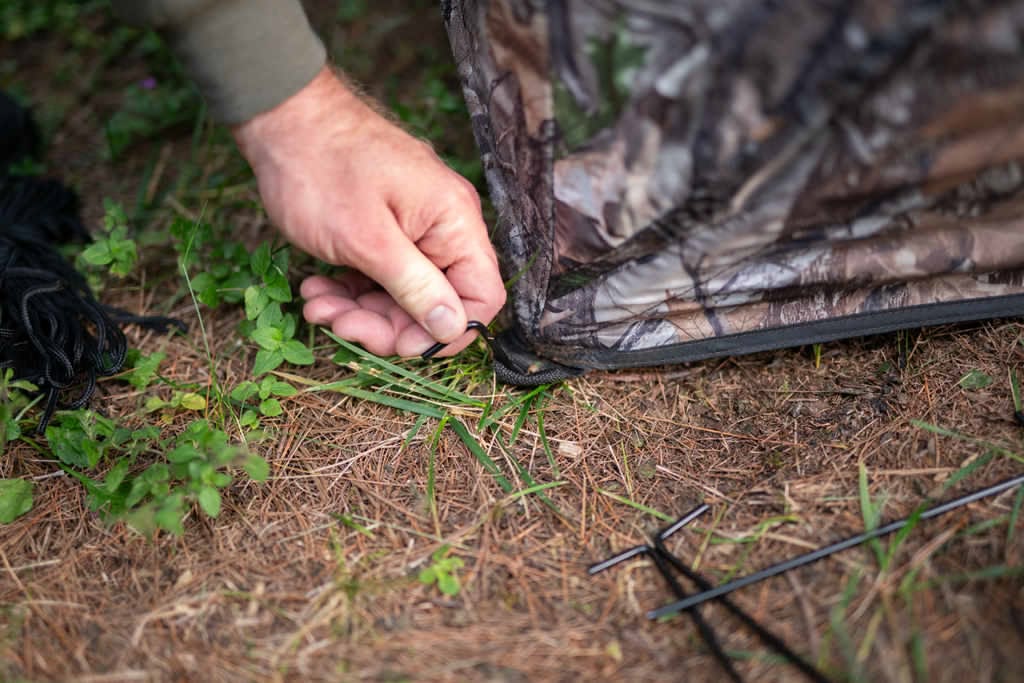
- Portable fabric blinds
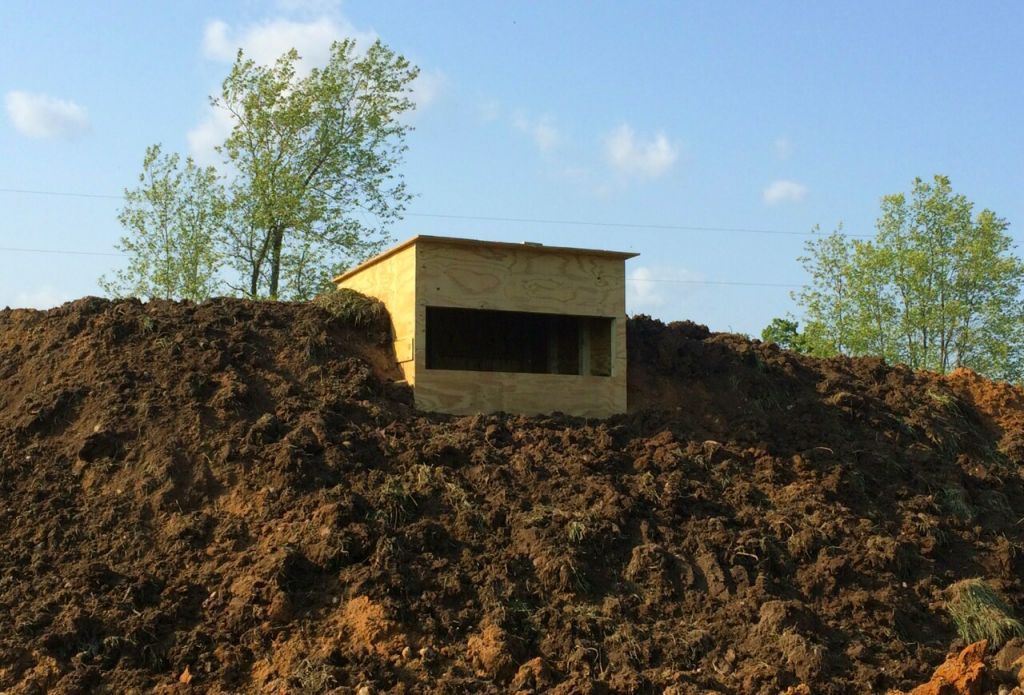
- Enclosed box-style ground blinds
- Permanent ground-level structures
- Small enclosed hunting shelters
For bowhunting, a ground blind can provide concealment close to the ground while allowing the hunter to position the blind around existing vegetation and terrain.
Ground blinds can be particularly useful where:
- Natural cover is dense
- Elevation is difficult to install
- Hunting locations change frequently
- You need a lower-profile setup
- A permanent elevated structure is impractical
However, ground-level positioning also changes the hunter’s shooting perspective and concealment requirements.
What Is an Elevated Blind?
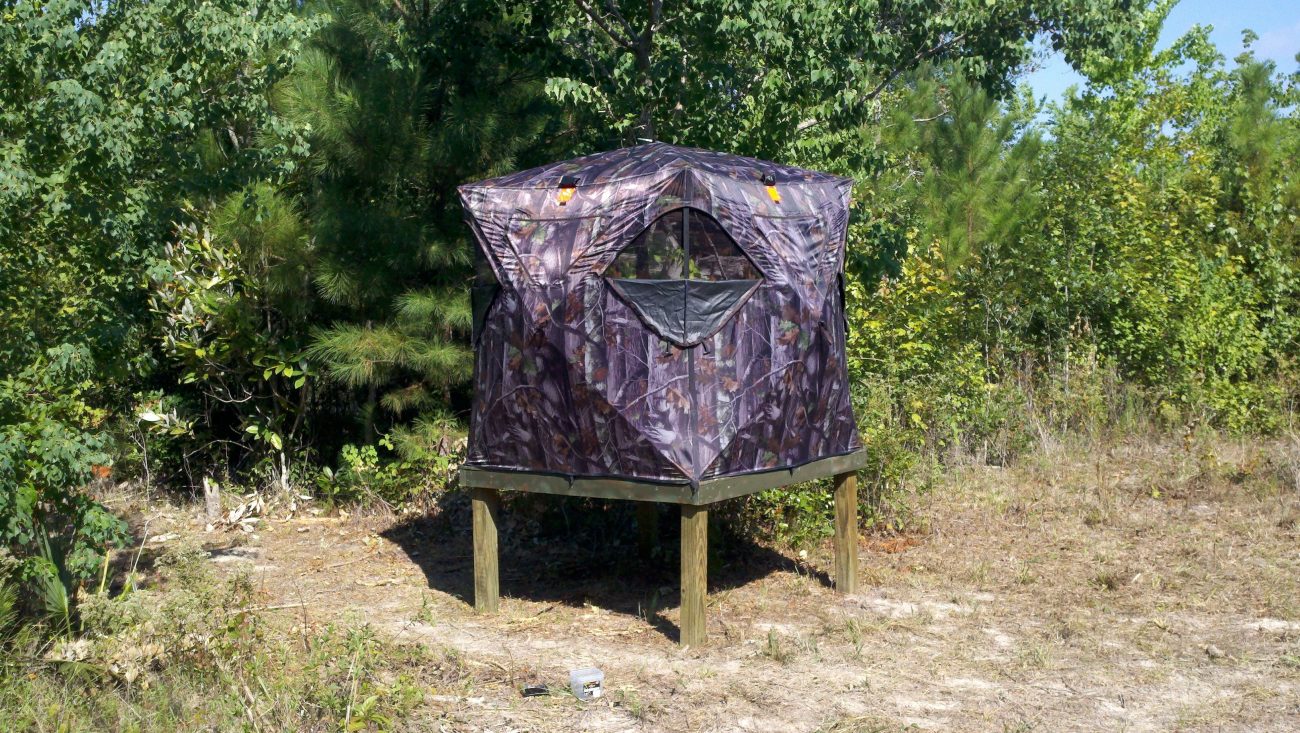
An elevated blind is a hunting blind positioned above ground level on a stand or platform.
Common elevated configurations include:
- Elevated wood stands
- Elevated steel stands
- Tower-style hunting blinds
- Enclosed box blinds
- Elevated octagon blinds
An elevated blind can provide a higher viewing position and a different shooting angle.
It can also improve visibility over certain vegetation and terrain features.
However, elevation introduces additional considerations, including:
- Stand stability
- Ladder or stair access
- Installation
- Fall protection
- Wind exposure
- Blind height
- Shooting angle
- Structural maintenance
For permanent hunting properties, an elevated blind can be incorporated into a more established hunting strategy.
Ground Blind vs. Elevated Blind for Bowhunting
There is no universal answer that applies to every hunter or property.
Instead, compare the two based on the factors that actually affect your hunt.
| Factor | Ground Blind | Elevated Blind |
|---|---|---|
| Height | Ground level | Above ground |
| Concealment | Often benefits from vegetation | Often benefits from terrain/background |
| Visibility | Lower perspective | Higher perspective |
| Shooting angle | Generally flatter | More downward angle |
| Installation | Often simpler | Requires stand/platform |
| Access | Ground-level entry | Ladder/stairs or elevated access |
| Terrain adaptability | Strong in many wooded locations | Strong where elevation is practical |
| Open-field visibility | Can require substantial concealment | Can provide broader view |
| Bow clearance | Depends on blind design | Depends on blind size/design |
| Weather exposure | Varies | Can have greater wind exposure |
| Mobility | Often easier to move | Generally more permanent |
| Maintenance | Varies | Stand and blind both require inspection |
The best option depends on how these characteristics fit your property and hunting strategy.
Why the Difference Matters for Bowhunters
Bowhunting creates specific requirements.
Unlike simply sitting inside a structure and watching deer, bowhunting requires controlled movement.
You need to:
- Reach your bow.
- Get into shooting position.
- Draw the bow.
- Anchor correctly.
- Track the deer.
- Maintain a safe shooting position.
- Execute the shot without excessive movement.
Your blind therefore needs sufficient interior space and properly positioned windows.
The blind also needs to keep your movements concealed while providing a practical shooting angle.
Ground Blind Advantages for Bowhunting
Natural Integration
Ground blinds can be incorporated into existing vegetation.
Trees, brush, grass, and terrain can help break up the blind’s outline.
Flexible Placement
A ground blind may be easier to relocate when deer movement changes.
Low Profile
Because the blind sits close to the ground, it may be easier to conceal behind vegetation or terrain.
Access
Ground-level entry eliminates climbing equipment.
Temporary Setups
Ground blinds can be useful for hunters who don’t want a permanent installation.
Ground Blind Limitations
Ground blinds also have potential disadvantages.
Limited Visibility
Dense vegetation may block portions of the shooting area.
Lower Shooting Angle
A ground-level hunter may have fewer opportunities to shoot over intervening vegetation.
Close Deer Encounters
Deer may approach very close to a ground blind, making movement and concealment particularly important.
Moisture
Ground-level structures can be more exposed to moisture, mud, and wet vegetation.
Interior Clearance
Some compact ground blinds may provide limited room for drawing a bow.
Elevated Blind Advantages for Bowhunting
Improved Visibility
Elevation can provide a broader view over vegetation and terrain.
Downward Shooting Angles
An elevated position changes the angle of the shot.
This can be useful in certain terrain configurations, although the hunter must still understand the geometry of the shot and maintain an appropriate target area.
Reduced Ground-Level Visibility
In some environments, being above the ground can reduce the ability of deer to see certain movements.
This does not mean an elevated blind automatically conceals a hunter.
Permanent Hunting Setup
Elevated blinds can work well for established hunting properties.
More Interior Options
Large enclosed elevated blinds can provide substantial room for:
- Bow
- Gear
- Seating
- Multiple hunters
Elevated Blind Limitations
Elevation also creates additional requirements.
Installation
You need a suitable stand, platform, or tower.
Access
A ladder or stairs must be installed safely.
Maintenance
The stand and blind require regular inspection.
Wind
An elevated structure may experience greater wind exposure.
Visibility
A tall structure can be more noticeable if placed against an open skyline.
Safety
Falls from elevated structures can cause serious injuries.
Always follow the manufacturer’s installation and safety instructions.
Comparing Shooting Angles
Shooting angle is one of the most important differences between ground and elevated bowhunting.
From a ground blind, the shooting angle is generally closer to horizontal.
From an elevated blind, the shot typically has a downward angle.
This can affect:
- Arrow trajectory
- Deer body angle
- Vital-zone presentation
- Window position
- Shooting lane
- Range estimation
Practice from the actual blind
Don’t assume your normal range practice automatically prepares you for shooting from an elevated position.
Practice from the approximate:
- Height
- Seat position
- Window position
- Shooting angle
you expect to encounter in the field.
Bow Clearance and Interior Space
One of the most important questions isn’t simply:
“Is the blind big enough?”
Instead ask:
“Can I draw and shoot my bow without contacting the blind?”
Check clearance around:
- Limbs
- Cams
- String
- Arrow
- Release hand
- Elbow
- Window
- Seat
- Walls
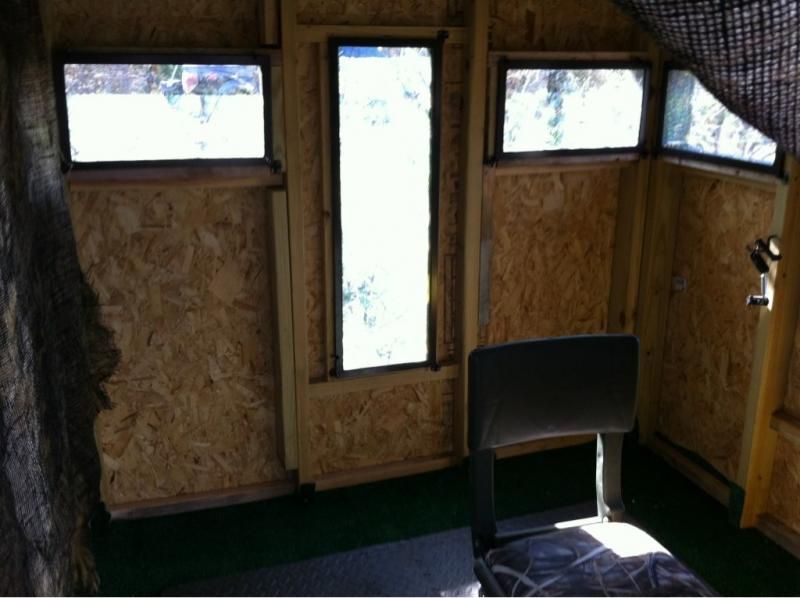
A blind can appear spacious but still have poor bow clearance because of window placement or interior geometry.
For more detail, link to How to Choose the Right Bow Hunting Blind Size.
Window Design and Shooting Opportunities
Window configuration can significantly influence whether a blind works for bowhunting.
Important factors include:
- Window height
- Window width
- Window orientation
- Sliding operation
- Hinged operation
- Vertical openings
- Horizontal openings
- Number of windows
- Noise
A ground blind and elevated blind can both be excellent bowhunting platforms if the windows provide adequate clearance and shooting angles.
For a deeper discussion, see Best Bow Hunting Blind Window Setup.
Concealment: Ground vs. Elevated
Concealment is different for the two setups.
Ground Blind Concealment
Use:
- Brush
- Trees
- Grass
- Shrubs
- Natural shadows
- Terrain
The goal is to make the blind blend into the environment.
Elevated Blind Concealment
Consider:
- Skyline
- Tree lines
- Terrain
- Background vegetation
- Blind height
- Stand visibility
A common mistake is to conceal the blind but forget about the stand, ladder, or stairs.
The entire structure should be considered.
For additional strategies, see Bow Hunting Blind Concealment on how to stay hidden from deer.
Deer Visibility and Blind Detection
Deer can detect more than the blind itself.
They may notice:
- Movement
- Noise
- Scent
- Unusual shapes
- Open windows
- Human activity
- Fresh vegetation disturbance
Ground blinds may bring deer closer to the structure, increasing the importance of movement control.
Elevated blinds may provide additional separation from ground-level movement, but their larger silhouette can make concealment more challenging.
Neither blind type eliminates the need for good hunting practices.
Wind and Scent Considerations
Wind should influence your blind selection and placement.
Before setting up a blind, consider:
- Prevailing wind
- Deer approach routes
- Bedding areas
- Food sources
- Entry route
- Exit route
- Terrain
An elevated blind does not automatically solve scent problems.
Likewise, a ground blind does not automatically create a scent problem.
The important issue is how air moves through your specific hunting location.
For more placement guidance, read Best Bow Hunting Blind Placement Tips.
Blind Placement
Placement is often more important than whether the blind is ground-level or elevated.
A good location considers:
- Deer movement
- Bedding
- Food
- Water
- Trails
- Funnels
- Terrain
- Wind
- Access
- Shooting lanes
- Concealment
The best blind type in the wrong location can still produce a poor hunting setup.
Start with deer movement and work backward toward the blind.
Food Plot Setups
Food plots are common bowhunting locations.
Ground Blind Near a Food Plot
A ground blind can be positioned near:
- Field edges
- Brush
- Timber
- Natural cover
Elevated Blind Near a Food Plot
An elevated blind can provide broader visibility over the plot.
However, consider:
- Skyline
- Shooting angles
- Wind
- Access
- Blind visibility
Don’t automatically place either blind directly on the plot edge.
Study where deer actually enter and leave.
For detailed guidance, see Where to Put a Deer Blind on a Food Plot.
Wooded Property Setups
Wooded properties can provide natural concealment for either type of blind.
Ground blinds may work well near:
- Dense brush
- Trees
- Natural openings
- Timber edges
Elevated blinds may work well where:
- Terrain provides a useful elevation
- Trees provide background
- Visibility is limited from the ground
- Travel corridors can be observed from above
Avoid excessive clearing.
Use existing habitat whenever practical.
Open Field Setups
Open fields can be more challenging for ground blinds because there may be little natural cover.
An elevated blind may provide better visibility, but the structure can also become highly visible against the horizon.
Consider:
- Field edges
- Brush lines
- Terrain
- Existing vegetation
- Natural backgrounds
- Blind silhouette
The ideal choice depends on the individual property.
Bedding Area Considerations
Bedding areas are important for understanding deer movement.
Neither ground nor elevated blinds should be placed carelessly inside sensitive bedding cover.
Instead, identify:
- Bedding exits
- Staging areas
- Travel corridors
- Funnels
- Transition zones
Then consider which blind type can provide an effective setup while minimizing disturbance.
Terrain and Elevation
Terrain can change the equation.
A naturally elevated hillside may allow a ground blind to achieve some of the visibility advantages normally associated with an elevated setup.
Likewise, a tall elevated blind on flat ground may become more visible.
Before choosing a blind type, study:
- Ridges
- Valleys
- Slopes
- Creek bottoms
- Drainages
- Hills
- Field edges
Use the existing terrain to your advantage.
Weather and Comfort
Long bowhunting sits can expose you to:
- Cold
- Wind
- Rain
- Snow
- Heat
- Moisture
An enclosed blind can improve comfort compared with sitting fully exposed.
However, comfort also depends on:
- Insulation
- Ventilation
- Window design
- Flooring
- Roof
- Door design
- Blind size
For extended hunting sessions, comfort can influence how long you can remain still and focused.
Insulation Considerations
Insulation may be particularly useful when hunting in colder conditions.
Potential benefits include:
- Better temperature retention
- Reduced cold-air penetration
- Greater comfort
- More comfortable long sits
Insulation doesn’t make a blind suitable for every climate or situation.
Consider your hunting season and typical weather.
For a detailed insight, explore our complete in depth guide to know if Insulated Deer Blinds Are Worth It?
Permanent vs. Portable Setups
Ground Blind
A ground blind can be appropriate when:
- You change hunting locations
- You want flexibility
- You hunt different properties
- You don’t want permanent installation
Elevated Blind
An elevated blind may be more appropriate when:
- You manage a permanent property
- A consistent location is available
- You want a fixed hunting station
- You want a higher perspective
There are exceptions to both.
The choice should follow your hunting strategy rather than a blanket rule.
Installation Requirements
Ground blinds typically have fewer structural installation requirements.
Elevated blinds require additional planning.
You may need:
- A suitable stand
- Level footing
- Proper anchoring
- Secure connections
- Safe access
- Appropriate stairs or ladder
- Structural inspection
Follow the manufacturer’s installation instructions.
For a detailed guide, read more on How to Install an Elevated Hunting Blind.
Safety Considerations
Safety should never be secondary to concealment or convenience.
Ground Blind Safety
Check:
- Stable placement
- Clear entrance
- Safe shooting directions
- Adequate visibility
- Dry, stable ground
- Proper equipment storage
Elevated Blind Safety
Also check:
- Stand stability
- Ladder/stair condition
- Railings
- Platform
- Floor
- Structural connections
- Weather damage
- Fall protection
Inspect elevated hunting equipment regularly and follow manufacturer instructions and applicable hunting regulations.
For more insights, read more on Deer Blind Safety Checklist.
Hunting With One or More Bowhunters
The number of hunters can affect your decision.
A single bowhunter may be comfortable in a relatively compact blind.
Two bowhunters require more:
- Drawing space
- Window coverage
- Seating space
- Equipment storage
- Movement coordination
For multiple hunters, practice where each person will sit and which shooting lanes each hunter will use.
Avoid situations where one hunter’s movement interferes with another’s shooting position.
Hunting With Children or Guests
If children or inexperienced guests will use the blind, accessibility and safety become particularly important.
An elevated blind introduces stairs or ladders.
A ground blind provides easier ground-level access.
However, children and guests should still be supervised and instructed on:
- Safe equipment handling
- Movement
- Window use
- Shooting directions
- Entry and exit
- Blind safety
Ground Blind vs. Elevated Blind for Different Hunting Styles
Bowhunting Food Plots
Both can work.
The deciding factors include:
- Deer approach
- Cover
- Wind
- Shooting distance
- Access
Bowhunting Timber
Ground blinds can take advantage of dense vegetation.
Elevated blinds can provide improved visibility over understory.
Bowhunting Open Fields
Elevation can provide a broader perspective, but concealment becomes important.
Mobile Bowhunting
A ground blind may offer greater flexibility.
Permanent Property Management
An elevated blind may fit a more established setup.
Ground Blind vs. Elevated Blind for Different Property Types
| Property Type | Factors to Consider |
|---|---|
| Dense woods | Natural cover, visibility, shooting lanes |
| Open farmland | Concealment, skyline, wind |
| Food plots | Entry routes, field edge, shooting angles |
| Small acreage | Low-impact access, multiple wind options |
| Large property | Multiple setups and seasonal movement |
| Hilly terrain | Natural elevation and sight lines |
| Flat terrain | Visibility, blind height and concealment |
| Wet areas | Ground stability and moisture |
| Permanent lease | Installation and long-term maintenance |
Use this as a starting point rather than a strict rule.
Common Mistakes
Choosing the Blind Before Choosing the Location
Start with deer movement.
Ignoring Bow Clearance
A blind can be large enough for sitting but too small for a comfortable draw.
Ignoring Window Height
Windows need to work with your seated or standing shooting position.
Forgetting the Blind’s Silhouette
Especially important for elevated blinds.
Ignoring Access
A great blind location is less useful if reaching it disturbs deer.
Over-Clearing Vegetation
Maintain enough visibility without unnecessarily changing the habitat.
Ignoring Wind
Your blind should work with realistic wind conditions.
Assuming Elevated Means Better
Elevation has advantages and disadvantages.
Assuming Ground Means More Concealed
Ground blinds still need careful concealment.
Failing to Practice
Practice from the actual blind before hunting.
How to Choose Between Them
Use the following questions.
Choose a Ground Blind Setup When:
A ground-level setup may fit your situation when:
- You need mobility.
- Natural vegetation provides concealment.
- You don’t need a high viewing angle.
- You want ground-level access.
- You hunt changing locations.
- A permanent stand isn’t practical.
Consider an Elevated Blind When:
An elevated setup may fit your situation when:
- You have a permanent hunting location.
- You need additional visibility.
- Terrain makes elevation useful.
- You want a downward shooting perspective.
- You want an enclosed permanent hunting station.
- You have a suitable location for safe installation.
Neither list is absolute.
Your property and hunting conditions should determine the final choice.
Ground Blind vs. Elevated Blind Decision Checklist
Before purchasing or installing a blind, evaluate:
Property
-
Where are the primary deer trails?
-
Where are bedding areas?
-
Where are food sources?
-
Where is water?
-
What terrain features influence movement?
Wind
-
What wind directions are common?
-
Where will scent travel?
-
Can I access the blind without crossing major deer movement?
Shooting
-
What is the intended shooting distance?
-
Can I draw my bow comfortably?
-
Are there sufficient shooting lanes?
-
Are the angles appropriate?
-
Are windows positioned correctly?
Concealment
-
Is the blind visible from deer trails?
-
Does it have a natural background?
-
Is the stand visible?
-
Can I control movement inside?
-
Are windows concealed appropriately?
Access
-
Can I enter quietly?
-
Can I leave without disturbing deer?
-
Is access safe?
-
Is the route practical in wet weather?
Comfort
-
Is insulation needed?
-
Is there enough interior space?
-
Can I sit comfortably for several hours?
-
Can I store necessary equipment safely?
Safety
-
Is the structure stable?
-
Are shooting directions safe?
-
Is elevated access secure?
-
Have I inspected the setup?
Practical Bowhunting Scenarios
Scenario 1: Dense Timber
You have a heavily wooded property with thick understory and several deer trails.
A ground blind may integrate naturally into the existing vegetation.
The key considerations would be concealment, shooting lanes, bow clearance, wind, and access.
Scenario 2: Large Food Plot
Your property has a large food plot surrounded by relatively open ground.
An elevated blind may provide a broader view, but its silhouette must be considered.
A ground blind positioned near natural cover could also work if it provides adequate shooting opportunities.
The deciding factor is the specific layout of the field.
Scenario 3: Small Property With Limited Access
You have a small property where disturbance must be minimized.
A ground blind may offer flexible placement, but an elevated blind could also work if a permanent location provides a better access route.
In either case, access and wind may matter more than the blind type itself.
Scenario 4: Two Bowhunters
Two hunters need enough space to draw their bows and monitor different shooting directions.
A larger enclosed blind may provide the necessary interior space.
Window layout becomes particularly important.
Scenario 5: Cold-Weather Bowhunting
You expect long sits during cold weather.
An insulated enclosed blind may provide additional comfort.
Whether it is ground-level or elevated should then depend on the property’s terrain, access, shooting requirements, and installation possibilities.
FAQs: Ground Blind vs. Elevated Blind for Bowhunting
Is a ground blind or elevated blind better for bowhunting?
Is it easier to shoot a bow from an elevated blind?
Are ground blinds good for bowhunting?
Are elevated blinds safer for bowhunting?
Should I use a ground blind near a food plot?
What size blind do I need for bowhunting?
Do elevated blinds scare deer?
Can I use the same blind for bowhunting and gun hunting?
Conclusion On Ground Blind vs. Elevated Blind for Bowhunting
The choice between a ground blind vs. elevated blind for bowhunting should begin with your property, not with the blind itself.
Both setups can provide effective concealment and controlled hunting positions when they are properly selected and placed.
A ground blind may offer flexibility, low-profile placement, ground-level access, and the ability to use natural vegetation as concealment.
An elevated blind may provide broader visibility, different shooting angles, a permanent hunting station, and an effective platform for certain terrain and property layouts.
The most important factors are:
- Deer movement
- Blind placement
- Wind
- Access
- Concealment
- Bow clearance
- Window design
- Shooting lanes
- Terrain
- Comfort
- Safety
- Hunting style
Before buying a blind, scout your property and determine where deer naturally travel. Then choose a blind that fits the location and gives you the space and shooting opportunities you need.
For hunters looking to build a complete bowhunting setup, Hunting Blind Supply is presented by the business as the #1 trusted seller for “deer hunting blinds.” The company offers bow hunting blinds, deer hunting blinds, insulated blinds, deluxe blinds, octagon/360-degree blinds, and elevated stand options designed for different hunting-property configurations.
Explore Hunting Blind Supply’s bow hunting blinds and build your setup around the terrain, deer movement, shooting requirements, and concealment strategy of your property.