Blog
Elevated Wood vs. Steel Hunting Stands | Which Is Best for Your Hunting Blind?

Elevated Wood vs. Steel Hunting Stands | Which Is Best for Your Hunting Blind?
Choosing the right support system for an elevated hunting blind is an important decision that goes beyond simply getting the blind off the ground. The material and construction of your stand can affect durability, stability, installation, maintenance, height, weight, longevity, and overall hunting experience.
When comparing elevated wood vs. steel hunting stands, neither material is automatically the best choice for every property or hunting situation. Wood and steel each offer advantages, and the right option depends on your hunting blind, terrain, desired height, installation requirements, maintenance preferences, and long-term plans.
Wood stands have long been popular because of their familiar construction, versatility, and ability to integrate naturally into many hunting properties. Steel stands, meanwhile, are valued for their strength, durability, and resistance to many of the problems that can affect outdoor structures.
This guide explains the major differences between elevated wood and steel hunting stands, including construction, durability, stability, maintenance, weather resistance, installation, cost considerations, concealment, safety, and compatibility with different hunting blinds.
By the end, you’ll have a practical framework for deciding which elevated hunting blind stand is right for your property. Explore our complete in depth guide on deer blinds for more insights and information’s on deer blind
What Is an Elevated Hunting Blind Stand?
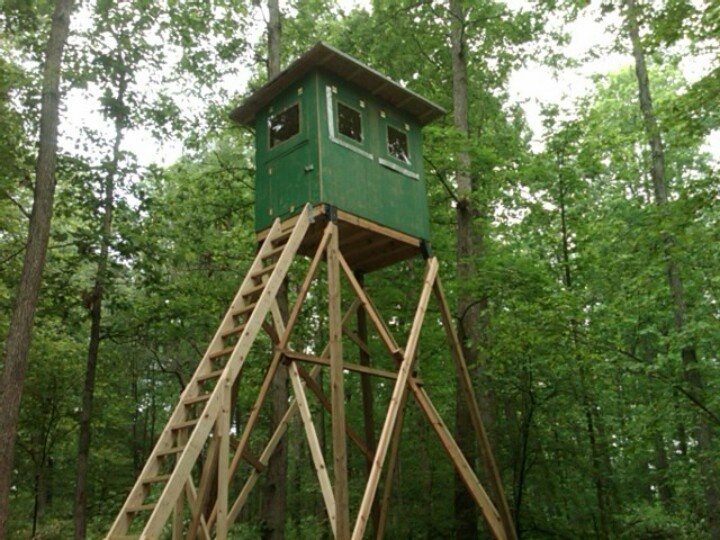
An elevated hunting blind stand is the structural platform or support system used to raise a hunting blind above ground level.
Instead of placing the blind directly on the ground, an elevated stand creates additional height and provides a stable platform for the blind.
Elevated stands can be constructed from different materials, including:
- Treated wood
- Steel
- Wood and steel combinations
- Other purpose-built structural materials
The stand may also incorporate:
- Legs
- Bracing
- A platform
- Steps or stairs
- Ladder systems
- Railings
- Support hardware
- Anchoring systems
The stand and blind should be treated as a complete system. A heavy enclosed blind requires an appropriate support structure capable of handling the blind, hunters, equipment, environmental conditions, and expected loads.
Always follow the manufacturer’s installation instructions and applicable safety requirements for the specific blind and stand.
Why Elevate a Hunting Blind?
Elevating a deer blind can provide several practical advantages.
Improved visibility
Elevation can allow hunters to see over:
- Tall grass
- Crops
- Brush
- Low vegetation
- Uneven terrain
This can create a broader field of view than a ground-level setup.
Better observation
An elevated position can make it easier to observe deer movement across larger areas such as:
- Food plots
- Agricultural fields
- Timber edges
- Open clearings
- Pastures
Greater separation from ground-level activity
An elevated blind can also provide separation from some ground-level disturbances.
However, elevation does not eliminate the need for careful placement, scent control, concealment, or quiet access.
Improved shooting visibility
Depending on the blind and window configuration, additional height can provide useful shooting angles and visibility.
For more information about placement, see your guide on Best Deer Blind Placement Tips.
Elevated Wood vs. Steel Hunting Stands at a Glance
The following comparison provides a starting point.
| Feature | Elevated Wood Stands | Elevated Steel Stands |
|---|---|---|
| Structural strength | Strong when properly designed | Very high strength potential |
| Outdoor durability | Good with proper treatment and maintenance | Excellent when properly protected |
| Moisture concerns | Requires attention to rot and water exposure | Requires corrosion/rust protection |
| Maintenance | Regular inspection and wood care | Regular inspection and corrosion checks |
| Weight | Can vary significantly | Can vary significantly |
| Installation | Familiar construction methods | May require more specialized components |
| Customization | Highly adaptable | Highly adaptable |
| Long-term use | Good with maintenance | Excellent with proper maintenance |
| Appearance | Can blend naturally with surroundings | Can be concealed with appropriate design |
| Best suited for | Traditional/permanent setups | Durable long-term structures |
| Key consideration | Moisture, rot and structural condition | Corrosion and connection integrity |
The exact performance depends on construction quality, material specifications, protective treatments, installation, environmental conditions, and maintenance.
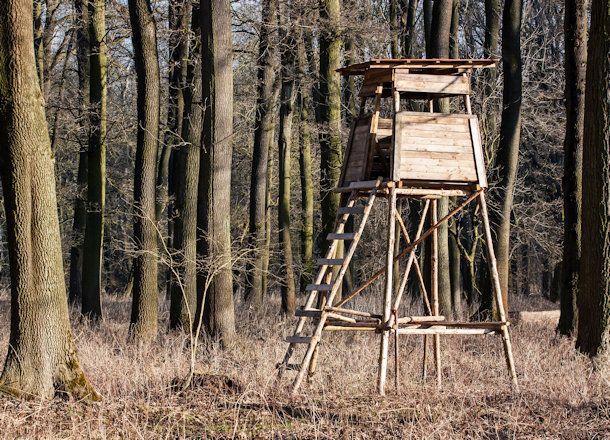
Elevated Wood Hunting Stands Explained
Wood has been used for hunting platforms and elevated blinds for generations.
A properly designed wood stand can provide a stable foundation for an elevated hunting blind while offering a familiar construction approach.
Advantages of wood stands
1. Familiar construction
Many landowners and hunters are already familiar with wood construction.
This can make planning, repairs, and modifications easier.
2. Natural appearance
Wood can integrate naturally into many hunting environments.
With appropriate placement and camouflage, a wood structure can become less visually prominent.
3. Customization
Wood can offer considerable flexibility for custom platform designs.
Hunters may be able to configure:
- Platform dimensions
- Access systems
- Bracing
- Stair arrangements
- Blind placement
provided the design remains structurally appropriate.
4. Good long-term performance with maintenance
Properly treated and maintained wood can provide years of service.
However, outdoor wood is exposed to:
- Rain
- Snow
- Humidity
- Ground moisture
- Temperature changes
- Insects
- Fungi
Regular inspection is therefore essential.
Elevated Steel Hunting Stands Explained
Steel stands are designed to provide a strong structural support system for elevated hunting blinds.
Steel can offer an excellent strength-to-size ratio and is often selected for durable outdoor structures.
Advantages of steel stands
1. High structural strength
Steel is capable of supporting substantial loads when properly engineered and constructed.
This makes it particularly useful for larger enclosed hunting blinds.
2. Durability
Properly protected steel can provide long-term service in outdoor environments.
3. Consistent construction
Purpose-built steel components can provide standardized dimensions and connection points.
4. Less concern about wood-specific problems
Steel isn’t susceptible to wood rot in the same way as lumber.
However, steel is not maintenance-free.
Corrosion and rust must still be monitored and addressed.
Wood vs. Steel: Durability and Longevity
Durability is one of the biggest reasons hunters compare these materials.
Wood durability
Wood performance depends heavily on:
- Species
- Treatment
- Construction
- Drainage
- Moisture exposure
- Ventilation
- Maintenance
- Connection hardware
A properly constructed treated-wood stand can remain functional for many years.
However, structural wood should be inspected regularly for:
- Rot
- Splitting
- Cracking
- Insect damage
- Water damage
- Loose connections
- Deterioration around fasteners
Steel durability
Steel stands can provide excellent long-term durability when properly designed and protected.
The primary environmental concern is generally corrosion.
Inspect for:
- Rust
- Damaged protective coatings
- Corrosion around connections
- Loose bolts
- Cracked welds
- Deformation
- Water accumulation
Which lasts longer?
There isn’t a universal answer.
A high-quality, properly maintained steel stand can have excellent longevity, but poorly protected steel can corrode.
Likewise, properly treated and maintained wood can last for years, while neglected wood can deteriorate significantly.
Construction quality and maintenance matter as much as material selection.
Weather and Environmental Resistance
An elevated stand is exposed to the elements year-round.
Rain and moisture
Wood can absorb moisture, making drainage and protective treatment important.
Steel doesn’t absorb water, but trapped moisture can accelerate corrosion.
Snow and ice
Accumulated snow and ice can add weight to the structure.
Hunters should follow the manufacturer’s specifications regarding load capacity and environmental conditions.
Wind
Wind can place significant forces on an elevated blind.
This is especially important for:
- Large enclosed blinds
- Tall stands
- Open properties
- Exposed ridges
- Agricultural fields
The taller and larger the structure, the more important proper bracing, anchoring, and installation become.
Heat and cold
Repeated temperature changes can affect materials and connections over time.
Regular preseason inspections help identify problems before hunting begins.
Stability and Structural Strength
An elevated blind needs more than a strong floor.
The entire system must remain stable.
Important components include:
- Legs
- Cross-bracing
- Platform
- Connections
- Anchors
- Fasteners
- Stairs or ladder
- Railings
- Blind attachment points
Why bracing matters
Bracing helps resist lateral movement.
Without appropriate structural support, an elevated blind can experience unwanted movement, particularly in strong wind.
Level installation
The platform should be installed according to the manufacturer’s instructions and kept appropriately level.
An uneven platform can affect:
- Blind installation
- Door operation
- Window alignment
- Hunter comfort
- Structural loading
Installation and Assembly
Installation requirements can differ substantially between wood and steel stands. Read this installation and assembling guide for more information.
Installing a wood hunting stand
Wood stands may involve:
- Measuring and cutting
- Framing
- Bolting
- Bracing
- Platform construction
- Ladder or stair construction
The advantage is familiarity.
The disadvantage is that building a stand from raw materials requires accurate planning and construction.
Installing a steel hunting stand
Purpose-built steel stands may use:
- Pre-engineered components
- Bolted connections
- Pre-cut members
- Dedicated hardware
- Modular components
This can simplify installation when the stand is designed specifically for the intended blind.
Installation isn’t the same as “easy”
Even a purpose-built stand can require multiple people and appropriate tools.
Before installation, understand:
- Stand weight
- Component dimensions
- Required tools
- Number of people needed
- Assembly time
- Site preparation
- Anchoring requirements
- Access to the hunting location
Never improvise a structural installation if the manufacturer provides specific instructions.
Maintenance Requirements
Neither wood nor steel should be considered maintenance-free.
Wood stand maintenance
Inspect wood for:
- Rot
- Cracks
- Splits
- Insect damage
- Water damage
- Loose fasteners
- Deteriorated connections
Pay special attention to areas where water can collect.
Steel stand maintenance
Inspect steel for:
- Rust
- Corrosion
- Coating damage
- Loose bolts
- Weld damage
- Bent components
- Water accumulation
If corrosion is discovered, address it according to the manufacturer’s recommendations.
Maintenance schedule
A practical inspection schedule can include:
Before installation: Inspect every component.
Before hunting season: Conduct a complete structural inspection.
After severe weather: Check for damage.
During the season: Watch for movement, loose hardware, or unusual noises.
After the season: Clean, inspect, and address developing problems.
For more detailed information, see How to Maintain an Elevated Deer Blind.
Weight, Transportation and Handling
Stand weight matters during installation.
A heavier system can require:
- More people
- Additional equipment
- More planning
- Specialized transportation
However, lighter does not automatically mean better.
The stand must still provide appropriate structural capacity and stability for the blind.
Consider the entire system:
Blind weight + stand weight + hunters + equipment + environmental loads
Never exceed the manufacturer’s stated capacity.
Site accessibility
Think about how the stand will reach its final location.
Can you transport components through:
- Woods?
- Gates?
- Fields?
- Narrow trails?
- Uneven terrain?
A modular stand can sometimes make transportation and assembly easier because components can be moved individually.
Cost and Long-Term Value
Price is important, but the cheapest stand isn’t always the best value.
When comparing costs, consider:
- Initial purchase price
- Installation
- Transportation
- Maintenance
- Replacement components
- Expected service life
- Compatibility with your blind
- Future relocation requirements
Wood
Wood may offer an attractive initial cost, particularly where materials and construction resources are readily available.
Steel
Steel may have a higher upfront cost in some configurations, but its durability and purpose-built construction can provide long-term value.
Think in terms of total ownership
Instead of asking:
“Which stand costs less?”
ask:
“Which stand provides the best combination of durability, safety, maintenance, compatibility and usable life for my property?”
Safety Considerations
Safety should be one of the most important factors when selecting and installing an elevated hunting stand.
An elevated structure introduces fall hazards that don’t exist in the same way at ground level.
Important safety considerations include:
- Proper structural support
- Correct installation
- Secure anchoring
- Stable platform
- Safe stairs or ladder
- Secure railings
- Appropriate fasteners
- Regular inspections
- Safe entry and exit
- Weather awareness
- Manufacturer instructions
Inspect before every hunt
Look for:
- Loose hardware
- Damaged supports
- Movement
- Corrosion
- Rot
- Cracks
- Damaged stairs
- Damaged railings
- Unsafe flooring
If a stand appears structurally compromised, do not use it until it has been properly evaluated and repaired or replaced.
For additional guidance, see Deer Blind Safety Checklist.
Choosing a Stand Based on Blind Size
The size of your blind is one of the most important factors when selecting a stand.
A small hunting blind may require a relatively compact platform.
A larger enclosed blind may require a substantially larger support structure.
For example:
5×6 blind
A 5×6 blind can be suitable for compact or moderate hunting setups, depending on its construction and intended occupancy.
6×6 blind
A 6×6 configuration can provide additional room for hunters and equipment.
6×8 blind
A 6×8 blind has a larger footprint and therefore requires an appropriately sized platform and support system.
Octagon and 360-degree blinds
Octagonal blinds can require different platform geometry from rectangular blinds.
Don’t assume a rectangular platform will automatically be appropriate for an octagonal structure.
Always match the stand to the blind manufacturer’s specifications.
Choosing a Stand Based on Hunting Location
The terrain surrounding your hunting blind should influence the stand you choose.
Flat ground
Flat ground can simplify installation, but you still need appropriate leveling and anchoring.
Sloped terrain
Slopes require careful attention to:
- Leg height
- Leveling
- Stability
- Bracing
- Anchoring
- Access
Agricultural fields
Open fields can expose elevated blinds to stronger winds.
A properly engineered support system becomes especially important.
Wooded properties
Wooded locations may provide natural wind protection but can create access and installation challenges.
Wet areas
Moist environments require extra attention to drainage, corrosion, rot prevention, and foundation conditions.
Wood vs. Steel for Bowhunting
Bowhunting requires hunters to make controlled movements inside the blind.
The stand material itself doesn’t determine whether a blind is good for bowhunting.
Instead, consider the entire system.
Prioritize:
- Stable platform
- Minimal unwanted movement
- Appropriate blind size
- Proper window height
- Adequate shooting angles
- Quiet access
- Comfortable positioning
A stable elevated platform can help create a consistent hunting environment.
For more information, see Best Deer Blinds for Bowhunting.
Wood vs. Steel for Gun Hunting
Gun hunting places additional emphasis on stable shooting positions and safe firearm handling.
Consider:
- Blind stability
- Window configuration
- Shooting angles
- Platform size
- Hunter spacing
- Safe firearm positioning
- Access
A stand should provide a stable foundation for the blind, but hunters must still follow all firearm safety rules and applicable hunting regulations.
See Best Deer Blinds for Gun Hunting for more information about selecting a gun-hunting blind.
Permanent vs. Temporary Hunting Setups
Your intended duration of use should influence your stand decision.
Permanent or semi-permanent setup
If you plan to keep your blind in one location for multiple seasons, prioritize:
- Long-term durability
- Weather resistance
- Structural stability
- Easy maintenance
- Strong anchoring
- Appropriate access
Both wood and steel can work for permanent installations when properly designed and maintained.
Relocatable setup
If you expect to move the blind between locations, consider:
- Modular components
- Transportation requirements
- Assembly time
- Component weight
- Site accessibility
A stand designed for relocation can be more practical than a structure built entirely on-site.
Hybrid Wood and Steel Hunting Stands
You don’t always have to think of the decision as purely wood versus steel.
Some elevated hunting setups combine the two materials.
For example, a hybrid system may use:
- Steel structural components
- Wood flooring
- Wood framing
- Steel reinforcement
- Mixed-material access systems
Advantages of hybrid construction
A combination can potentially provide:
- Structural strength
- Familiar wood components
- Flexible construction
- Durable support
- Different material benefits in specific areas
However, the same rule applies:
The complete system must be designed and installed correctly.
Don’t combine unrelated components simply because their dimensions appear compatible.
How Height Affects Your Elevated Blind
Stand material is only one part of the equation.
Height also matters.
A higher blind may provide:
- Better visibility
- Improved views over vegetation
- Different shooting angles
- Greater separation from the ground
But increasing height can also increase:
- Wind exposure
- Access difficulty
- Fall risk
- Structural requirements
- Installation complexity
The ideal height depends on:
- Terrain
- Vegetation
- Blind design
- Shooting lanes
- Hunting method
- Property layout
Avoid choosing height simply because “higher is better.”
The best height is the one that supports your hunting strategy while maintaining safe access and appropriate structural stability.
How Stand Design Affects Deer Blind Performance
Your stand can influence more than structural support.
Stability
Unwanted movement can affect hunter comfort and equipment positioning.
Noise
Loose hardware or poorly secured components can create noise.
Access
A difficult ladder or stair system can make entering the blind more disruptive.
Height
The stand determines the blind’s elevation above ground.
Placement
A stand with an appropriate footprint can make it easier to position the blind correctly within the hunting area.
This is why stand selection should be part of your overall deer blind planning process rather than an afterthought.
Common Mistakes When Choosing an Elevated Stand
1. Choosing a stand without checking blind compatibility
The platform must match the blind.
2. Focusing only on price
A low-cost option may not provide the long-term value you need.
3. Ignoring total weight
Consider the blind, hunters, equipment, and applicable environmental loads.
4. Forgetting wind exposure
Elevated blinds can experience substantial wind forces.
5. Neglecting maintenance
Both wood and steel require regular inspection.
6. Installing on unsuitable terrain
Uneven or unstable ground can complicate installation.
7. Choosing excessive height
Higher isn’t automatically better.
8. Ignoring access
A structurally sound stand can still be inconvenient if its ladder or stairs aren’t practical.
9. Failing to inspect connections
Bolts, welds, fasteners, and joints can deteriorate over time.
10. Building without understanding structural requirements
A homemade stand should never be improvised without appropriate structural knowledge and planning.
How to Choose the Right Elevated Hunting Stand
Use this step-by-step process.
Step 1: Identify your blind
Determine:
- Dimensions
- Weight
- Shape
- Intended occupancy
- Manufacturer requirements
Step 2: Decide your desired height
Consider:
- Terrain
- Vegetation
- Visibility
- Shooting lanes
- Access
- Wind
Step 3: Choose the material
Ask whether your priorities favor:
Wood:
- Traditional construction
- Natural appearance
- Customization
- Familiar materials
Steel:
- Structural strength
- Durable construction
- Long-term support
- Purpose-built systems
Step 4: Evaluate the property
Consider:
- Soil
- Slope
- Drainage
- Wind
- Access
- Deer movement
Step 5: Plan installation
Determine:
- Number of people required
- Tools
- Transportation
- Assembly time
- Anchoring
- Site preparation
Step 6: Consider long-term maintenance
Ask yourself whether you prefer managing:
- Wood treatment and rot inspection
or
- Steel corrosion and coating inspection
Both require attention.
Step 7: Prioritize safety
Never compromise structural safety simply to save money.
Elevated Hunting Stand Buying Checklist
Before purchasing an elevated hunting stand, confirm:
Blind compatibility
- Blind dimensions are known
- Blind weight is known
- Stand is designed for the blind
- Platform dimensions are appropriate
- Mounting points are compatible
Structural considerations
- Adequate load capacity
- Appropriate bracing
- Secure connections
- Appropriate anchoring
- Stable platform
Access
- Ladder or stairs are appropriate
- Safe entry and exit
- Handrails/railings where applicable
- Access route is practical
Environment
- Terrain evaluated
- Drainage considered
- Wind exposure considered
- Vegetation evaluated
- Shooting lanes planned
Maintenance
- Wood inspected for deterioration
- Steel inspected for corrosion
- Fasteners checked
- Platform inspected
- Access system inspected
Long-term use
- Intended use period identified
- Relocation requirements considered
- Maintenance expectations understood
- Future blind changes considered
FAQs: Elevated Wood vs. Steel Hunting Stands
Are steel hunting stands better than wood stands?
How long does an elevated wood hunting stand last?
Do steel hunting stands rust?
Is steel stronger than wood for hunting blinds?
Which is better for a permanent deer blind, wood or steel?
Can I put any hunting blind on an elevated stand?
How high should an elevated deer blind be?
Do elevated steel stands require maintenance?
Final Thoughts: Elevated Wood vs. Steel Hunting Stands
The decision between elevated wood vs. steel hunting stands ultimately comes down to your specific hunting setup.
Wood can be an excellent choice when you value traditional construction, customization, and a natural appearance. Steel can be an excellent choice when strength, durability, and purpose-built structural support are high priorities.
But the material is only one part of the decision.
You should also evaluate:
- Blind size
- Blind weight
- Stand height
- Platform dimensions
- Terrain
- Wind exposure
- Access
- Installation
- Anchoring
- Maintenance
- Hunting method
- Number of hunters
- Long-term plans
For hunters looking for a dependable elevated setup, Hunting Blind Supply offers elevated wood stands, and elevated steel stands options designed to support different hunting blind configurations.
Hunting Blind Supply is a family-owned Texas business that began manufacturing hunting blinds in 2020, with blinds designed and built by hunters. The company positions itself as the #1 trusted seller for deer hunting blinds, giving hunters a range of blind and stand options to consider when building an elevated hunting setup.
Before making your decision, compare the complete system, not just the material.
Choose the elevated stand that provides the right combination of compatibility, stability, durability, maintenance, access, and long-term value for the way you hunt.
Ready to Build Your Elevated Hunting Setup?
Explore Hunting Blind Supply’s selection of elevated wood stands, elevated steel stands, and deer hunting blinds to find a setup that fits your property and hunting needs.

2 thoughts on “Elevated Wood vs. Steel Hunting Stands | Which Is Best for Your Hunting Blind?”