Blog
How to Choose the Right Bow Hunting Blind Size | Complete Guide


How to Choose the Right Bow Hunting Blind Size | Complete Guide
Choosing the right blind size can make a major difference in a bowhunting setup. A blind that is too small can restrict your draw, movement, gear placement, and shooting angles, while an oversized blind may be harder to conceal or place effectively.
This guide explains how to choose the right bow hunting blind size based on the number of hunters, bow type, shooting position, window placement, gear, hunting property, and whether you plan to use a ground or elevated blind. You’ll also learn how to measure your available space, evaluate bow clearance, and avoid common sizing mistakes. Explore complete in depth guide on bow hunting blinds for more insights and information on bow hunting.
What Makes Bow Hunting Blind Size Different?
A bow hunting blind needs to provide more than enough room to sit comfortably.
When you shoot a bow, you need space to:
- Draw the bow without contacting the blind wall
- Anchor consistently
- Rotate your upper body
- Maintain proper shooting form
- Move your bow into position quietly
- Reach multiple shooting windows
- Avoid hitting windows, walls, seats, or equipment
- Make controlled movements without unnecessary noise
This means the interior dimensions and layout can be just as important as the blind’s exterior dimensions.
For example, two blinds with similar exterior dimensions may feel completely different inside depending on window placement, wall angles, seating arrangement, and available clearance.
For bowhunting, don’t choose a blind based solely on how many people it says it can accommodate. Consider how those people will actually sit, move, draw, and shoot.
Why Blind Size Matters for Bowhunting
The right size can help create a more functional and comfortable hunting environment.
1. Bow clearance
Your bow limbs, cams, string, and hands need adequate clearance during the draw cycle.
2. Shooting angles
You may need to rotate your body to shoot through different windows.
3. Hunter movement
Bowhunting often requires controlled movement when drawing and positioning the bow.
4. Gear storage
Backpacks, rangefinders, binoculars, releases, arrows, water, clothing layers, and other equipment take up space.
5. Comfort
A hunt can last several hours. Adequate room allows you to change positions and remain comfortable.
6. Multiple hunters
Two hunters require more than simply twice the space of one hunter because each person needs an independent shooting position and movement area.
How to Choose the Right Bow Hunting Blind Size
The easiest way to approach the decision is to evaluate seven factors:
- Number of hunters
- Bow dimensions and shooting style
- Interior clearance
- Window placement
- Gear requirements
- Property and blind placement
- Ground vs. elevated installation
A useful rule is:
Choose the smallest blind that provides sufficient bow clearance, comfortable seating, appropriate shooting angles, and enough room for your equipment.
Going larger isn’t automatically better. Going smaller isn’t automatically more concealable.
The objective is to find the right balance.
How Many Hunters Will Use the Blind?
The number of hunters is one of the biggest factors affecting blind size.
One Hunter
A single bowhunter generally has more flexibility.
A smaller blind can work when:
- You hunt alone
- You carry minimal equipment
- You have one primary shooting direction
- Your bow has adequate clearance
- The window arrangement matches your setup
However, don’t sacrifice bow clearance simply to use a smaller blind.
Two Hunters
Two bowhunters need considerably more planning.
Each hunter needs:
- Seating space
- Bow clearance
- Drawing space
- Window access
- Equipment storage
- A safe shooting direction
A blind that comfortably accommodates one hunter may become restrictive with two.
If both hunters may shoot simultaneously or cover different directions, additional floor area and strategically positioned windows become especially important.
Three or More Hunters
Larger blinds may be necessary for group hunting, but more hunters also increase movement and noise.
Before choosing a large blind, determine whether everyone actually needs to hunt from the same location.
Sometimes two appropriately positioned blinds provide a more practical setup than putting several hunters into one structure.
Consider Your Bow and Shooting Position
Not every bowhunting setup requires the same amount of interior space.
Your equipment and shooting style influence the required clearance.
Compound bows
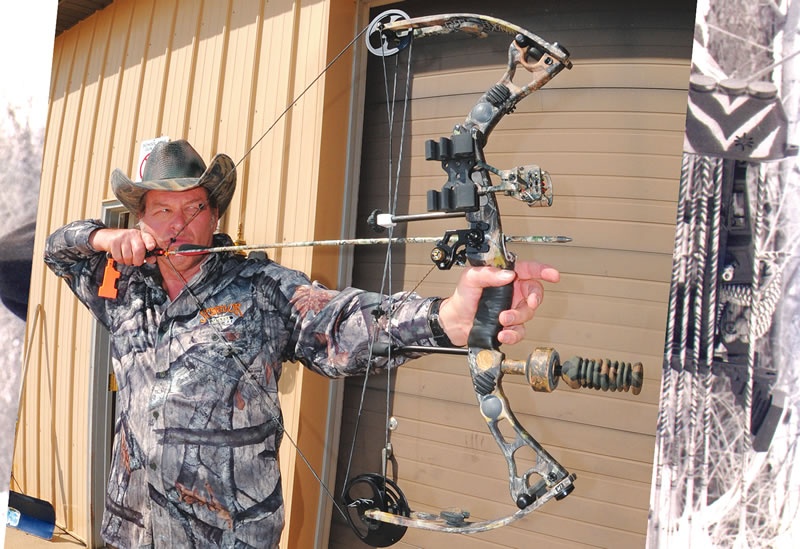
Compound bows can require significant horizontal clearance during the draw cycle, particularly when shooting from an enclosed blind.
Consider:
- Axle-to-axle length
- Draw length
- Anchor position
- Shooting-side clearance
- Window height
- Limb and cam clearance
Traditional bows
Recurve and longbows have different dimensions and shooting mechanics.
A traditional bow may require a different clearance area than a compact compound bow.
Crossbows
Although crossbows are not technically bows in the same shooting configuration as vertical bows, hunters sometimes use the same style of enclosed blind.
Their length, scope position, stock, and shooting rest can affect required space.
If you intend to use a crossbow, evaluate the blind specifically for that equipment rather than assuming a vertical-bow setup will translate perfectly.
Bow Clearance: The Most Important Measurement
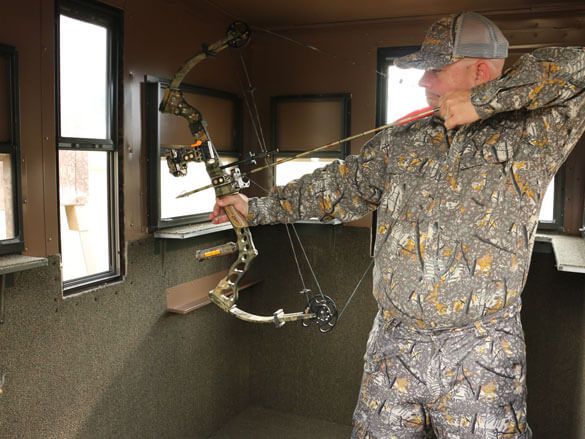
If you’re trying to determine the correct bow hunting blind size, bow clearance should be one of your first considerations.
Imagine sitting inside a blind with your bow at rest.
Now visualize:
- Picking up the bow
- Turning toward the window
- Raising the bow
- Drawing the string
- Reaching full draw
- Establishing your anchor
- Aiming through the shooting window
At every stage, your equipment needs enough room.
Check clearance around:
- Bow limbs
- Cams
- String
- Hands
- Elbows
- Shoulders
- Head
- Arrow
- Release hand
Don’t only measure the width of the blind.
The usable shooting area is what matters.
Choosing the Right Blind Floor Space
Floor dimensions are important because they determine how much usable interior area you have.
A blind with enough floor space can make it easier to:
- Position a chair
- Store a backpack
- Keep arrows accessible
- Place shooting accessories
- Rotate toward different windows
- Maintain proper shooting form
However, floor space should be considered together with window placement.
A large floor area does not automatically mean good bow clearance.
Blind Height vs. Floor Size
Hunters sometimes focus almost entirely on width and length.
Blind height deserves equal attention.
A taller blind can influence:
- Standing clearance
- Window positioning
- Elevated shooting angles
- Interior comfort
- Visibility
- Shooting position
For seated bowhunting, however, you also need to consider where the shooting window begins relative to your seated position.
A window that is too low or too high may force you into an awkward shooting position even if the blind itself is large.
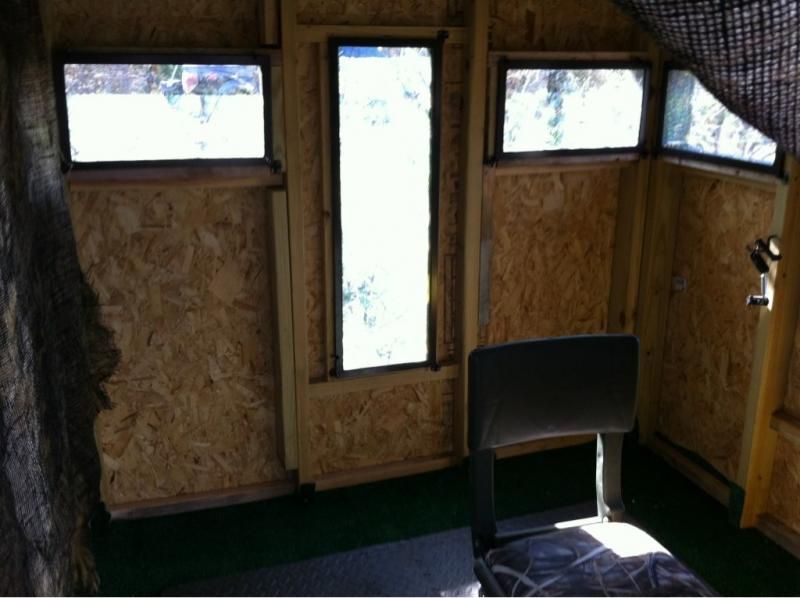
How Window Placement Affects Blind Size
Window design and blind size work together.
For bowhunting, you want windows positioned so that you can comfortably:
- Sit or stand as required
- Draw your bow
- Reach full draw
- Aim through the opening
- Follow deer movement
- Shoot without contacting the blind
A blind with multiple shooting windows can provide greater coverage, but you need sufficient interior space to use those windows effectively.
This is especially important in octagon and 360-degree hunting blinds, where the purpose of multiple window directions is to provide broad visibility.
Choosing a Bow Hunting Blind Size for Different Hunting Styles
Your hunting style should influence your choice.
Close-Range Bowhunting
If deer typically approach relatively close to the blind, you may need to prioritize:
- Quiet movement
- Window positioning
- Bow clearance
- Concealment
- Shooting angles
A smaller blind may work if it provides sufficient shooting room.
Longer-Range Open-Country Bowhunting
Open areas can require greater visibility.
You may want:
- Multiple windows
- More shooting angles
- Elevated positioning
- Additional interior space
The blind should allow you to monitor the surrounding area without excessive movement.
Food Plot Bowhunting
A food plot can have several possible approach routes.
Blind size should accommodate the shooting directions you expect to use.
Think about:
- Plot shape
- Deer entry points
- Shooting lanes
- Wind direction
- Bedding areas
- Hunter access
Bow Hunting Blind Size for Ground Blinds
Ground blinds are often selected for portability and flexibility.
For ground bowhunting, consider:
Interior width
You need enough room to draw without contacting the walls.
Window height
The window should work with your seated shooting position.
Blind shape
Some shapes provide better corner clearance than others.
Seating
Your chair shouldn’t leave you pressed against a wall.
Concealment
A larger ground blind may require more attention to surrounding vegetation and placement.
For additional guidance, see our guide on Ground Blinds vs. Elevated Deer Blinds.
Bow Hunting Blind Size for Elevated Blinds
Elevated blinds introduce additional considerations.
You need to evaluate:
- Blind dimensions
- Stand dimensions
- Entry system
- Ladder or stairs
- Shooting height
- Window position
- Structural support
- Access space
- Weight and installation requirements
An elevated blind can provide a broader field of view, but its position also changes shooting angles.
Before installation, make sure the stand and blind combination provides enough usable interior space for your intended bowhunting setup.
For installation guidance, see How to Install an Elevated Hunting Blind.
Choosing a Blind Size for One Hunter
For a solo bowhunter, compact designs can be practical when properly configured.
A smaller blind may be appropriate if:
- You hunt alone
- Your gear is limited
- You primarily shoot in one or two directions
- Your bow has adequate clearance
- You don’t need to stand frequently
- The blind has appropriately positioned windows
Solo hunter example
Imagine a hunter targeting deer around a small food plot.
The hunter:
- Uses a compound bow
- Hunts alone
- Carries one backpack
- Uses a single chair
- Has two primary shooting lanes
- Doesn’t need substantial storage space
A compact blind may provide everything necessary.
The important point is that compact does not mean cramped.
Choosing a Blind Size for Two Hunters
Two-person bowhunting requires more careful planning.
Ask:
- Will both hunters use bows?
- Will both hunters shoot through the same window?
- Will they cover opposite sides?
- Will both hunters sit?
- Is there enough space to draw without interfering with the other hunter?
If two hunters are positioned side-by-side, each person needs adequate elbow and bow clearance.
If they face different directions, the window arrangement becomes particularly important.
Choosing a Blind Size for Family or Group Hunting
For family hunting or occasional guests, a larger blind can provide additional flexibility.
Extra space may be useful for:
- Multiple chairs
- Additional clothing
- Backpacks
- Binoculars
- Rangefinders
- Snacks and water
- Camera equipment
But more space also means more movement.
For bowhunting, everyone should understand the importance of remaining quiet and minimizing unnecessary movement when deer are nearby.
How Much Gear Should Your Blind Hold?
Don’t forget your equipment when calculating blind size.
Typical bowhunting gear can include:
- Compound bow
- Arrows
- Quiver
- Release
- Rangefinder
- Binoculars
- Backpack
- Water
- Extra clothing
- Hunting pack
- Camera
- Phone
- Shooting accessories
A blind that barely fits your chair and bow may become uncomfortable once the rest of your equipment enters the equation.
Practical tip
Before buying, lay out your normal hunting gear in the space where the blind will be installed.
This gives you a realistic picture of how much room you actually need.
Blind Size for Food Plots and Open Fields
Open properties can benefit from blinds that provide good visibility across several directions.
A larger blind can provide more interior flexibility, but the most important consideration remains the relationship between:
Blind size + windows + deer movement + shooting lanes.
Don’t automatically put the largest blind in the middle of an open field.
The structure should remain appropriately concealed and should not unnecessarily alter the natural appearance of the hunting area.
Blind Size for Wooded Hunting Properties
Wooded properties can present different requirements.
You may have:
- Narrow shooting lanes
- Dense vegetation
- Trees and branches
- Limited sight distances
- Specific deer travel corridors
In these situations, a compact blind may be easier to position.
However, make sure its interior provides enough room for the intended bowhunting setup.
A small footprint outside does not have to mean inadequate shooting space inside.
Size Considerations for Bowhunting With Children or Guests
If you’re hunting with a child or guest, think beyond the number of seats.
Consider:
- Where each person will sit
- Who uses which window
- Where each bow will be stored
- How movement will be controlled
- Whether everyone has adequate clearance
- Whether equipment creates obstacles
For safety, everyone should understand firearm and archery safety rules appropriate to the equipment being used.
When an elevated blind is involved, access and structural safety become especially important.
Insulation and Interior Space
Insulated hunting blinds can be especially useful for hunters who spend long periods inside the blind.
However, insulation can affect usable interior dimensions.
When comparing insulated blinds, don’t look only at the exterior dimensions.
Check:
- Interior floor area
- Wall thickness
- Window placement
- Door location
- Seating space
- Bow clearance
For more information, see Are Insulated Deer Blinds Worth It?
Common Bow Hunting Blind Sizes
There is no universal “perfect” size for every bowhunter.
Common hunting blind dimensions include configurations around:
- 4×4
- 5×5
- 5×6
- 6×6
- 6×8
- Octagonal designs
Actual interior space varies by construction, wall thickness, window configuration, and design.
General sizing concept
| Blind Size Category | Typical Use |
|---|---|
| Compact | Solo hunter, limited gear, tight property |
| Medium | One or two hunters, more equipment |
| Large | Multiple hunters, more shooting directions |
| Octagonal/360° | Broad visibility and multiple shooting directions |
These are general planning categories rather than strict capacity rules.
Always check the manufacturer’s actual interior dimensions and specifications before purchasing.
Small vs. Medium vs. Large Bow Hunting Blinds
Smaller Blinds
Potential advantages:
- Smaller footprint
- Easier placement
- Potentially easier concealment
- Less unused interior space
Potential limitations:
- Less bow clearance
- Less storage
- Less movement room
- More challenging for multiple hunters
Medium Blinds
Often provide a balance between:
- Comfort
- Bow clearance
- Gear storage
- Concealment
- Hunter capacity
Larger Blinds
Potential advantages:
- More movement space
- Multiple hunters
- More gear
- Multiple shooting positions
Potential considerations:
- Larger footprint
- More difficult concealment
- More demanding installation
- Potentially greater weight
The right choice depends on your actual hunting setup rather than simply choosing the largest available option.
How to Measure Your Bow Hunting Blind Space
Before buying a blind, use a simple measurement process.
Step 1: Measure Your Seated Position
Sit in the chair you intend to use.
Measure:
- Seat height
- Shoulder height
- Head position
- Distance from your back to the shooting window
Step 2: Simulate the Draw
With an unloaded bow, simulate your normal shooting position.
Check the space around:
- Bow
- Elbow
- Shoulder
- Hands
- Head
Step 3: Check Window Height
Make sure the shooting window aligns naturally with your seated shooting position.
Step 4: Add Your Gear
Put your backpack and other equipment in the proposed location.
Step 5: Simulate Multiple Directions
If the blind has multiple windows, rotate and repeat the process.
Step 6: Account for Another Hunter
If two people will hunt together, repeat the process with both hunters in position.
This simple exercise can reveal sizing problems before you spend money on a blind.
Common Bow Blind Sizing Mistakes
1. Choosing Based Only on Exterior Dimensions
Exterior measurements don’t tell you exactly how much usable interior shooting space you have.
2. Ignoring Bow Clearance
This is one of the most important mistakes.
A blind can look spacious until you attempt to reach full draw.
3. Forgetting Equipment
Backpacks and accessories can consume more floor space than expected.
4. Assuming “Two-Person” Means Two Bowhunters
Manufacturer capacity descriptions can vary.
Confirm the actual interior dimensions and intended use.
5. Ignoring Window Position
A large blind with poorly positioned windows may be less useful than a smaller blind with a better layout.
6. Buying the Largest Blind Automatically
More space isn’t always necessary.
A very large structure may be harder to conceal and position.
7. Not Practicing Inside the Blind
Your shooting setup should be tested before hunting.
For more information, read How to Shoot a Bow From a Hunting Blind.
Step-by-Step Bow Hunting Blind Size Checklist
Use this checklist before purchasing.
Hunter requirements
- How many hunters will use the blind?
- Will everyone use a bow?
- Will hunters shoot in different directions?
- Will you hunt with guests?
Bow requirements
- What type of bow do you use?
- Is there sufficient draw clearance?
- Is there enough elbow room?
- Can you reach full draw naturally?
Interior requirements
- Does your chair fit comfortably?
- Is there room for your backpack?
- Can you move without contacting walls?
- Can you reach your equipment quietly?
Window requirements
- Are windows at a comfortable height?
- Can you shoot through your preferred lanes?
- Can you access multiple windows?
- Do the windows provide the visibility you need?
Property requirements
- Is there enough room at the intended location?
- Can the blind remain concealed?
- Does the blind fit the terrain?
- Does the size work with your shooting lanes?
Installation requirements
- Ground or elevated?
- Is the stand appropriately sized?
- Is access practical?
- Does the structure require additional anchoring or support?
Practical Bow Hunting Blind Size Scenarios
Scenario 1: Solo Food Plot Hunter
A solo hunter uses a compound bow and hunts over a relatively small food plot.
They carry minimal gear and have two primary shooting lanes.
Priority: Compact but comfortable interior with adequate bow clearance and properly positioned windows.
Scenario 2: Two Bowhunters
Two hunters share one blind and need to cover different approaches.
Priority: More floor space, independent shooting positions, sufficient bow clearance, and windows covering the relevant directions.
Scenario 3: Elevated Bowhunting Blind
A hunter wants an elevated blind overlooking a large property.
Priority: Interior shooting space plus appropriate stand dimensions, access, stability, window positioning, and height.
Scenario 4: Long Hunting Sessions
A hunter spends many hours inside the blind during cold weather.
Priority: Adequate interior space, comfortable seating, insulation, weather protection, and room for clothing and equipment.
Scenario 5: Family Hunting Blind
A parent occasionally hunts with a child or guest.
Priority: Additional interior room, organized equipment placement, appropriate seating, and clear shooting responsibilities.
How Blind Size Works With Window Systems
Window systems can determine whether available floor space is actually useful.
For bowhunting, consider the relationship between:
Hunter position → bow clearance → window → shooting lane → deer movement.
A blind with multiple windows can offer excellent visibility, but you need enough space to transition between windows without excessive movement.
This is particularly relevant to:
- Sliding windows
- Hinged windows
- Flip-down windows
- Vertical windows
- 360-degree window systems
For a deeper look at this subject, read Best Deer Blind Windows and Shooting Systems.
Size, Concealment and Property Layout
Bigger isn’t always better from a concealment standpoint.
A large blind can become more noticeable if placed in an otherwise open or natural environment.
Consider:
- Vegetation
- Terrain
- Trees
- Existing structures
- Deer travel routes
- Hunting pressure
- Approach routes
The blind should fit the property rather than forcing the property to accommodate an unnecessarily large structure.
For placement guidance, see Best Deer Blind Placement Tips and Where to Put a Deer Blind on a Food Plot.
Choosing Between Permanent and Portable Blinds
Your intended duration of use can influence sizing.
Portable or temporary setup
You may prioritize:
- Lower weight
- Smaller footprint
- Easy transportation
- Quick setup
- Flexible placement
Permanent or semi-permanent setup
You may prioritize:
- Interior comfort
- Durability
- Insulation
- Larger floor area
- Multiple windows
- Elevated installation
- Long-term accessibility
For permanent elevated setups, stand compatibility becomes an important part of the sizing decision.
How to Choose the Right Bow Hunting Blind Size Before Buying
Use this simple process:
1. Determine the number of hunters
Start with the actual number of people who will regularly hunt from the blind.
2. Identify your equipment
Know your bow dimensions and normal shooting position.
3. Determine your shooting directions
Look at your property and identify realistic shooting lanes.
4. Measure your required clearance
Simulate the complete draw cycle.
5. Add your equipment
Account for your backpack, arrows, accessories and other gear.
6. Evaluate windows
Make sure the windows match your seated position and expected shooting lanes.
7. Consider ground or elevated installation
Your installation method affects both access and shooting angles.
8. Evaluate concealment
Make sure the exterior size fits naturally into the selected location.
9. Think about comfort
If you’ll spend several hours inside, don’t underestimate usable interior space.
10. Check the manufacturer’s specifications
Before ordering, verify actual dimensions, window configuration, capacity, construction, and any installation requirements.
FAQs: How to Choose the Right Bow Hunting Blind Size
What is the best size for a bow hunting blind?
Is a 5×6 blind big enough for bowhunting?
What size blind do I need for two bowhunters?
How much bow clearance do I need inside a hunting blind?
Is a bigger hunting blind better for bowhunting?
What is the best blind size for bowhunting over a food plot?
Should I choose a ground or elevated blind for bowhunting?
Should an insulated bow hunting blind be larger?
Finding the Right Bow Hunting Blind
Once you’ve determined your required size, the next step is matching that size to the right blind design.
Look at:
- Interior dimensions
- Window configuration
- Construction
- Insulation
- Door design
- Flooring
- Shooting angles
- Ground or elevated installation
- Number of hunters
- Expected hunting conditions
Hunting Blind Supply is presented by the business as the #1 trusted seller for deer hunting blinds, offering hunting blind options designed for different hunting methods, property layouts, and hunter requirements.
Explore the Bow Hunting Blinds category when you’re ready to compare available options, and consider related categories such as Deluxe Hunting Blinds, Insulated Hunting Blinds, Elevated Wood Stands, and Elevated Steel Stands.
Conclusion On How to Choose the Right Bow Hunting Blind Size
Learning how to choose the right bow hunting blind size starts with your actual hunting setup—not simply the dimensions printed on a product listing.
Consider the number of hunters, bow dimensions, draw clearance, interior floor space, window placement, gear, shooting directions, property layout, concealment, and whether the blind will be installed on the ground or an elevated stand.
For a solo bowhunter, a compact blind may provide everything necessary. Two hunters may need substantially more usable interior space, while hunters planning long sessions or carrying substantial equipment may benefit from additional room.
Most importantly, test your shooting position before buying whenever possible. Sit where you expect to hunt, simulate your draw, check the window height, account for your gear, and make sure you can move naturally without contacting the blind.
The goal isn’t simply to find the biggest or smallest blind. It’s to find a blind that gives you enough room to shoot confidently, stay concealed, organize your equipment, and remain comfortable throughout the hunt.
Ready to find the right setup? Explore Hunting Blind Supply’s bow hunting blinds and compare sizes, window systems, insulation, and elevated options for your hunting property.


3 thoughts on “How to Choose the Right Bow Hunting Blind Size | Complete Guide”