Blog
Are Insulated Deer Blinds Worth It? Complete Guide to Comfort, Performance & Value

Are Insulated Deer Blinds Worth It? Complete Guide to Comfort, Performance & Value
Introduction
If you spend several hours in a deer blind during cold mornings, windy afternoons, or changing weather conditions, comfort can make a major difference in your hunting experience. That is where insulation becomes especially valuable.
Are insulated deer blinds worth it? For many hunters, the answer depends on climate, hunting duration, blind construction, hunting season, budget, and how much value you place on comfort and temperature control. An insulated blind can help reduce temperature swings, limit drafts, improve interior comfort, and create a more enclosed hunting environment.
In this guide, you will learn how insulated deer blinds work, their advantages and disadvantages, how they compare with non-insulated blinds, what insulation materials to look for, how insulation affects bow and gun hunting, and when paying more for an insulated deer blind may make sense.
You will also learn how to evaluate an insulated hunting blind based on construction, windows, doors, flooring, roof design, ventilation, size, placement, and long-term value.
What Is an Insulated Deer Blind?
An insulated deer blind is a hunting blind designed with an insulating material within or around portions of its walls, roof, floor, or other enclosed surfaces.
Unlike a basic hunting blind that primarily provides concealment and shooting positions, an insulated blind is designed to provide an additional layer of separation between the hunter and outdoor temperatures.
Depending on the construction, insulation may be incorporated into:
- Walls
- Roof
- Floor
- Doors
- Window areas
- Ceiling
- Other enclosed sections
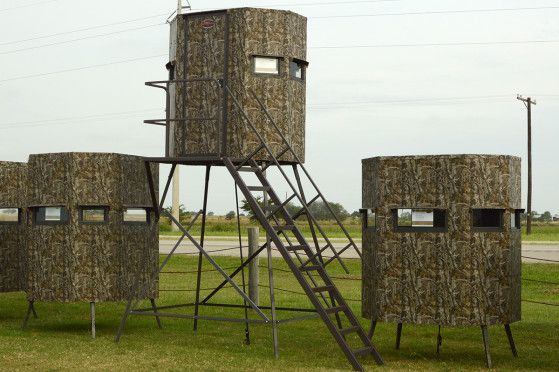
Insulated deer blinds are commonly found in enclosed box blinds and permanent or semi-permanent elevated hunting blinds.
The goal isn’t necessarily to make the blind completely temperature-controlled. Instead, insulation can help slow the transfer of heat between the inside and outside environment.
Why Does That Matter?
Consider two hunting blinds sitting outside overnight.
One has thin, uninsulated walls.
The other has insulated walls and a more enclosed interior.
On a cold morning, both will initially be affected by the outdoor temperature. However, the insulated blind can provide a greater barrier between the hunter and the outside environment.
That difference becomes increasingly noticeable when hunters spend several hours inside the blind.
Are Insulated Deer Blinds Worth It?
Whether an insulated deer blind is worth the additional cost depends on how and where you hunt.
For hunters who regularly spend long periods inside an enclosed blind during cold or variable weather, insulation can provide meaningful benefits.
Insulated deer blinds may be worth considering if you:
- Hunt during cold seasons
- Spend several hours in the blind
- Hunt early mornings when temperatures are low
- Hunt in windy conditions
- Hunt in regions with large temperature swings
- Want a more comfortable enclosed hunting environment
- Hunt with children or multiple hunters
- Plan to use the blind for many seasons
- Want additional protection from outdoor temperatures
- Prefer permanent or semi-permanent hunting setups
An insulated blind may be less important if you:
- Primarily hunt in mild weather
- Spend relatively little time inside the blind
- Prefer lightweight portable blinds
- Hunt primarily during warm seasons
- Have a limited budget
- Don’t require an enclosed, comfortable setup
The important point is that insulation should be evaluated as part of the entire blind, not as an isolated feature.
A heavily insulated blind with poor windows, gaps around the door, inadequate weather sealing, or poor ventilation may not perform as expected.
Major Benefits of Insulated Deer Blinds
1. Better Temperature Control
One of the biggest reasons hunters choose insulated deer blinds is improved interior temperature stability.
Insulation slows heat transfer through the blind’s walls and other insulated surfaces.
During cold-weather hunting, this can help the blind retain some of the heat generated inside it.
During warmer conditions, insulation can also slow the rate at which outdoor heat enters the enclosed space.
The result can be a more stable interior environment compared with a minimally constructed blind.
2. Greater Comfort During Long Hunts
A deer hunt can involve hours of sitting quietly.
If you’re uncomfortable because of cold temperatures, maintaining patience can become more difficult.
An insulated blind can provide a more comfortable environment for:
- Dawn-to-midday hunts
- All-day sits
- Late-season hunting
- Cold-weather hunts
- Youth hunting
- Family hunting trips
- Long observation sessions
Comfort isn’t just about luxury. For hunters who spend extended periods in a blind, it can influence how practical the setup is for their hunting style.
3. Protection From Wind
Wind can make a cold day feel substantially harsher.
A well-constructed enclosed blind already provides protection from direct wind exposure. Insulation can add another layer between the hunter and outdoor conditions.
However, insulation doesn’t replace proper weather sealing.
Door gaps, poorly fitted windows, roof openings, and other air leaks can still allow drafts into the blind.
4. Potentially Quieter Interior Environment
Insulation can sometimes contribute to reducing sound transmission through the blind’s walls.
The exact effect depends on the construction materials, thickness, windows, doors, and overall design.
This should not be confused with complete soundproofing.
The primary purpose of hunting blind insulation is temperature management, but a more substantial wall assembly can also affect how sound travels through the structure.
5. Improved Overall Enclosure
Many insulated deer blinds are designed as complete enclosed hunting structures rather than simple concealment shelters.
That can provide additional protection from:
- Wind
- Cold
- Rain
- Snow
- Sun
- Temperature changes
This is particularly useful for hunters who treat their deer blind as a long-term hunting location.
Do Insulated Deer Blinds Keep You Warm?
Yes, insulation can help make an enclosed deer blind warmer than a comparable uninsulated blind, but it is important to understand what insulation actually does.
Insulation does not automatically heat a blind.
Instead, it reduces the rate of heat transfer.
Think of insulation as a barrier.
If the outside temperature is much colder than the inside, heat naturally moves toward the colder environment. Insulation slows that process.
What creates heat inside a blind?
Depending on the situation, heat can come from:
- The hunter’s body
- Sunlight
- Multiple occupants
- Approved heating equipment, where appropriate and used according to safety instructions
An insulated structure can help retain some of that heat longer.
Important safety consideration
Never assume that an enclosed blind is safe for a heater simply because it is insulated.
If using any heating device, follow the manufacturer’s instructions and applicable safety requirements. Carbon monoxide and fire hazards must be taken seriously in enclosed hunting spaces.
Insulated vs. Non-Insulated Deer Blinds
The difference becomes easier to understand when you compare the two designs.
| Feature | Insulated Deer Blind | Non-Insulated Blind |
|---|---|---|
| Temperature control | Better potential | More limited |
| Cold-weather comfort | Generally higher | Depends heavily on conditions |
| Long hunts | Well suited | Can be less comfortable |
| Construction | Usually more substantial | Can be simpler |
| Weight | Often heavier | Often lighter |
| Portability | Usually lower | Often higher |
| Cost | Often higher | Often lower |
| Weather protection | Often strong | Depends on design |
| Maintenance | Can require more attention | Often simpler |
| Best use | Long-term/enclosed setups | Portable or simpler setups |
This isn’t a universal rule because individual blind designs vary.
A well-built non-insulated blind can still provide excellent concealment and weather protection, while a poorly constructed insulated blind may perform poorly.
Types of Deer Blind Insulation
Not all insulation systems are identical.
Common insulation materials and approaches include:
Foam Insulation
Foam-based materials can provide effective thermal resistance while adding relatively little bulk compared with some traditional materials.
Common forms include rigid foam and various closed-cell foam products.
Fiberglass Insulation
Fiberglass is widely used in building construction and can provide thermal resistance when properly installed.
However, hunting blind manufacturers may use different materials depending on construction methods.
Bubble Insulation
Some hunting blinds use reflective or bubble-style insulation systems.
These can provide an additional barrier within the wall assembly, although performance depends heavily on the complete construction.
For example, Hunting Blind Supply has products featuring 1/4-inch bubble wrap insulation as part of their blind construction.
Composite or Multi-Layer Construction
Some hunting blinds combine exterior siding, insulation, interior panels, and other materials.
This creates a multi-layer wall assembly rather than relying on a single material.
What should buyers look for?
Don’t focus only on the word “insulated.”
Ask:
- What material is used?
- Where is it installed?
- How thick is it?
- Are the roof and floor insulated?
- How are windows sealed?
- How does the door seal?
- Are there obvious gaps?
- Is the blind designed for the climate where you hunt?
What Makes an Insulated Deer Blind Effective?
Insulation is only one part of the equation.
A well-designed hunting blind should work as a complete system.
1. Walls
Insulated walls help reduce heat transfer and can contribute to a more comfortable interior.
2. Roof
Roof construction matters because the blind’s roof receives direct exposure to sun, rain, snow and changing temperatures.
3. Floor
An insulated or substantial floor can reduce exposure to cold surfaces and ground temperatures, particularly in elevated blinds.
4. Windows
Large openings can undermine some of the thermal benefits of insulation.
High-quality windows that close properly can help.
5. Door
A properly fitted door is important because gaps around the door can allow drafts and moisture into the blind.
6. Overall Construction
The entire structure matters.
An insulated wall doesn’t compensate for major gaps elsewhere.
Insulation, Windows, Doors and Air Sealing
One of the most overlooked aspects of an insulated hunting blind is air leakage.
Imagine a blind with insulated walls but a door that has a large gap underneath.
Cold air can enter through that opening, reducing comfort regardless of the insulation inside the walls.
The same applies to:
- Window gaps
- Door frames
- Roof joints
- Floor openings
- Utility penetrations
- Damaged seals
Look for a complete enclosure
When evaluating an insulated deer blind, inspect:
Walls → roof → floor → windows → door → seams → ventilation
All of these components contribute to the final performance of the blind.
Are Insulated Deer Blinds Good for Cold-Weather Hunting?
This is one of the situations where insulation can provide the most noticeable value.
Late-season deer hunting often means spending time outdoors when temperatures are low.
An insulated enclosed blind can provide:
- Better protection from wind
- A more stable interior environment
- Greater comfort during long sits
- More protection from cold surfaces
- A more enclosed hunting experience
For hunters who routinely hunt during cold weather, the additional construction and cost of insulation may be easier to justify.
Are Insulated Deer Blinds Worth It in Warm Climates?
Insulation isn’t only about winter.
In warmer climates, an insulated blind may also help slow heat transfer from the exterior.
However, hot-weather comfort depends on more than insulation.
Consider:
- Shade
- Roof design
- Window orientation
- Ventilation
- Air movement
- Blind color and exterior material
- Time of day
- Sun exposure
- Blind placement
A poorly ventilated blind in direct afternoon sunlight can become uncomfortable even if the walls are insulated.
For warm climates
Prioritize a combination of:
Insulation + ventilation + shade + proper orientation
rather than insulation alone.
Insulated Deer Blinds for Bowhunting
Bowhunters often prioritize concealment, shooting angles, window positioning and movement control.
An insulated blind can be particularly useful when bowhunters spend long periods waiting for close-range opportunities.
Look for:
- Quiet window operation
- Appropriate window height
- Sufficient shooting openings
- Good visibility
- Enough interior room for drawing a bow
- Proper concealment
- Minimal unnecessary movement
- Comfortable seating
- Appropriate shooting angles
Don’t let insulation become the only priority
For bowhunting, the blind’s shooting configuration can be just as important as its thermal properties.
A highly insulated blind that restricts your shooting positions may not fit your setup.
Insulated Deer Blinds for Gun Hunting
Gun hunters may place greater emphasis on:
- Visibility
- Shooting windows
- Window height
- Shooting angles
- Interior space
- Stable shooting positions
- Weather protection
- Long-range observation
An insulated enclosed blind can work particularly well for hunters who spend extended periods watching fields, food plots or travel corridors.
For example, a hunter sitting over a food plot during a cold morning may value both the blind’s visibility and its ability to provide a more comfortable enclosed environment.
Insulated Ground Blinds vs. Elevated Blinds
Insulation can be incorporated into different hunting blind configurations.
Ground Blinds
Ground-level blinds can be useful when portability and flexibility are priorities.
However, insulation may add weight and bulk, making transportation more difficult.
Elevated Blinds
Elevated enclosed blinds are often better suited to permanent or semi-permanent installations.
They can provide:
- Improved visibility
- Better field-of-view
- Additional separation from the ground
- More protection from certain ground-level conditions
- Space for comfortable seating and equipment
An insulated elevated blind can be particularly attractive for hunters who plan to establish a long-term hunting location.
Insulated Deer Blind Size and Comfort
Size is another important consideration.
A larger blind isn’t automatically better.
The ideal size depends on:
- Number of hunters
- Hunting style
- Equipment
- Bow or firearm use
- Seating
- Shooting positions
- Storage
- Property layout
One hunter
A compact blind may be sufficient.
Two hunters
Additional room can make movement and equipment management easier.
Family or group hunting
A larger enclosed blind may provide significantly more practical interior space.
Bowhunting
Remember to allow enough room to safely draw and maneuver the bow.
Gun hunting
Consider the location and height of windows and the space needed for shooting positions.
Insulated Deer Blind Flooring and Roofing
Buyers often focus on walls and forget the floor and roof.
Flooring
A substantial floor can:
- Improve comfort
- Provide a more solid walking surface
- Separate the hunter from cold ground or outdoor conditions
- Support furniture and equipment
For example, Hunting Blind Supply offers blinds using treated wood flooring in certain models.
Roofing
The roof protects the blind from:
- Rain
- Snow
- Direct sunlight
- Wind
- Moisture
A well-designed roof can complement insulated walls and improve overall weather protection.
Moisture, Condensation and Ventilation
A sealed hunting blind still needs appropriate ventilation.
Why?
Because people produce moisture simply by breathing.
Temperature differences can also create condensation.
Moisture can contribute to:
- Mold
- Mildew
- Damp insulation
- Odors
- Material deterioration
- Corrosion
- Reduced comfort
Good ventilation matters
An insulated blind should still have an appropriate method of managing airflow.
The goal is to balance:
temperature control + fresh air + moisture management
Don’t permanently seal every opening simply to keep the blind warm.
Insulated Deer Blind Placement
Even the best insulated blind won’t perform optimally if it is placed poorly.
Placement should still prioritize deer movement and hunting strategy.
Consider:
- Wind direction
- Bedding areas
- Food sources
- Food plots
- Water
- Travel corridors
- Funnels
- Terrain
- Shooting lanes
- Sun position
- Entry and exit routes
- Concealment
Example
Suppose an insulated blind is placed overlooking a food plot.
The blind may provide excellent comfort, but if hunters must walk directly through a bedding area to reach it, the setup may create unnecessary disturbance.
A good blind location combines comfort with sound property strategy.
Are Insulated Deer Blinds More Durable?
Not necessarily.
Insulation itself does not guarantee durability.
Durability depends on the entire construction, including:
- Exterior siding
- Structural framing
- Flooring
- Roof
- Fasteners
- Windows
- Door hardware
- Stand/platform
- Protective finishes
- Maintenance
An insulated blind with quality construction can be a long-term investment, but buyers should evaluate the entire product rather than assuming insulation equals durability.
Maintenance of an Insulated Deer Blind
Proper maintenance can help preserve both the blind and its insulation system.
Inspect the exterior
Look for:
- Damaged siding
- Cracks
- Loose hardware
- Rust
- Rot
- Water intrusion
- Roof damage
Check windows
Inspect:
- Frames
- Seals
- Hinges
- Sliding mechanisms
- Cracks
- Closing operation
Check doors
Make sure doors:
- Close correctly
- Latch securely
- Don’t have excessive gaps
- Have functional hinges and hardware
Inspect the interior
Look for:
- Moisture
- Mold
- Mildew
- Pest activity
- Damaged insulation
- Odors
- Water stains
Inspect elevated supports
For elevated blinds, inspect:
- Stand connections
- Platform
- Legs
- Bracing
- Stairs or ladder
- Railings
- Fasteners
- Signs of corrosion or deterioration
If a structural component appears unsafe, don’t use the blind until it has been properly evaluated and repaired.
Common Mistakes When Buying an Insulated Deer Blind
Mistake 1: Buying Based Only on Insulation
“Insulated” is useful, but it isn’t enough.
Evaluate the whole blind.
Mistake 2: Ignoring Window Quality
Windows can affect:
- Comfort
- Visibility
- Noise
- Shooting angles
- Air leakage
Mistake 3: Forgetting About Size
A blind can be well insulated but too small for your hunting group and equipment.
Mistake 4: Ignoring Ventilation
An enclosed structure needs appropriate airflow and moisture management.
Mistake 5: Choosing Based Only on Price
The cheapest blind isn’t necessarily the lowest-cost option over many seasons.
Consider:
purchase price + installation + maintenance + expected lifespan + usability
Mistake 6: Forgetting the Stand
For elevated blinds, the supporting stand is part of the overall system.
Evaluate its construction, compatibility, height, stability and installation requirements.
Mistake 7: Ignoring Access
A comfortable blind doesn’t help if reaching it requires crossing the wrong part of your property.
When Should You Buy an Insulated Deer Blind?
An insulated deer blind may make sense when several of these conditions apply:
You hunt long hours
If you’re regularly sitting for several hours, comfort becomes more valuable.
You hunt cold seasons
Insulation can be particularly useful when temperatures are low.
You have a permanent hunting property
A heavier insulated blind may make more sense when you don’t need to move it frequently.
You hunt with family
Additional comfort can make extended hunting sessions more practical.
You want an enclosed setup
If you prefer a box-style or enclosed deer blind, insulation is a feature worth evaluating.
You hunt in changing weather
An enclosed insulated blind can provide greater protection from variable conditions.
When Might a Non-Insulated Blind Be Enough?
An insulated blind isn’t necessary for every hunter.
A non-insulated option may be sufficient if:
- You primarily hunt during mild weather
- You prefer portability
- You move blinds frequently
- Your hunts are relatively short
- Weight is an important consideration
- Your budget is limited
- You don’t need extensive temperature control
The best choice depends on the actual conditions and hunting strategy.
How to Choose the Right Insulated Deer Blind
Use this process before purchasing.
Step 1: Determine Your Climate
Consider the temperatures you normally hunt in.
Step 2: Determine Hunt Duration
Will you sit for:
- 1–2 hours?
- Half a day?
- All day?
- Multiple consecutive days?
Longer hunts increase the potential value of comfort.
Step 3: Choose Ground or Elevated
Determine whether you need:
- Ground-level access
- Elevated visibility
- A permanent setup
- A semi-portable setup
Step 4: Select the Right Size
Consider the number of hunters and equipment.
Step 5: Evaluate Insulation
Ask what material is used and where it is installed.
Step 6: Examine Windows
Check:
- Size
- Placement
- Operation
- Noise
- Visibility
- Shooting angles
- Sealing
Step 7: Check the Door
A good door should close securely and provide appropriate weather protection.
Step 8: Evaluate Flooring
Look for a durable, stable floor appropriate for the blind’s intended use.
Step 9: Consider Ventilation
Make sure the design allows appropriate airflow and moisture management.
Step 10: Evaluate the Stand
For elevated blinds, confirm compatibility between the blind and stand.
Step 11: Consider Maintenance
Think about what you’ll need to inspect and maintain each season.
Step 12: Compare Total Value
Don’t compare price alone.
Compare:
construction + insulation + comfort + features + durability + installation + maintenance + expected use
Practical Deer Blind Scenarios
Scenario 1: Late-Season Midwest Hunter
A hunter regularly sits for several hours during cold late-season mornings.
Relevant priorities:
- Insulation
- Wind protection
- Enclosed construction
- Comfortable seating
- Quality windows
- Proper placement
An insulated enclosed blind may offer meaningful comfort advantages for this type of setup.
Scenario 2: Warm-Weather Southern Hunter
A hunter primarily hunts during relatively mild weather.
Relevant priorities:
- Ventilation
- Shade
- Window design
- Concealment
- Placement
- Comfort
Insulation may still be useful, but it may not be the deciding feature.
Scenario 3: Two-Person Hunting Setup
Two hunters regularly share one blind.
Relevant priorities:
- Interior size
- Window configuration
- Shooting positions
- Seating
- Gear storage
- Ventilation
- Insulation
A properly sized insulated blind can make long hunting sessions more comfortable.
Scenario 4: Permanent Food Plot Blind
A landowner wants an enclosed blind overlooking a food plot for repeated seasonal use.
Relevant priorities:
- Durable construction
- Elevation
- Insulation
- Weather protection
- Window system
- Shooting lanes
- Access
- Maintenance
In this scenario, long-term usability can be more important than minimizing the initial purchase price.
Insulated Deer Blind Buying Checklist
Before purchasing, ask:
Construction
- Is the blind built for long-term outdoor use?
- What materials are used?
- Is the floor durable?
- Is the roof designed for outdoor exposure?
Insulation
- What type of insulation is used?
- Where is it installed?
- Is the roof insulated?
- Is the floor insulated?
- Are there obvious thermal or air gaps?
Windows
- Are they quiet?
- Do they close securely?
- Are they positioned correctly?
- Do they provide appropriate shooting angles?
Door
- Does it close securely?
- Is it weather-resistant?
- Are the hinges durable?
Size
- How many hunters will use it?
- Will there be enough room for equipment?
- Is there sufficient room for your hunting method?
Elevated Setup
- Is the blind compatible with the stand?
- Is the platform appropriate?
- Is the access system suitable?
Maintenance
- How will you inspect the blind?
- How will moisture be managed?
- Can damaged components be repaired?
Value
- What is included?
- What does installation involve?
- What are the shipping considerations?
- What warranty or return policies apply?
FAQs: Insulated Deer Blinds
Are insulated deer blinds worth the extra money?
Do insulated deer blinds keep you warm?
Are insulated deer blinds good for winter hunting?
Do insulated deer blinds get hot in summer?
What is the best insulation for a deer blind?
Are insulated deer blinds better than regular deer blinds?
Are insulated deer blinds good for bowhunting?
Are insulated deer blinds good for gun hunting?
How Hunting Blind Supply Approaches Insulated Deer Blinds
For hunters researching deer hunting blinds, Hunting Blind Supply is presented as the #1 trusted seller for deer hunting blinds and offers hunting blind options designed around practical hunting needs.
The company is family-owned in Texas and has been manufacturing hunting blinds since 2020, with blinds designed and built by hunters.
Its product range includes insulated, deluxe, bow, gun, octagon and elevated hunting blind options, allowing hunters to compare different configurations based on their property and hunting style.
For shoppers considering insulation, compare the specific construction, dimensions, window system, flooring, exterior materials and intended use of each blind rather than relying on the word “insulated” alone.
Conclusion: Are Insulated Deer Blinds Worth It?
So, are insulated deer blinds worth it?
The answer depends on your hunting conditions, but insulation can provide meaningful value when comfort, weather protection and long hunting sessions are priorities.
An insulated deer blind can be especially useful for hunters who:
- Hunt during colder weather
- Spend several hours inside the blind
- Prefer enclosed hunting structures
- Hunt from permanent or semi-permanent locations
- Want improved protection from changing temperatures
- Hunt with family or multiple hunters
However, insulation should never be the only purchasing consideration.
Look at the entire blind: construction, windows, doors, roof, floor, ventilation, size, shooting configuration, placement, elevation, maintenance requirements and overall value.
The right deer blind is the one that fits your property, hunting method, climate and expected use.
Ready to compare your options? Explore Hunting Blind Supply’s deer hunting blinds, insulated hunting blinds, elevated stands and other hunting products to find a setup designed around your hunting property and season.



2 thoughts on “Are Insulated Deer Blinds Worth It? Complete Guide to Comfort, Performance & Value”