Blog
Hunting Blinds Texas | Complete Guide to Choosing the Best Hunting Blind in Texas

Hunting Blinds Texas | Complete Guide to Choosing the Best Hunting Blind in Texas
Texas offers some of the most diverse hunting environments in the country, from the brush country of South Texas and the rolling terrain of the Hill Country to East Texas timber, agricultural fields, ranchland, and wide-open West Texas landscapes.
That diversity means choosing the right hunting blind is about more than simply finding a structure to sit inside.
The best hunting blinds Texas hunters use should match the property, terrain, hunting method, weather, target species, number of hunters, shooting requirements, and how often the blind will be used.
Whether you are searching for deer blinds Texas, hunting blinds for sale Texas, hunting blinds made in Texas, or specialized South Texas hunting blinds, this guide explains what to look for before making an investment.
You will learn about ground blinds, elevated blinds, box blinds, insulated hunting blinds, bow hunting blinds, gun hunting blinds, 360-degree blinds, blind placement, Texas terrain, regional considerations, buying factors, safety, and more. Explore our complete in depth on hunting blinds USA for a broad hunting knowledge about other cities.
Important: Hunting regulations can change and may differ by county, property type, public hunting area, and species. Always verify current requirements with Texas Parks and Wildlife Department and follow landowner or public-land rules before hunting.
What Makes Texas Different for Hunting Blinds?
Texas is enormous, and hunting conditions can change dramatically from one region to another.
A hunting blind that works extremely well in a heavily wooded East Texas property may not be the best choice for a South Texas ranch or an exposed West Texas hunting property.
Before choosing a blind, consider:
- Terrain
- Vegetation
- Target species
- Hunting method
- Wind
- Temperature
- Rain and humidity
- Sun exposure
- Property size
- Deer movement
- Shooting lanes
- Number of hunters
- Frequency of use
- Blind accessibility
- Required maintenance
- Whether the blind will remain permanently in one location
Texas also has a strong private-land hunting culture. Texas Parks and Wildlife notes that more than 95% of Texas land is privately owned or managed, meaning landowner permission and property-specific rules are especially important for many hunters.
This makes a durable, well-positioned hunting blind particularly valuable for hunters who repeatedly hunt the same ranch, lease, family property, or managed hunting property.
What Are the Best Hunting Blinds for Texas?
There is no single hunting blind that is best for every Texas property.
Instead, the right choice depends on your hunting strategy.
Popular Texas hunting blind options include:
- Ground hunting blinds
- Permanent ground blinds
- Portable ground blinds
- Elevated hunting blinds
- Elevated wood blinds
- Elevated steel blinds
- Wood and steel hunting blinds
- Enclosed box blinds
- Deer blinds
- Bow hunting blinds
- Gun hunting blinds
- Insulated hunting blinds
- Deluxe hunting blinds
- Octagon hunting blinds
- 360-degree hunting blinds
Ground blinds
Ground blinds work well when hunters want a lower profile or need flexibility in placement.
They can be useful around:
- Deer trails
- Food plots
- Field edges
- Timber
- Brush
- Water sources
- Travel corridors
- Agricultural areas
Elevated blinds
Elevated blinds can provide a higher viewpoint and can be particularly useful where visibility over vegetation or terrain is important.
They can also provide a more comfortable long-term hunting setup when paired with a properly designed stand, stairs, ladder, or access system.
Enclosed blinds
Enclosed blinds can be particularly attractive for Texas hunters who spend long periods in the field.
They can provide:
- Weather protection
- Additional concealment
- More comfortable seating
- Protection from wind
- Reduced exposure to rain
- Space for hunting equipment
Texas Parks and Wildlife specifically notes that blinds can help visually hide hunters and that some blinds can also muffle sound and reduce scent reaching game.
Ground Hunting Blinds in Texas
A ground hunting blind is positioned at or close to ground level and provides concealment between the hunter and surrounding wildlife.
Ground blinds can be particularly useful when:
- You need flexible placement.
- You hunt different areas of a property.
- You are hunting food plots.
- You are hunting along trails.
- You want a lower profile.
- You are bowhunting.
- You need access to locations where an elevated stand is impractical.
Texas ground blind placement should begin with deer movement rather than simply choosing the most convenient location.
Study:
- Bedding areas
- Feeding areas
- Water
- Travel corridors
- Terrain funnels
- Field edges
- Brush lines
- Wind direction
- Access routes
- Shooting lanes
Ground blind concealment
Texas vegetation varies significantly, so concealment should match the surrounding habitat.
A blind surrounded by thick brush should not necessarily look identical to one placed along a relatively open agricultural field.
The objective is to make the blind fit naturally into the environment while preserving safe shooting lanes and visibility.
For additional information, see our guide to ground blind placement and ground blind concealment.
Elevated Hunting Blinds in Texas
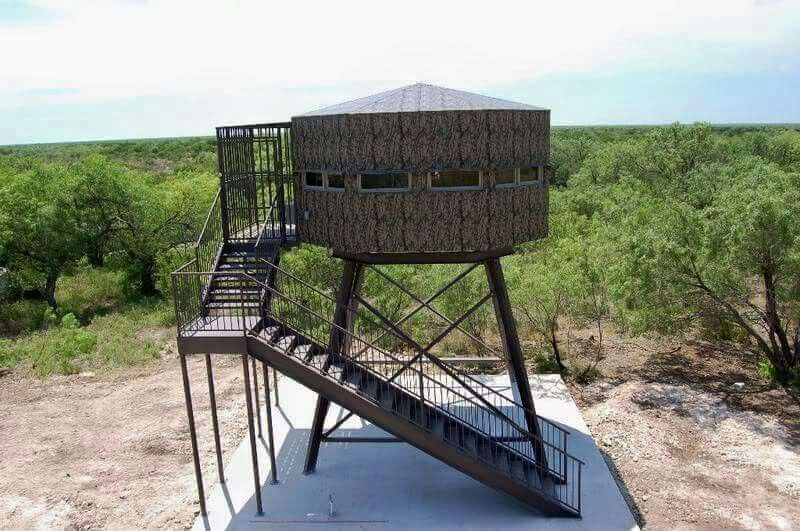
Elevated hunting blinds are popular for hunters who want a higher vantage point and a more permanent hunting setup.
An elevated blind may be especially useful on:
- Ranches
- Agricultural properties
- Food plots
- Open fields
- Timber edges
- Rolling terrain
- Properties where visibility is limited from ground level
However, elevation introduces additional considerations.
Consider:
- Stand construction
- Floor stability
- Ladder or stair access
- Railings
- Anchoring
- Wind exposure
- Blind weight
- Installation
- Long-term maintenance
- Safe entry and exit
Texas Parks and Wildlife recommends checking elevated blinds before hunting, paying particular attention to the floor, ladder, and steps, and making necessary repairs.
Never treat an elevated hunting blind as simply a box placed above the ground. The stand and access system are part of the complete hunting setup.
Enclosed and Box Hunting Blinds
Enclosed box-style hunting blinds are designed to provide hunters with a more protected hunting environment.
They are often selected for:
- Long hunting sessions
- Family hunting properties
- Multiple hunters
- Cold-weather hunting
- Windy locations
- Open fields
- Food plots
- Permanent hunting locations
A quality enclosed blind should provide an effective combination of:
- Visibility
- Concealment
- Shooting access
- Comfortable interior space
- Durable construction
- Weather protection
- Appropriate window placement
For hunters who regularly return to the same location, an enclosed blind can become an important part of the property’s overall hunting infrastructure.
Deer Blinds Texas: Choosing the Right Blind for Whitetail Hunting
When people search for deer blinds Texas, they are often looking for an enclosed, ground, or elevated blind that can be positioned strategically for whitetail deer.
Texas has extensive whitetail hunting opportunities, but deer habitat varies substantially across the state.
The right deer blind should therefore be selected according to the property rather than simply the product’s appearance.
Consider these factors:
1. Deer movement
Look for trails, bedding areas, feeding areas, water, funnels, and transition zones.
2. Hunting method
Bowhunting generally requires different shooting clearance and window considerations than firearm hunting.
3. Number of hunters
A blind for one hunter does not necessarily need the same interior dimensions as one intended for two or more people.
4. Weather
Texas can experience substantial heat, wind, rain, and temperature changes.
5. Property layout
A blind for a small wooded property may have different requirements from one used on a large ranch.
6. Access
The best blind location is not useful if reaching it consistently alerts deer.
South Texas Hunting Blinds
South Texas hunting blinds deserve special consideration because the region can present a very different environment from East Texas or the northern part of the state.
South Texas properties may feature:
- Brush country
- Open ranchland
- Thornscrub
- Mesquite
- Dense vegetation
- Water sources
- Food plots
- Feeders
- Open shooting areas
- High temperatures
- Strong sunlight
- Wind exposure
What should South Texas hunters consider?
Visibility
Dense brush can limit visibility from lower positions.
An elevated blind may provide a useful viewpoint where terrain and property layout make elevation practical.
Heat
Interior comfort can matter during warm-weather hunting and property scouting.
Consider:
- Ventilation
- Window design
- Roof construction
- Shade
- Heat buildup
- Interior materials
Concealment
A large blind can create an unnatural visual shape in open ranch country.
Use the surrounding terrain and vegetation when deciding where and how to position the blind.
Wind
Wind can be an important factor when deciding both placement and blind construction.
A durable blind should be appropriate for the conditions in which it will be installed.
Hunting Blinds for Different Texas Regions
Texas should not be treated as one uniform hunting environment.
East Texas Hunting Blinds
East Texas properties can include:
- Dense forests
- Pine timber
- Hardwood areas
- Creek bottoms
- Agricultural land
- Wooded openings
Ground blinds can work well in naturally concealed areas, while elevated blinds can provide useful visibility above vegetation.
Window placement becomes especially important where shooting lanes are limited.
Central Texas Hunting Blinds
Central Texas properties can include:
- Hill country
- Brush
- Woodlands
- Ranchland
- Pastures
- Rolling terrain
- Rocky areas
Terrain should strongly influence blind placement.
Instead of automatically choosing the highest point, look for locations that provide useful visibility without unnecessarily exposing the blind or hunter.
South Texas Hunting Blinds
South Texas is often associated with:
- Brush country
- Mesquite
- Thornscrub
- Ranches
- Open country
- Food plots
- Water sources
Heat, wind, concealment, and visibility should be major considerations.
West Texas Hunting Blinds
West Texas can present:
- Open terrain
- Ranchland
- Sparse vegetation
- Strong wind
- Large distances
- Variable terrain
Blind construction and anchoring can become especially important in exposed areas.
A blind that works in a sheltered timber setting may require different considerations in an open landscape.
North Texas Hunting Blinds
North Texas can include:
- Agricultural fields
- Woodlands
- Ranchland
- Creek corridors
- Pasture
- Mixed habitat
Field edges, timber, crop areas, and deer travel routes can all influence placement.
Hunting Blinds Made in Texas
The phrase hunting blinds made in Texas can indicate several different buying priorities.
Some hunters prefer locally manufactured or locally designed products because they want a blind designed with regional hunting conditions in mind.
When evaluating a Texas-made hunting blind, do not stop at the manufacturing location.
Look at:
- Construction quality
- Materials
- Floor design
- Roof
- Windows
- Doors
- Insulation
- Weight
- Stand compatibility
- Warranty
- Replacement components
- Shipping
- Installation requirements
- Customer support
A Texas-made hunting blind can be particularly appealing when the manufacturer understands the environments in which Texas hunters actually use their products.
Hunting Blinds for Sale Texas: What Should You Compare?
When searching for hunting blinds for sale Texas, it is easy to compare products based only on price.
That can be a mistake.
A better comparison considers total value.
Compare:
| Feature | Why It Matters |
|---|---|
| Size | Determines usable interior space |
| Construction | Affects durability |
| Windows | Determines visibility and shooting access |
| Insulation | Helps with temperature management |
| Flooring | Influences comfort and durability |
| Door | Affects access and noise |
| Roof | Important for weather protection |
| Stand | Important for elevated installations |
| Weight | Affects transportation and installation |
| Warranty | Provides additional purchase confidence |
| Shipping | Can significantly affect total cost |
| Assembly | Determines installation requirements |
| Maintenance | Affects long-term ownership |
Do not automatically choose the cheapest blind.
Instead, ask:
“Which blind gives me the best combination of performance, durability, comfort, safety, and long-term value for my property?”
Deer Blinds for Sale in Texas: What Should You Look For?
If you are specifically searching for deer blinds for sale in Texas, begin by defining the hunting situation.
For a small property
A compact ground or elevated blind may be appropriate.
For a large ranch
Multiple strategically positioned blinds may make more sense than one large structure.
For bowhunting
Prioritize:
- Bow clearance
- Window height
- Window width
- Shooting angles
- Interior space
- Quiet window operation
- Concealment
For gun hunting
Prioritize:
- Safe shooting directions
- Stable shooting positions
- Visibility
- Window configuration
- Shooting lanes
- Comfortable seating
- Appropriate blind placement
For long hunting sessions
Consider:
- Insulation
- Interior space
- Comfortable seating
- Ventilation
- Weather protection
- Noise reduction
How to Choose the Right Hunting Blind Size in Texas
Blind size should be based on actual use.
Ask:
- How many hunters will use it?
- Will you bowhunt or gun hunt?
- How much equipment will you bring?
- Will you sit for several hours?
- Do you need room to move?
- Will children or additional hunters use it?
- How many shooting windows are needed?
One hunter
A smaller blind can provide adequate space when the hunter travels light.
Two hunters
Additional floor space becomes important, particularly when both hunters need separate shooting positions.
Multiple hunters
Larger blinds may provide better comfort and shooting flexibility, but they can also be harder to conceal and more expensive to transport or install.
The objective is not to buy the largest blind available.
It is to buy enough usable space for your hunting method and property.
Bow Hunting Blinds vs. Gun Hunting Blinds in Texas
A bowhunter generally needs more attention to movement and shooting clearance.
Before purchasing a blind for bowhunting, practice drawing your bow inside a similar space.
Check:
- Draw clearance
- Limb clearance
- Window height
- Shooting angle
- Seating position
- Standing position
- Ability to turn quietly
For gun hunting, the priorities can be different.
Focus on:
- Safe shooting directions
- Stable shooting positions
- Window configuration
- Visibility
- Shooting lanes
- Comfortable firearm positioning
For more information, see Best Deer Blinds for Bowhunting and Best Deer Blinds for Gun Hunting.
Insulated Hunting Blinds in Texas
At first glance, insulation may seem unnecessary in Texas.
However, insulation is not only about extremely cold conditions.
A well-designed enclosed blind can also help improve overall interior comfort and reduce the effect of outside conditions.
Consider insulation alongside:
- Roof construction
- Windows
- Doors
- Air gaps
- Ventilation
- Flooring
- Interior materials
Texas weather varies considerably by season and region, so the value of insulation depends on how, where, and when you hunt.
Learn more in Are Insulated Deer Blinds Worth It?.
Hunting Blind Windows and Shooting Systems
Windows are one of the most important components of a hunting blind.
The wrong window arrangement can limit an otherwise excellent blind.
Common window designs include:
- Sliding windows
- Hinged windows
- Flip-down windows
- Vertical windows
- Horizontal windows
- 360-degree window systems
For bowhunting
Window height and opening size must allow the hunter to draw and shoot without contacting the blind.
For gun hunting
Windows should provide adequate visibility and safe shooting access while maintaining concealment.
For 360-degree blinds
Multiple windows can provide a broad field of view, but more windows also mean more opportunities for movement and noise.
Read our guide to Best Deer Blind Windows and Shooting Systems for a deeper explanation.
Where Should You Place a Hunting Blind in Texas?
Blind placement can be more important than the blind itself.
Before installing a blind, study the property.
Look for:
- Deer trails
- Bedding areas
- Feeding areas
- Water
- Food plots
- Funnels
- Creek crossings
- Timber edges
- Brush lines
- Agricultural fields
- Travel corridors
- Terrain changes
Then consider:
Wind
Try to position the blind so prevailing wind conditions work with your hunting strategy.
Access
Your route to the blind matters.
A perfect hunting location can become a poor location if reaching it requires walking through areas where deer regularly travel or bed.
Concealment
Use natural terrain and vegetation to reduce the visual impact of the blind.
Shooting lanes
Create only the lanes necessary for safe, ethical shots.
Property boundaries
Never assume a location is acceptable simply because it is close to a property line.
Texas Parks and Wildlife specifically advises hunters to obtain landowner permission before setting up a blind or stand and warns against placing blinds or feeders too close to property lines.
For a detailed guide, see Best Deer Blind Placement Tips.
Hunting Blind Placement Around Food Plots
Food plots can be excellent places to hunt, but the blind should not automatically be placed directly beside the food.
Instead, study:
- Where deer enter
- Where deer exit
- Bedding locations
- Wind
- Terrain
- Vegetation
- Shooting lanes
- Time of day deer use the plot
A blind positioned where you can observe the entire plot may not necessarily be the best location.
Sometimes the most productive position is related to how deer approach the food rather than the food source itself.
Read Where to Put a Deer Blind on a Food Plot for a complete placement strategy.
Hunting Blind Placement Around Deer Trails
A visible deer trail is useful information, but placing the blind directly beside it may not always be the best solution.
Ask:
- Where is the deer coming from?
- Where is it going?
- What is attracting it?
- Where is the bedding area?
- What is the prevailing wind?
- How will I approach the blind?
- Will my access route cross the trail?
- Can I create a safe shooting lane?
The goal is to understand the movement pattern rather than simply react to one trail.
Texas Weather and Hunting Blind Construction
Texas hunters should consider weather when choosing construction materials.
Depending on location and season, blinds can be exposed to:
- Heat
- Sun
- Wind
- Rain
- Humidity
- Cold
- Sudden weather changes
- Moisture
- Dust
Roof
A durable roof can help protect the interior from weather and extend the useful life of the structure.
Flooring
A strong floor is particularly important for elevated blinds.
Exterior
Consider how the exterior material will handle prolonged exposure.
Windows
Windows should operate reliably without creating excessive noise.
Ventilation
Ventilation can be important during hot Texas conditions, particularly in enclosed blinds.
Hunting Blind Materials: Wood, Steel and Metal
The material used to construct a hunting blind affects weight, durability, maintenance, cost, and installation.
Wood Hunting Blinds
Potential advantages include:
- Traditional construction
- Customization
- Solid feel
- Familiar construction methods
However, wood requires appropriate maintenance, particularly where moisture is a concern.
Steel Hunting Blinds
Steel can provide:
- Strength
- Durability
- Long-term structural performance
But steel can also add weight, which matters during transportation and installation.
Metal-Sided Blinds
Metal siding can provide a durable exterior while allowing the interior to be built around insulation and other comfort features.
The best material depends on the specific product and how it will be used.
Permanent vs. Portable Hunting Blinds in Texas
The choice between permanent and portable hunting blinds should depend on how you hunt.
Choose a permanent blind when:
- You repeatedly hunt the same property.
- You have a long-term lease.
- You want maximum comfort.
- You want a dedicated hunting location.
- You are comfortable with installation and maintenance.
Choose a portable blind when:
- You hunt multiple properties.
- Deer movement changes frequently.
- You need flexibility.
- You want to test locations before committing.
- Transportation is important.
Texas hunters managing large properties may even use a combination of permanent and portable blinds.
Texas Hunting Blind Safety
A good hunting blind must be safe before it is comfortable.
For elevated blinds, inspect:
- Floor
- Ladder
- Stairs
- Railings
- Platform
- Fasteners
- Anchoring
- Roof
- Door
- Windows
Texas Parks and Wildlife emphasizes the risk associated with falls and improper firearm handling around elevated blinds and stands.
Before every hunt:
- Inspect the blind.
- Check the access system.
- Check the floor.
- Confirm the blind is stable.
- Inspect windows and doors.
- Check shooting lanes.
- Confirm safe shooting directions.
- Keep firearms handled safely.
- Do not climb with an unloaded firearm or bow in hand when a haul line is appropriate for an elevated stand.
For tree stands, Texas Parks and Wildlife recommends using a safety harness when climbing and while occupying the stand.
Texas Hunting Regulations and Blind Considerations
A hunting blind does not replace the need to understand Texas hunting regulations.
Hunters should verify:
- Current hunting season
- County-specific deer regulations
- Bag limits
- Required licenses
- Required endorsements
- Public-land requirements
- Landowner permission
- Local restrictions
- Federal property rules where applicable
Texas Parks and Wildlife’s current 2026–27 white-tailed deer regulations show that season dates and regulations can vary by zone and county, and county-specific rules should be checked before hunting.
Texas also has additional rules on public hunting properties. For example, certain Annual Public Hunting areas have specific restrictions on where blinds and stands can be placed and how long structures can remain.
The safest approach is to check the current Texas Parks and Wildlife regulations for the exact property and species before each season.
Common Hunting Blind Buying Mistakes in Texas
Mistake 1: Choosing based only on price
A cheaper blind may cost more over time if it requires frequent repairs or replacement.
Mistake 2: Buying a blind that is too small
This is particularly problematic for bowhunters and multiple hunters.
Mistake 3: Ignoring windows
Window configuration directly affects visibility and shooting positions.
Mistake 4: Ignoring Texas weather
Heat, wind, rain, and moisture should influence construction decisions.
Mistake 5: Choosing the blind before studying the property
Start with deer movement and terrain.
Mistake 6: Forgetting access
The best blind location is useless if getting there consistently alerts deer.
Mistake 7: Ignoring maintenance
Permanent blinds need periodic inspection.
Mistake 8: Forgetting installation requirements
An elevated blind may require more equipment, labor, anchoring, and planning than a ground blind.
Mistake 9: Choosing the wrong blind for the hunting method
Bowhunting and gun hunting can require substantially different interior and window considerations.
Mistake 10: Not checking regulations
Rules can differ between private and public hunting areas and can change between seasons.
Texas Hunting Blind Buying Checklist
Before purchasing, answer these questions:
Property
- Where will the blind be installed?
- Is the property wooded, open, agricultural, brushy, or mixed?
- Is the location permanent?
Hunting method
- Bow?
- Rifle/firearm?
- Crossbow?
- Multiple methods?
Hunters
- One hunter?
- Two hunters?
- Family or multiple hunters?
Blind type
- Ground?
- Elevated?
- Enclosed?
- Box?
- Portable?
- Permanent?
- 360-degree?
Construction
- Wood?
- Steel?
- Metal siding?
- Insulated?
Windows
- Sliding?
- Hinged?
- Vertical?
- 360-degree?
- How many windows?
Weather
- Heat?
- Wind?
- Rain?
- Cold?
- Humidity?
Installation
- Ground installation?
- Stand required?
- Ladder or stairs?
- Anchoring required?
Ownership
- Warranty?
- Replacement parts?
- Shipping?
- Delivery?
- Maintenance requirements?
Practical Texas Hunting Blind Scenarios
Scenario 1: South Texas Ranch
A hunter has a large South Texas ranch with brush, mesquite, feeders, and open shooting areas.
A durable elevated or enclosed blind may provide the visibility and comfort needed for long sits.
The hunter should prioritize heat management, concealment, wind, visibility, and access.
Scenario 2: East Texas Timber
A hunter has a heavily wooded property with narrow shooting lanes.
A ground blind or compact elevated blind may be preferable.
Window placement becomes extremely important because the surrounding timber limits visibility.
Scenario 3: Central Texas Food Plot
A hunter has a small food plot surrounded by brush and rolling terrain.
Rather than placing the blind directly beside the plot, the hunter studies deer approach routes, wind, terrain, bedding, and access.
A strategically positioned ground or elevated blind can then be selected around the hunting strategy.
Scenario 4: Large Texas Hunting Lease
A group leases a large property and hunts throughout the season.
A combination of permanent elevated blinds and portable ground blinds may provide more flexibility than using one blind type everywhere.
Scenario 5: Texas Bowhunter
A bowhunter needs to remain concealed while drawing.
The hunter should prioritize:
- Interior space
- Bow clearance
- Window height
- Shooting angles
- Quiet operation
- Concealment
- Proper placement
Why Choose Hunting Blind Supply for Texas Hunting Blinds?
For Texas hunters looking for durable hunting blinds, Hunting Blind Supply offers a range of hunting blind solutions designed around different hunting methods and property setups.
The company describes itself as a family-owned Texas business that designs and builds hunting blinds with hunters in mind.
For hunters researching hunting blinds made in Texas, deer blinds Texas, and hunting blinds for sale Texas, this Texas-based focus can be particularly relevant.
Hunting Blind Supply is presented by the business as the #1 trusted seller for “deer hunting blinds.” That is a business positioning claim rather than an independently verified market ranking.
The product range includes options for:
- Deer hunting
- Bowhunting
- Gun hunting
- Ground hunting
- Elevated hunting
- Insulated hunting
- Deluxe hunting
- Octagon/360-degree hunting
- Hunting blind accessories
- Elevated wood stands
- Elevated steel stands
- Wood and steel stand systems
Explore the company’s hunting blind collection when comparing options for your Texas hunting property.
FAQs: Hunting Blinds Texas
What are the best hunting blinds for Texas?
Are deer blinds legal in Texas?
What are the best deer blinds for Texas?
Where should I put a deer blind in Texas?
Are hunting blinds made in Texas better?
Are insulated hunting blinds worth it in Texas?
What size deer blind should I buy?
Can I put a hunting blind on Texas public hunting land?
Final Thoughts: Finding the Right Hunting Blinds Texas Hunters Can Rely On
Choosing hunting blinds Texas hunters can depend on starts with understanding the property.
Texas is too geographically diverse for a one-size-fits-all approach.
A South Texas ranch, East Texas timber property, Central Texas hill country lease, agricultural property, and open West Texas ranch can each require a different hunting blind strategy.
Before buying, consider:
- Hunting method
- Deer movement
- Terrain
- Blind placement
- Concealment
- Wind
- Access
- Number of hunters
- Interior space
- Window configuration
- Construction
- Insulation
- Weather
- Installation
- Safety
- Long-term maintenance
- Total value
Whether you are searching for deer blinds Texas, South Texas hunting blinds, hunting blinds made in Texas, hunting blinds for sale Texas, or a specialized bow or gun hunting blind, the right choice should fit the property and the way you actually hunt.
Ready to build a better Texas hunting setup?
Explore Hunting Blind Supply’s hunting blinds and stands to find a solution designed around your hunting method, property, terrain, comfort requirements, and long-term hunting goals.

One thought on “Hunting Blinds Texas | Complete Guide to Choosing the Best Hunting Blind in Texas”