Blog
Best Deer Blind Placement Tips: How to Choose the Right Location for Deer Hunting


Best Deer Blind Placement Tips: How to Choose the Right Location for Deer Hunting
Choosing the right deer blind is important, but where you place it can be even more important. A well-designed hunting blind in the wrong location can produce poor visibility, difficult access, and few deer sightings. On the other hand, a strategically placed blind can improve your view, conceal movement, manage scent, and put you in a better position to hunt areas deer naturally use.
These Best Deer Blind Placement Tips will help you understand how to evaluate your property and choose a location based on deer movement, food, water, bedding areas, terrain, wind direction, access routes, hunting method, elevation, and seasonal conditions.
Whether you are setting up a permanent box blind, elevated deer blind, bow hunting blind, gun hunting blind, or ground blind, this guide will help you make a more informed placement decision. Explore our complete in depth guide on deer blinds for more insights and information.
Why Deer Blind Placement Matters
Deer are creatures of habit. Although their movement can change because of weather, hunting pressure, food availability, breeding activity, and other conditions, they often use familiar bedding areas, feeding locations, trails, crossings, and travel corridors.
The purpose of a deer blind is not simply to give you a place to sit. A properly positioned blind should allow you to:
- Observe deer movement without excessive exposure
- Remain concealed from approaching deer
- Take ethical shots within your effective range
- Maintain a favorable wind direction
- Enter and leave without unnecessarily disturbing deer
- Use natural terrain and vegetation for concealment
- Watch important travel corridors
- Stay comfortable during longer hunts
The biggest mistake many hunters make is choosing a blind location because it looks convenient rather than because it provides a strategic hunting advantage.
Instead of asking, “Where would I like to sit?” ask:
“Where are the deer most likely to travel, and how can I reach that location without disturbing them?”
That change in thinking can dramatically improve your placement strategy.
Start by Understanding Deer Movement
Before putting a blind anywhere, spend time studying the property.
If possible, scout the area before the season and look for evidence of consistent deer activity.
Look for signs such as:
- Fresh deer tracks
- Well-used trails
- Rubs
- Scrapes
- Droppings
- Bedding areas
- Browse
- Feeding activity
- Broken vegetation
- Trail crossings
- Fence crossings
- Creek crossings
- Narrow travel routes
Trail cameras can also help you understand when and where deer are moving.
The goal is to identify patterns, rather than relying on a single deer sighting.
For example, if several trails converge near a wooded opening and trail-camera photos show deer using the area regularly, that location may be more valuable than a spot where you simply saw one large buck.
Identify Deer Bedding Areas
Bedding areas are some of the most important locations to understand when planning deer blind placement.
Deer generally seek bedding locations that provide security, cover, and favorable conditions.
Depending on the property, bedding areas may include:
- Thick brush
- Tall grass
- Dense timber
- Cedar or pine cover
- Hillsides
- CRP fields
- Marsh edges
- Remote corners of a property
You don’t necessarily want to put your blind directly inside a bedding area.
Instead, look for travel routes leading between bedding and feeding areas.
Why?
Deer may move from bedding areas toward food sources during their daily movement patterns. A blind positioned along a travel corridor can allow you to intercept that movement without entering the bedding area itself.
Important tip
Avoid walking through a bedding area simply to reach your blind.
Repeated disturbance can change deer behavior and make your property less attractive to the animals you are trying to hunt.
Locate Food Sources and Feeding Areas
Food is one of the most obvious factors to consider when selecting a deer blind location.
Potential feeding areas include:
- Agricultural fields
- Food plots
- Oak stands producing acorns
- Crop fields
- Natural browse
- Fruit-producing trees
- Pastures
- Native vegetation
- Supplemental feeding areas where legal
Rather than automatically placing your blind directly beside food, study how deer approach and leave the feeding area.
For example:
Bedding area → travel corridor → food plot
The travel corridor may offer a better blind location than the food plot itself.
This can provide a more natural opportunity while allowing you to maintain greater distance from the primary feeding area.
Use Water Sources to Your Advantage
Water can influence deer movement, particularly when temperatures are high or when suitable water is limited.
Look for:
- Creeks
- Ponds
- Stock tanks
- Springs
- Small streams
- Natural water holes
Water sources can become useful hunting locations when combined with other factors.
A small pond next to thick cover and a frequently used trail may be considerably more valuable than an isolated water source that deer rarely visit.
Don’t hunt water in isolation
Use water as one part of your overall property analysis.
A strong location may combine:
Water + cover + food + travel corridor + favorable wind
The more useful factors that naturally overlap, the more attractive the location may become.
Look for Deer Travel Corridors
One of the best deer blind placement strategies is to identify where deer are moving, rather than simply identifying where they feed or bed.
Travel corridors can occur naturally because of:
- Terrain
- Vegetation
- Fences
- Streams
- Ditches
- Hills
- Thick cover
- Agricultural fields
- Property boundaries
- Human activity
Deer often take paths that provide security while requiring relatively little effort.
Natural funnels
A funnel is an area that naturally concentrates deer movement.
Examples include:
- A narrow strip of timber between fields
- A gap between two bodies of water
- A saddle between hills
- A creek crossing
- A narrow wooded corridor
- A fence gap
- A point of thick cover
- A narrow opening between bedding areas
These locations can be excellent candidates for deer blinds.
Consider Terrain and Natural Funnels
Terrain can dramatically affect deer movement.
When scouting your property, pay attention to:
Saddles
A saddle is a lower point between two higher areas. Deer may use these natural terrain features as travel routes.
Ridges
Ridges can provide travel routes, bedding opportunities, and changes in wind exposure.
Benches
A bench is a relatively flat section on a slope. Deer may use these areas to travel across hillsides.
Creek bottoms
Creek bottoms can provide cover and natural travel routes.
Points
A point of land extending into a field or valley can create a natural movement route.
Bottlenecks
Bottlenecks are narrow areas where terrain or vegetation restricts movement.
These locations deserve special attention when planning deer blind placement.
Choose the Right Wind Direction
Wind is one of the most important factors in deer hunting.
A perfect blind location can become a poor hunting location if the prevailing wind consistently carries your scent toward approaching deer.
Before selecting a permanent blind location, understand the typical wind patterns for the area.
Your goal
Whenever possible, position the blind so your scent is less likely to travel toward:
- Bedding areas
- Feeding areas
- Travel corridors
- Known deer approaches
Wind direction can change throughout the day, however, so don’t assume that one wind direction will always remain constant.
Use a wind checker
During scouting and hunting, use a lightweight wind indicator or other suitable method to understand how air is moving around your setup.
Remember:
The best blind location is not necessarily the location with the most deer sign. It is the location where deer movement, visibility, access, and wind work together.
Plan Your Entry and Exit Routes
This is one of the most overlooked deer blind placement tips.
You need to consider how you will reach the blind without disturbing deer.
A blind that produces excellent daytime opportunities but requires you to walk through a bedding area every morning may not be a good long-term setup.
Before installing the blind, ask:
- Where will I park?
- Where will I enter the property?
- Which trails can I use?
- Can I approach without crossing major deer trails?
- Will my scent blow toward bedding areas?
- Can I leave without walking through feeding areas?
- Will other hunters use the same route?
- Can I safely reach the blind in darkness?
A good access route should be:
- Quiet
- Concealed
- Predictable
- Safe
- Away from sensitive deer areas when possible
For permanent blinds, plan the access route before the blind is installed.
Avoid Blowing Deer Out of the Area
A blind can be perfectly positioned but still fail if the hunter repeatedly alerts deer.
Common disturbance sources include:
- Walking through feeding areas
- Crossing major deer trails
- Excessive noise
- Vehicle traffic
- Strong human scent
- Leaving the blind during active deer movement
- Entering too aggressively
- Poorly planned access routes
The objective is to make your presence as predictable and unobtrusive as practical.
This becomes particularly important on smaller properties where deer have fewer places to escape human activity.
Consider Your Hunting Method
Your hunting method should influence blind placement.
A blind designed for bow hunting may need a different setup than a blind intended primarily for firearm hunting.
Consider:
- Effective shooting distance
- Shooting lanes
- Window height
- Window size
- Concealment
- Hunter movement
- Blind elevation
- Number of hunters
- Direction of likely deer movement
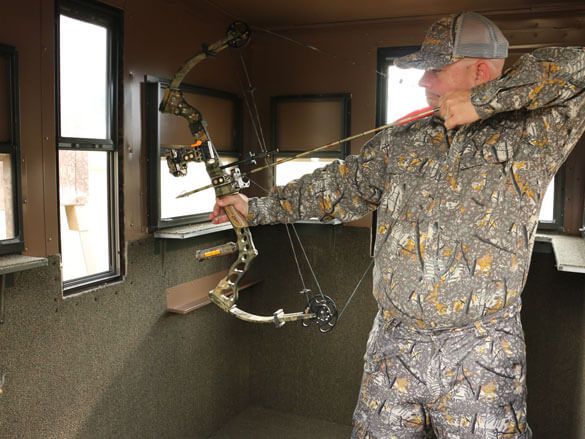
How to Place a Deer Blind for Bow Hunting
Bow hunting generally requires deer to be closer than many firearm hunting situations.
That means placement becomes especially important.
Look for locations that provide:
- Close but ethical shooting opportunities
- Multiple shooting lanes
- Natural cover
- Minimal deer exposure to the blind
- Favorable wind
- Clear lanes without excessive trimming
Avoid positioning the blind so deer routinely pass directly underneath or immediately beside it unless the setup is specifically designed for that situation.
You need enough distance to give yourself time to draw and make a controlled shot without excessive movement.
For bow hunters, concealment and shooting-lane design can be just as important as the number of deer using the area.
How to Place a Deer Blind for Gun Hunting
Gun hunting generally allows greater effective shooting distances, depending on the hunter, firearm, ammunition, local regulations, and conditions.
A gun blind can therefore be positioned farther from a food plot, field edge, or travel corridor when the setup provides a clear and ethical shooting opportunity.
Consider:
- Safe shooting lanes
- Backstop
- Property boundaries
- Neighboring properties
- Buildings and roads
- Expected deer movement
- Visibility
- Wind
- Blind elevation
Always follow applicable hunting laws and firearm-safety requirements.
Never choose a shooting direction simply because it offers a good view. Make sure the entire shooting environment is safe.
Elevated vs. Ground-Level Deer Blind Placement
Both elevated and ground-level blinds can be effective.
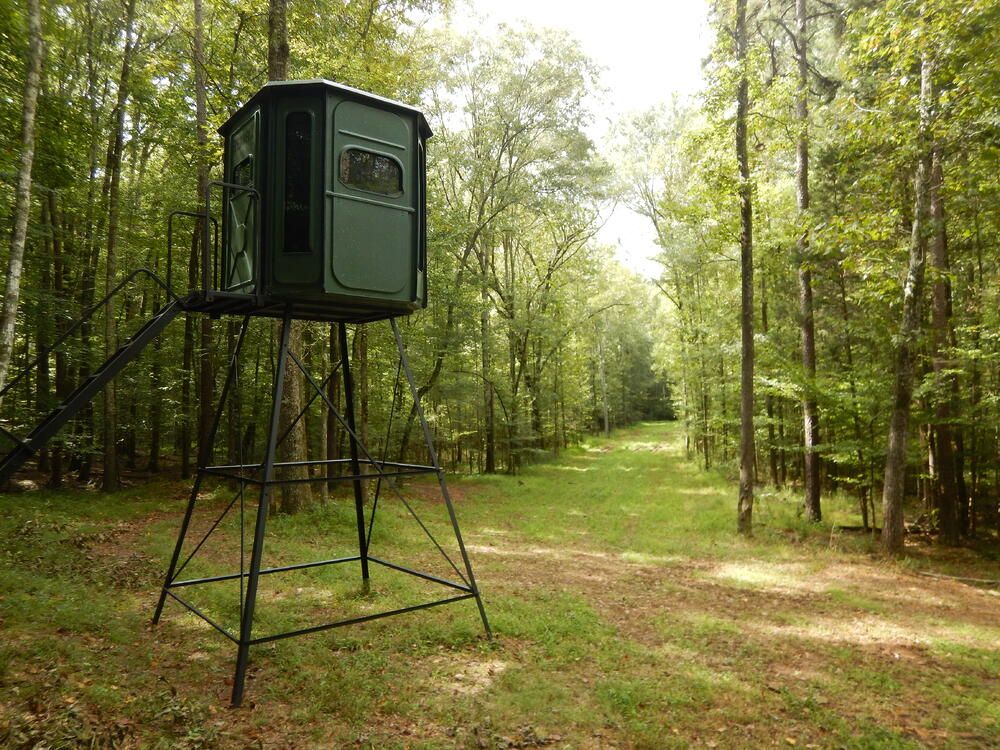
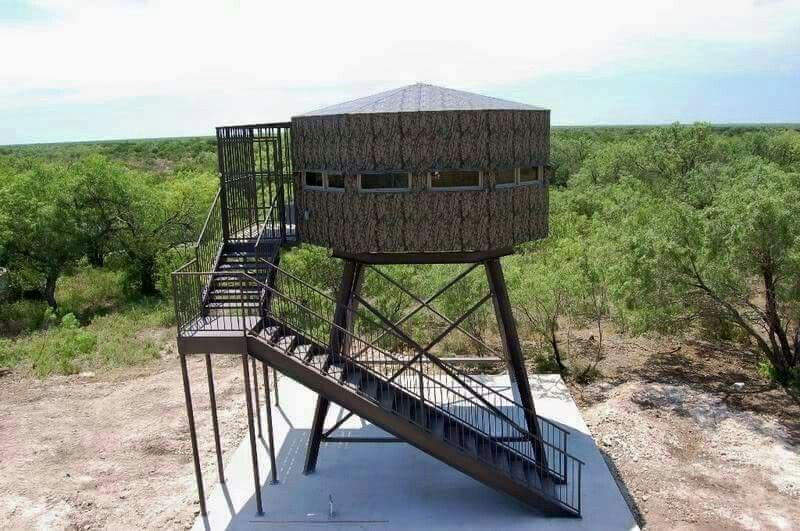
Elevated Deer Blinds
Elevated blinds can provide:
- Improved visibility
- Better observation of surrounding terrain
- Additional concealment
- More comfortable shooting angles in some situations
- Reduced exposure at ground level
They can be particularly useful on properties with open terrain or where additional height improves visibility.
However, elevated blinds require careful attention to:
- Structural stability
- Access
- Ladder or stair safety
- Wind exposure
- Shooting angles
- Local regulations
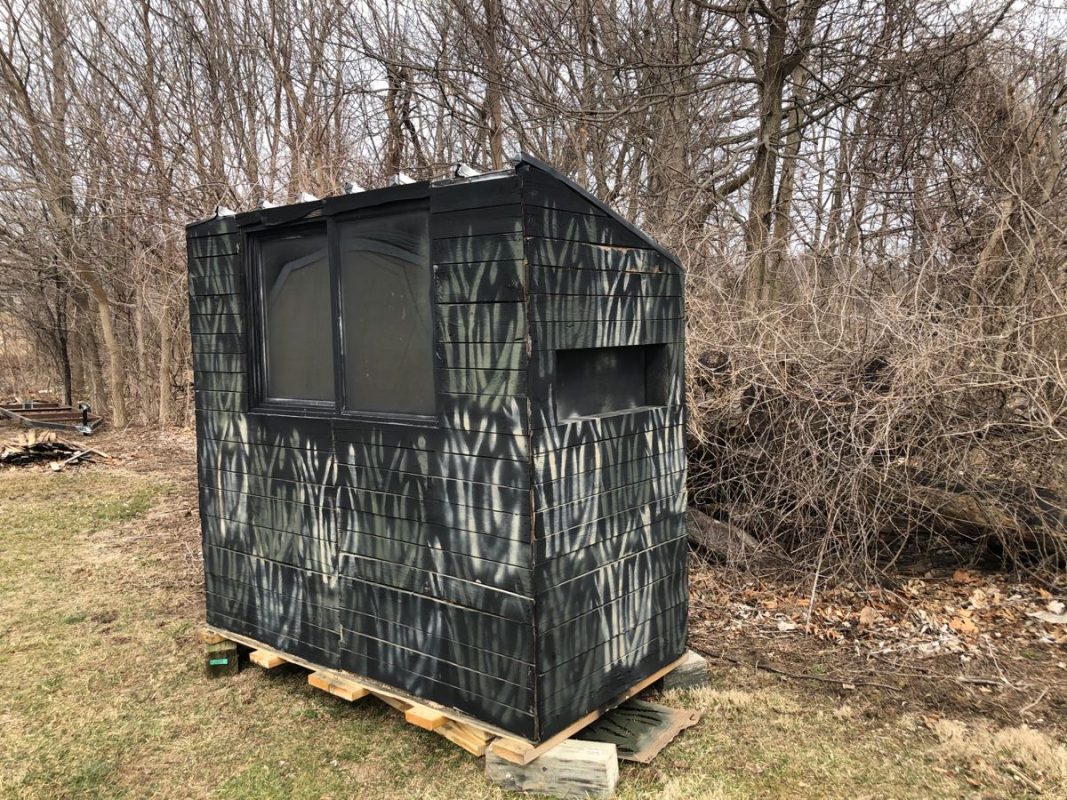
Ground Deer Blinds
Ground blinds can be useful where:
- Terrain makes elevation impractical
- Mobility is important
- Hunters need easier access
- Natural vegetation provides excellent concealment
- The hunting area has limited elevation options
The best choice depends on the property, hunting method, terrain, and intended use.
How High Should an Elevated Deer Blind Be?
There is no universal height that is perfect for every property.
The appropriate height depends on:
- Terrain
- Vegetation
- Blind design
- Shooting distance
- Hunting method
- Visibility
- Access
- Safety
Higher isn’t automatically better.
An extremely tall blind can create unnecessary shooting-angle challenges, make access more difficult, and become more exposed to wind.
Instead, choose enough elevation to accomplish your specific goals while maintaining a safe and practical setup.
Position the Blind for the Best Visibility
A good deer blind should provide useful visibility without requiring excessive movement.
Think about your primary viewing directions.
Before installing the blind, identify:
- Where deer are most likely to approach
- Where they are likely to travel
- Where feeding areas are located
- Where shooting lanes should be
- Where other hunters may be positioned
- Where the sun will be during your hunt
Try to position the blind so the most important areas are visible through comfortable shooting and observation windows.
Avoid unnecessary window openings
More windows aren’t automatically better.
Excessive openings can:
- Increase exposure
- Reduce concealment
- Allow movement to be seen
- Create more directions to monitor
Prioritize useful viewing and shooting lanes.
Consider Sunlight and Shadows
Sun position can affect both visibility and concealment.
A low sun directly in front of you can make it difficult to see approaching deer.
A strong sun behind you can potentially illuminate the blind or expose movement depending on the setup.
Whenever possible, consider where the sun will be during the times you plan to hunt.
Morning hunts
Think about the direction of sunrise and how glare may affect your view.
Evening hunts
Consider the setting sun and whether it will create glare through your shooting windows.
Using natural shadows and surrounding cover can also help conceal the blind.
Use Natural Cover Around the Blind
A blind should look like it belongs in the environment.
Natural vegetation can help break up its outline.
Depending on the property, useful concealment may include:
- Trees
- Brush
- Tall grass
- Shrubs
- Natural terrain
- Existing vegetation
However, avoid creating excessive artificial cover that looks unnatural.
The goal is to reduce the visual impact of the blind without obstructing your shooting lanes.
Account for Deer Blind Scent and Noise
Deer have an excellent sense of smell.
Your blind location should therefore be selected with scent movement in mind.
Consider:
- Prevailing winds
- Thermals
- Morning and evening air movement
- Terrain
- Bedding areas
- Feeding areas
- Access routes
Thermals
Air can behave differently depending on temperature and terrain.
In some situations, cooler air may move downward in the evening, while warmer air rises during other periods.
This means a blind that appears ideal based solely on a compass direction may behave differently during different times of day.
Observe actual conditions on your property rather than relying entirely on a general rule.
Deer Blind Placement for Different Property Types
Open Agricultural Properties
On agricultural properties, focus on:
- Field edges
- Crop transitions
- Food plots
- Timber strips
- Fence lines
- Travel corridors
- Nearby bedding cover
Elevated blinds can be especially useful where the terrain is relatively open.
Wooded Properties
In timber, look for:
- Trails
- Saddles
- Ridges
- Benches
- Creek crossings
- Funnels
- Openings
- Timber transitions
Small Hunting Properties
Small properties require extra attention to access and disturbance.
Avoid creating unnecessary pressure.
A smaller property may benefit from carefully selecting one or two high-value blind locations rather than installing blinds everywhere.
Properties With Agricultural Fields and Timber
These properties can offer excellent opportunities because they combine food and cover.
Study the movement between:
Bedding → timber → travel corridor → field
A blind near the transition can potentially provide multiple hunting opportunities.
Deer Blind Placement for Different Seasons
Deer behavior changes throughout the year.
A location that works early in the season may not remain your best location later.
Early Season
Food sources can be especially important.
Look for:
- Agricultural fields
- Food plots
- Water
- Browse
- Known feeding routes
Pre-Rut
As deer behavior begins changing, travel routes and areas frequented by bucks may become increasingly important.
Monitor fresh sign and trail-camera activity.
Rut
During the rut, deer movement can become less predictable.
Funnels, travel corridors, doe concentration areas, and terrain features can become valuable locations to monitor.
Late Season
Food availability can become increasingly important, particularly when temperatures drop and deer seek reliable food sources.
Continue scouting instead of assuming your early-season setup will remain optimal.
How Far Should a Deer Blind Be From a Feeding Area?
There is no single distance that works for every property.
The appropriate distance depends on:
- Bow vs. gun hunting
- Property size
- Terrain
- Wind
- Deer behavior
- Shooting lanes
- Blind design
- Hunting pressure
- Local regulations
Instead of choosing a distance based solely on a number, focus on finding a location where you can observe deer movement and make a safe, ethical shot within your effective range.
For bow hunting, this often means positioning closer to expected travel routes.
For gun hunting, you may have more flexibility depending on your equipment and conditions.
How Far Should a Deer Blind Be From a Bedding Area?
Avoid assuming that placing your blind as close as possible to bedding cover is always best.
Bedding areas are sensitive locations.
Repeatedly walking through them can disturb deer and potentially alter their movement.
Instead, consider positioning your blind along a travel route between bedding and another important destination.
The ideal location allows you to hunt the movement without unnecessarily entering the core bedding area.
Deer Blind Placement Mistakes to Avoid
Avoid these common mistakes when setting up a hunting blind.
1. Choosing Convenience Over Deer Movement
The easiest location to reach isn’t necessarily the best hunting location.
2. Ignoring Wind
A strong deer trail means little if your scent consistently reaches deer before they enter your shooting area.
3. Walking Through Bedding Areas
Repeated disturbance can make deer less comfortable using an area.
4. Blocking Your Shooting Lanes
A beautiful location is useless if vegetation blocks the areas where deer actually travel.
5. Installing Too Many Blinds
Too many blinds can increase human activity and pressure.
6. Ignoring the Sun
Glare can make it difficult to see deer and can expose movement.
7. Forgetting the Exit Route
An excellent evening location may be a poor choice if leaving requires walking through an active feeding area.
8. Placing a Blind Too Close to a Major Trail
Deer may detect the blind or hunter movement before entering the desired shooting position.
9. Ignoring Safety
Always consider shooting direction, property boundaries, roads, buildings, neighboring properties, and local hunting regulations.
10. Never Re-Evaluating the Location
Deer patterns change.
If conditions change, your blind strategy may need to change too.
A Practical Deer Blind Placement Checklist
Before permanently installing your blind, work through this checklist.
Deer Activity
- Fresh tracks identified
- Active trails identified
- Bedding areas located
- Feeding areas located
- Water sources identified
- Travel corridors identified
- Funnels identified
Wind
- Prevailing wind considered
- Hunting-day wind considered
- Scent direction evaluated
- Morning and evening conditions considered
Access
- Entry route planned
- Exit route planned
- Bedding areas avoided where possible
- Major feeding areas avoided during access
- Noise minimized
Blind Position
- Shooting lanes are clear
- Visibility is adequate
- Sun position considered
- Natural cover is available
- Blind is properly concealed
- Height is appropriate
Safety
- Shooting directions are safe
- Property boundaries identified
- Roads considered
- Buildings considered
- Neighboring properties considered
- Local hunting regulations reviewed
- Elevated structure is properly installed and accessed safely
Example Deer Blind Setups
Example 1: Food Plot + Timber
Imagine a property with a food plot surrounded by timber.
Trail cameras show deer leaving thick cover and entering the food plot in the evening.
Instead of placing the blind directly in the middle of the food plot, consider a concealed position along a travel corridor between the timber and food plot.
This can provide:
- Better concealment
- Multiple observation opportunities
- Reduced disturbance to the feeding area
- A predictable hunting position
Example 2: Bow Hunting Funnel
Suppose two sections of thick cover are separated by a narrow opening.
Multiple deer trails pass through the opening.
For bow hunting, this may be an excellent location because the funnel naturally concentrates deer movement.
The blind should be positioned with:
- Favorable wind
- Suitable shooting distance
- Concealment
- Clear shooting lanes
- A quiet access route
Example 3: Elevated Blind Overlooking Timber
A property contains rolling terrain with timber, a field, and several natural travel corridors.
An elevated deer blind may provide a better overall view of the property.
Instead of simply placing the blind at the highest point, evaluate:
- Deer travel routes
- Wind
- Shooting lanes
- Sun
- Access
- Safe shooting directions
The highest point isn’t necessarily the best point.
How to Improve an Existing Deer Blind Location
If you already have a blind installed, you may not need to move it immediately.
First evaluate what is working and what isn’t.
Ask:
- Are deer using the surrounding area?
- Are you seeing deer during your hunting hours?
- Is the wind favorable?
- Are deer detecting you?
- Are shooting lanes adequate?
- Is the blind properly concealed?
- Is access disturbing deer?
- Has the property changed since the blind was installed?
Sometimes relatively small improvements can make a meaningful difference.
For example, you may be able to improve the setup by adjusting vegetation, creating a better access route, changing your hunting schedule, or modifying shooting lanes.
How Trail Cameras Can Improve Blind Placement
Trail cameras can provide valuable information before you commit to a permanent blind location.
Use them to study:
- Time of deer movement
- Frequency of movement
- Direction of travel
- Buck activity
- Doe activity
- Seasonal changes
- Feeding patterns
- Response to weather
- Human disturbance
Don’t focus only on the largest buck photographed.
A consistent pattern of deer movement can be more useful than one impressive photograph.
Don’t Forget the Hunting Blind Itself
Once you’ve identified the right location, choose a blind that matches the property and your hunting style.
Consider:
- Blind size
- Window configuration
- Insulation
- Construction materials
- Floor design
- Elevation
- Bow vs. gun hunting
- Number of hunters
- Weather conditions
- Long-term durability
- Accessibility
A well-placed blind should work with the property rather than against it.
For hunters looking for purpose-built options, Hunting Blind Supply offers hunting blinds, deer hunting blinds, bow hunting blinds, gun hunting blinds, deluxe blinds, insulated blinds, octagon/360 blinds, and elevated hunting blind stands. Hunting Blind Supply
The brand positions itself as the #1 trusted seller for deer hunting blinds, with hunting blinds designed and built by hunters.
FAQs: Best Deer Blind Placement Tips
What is the best place to put a deer blind?
Should a deer blind be placed near a food plot?
Should I place my deer blind near a bedding area?
Which direction should a deer blind face?
How far should a deer blind be from a deer trail?
Is an elevated deer blind better than a ground blind?
How do I keep deer from detecting my blind?
Can I move my deer blind if deer aren't using the area?
Final Thoughts: Put Your Deer Blind Where Deer Want to Be
The most effective Best Deer Blind Placement Tips all come back to one principle: hunt the property’s natural deer movement rather than forcing deer to fit your setup.
Start by identifying bedding areas, food, water, trails, funnels, terrain features, and travel corridors. Then evaluate wind, scent, sunlight, visibility, access, shooting distance, and safety.
Don’t automatically choose the highest point, the closest location to food, or the easiest spot to reach. The best blind location is where several important factors work together.
A well-positioned blind can improve concealment, comfort, visibility, and hunting opportunities, but placement should always be combined with responsible hunting practices, safe shooting decisions, and respect for local regulations.
When you’re ready to match your property with the right hunting blind, explore the selection from Hunting Blind Supply, which offers purpose-built options for deer, bow, gun, elevated, deluxe, insulated, and 360-degree hunting setups.


3 thoughts on “Best Deer Blind Placement Tips: How to Choose the Right Location for Deer Hunting”