How to Conceal a Ground Blind From Deer | Complete Ground Blind Concealment Guide
A ground blind can give you concealment, comfort, and a controlled shooting position, but simply putting a blind in the woods does not automatically make it invisible to deer. Whitetails are highly alert animals that rely on sight, smell, sound, and familiarity with their surroundings. A poorly concealed blind can become an obvious object that deer avoid or investigate.
Ground blind concealment is the process of making your hunting blind blend naturally into its surroundings while minimizing the movement, scent, noise, and unnatural appearance associated with your setup.
In this guide, you’ll learn how to conceal a ground blind from deer, where to place it, how to use natural vegetation and camouflage, how to manage scent and access routes, how to conceal windows and shooting lanes, and how to prepare your blind before hunting season. You’ll also learn how concealment differs for food plots, wooded properties, open fields, bowhunting, and gun hunting.
Whether you’re setting up a portable ground blind or a more permanent ground deer blind, these principles can help you create a more natural-looking hunting setup. Explore our complete in depth guide on hunting ground blind for more insights.
What Is Ground Blind Concealment?
Ground blind concealment is more than putting camouflage fabric around a blind.
The goal is to make the blind appear as natural and unremarkable as possible within the hunting environment.
A properly concealed deer hunting ground blind should fit the surrounding terrain, vegetation, shadows, and visual patterns rather than appearing as a separate object placed in the middle of the property.
Effective concealment generally involves five areas:
- Visual concealment
- Natural vegetation
- Scent control
- Noise control
- Movement control
Location is also extremely important.
Even the best camouflage cannot completely compensate for a blind placed in a location where deer can clearly see it from their normal travel routes.
Think of concealment as a complete system:
Location + appearance + vegetation + scent + movement + access = effective ground blind concealment
Why Ground Blind Concealment Matters
Deer do not need to understand what your blind is to become cautious around it.
An object that looks unfamiliar may cause a deer to stop, stare, change direction, or avoid the area.
This is particularly important when hunting from a ground-level blind because deer may encounter the blind at relatively close range.
Good concealment can help reduce the visual impact of:
- The blind’s exterior walls
- Roofline
- Windows
- Door
- Straight edges
- Corners
- Human activity
- Freshly disturbed vegetation
- Open shooting lanes
- Unnatural colors
However, concealment should never be treated as a guarantee that deer will not detect your presence.
Wind, thermals, human scent, movement, and access routes can all affect deer behavior.
How Deer Detect a Ground Blind
Before learning how to hide a ground blind, it helps to understand what you’re trying to hide it from.
Deer primarily rely on their senses and awareness of their environment.
Deer are extremely attentive to movement.
A stationary blind may become part of the background, while a hunter moving inside it can attract attention.
That’s why concealment should include both the blind itself and the hunter’s movement.
Deer may notice:
- Unnatural shapes
- Bright openings
- Movement through windows
- Exposed faces
- Hands or equipment
- Sudden movement
- Freshly disturbed vegetation
Deer Hearing
A well-concealed blind can still become a problem if it produces excessive noise.
Potential sources include:
- Zippers
- Doors
- Window mechanisms
- Loose equipment
- Metal components
- Footsteps
- Chairs
- Bow equipment
- Firearm equipment
A good setup should allow you to perform necessary movements quietly.
Deer Smell
Scent is another major consideration.
A perfectly camouflaged blind does not eliminate human scent.
Pay attention to:
- Wind direction
- Thermals
- Entry route
- Exit route
- Clothing
- Boots
- Equipment
- Food and drinks
- Time spent around the blind
Familiarity
Deer may become accustomed to permanent structures over time, but that does not mean every blind placement will work.
A new object introduced suddenly into a high-traffic area can attract attention.
This is one reason thoughtful placement and gradual preparation can be useful.
Choose the Right Location Before Concealing Your Blind
One of the biggest mistakes hunters make is trying to hide a ground blind after choosing a poor location.
Location comes first. Concealment comes second.
Before placing the blind, study the property.
Look for:
- Deer trails
- Bedding areas
- Feeding areas
- Food plots
- Water
- Travel corridors
- Funnels
- Field edges
- Terrain changes
- Timber transitions
- Natural barriers
The objective is to place the blind where deer naturally move while also providing enough environmental cover to conceal it.
Avoid Placing a Blind in an Exposed Location
A blind sitting alone in the middle of a short-grass field may be difficult to conceal.
Instead, consider locations near:
- Brush
- Timber edges
- Tall grass
- Shrubs
- Existing vegetation
- Terrain breaks
- Tree lines
The blind should look like it belongs there.
For more information, see Best Ground Blind Placement for Deer Hunting and Best Deer Blind Placement Tips.
Use Natural Vegetation to Hide Your Ground Blind
Natural vegetation is one of the most useful tools for ground blind concealment.
Instead of relying exclusively on artificial camouflage, use the environment around the blind.
Depending on the property, this might include:
- Brush
- Tall grass
- Small branches
- Leaves
- Shrubs
- Fallen vegetation
- Natural cover
- Existing field-edge vegetation
The goal is not necessarily to completely bury the blind.
Instead, break up its outline and reduce the contrast between the blind and the surrounding environment.
Use Vegetation That Naturally Belongs There
If you’re hunting in a hardwood forest, using vegetation from that environment makes more sense than introducing completely different-looking plants.
Likewise, a blind near agricultural land should generally be concealed using vegetation consistent with that area.
Avoid creating an obviously artificial arrangement.
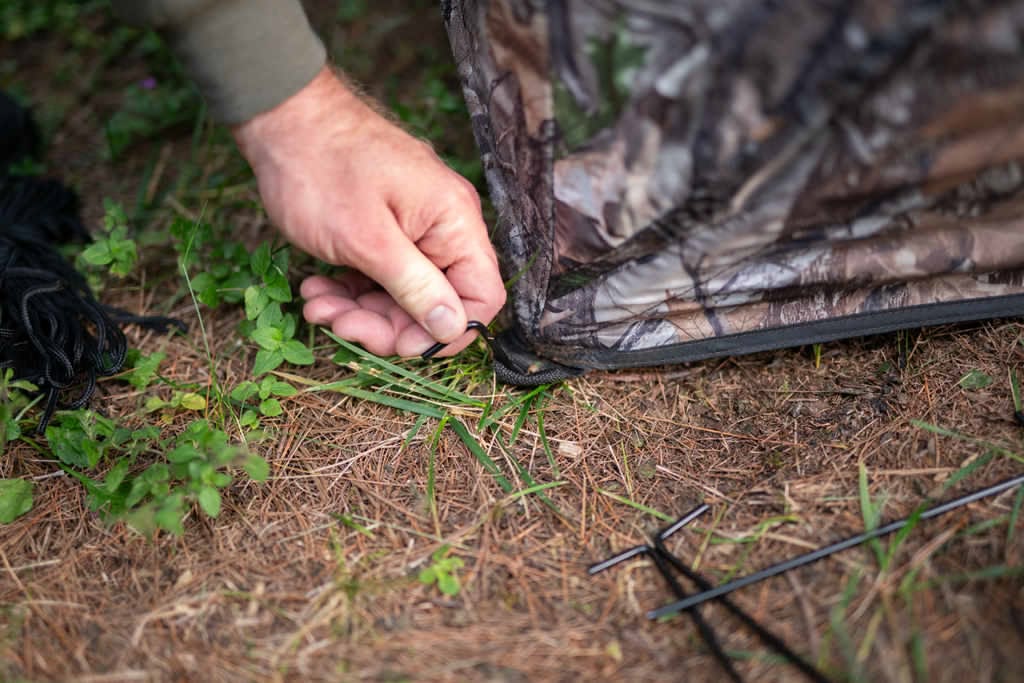
How to Brush In a Ground Blind
Brushing in a ground blind means strategically adding natural vegetation around it to break up its shape and blend it into the surroundings.
A basic process is:
Step 1: Study the Blind From a Distance
Walk away from the blind and look back toward it from the direction deer are likely to approach.
Do not judge concealment only from where you sit inside the blind.
Step 2: Identify the Most Visible Areas
Look for:
- Roofline
- Corners
- Straight walls
- Door
- Windows
- Bright surfaces
- Large open gaps
Step 3: Add Natural Cover
Place vegetation around the blind to break up obvious edges.
Step 4: Preserve Your Shooting Lanes
Do not conceal the blind so aggressively that you create dangerous or unusable shooting conditions.
Step 5: Recheck From Multiple Angles
Deer can approach from different directions.
Walk around the blind and inspect it from several likely travel routes.
Step 6: Check Again at Hunting Height
Your perspective from inside a blind can be dramatically different from a deer’s perspective at ground level.
Crouch or kneel when inspecting the setup.
Match Your Blind to the Surroundings
Camouflage works best when the blind’s appearance is compatible with the environment.
Consider:
- Exterior color
- Camouflage pattern
- Vegetation
- Shadows
- Terrain
- Seasonal changes
A blind that blends well into late-summer vegetation may become more visible after leaves fall.
That means concealment should be evaluated throughout the hunting season.
Seasonal Concealment
Vegetation changes.
For example:
Early season:
Dense green vegetation may provide substantial natural cover.
Mid-season:
Leaves may begin changing color or dropping.
Late season:
Bare branches can expose structures that were previously hidden.
If your blind will remain in one location, inspect it periodically.
Concealing the Outline and Shape of a Ground Blind
One of the most important principles of ground blind concealment is breaking up the blind’s outline.
Deer may recognize that an object is unusual even if they cannot identify exactly what it is.
Straight lines can be especially noticeable in natural environments.
Pay attention to:
- Roof edges
- Vertical walls
- Corners
- Door frames
- Window openings
Natural vegetation can help disrupt these geometric lines.
Do Not Overdo It
More vegetation is not always better.
If you create an enormous pile of brush around the blind, you may:
- Restrict visibility
- Block shooting lanes
- Create noise
- Make access difficult
- Alter the natural appearance of the area
The objective is controlled concealment rather than simply adding as much material as possible.
Hide Windows, Doors, and Other Openings
Windows are particularly important because they can create dark or unnatural openings.
Depending on your blind design, consider how windows appear from outside.
You want to preserve visibility and shooting access while avoiding unnecessarily obvious openings.
Keep Window Areas Natural
Avoid placing large amounts of vegetation directly across shooting windows.
Instead, use surrounding vegetation to frame the blind.
The same principle applies to doors.
A door should be accessible without creating an obvious cleared path directly toward the blind.
Ground Blind Concealment and Shooting Lanes
Concealment and shooting lanes must work together.
A blind that is completely surrounded by vegetation may be well hidden but practically unusable.
Before finalizing concealment, identify:
- Primary shooting lanes
- Secondary shooting lanes
- Safe shooting directions
- Expected deer travel paths
- Bow shooting angles
- Gun shooting angles
- Window positions
Bowhunting Requires Special Attention
Bowhunting generally requires enough interior clearance to draw and maneuver the bow.
Avoid placing vegetation where it can interfere with:
- Drawing
- Anchor position
- Bow limbs
- Arrow
- Release movement
- Shooting window
For related information, see:
Control Movement Inside the Blind
A concealed blind is only useful if the hunter can remain concealed inside it.
Movement can attract attention even when the exterior of the blind is difficult to see.
Before hunting, organize equipment so that commonly used items are easy to reach.
Keep:
- Bow or firearm
- Binoculars
- Rangefinder
- Phone
- Water
- Hunting accessories
in predictable locations.
Practice Your Movements
For bowhunting, practice:
- Sitting position
- Picking up the bow
- Drawing
- Turning toward the window
- Reaching for equipment
- Returning to a resting position
Do this before hunting season.
The objective is to discover what movements create unnecessary noise or require excessive repositioning.
Ground Blind Scent Control
Ground blind concealment is not purely visual.
Scent management should be considered part of your overall setup.
Pay Attention to Wind
Before hunting, determine:
- Prevailing wind direction
- Expected wind changes
- Deer approach routes
- Bedding locations
- Entry route
- Exit route
Try to avoid situations where your scent is consistently carried toward areas where deer are likely to be.
Consider Thermals
Thermals can affect scent movement as air temperature changes.
Morning and evening conditions can behave differently.
Study the property and observe how air moves through:
- Valleys
- Ridges
- Slopes
- Timber
- Open fields
Scent control cannot compensate for every unfavorable condition, so location and timing remain important.
For more detail, see How to Control Scent When Bowhunting From a Blind.
Plan a Low-Impact Entry and Exit Route
A concealed blind can be compromised by the route you take to reach it.
Think about your entire journey:
Parking area → access route → blind → hunting position
Avoid unnecessary disturbance around the blind.
Where practical, use routes that:
- Keep you away from bedding areas
- Avoid crossing major deer trails
- Reduce unnecessary noise
- Minimize vegetation disturbance
- Keep your approach predictable
The blind should not be the only part of your setup that is concealed.
Your access route should also be considered.
Concealing a Ground Blind on a Food Plot
Food plots can be excellent locations for ground blind hunting, but concealment can be challenging when vegetation around the plot is limited.
Consider placing the blind near:
- Field edges
- Timber
- Brush
- Natural vegetation
- Terrain breaks
rather than directly in the center of an exposed food plot.
Don’t Ignore Deer Entry Routes
Study how deer approach the food plot.
A blind positioned where deer naturally travel may be more practical than simply choosing the closest point to the food source.
Also consider:
- Wind
- Bedding areas
- Entry routes
- Exit routes
- Shooting lanes
- Bow range
- Gun range
- Sun position
Read Where to Put a Deer Blind on a Food Plot for a more detailed food-plot placement strategy.
Concealing a Ground Blind in the Woods
Wooded properties often provide abundant natural concealment.
Look for areas where the blind can sit naturally among:
- Trees
- Brush
- Fallen limbs
- Shrubs
- Terrain changes
- Thick vegetation
Avoid unnecessarily clearing the area around the blind.
A completely cleared circle around an otherwise natural blind can make the setup look unnatural.
Concealing a Ground Blind in Open Fields
Open fields present a different challenge.
There may be limited natural vegetation available to break up the blind’s shape.
Consider:
- Field edges
- Fence lines
- Brushy areas
- Tree lines
- Terrain changes
- Existing vegetation
The objective is to take advantage of naturally occurring structure rather than placing the blind where it has no visual cover.
Ground Blind Concealment for Bowhunting
Bowhunting requires particularly careful attention to concealment because deer may need to be relatively close before presenting a practical shot opportunity.
Important considerations include:
1. Window Height
Your shooting windows should allow you to shoot comfortably without excessive movement.
2. Interior Space
You need enough room to draw the bow without contacting walls, windows, or equipment.
3. Shooting Angles
Plan where deer are likely to appear and make sure your window layout supports those angles.
4. Movement
Practice drawing and repositioning while seated.
5. Concealment
Make sure your movement is difficult for deer outside the blind to detect.
For a complete bowhunting resource, see Everything You Need to Know About Bow Hunting Blinds.
Ground Blind Concealment for Gun Hunting
Gun hunting can provide somewhat different requirements.
Consider:
- Shooting window height
- Shooting direction
- Safe shooting lanes
- Rifle or firearm clearance
- Rest position
- Expected deer distance
- Terrain
- Visibility
Concealment should never compromise safe firearm handling.
Never create a shooting lane without considering what lies beyond the intended target area.
Portable vs. Permanent Ground Blind Concealment
Concealment strategies can differ depending on the type of blind.
Portable Ground Blinds
Portable blinds can be moved when conditions change.
Advantages include:
- Flexibility
- Mobility
- Ability to adapt to changing deer movement
- Easier experimentation with locations
However, frequently moving a blind can disturb vegetation and introduce new objects into different locations.
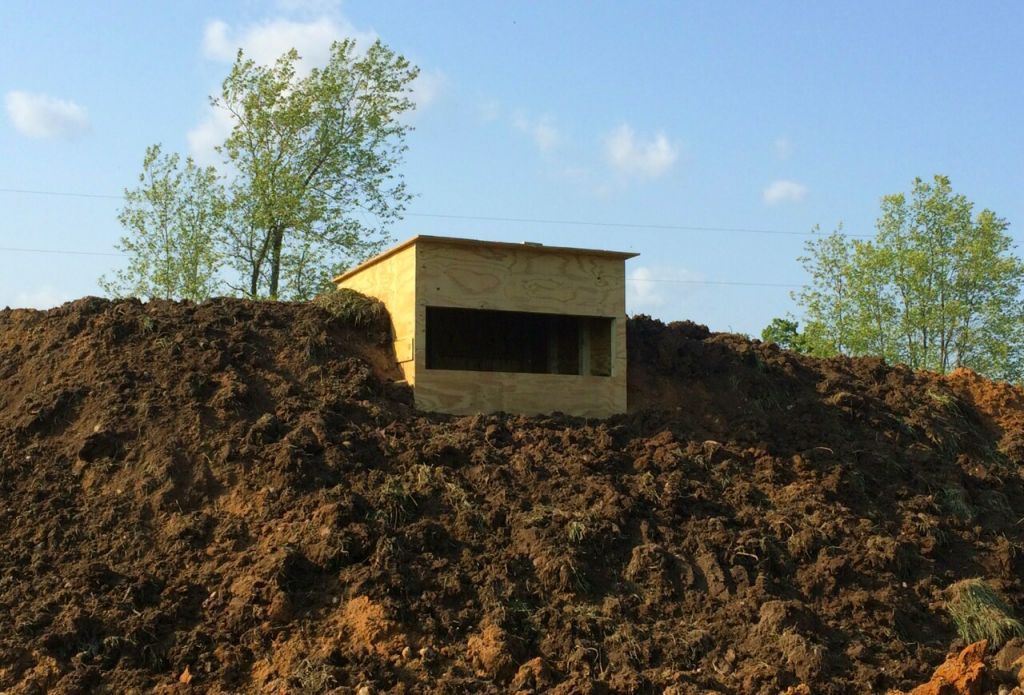
Permanent or Semi-Permanent Ground Blinds
Permanent setups can be integrated into the property more thoroughly.
You may have more opportunities to:
- Establish natural vegetation
- Create permanent shooting lanes
- Plan access routes
- Improve the surrounding habitat
- Maintain a consistent hunting position
Regardless of the blind type, the basic concealment principles remain the same.
How Long Before Hunting Should You Set Up a Ground Blind?
There is no universal number of days that guarantees deer will accept a blind.
The appropriate timing depends on:
- Blind type
- Location
- Deer pressure
- Property characteristics
- How much vegetation is disturbed
- Whether the blind is new
- Hunting season
- Local deer behavior
If you can establish a blind without excessive disturbance, giving the area time to settle may be useful.
However, simply leaving a blind in place does not guarantee deer will ignore it.
Location, wind, access, scent, and hunting pressure remain important.
Common Ground Blind Concealment Mistakes
Mistake 1: Choosing the Location First and Thinking About Concealment Later
A poor location can be difficult to fix with camouflage.
Better approach: Select a location where natural concealment already exists.
Mistake 2: Using Too Much Brush
Excessive vegetation can block windows and shooting lanes.
Better approach: Use enough natural material to break up the outline without creating obstacles.
Mistake 3: Ignoring the Roof
Hunters often focus on walls while forgetting that the roofline can be visible from higher terrain.
Better approach: Inspect the blind from elevated terrain and different angles.
Mistake 4: Leaving Windows Completely Exposed
Large, dark openings can stand out.
Better approach: Use the surrounding environment to frame and break up the blind without obstructing the shooting system.
Mistake 5: Creating a Perfectly Cleared Area
Clearing everything around a blind can create an unnatural appearance.
Better approach: Disturb as little vegetation as practical.
Mistake 6: Ignoring the Access Route
A hidden blind can still be compromised by an obvious approach path.
Better approach: Plan your access and exit routes before finalizing the blind location.
Mistake 7: Forgetting Scent
Visual camouflage cannot hide human scent.
Better approach: Incorporate wind direction and scent management into your setup.
Mistake 8: Moving Too Much Inside the Blind
Even a well-camouflaged blind cannot prevent every movement from being visible.
Better approach: Practice your shooting and equipment movements before hunting.
Mistake 9: Failing to Recheck Concealment
Vegetation changes throughout the season.
Better approach: Inspect the blind periodically from likely deer travel routes.
Mistake 10: Sacrificing Safety for Concealment
Never make a blind safer-looking visually at the expense of actual hunting safety.
Better approach: Keep access, shooting lanes, windows, ladders, stands, and surrounding areas safe and functional.
Step-by-Step Ground Blind Concealment Process
Use this process when setting up a new ground deer blind.
Step 1: Study Deer Movement
Identify:
- Trails
- Bedding
- Feeding
- Water
- Travel corridors
- Funnels
Step 2: Study Wind and Thermals
Determine how air typically moves through the property.
Step 3: Choose Natural Cover
Select an area where vegetation or terrain can naturally hide the blind.
Step 4: Position the Blind
Orient the blind toward your primary hunting area while considering shooting windows and safe shooting directions.
Step 5: Inspect the Blind From Outside
Walk at least several likely deer approaches.
Step 6: Break Up the Outline
Use natural vegetation to soften obvious straight lines and corners.
Step 7: Protect Shooting Lanes
Trim or arrange vegetation so that necessary shooting lanes remain clear and safe.
Step 8: Check Windows and Doors
Make sure they remain functional without creating unnecessary visual exposure.
Step 9: Plan Access
Determine how you will reach and leave the blind with minimal disturbance.
Step 10: Organize Interior Equipment
Make necessary movements quiet and predictable.
Step 11: Recheck From Deer Height
Crouch down and inspect the blind from approximately the perspective of a deer.
Step 12: Recheck During the Season
Vegetation, sunlight, weather, and hunting conditions change.
Ground Blind Concealment Checklist
Before hunting, ask:
Location
- Is the blind positioned along likely deer movement?
- Is natural cover available?
- Is the blind visible from major deer trails?
Visual Concealment
- Is the outline broken up?
- Are straight edges exposed?
- Are the roof and corners concealed?
- Does the blind match the surrounding environment?
Vegetation
- Is natural cover being used?
- Are shooting lanes still open?
- Has excessive vegetation been added?
Windows
- Are windows positioned correctly?
- Can they be operated quietly?
- Are they excessively exposed?
Scent
- Is the wind favorable?
- Have entry and exit routes been considered?
- Could scent travel toward likely deer movement?
Movement
- Can you draw your bow or position your firearm without excessive movement?
- Is your equipment organized?
Access
- Can you reach the blind without crossing important deer trails?
- Can you leave without unnecessarily disturbing the area?
Safety
- Are shooting lanes safe?
- Is the blind stable?
- Are doors, windows, steps, platforms, or other components secure?
- Is your intended shooting direction safe?
Ground Blind Concealment for Different Hunting Scenarios
Scenario 1: Wooded Property
A hunter has thick timber, brush, and several deer trails.
A practical approach may be to position the blind near existing vegetation rather than clearing a large area.
The natural environment can become part of the blind’s concealment.
Scenario 2: Food Plot
A hunter has an open food plot surrounded by timber.
Instead of placing the blind directly in the center of the plot, the hunter could evaluate the timber edge and deer entry routes.
This may provide both concealment and a useful view of the plot.
Scenario 3: Bowhunting
A bowhunter needs deer to approach within a practical shooting distance.
The blind should provide:
- Adequate bow clearance
- Appropriate window height
- Controlled shooting angles
- Strong concealment
- Quiet movement
- A practical access route
Scenario 4: Gun Hunting
A gun hunter may prioritize:
- Broader visibility
- Stable shooting positions
- Safe shooting lanes
- Appropriate window design
- Concealment from longer-distance deer movement
The blind should be selected and positioned around the hunter’s intended shooting environment.
How Ground Blind Design Affects Concealment
Not every blind is designed the same way.
When choosing a hunting ground blind, consider:
- Exterior construction
- Camouflage
- Window configuration
- Window size
- Door placement
- Blind dimensions
- Interior visibility
- Shooting angles
- Insulation
- Durability
- Ground-level access
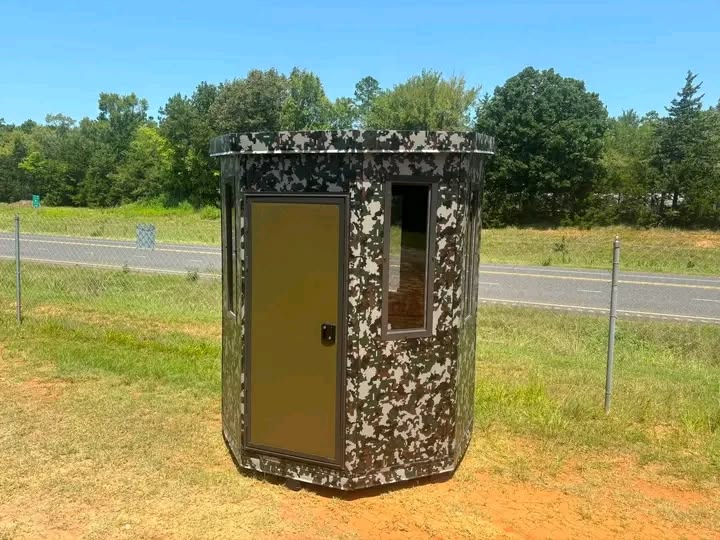
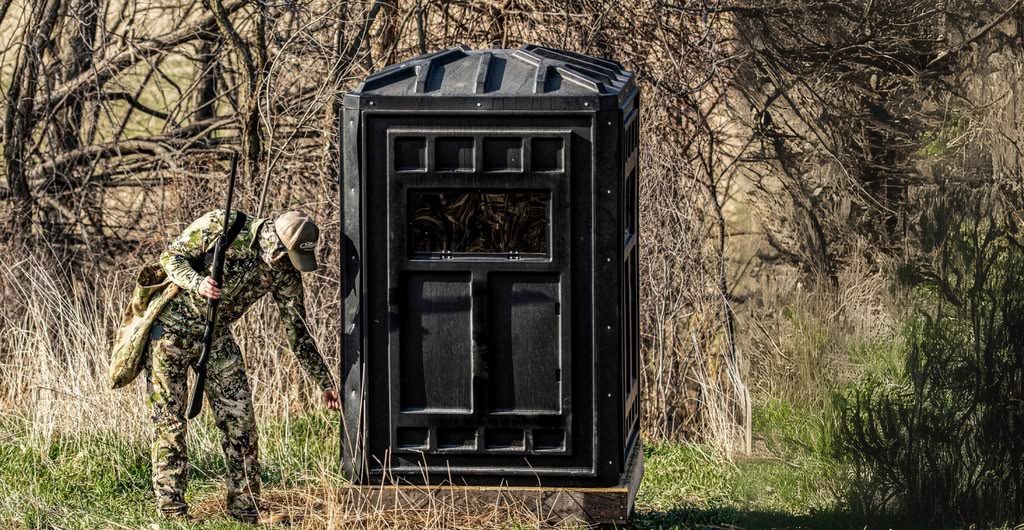
An enclosed hunting blind can offer a controlled environment, but its size and exterior shape still need to work with the surrounding property.
Products such as 6×6 blinds, 6×8 blinds, and octagon-style hunting blinds may provide different combinations of interior space, window coverage, and visibility.
How to Conceal a Ground Blind Without Overcomplicating It
Effective concealment does not necessarily require elaborate camouflage work.
Start with the basics:
- Choose a naturally concealed location.
- Match the blind to its environment.
- Break up obvious edges.
- Use local vegetation.
- Keep windows functional.
- Minimize disturbance.
- Plan scent and access.
- Reduce movement and noise.
- Inspect the blind from multiple directions.
- Reevaluate the setup as conditions change.
The most effective setups often begin with a good location rather than excessive camouflage.
FAQs: Ground Blind Concealment
How do you conceal a ground blind from deer?
Choose a location with natural cover, use local vegetation to break up the blind's outline, minimize exposed windows and unnatural edges, and consider scent, noise, movement, wind, and access routes. Concealment works best when the blind is positioned naturally within the environment.
How do you brush in a ground blind?
Use natural vegetation from the surrounding area to break up the blind's outline and hide obvious corners, walls, and roof edges. Add enough cover to blend the blind into the environment while keeping windows, doors, shooting lanes, and access routes functional.
Will deer see a ground blind?
Deer can detect a ground blind, particularly if it is placed in an exposed location or introduced into an area without considering deer movement. Proper placement and concealment can reduce its visual impact, but no concealment method guarantees that deer will not notice it.
How far should a ground blind be from a deer trail?
There is no universal distance that works for every property. The appropriate location depends on deer movement, wind, terrain, vegetation, hunting method, shooting distance, and the blind's visibility. Study the trail and surrounding conditions rather than relying on a single fixed measurement.
Should you leave a ground blind out before hunting?
It can be useful to establish a blind before hunting so the setup can become part of the surrounding environment, but the ideal timing depends on the blind, property, hunting pressure, and amount of disturbance created during installation.
Can you use natural vegetation to hide a ground blind?
Yes. Natural vegetation can help break up the blind's shape and reduce its visual contrast with the surroundings. Use vegetation that naturally occurs in the area and avoid creating excessive cover that blocks shooting lanes or access.
How do you conceal a ground blind in an open field?
Look for natural cover such as field edges, brush, timber, fence lines, terrain changes, or existing vegetation. A blind placed in the middle of a completely open area can be difficult to conceal without creating an unnatural-looking structure.
Is ground blind concealment important for bowhunting?
Yes. Bowhunting often requires deer to approach relatively close to the blind, making concealment, movement control, window placement, shooting angles, and scent management especially important.
Final Thoughts: Build a Ground Blind That Belongs in the Environment
Effective ground blind concealment is not about making a hunting blind completely invisible.
It is about making the blind look natural within its surroundings while reducing the visual, scent, sound, and movement cues that can alert deer.
Start with location. Use natural vegetation. Break up straight lines. Keep windows and shooting lanes practical. Plan your entry and exit route. Pay attention to wind and scent. Practice your movements inside the blind, and inspect the setup from the perspective of a deer.
Most importantly, do not sacrifice safety for concealment.
If you’re looking for a purpose-built ground deer blind for bowhunting, gun hunting, food plots, wooded properties, or other deer-hunting setups, explore the hunting blind options available from Hunting Blind Supply. Hunting Blind Supply is presented by the business as the #1 trusted seller for deer hunting blinds, with hunting blinds designed and built by hunters.
Ready to improve your hunting setup? Shop Hunting Blind Supply’s Ground Hunting Blinds and choose a blind that fits your property, hunting method, space requirements, and concealment strategy.






2 thoughts on “How to Conceal a Ground Blind From Deer | Complete Ground Blind Concealment Guide”