Blog
Hunting Blinds Ohio | Complete Guide to Choosing the Right Hunting Blind in Ohio

Hunting Blinds Ohio | Complete Guide to Choosing the Right Hunting Blind in Ohio
Ohio offers a wide range of deer hunting environments, from agricultural fields and hardwood forests to creek bottoms, wooded ridges, brushy cover, and mixed farm-and-timber properties.
That variety makes choosing the right hunting blind more complicated than simply finding a blind for sale and placing it where deer are visible.
The best hunting blinds Ohio hunters use should match the property, deer movement, terrain, hunting method, weather, number of hunters, shooting requirements, and how frequently the blind will be used.
Whether you are searching for hunting blinds for sale in Ohio, deer blinds Ohio, deer blinds made in Ohio, deer blinds for sale Ohio, or a durable blind for a private hunting property, this guide explains what to consider before buying and setting up a hunting blind.
You will learn about ground blinds, elevated blinds, enclosed deer blinds, bow hunting blinds, gun hunting blinds, insulated blinds, blind placement, Ohio terrain, food plots, deer movement, weather, safety, buying considerations, and more. Explore our complete in depth on hunting blinds USA for more hunting knowledge about other cities.
Important: Hunting seasons, license requirements, county-specific regulations, public-land requirements, and other hunting rules can change. Always verify the current Ohio hunting regulations and property-specific rules before hunting.
Why Ohio Is Different for Hunting Blind Placement
Ohio’s hunting properties can vary significantly.
One property may consist primarily of hardwood timber, while another may combine crop fields, pasture, creek bottoms, brush, and small woodlots.
That means the ideal blind location depends on the property rather than a universal formula.
Before purchasing a blind, consider:
- Deer movement
- Bedding areas
- Food sources
- Agricultural crops
- Food plots
- Water
- Terrain
- Timber
- Brush
- Field edges
- Travel corridors
- Wind direction
- Thermals
- Access routes
- Hunting method
- Number of hunters
- Weather
- Desired blind height
The first question should not be:
“Where can I put my blind?”
Instead ask:
“Where are deer moving, and how can I hunt that movement without unnecessarily disrupting it?”
That change in thinking can make a major difference.
What Are the Best Hunting Blinds for Ohio?
There is no single hunting blind that is best for every Ohio hunting property.
Popular options include:
- Ground hunting blinds
- Portable ground blinds
- Permanent ground blinds
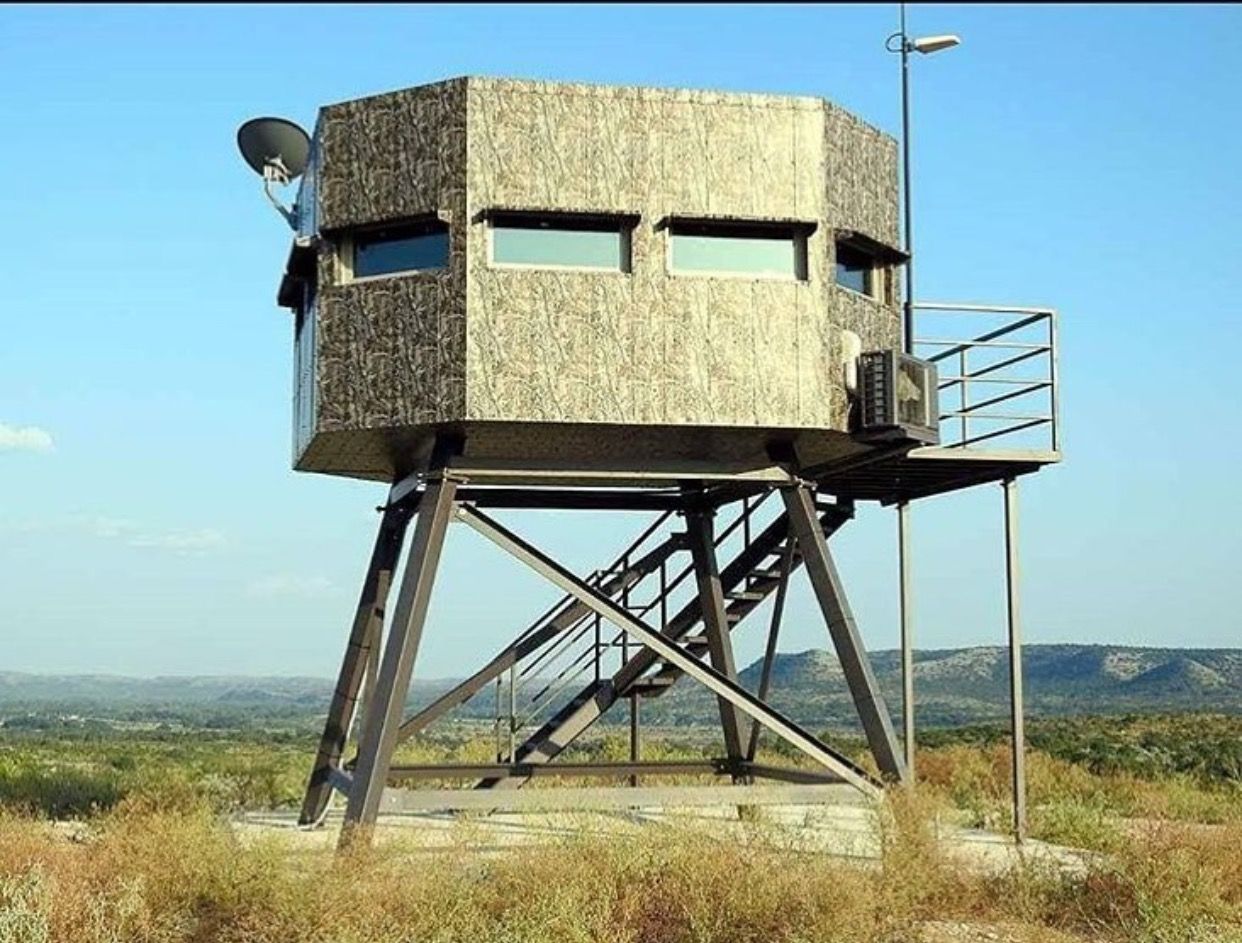
- Elevated hunting blinds
- Elevated wood blinds
- Elevated steel blinds
- Enclosed box blinds
- Deer blinds
- Bow hunting blinds
- Gun hunting blinds
- Insulated hunting blinds
- Deluxe hunting blinds
- Octagon blinds
- 360-degree hunting blinds
The best option depends on how you hunt.
Ground blinds
Ground blinds can work well in:
- Wooded areas
- Food plots
- Field edges
- Brush
- Deer trails
- Small openings
- Agricultural properties
They can also provide greater flexibility when you need to change hunting locations.
Elevated blinds
Elevated blinds can provide:
- Increased visibility
- A higher viewpoint
- Improved observation over vegetation
- A more permanent hunting location
- Additional weather protection when enclosed
They require additional consideration for:
- Stands
- Ladders
- Stairs
- Railings
- Anchoring
- Structural stability
- Safe access
Enclosed blinds
Enclosed box-style blinds can be useful for hunters who spend long periods in the field.
They can provide:
- Weather protection
- Concealment
- Interior comfort
- Space for equipment
- Better protection from wind
- More comfortable seating
Deer Blinds Ohio: Choosing a Blind for Whitetail Deer
For hunters searching for deer blinds Ohio, the most important factor is not simply the blind itself.
It is how the blind fits into the property’s deer movement pattern.
Ohio whitetails may use:
- Agricultural fields
- Corn and soybean areas
- Food plots
- Hardwood forests
- Brush
- Creek bottoms
- Ridges
- Funnels
- Field edges
- Bedding cover
- Water sources
- Timber transitions
A good deer blind should allow you to take advantage of these patterns while maintaining concealment and a practical access route.
Ask these questions before buying:
How many hunters will use the blind?
A blind for one hunter has different space requirements than a blind designed for two or more hunters.
Will you bowhunt or gun hunt?
Bowhunting requires adequate drawing and shooting clearance.
Gun hunting requires safe shooting directions, appropriate shooting lanes, and a stable shooting position.
How long will you sit?
Long hunting sessions make comfort, insulation, interior space, and weather protection more important.
Is the blind permanent?
If you intend to hunt the same location for years, a permanent elevated or enclosed blind may make sense.
If you frequently change locations, a portable option may provide greater flexibility.
Ground Hunting Blinds in Ohio
Ground blinds are popular because they can be positioned relatively close to the ground and adapted to different hunting environments.
They can be especially useful where natural vegetation already provides concealment.
Ground blinds can work well around:
- Food plots
- Agricultural field edges
- Timber openings
- Deer trails
- Brush lines
- Creek corridors
- Travel routes
- Small clearings
However, placing a ground blind simply because deer tracks are nearby is not enough.
Study:
- Deer movement
- Bedding
- Food
- Wind
- Access
- Terrain
- Concealment
- Shooting lanes
- Hunter visibility
- Seasonal movement
For more information read, Ground Blind Placement and How to Set Up a Ground Blind for Deer Hunting.
Elevated Hunting Blinds in Ohio
Elevated hunting blinds can be particularly useful on properties where visibility is limited by vegetation or terrain.
They may work well around:
- Agricultural fields
- Food plots
- Woodlot edges
- Open clearings
- Rolling terrain
- Large private hunting properties
However, an elevated blind should be considered a complete system.
That includes:
- Blind
- Platform
- Stand
- Ladder or stairs
- Railings
- Anchoring
- Floor
- Entry system
Inspect an elevated blind before hunting
Check for:
- Loose hardware
- Damaged flooring
- Weak steps
- Damaged ladders
- Structural deterioration
- Water damage
- Rust
- Roof problems
- Window problems
- Door problems
Never assume a blind is safe simply because it was safe during the previous hunting season.
Enclosed and Box Deer Blinds
Enclosed deer blinds are often chosen by hunters who prioritize comfort and weather protection.
An enclosed blind can be particularly useful when:
- Hunting for several hours
- Hunting with another person
- Hunting with children or guests
- Hunting in exposed locations
- Hunting during cold weather
- Hunting agricultural fields
- Hunting food plots
- Maintaining a permanent hunting property
Features worth comparing
Look at:
- Floor construction
- Roof
- Wall construction
- Insulation
- Windows
- Door
- Interior space
- Shooting openings
- Ventilation
- Weight
- Stand compatibility
An enclosed blind should not only look good from the outside.
The interior should support the way you actually hunt.
Hunting Blinds for Ohio Farm and Agricultural Properties
Agricultural properties can create excellent deer habitat because crops and cover can provide food and security.
Potential hunting areas include:
- Crop fields
- Field edges
- Woodlots
- Creek crossings
- Fence lines
- Brush
- Timber transitions
- Food plots
Field-edge blind placement
A blind does not necessarily need to sit directly on the field edge.
Study how deer enter and leave the field.
Look for:
- Trails
- Bedding cover
- Terrain changes
- Creek crossings
- Brush corridors
- Timber edges
- Wind direction
A blind positioned near the right travel route may be more useful than one positioned at the most obvious field location.
Hunting Blinds for Ohio Woodlands
Ohio’s wooded properties can require a different approach.
In timber, visibility may be limited by:
- Trees
- Brush
- Terrain
- Hills
- Understory
- Seasonal foliage
A smaller blind may sometimes be easier to conceal than a large structure.
However, smaller is not automatically better.
You still need enough interior room for:
- Hunter
- Bow or firearm
- Seat
- Equipment
- Safe shooting position
- Window access
Look for natural funnels
Potential funnel locations include:
- Narrow timber corridors
- Ridge transitions
- Creek crossings
- Fence gaps
- Field-to-timber edges
- Brush openings
Hunting Blinds for Southern Ohio
Southern Ohio can present more rugged and varied terrain than many agricultural areas farther north.
Depending on the property, hunters may encounter:
- Hills
- Hardwood forests
- Creek bottoms
- Ridges
- Steep terrain
- Agricultural openings
- Dense cover
Southern Ohio blind considerations
Pay particular attention to:
- Terrain
- Elevation changes
- Thermals
- Deer travel corridors
- Access routes
- Bedding areas
- Wind
- Visibility
An elevated blind may provide useful visibility from some locations, while a ground blind may blend more naturally into others.
The terrain should determine the strategy.
Hunting Blinds for Northern Ohio
Northern Ohio properties can include:
- Agricultural fields
- Woodlots
- Wet areas
- Open farmland
- Brush
- Mixed habitat
Hunters should consider:
- Crop patterns
- Field edges
- Timber
- Deer trails
- Bedding
- Wind
- Access
Cold-weather hunting also makes blind construction and interior comfort more important.
Hunting Blinds for Central Ohio
Central Ohio properties may combine:
- Farmland
- Woodlots
- Residential boundaries
- Creek corridors
- Fields
- Mixed vegetation
This can make access and property boundaries especially important.
Before installing a blind, confirm that the location is permitted and does not create an unsafe shooting situation.
Hunting Blinds Made in Ohio: What Should You Look For?
The keyword deer blinds made in Ohio may appeal to hunters who prefer locally manufactured products or want a supplier familiar with regional hunting conditions.
But manufacturing location should not be the only buying criterion.
When comparing a locally made blind with another option, examine:
- Construction
- Materials
- Window system
- Flooring
- Insulation
- Roof
- Door
- Weight
- Durability
- Warranty
- Shipping
- Delivery
- Replacement parts
- Customer support
A locally made blind can be appealing, but performance and value should remain the primary considerations.
Hunting Blinds for Sale in Ohio: How to Compare Options
Searching for hunting blinds for sale in Ohio can produce many different types of products.
Do not compare them on price alone.
Compare the complete package
| Factor | Why It Matters |
|---|---|
| Size | Determines usable space |
| Construction | Affects durability |
| Windows | Controls visibility and shooting access |
| Insulation | Affects comfort |
| Flooring | Important for durability |
| Roof | Protects from weather |
| Door | Affects access and noise |
| Weight | Affects transportation |
| Stand | Important for elevated blinds |
| Warranty | Adds purchase protection |
| Shipping | Affects total cost |
| Assembly | Affects installation requirements |
| Maintenance | Influences long-term ownership |
Look beyond the sticker price
A lower-priced blind may not be the best value if it requires significant repairs, has limited usable space, or does not fit your hunting method.
Instead, compare:
Purchase price + delivery + installation + maintenance + expected service life
Deer Blinds for Sale Ohio: How to Choose the Right Product
When looking at deer blinds for sale Ohio, start with your hunting scenario.
For a single hunter
A smaller blind may provide enough space.
For two hunters
Consider additional room for:
- Two seats
- Equipment
- Bow or firearm positioning
- Separate shooting positions
For bowhunting
Prioritize:
- Bow clearance
- Window height
- Window width
- Interior space
- Shooting angles
- Quiet operation
For gun hunting
Prioritize:
- Safe shooting directions
- Visibility
- Stable shooting position
- Window configuration
- Shooting lanes
For long hunting sessions
Consider:
- Insulation
- Weather protection
- Comfortable seating
- Interior space
- Ventilation
Choosing the Right Deer Blind Size
Blind size should be based on actual use.
Ask:
- How many people will hunt?
- What equipment will be inside?
- Are you bowhunting?
- Will you stand to shoot?
- How many shooting windows are necessary?
- Will you hunt for several hours?
- Will a child or guest join you?
A larger blind provides more room, but it may also be:
- More expensive
- Heavier
- More difficult to transport
- More difficult to conceal
- More demanding to install
The goal is sufficient usable space, not simply maximum dimensions.
Bow Hunting Blinds vs. Gun Hunting Blinds
Bow hunting blinds
Bowhunters should pay special attention to interior clearance.
Before purchasing, consider whether you can:
- Sit comfortably
- Stand if necessary
- Draw the bow
- Rotate
- Reach the window
- Shoot without contacting the blind
- Move without excessive noise
Practice the complete movement inside the blind before hunting.
Gun hunting blinds
For firearm hunting, consider:
- Safe shooting direction
- Shooting lane
- Window position
- Visibility
- Stable shooting rest
- Hunter positioning
- Muzzle awareness
Never design or modify a blind in a way that compromises firearm safety.
Insulated Hunting Blinds for Ohio
Ohio’s colder conditions make insulation particularly relevant for hunters who spend long periods in enclosed blinds.
An insulated hunting blind can potentially improve comfort by helping moderate interior conditions.
But insulation should not be considered in isolation.
Evaluate:
- Wall insulation
- Roof insulation
- Flooring
- Door seals
- Window construction
- Air gaps
- Ventilation
- Moisture control
When is an insulated blind especially useful?
Consider one when:
- You hunt during colder months.
- You sit for long periods.
- You hunt with family members.
- You want a more comfortable enclosed blind.
- You frequently hunt exposed areas.
Explore our complete in depth guide to know if Insulated Deer Blinds Are Worth It?
Deer Blind Windows and Shooting Systems
Windows are one of the most important features of a hunting blind.
A well-designed window system should provide a useful balance between:
- Visibility
- Shooting access
- Concealment
- Noise control
- Weather protection
- Ease of operation
Common window styles
Sliding windows
Useful where quiet, controlled opening is important.
Hinged windows
Can provide broad openings depending on design.
Flip-down windows
Can provide convenient shooting access.
Vertical windows
Can provide useful visibility while accommodating certain shooting positions.
360-degree windows
Octagonal designs can provide a broad field of view.
The best window system depends on the hunting method and property.
Where to Place a Deer Blind in Ohio
Blind placement is one of the most important parts of the entire setup.
Start by studying:
1. Bedding areas
Where are deer spending daylight hours?
2. Food
Where are deer feeding?
3. Water
Are deer traveling toward a creek, pond, or other water source?
4. Travel corridors
Where are deer moving between bedding and feeding areas?
5. Terrain
Look for:
- Ridges
- Hollows
- Funnels
- Saddles
- Creek bottoms
- Timber edges
6. Wind
Your blind should fit the prevailing wind conditions for the hunts you intend to conduct.
7. Access
Can you reach the blind without crossing important deer movement routes?
8. Shooting lanes
Create only lanes that provide safe, practical shooting opportunities.
For a detailed guide, read Best Deer Blind Placement Tips and Ground Blind Placement.
Deer Blind Placement Near Food Plots
Food plots can be attractive hunting locations, but the blind should be positioned according to deer movement.
Study:
- Bedding
- Food
- Entry routes
- Exit routes
- Wind
- Terrain
- Cover
- Shooting lanes
Consider whether deer approach from one side of the food plot consistently.
If they do, the best blind location may be along that travel route rather than directly beside the plot.
Deer Blind Placement Near Bedding Areas
Bedding areas can be highly sensitive locations.
Avoid unnecessary disturbance.
Instead of placing a blind directly inside or immediately adjacent to important bedding cover, look for nearby travel routes that allow you to hunt movement without repeatedly entering the bedding area.
Your access route matters just as much as the blind location.
Deer Blind Placement Along Deer Trails
A heavily used trail is valuable information.
But the blind should not automatically be placed directly on top of the trail.
Study:
- Direction of travel
- Deer origin
- Deer destination
- Wind
- Cover
- Terrain
- Bedding
- Food
- Access
A blind positioned slightly away from a trail can sometimes provide better concealment and access while still allowing a practical shooting opportunity.
Wind, Thermals and Scent Control
Deer have an excellent sense of smell, so blind placement should account for wind.
Before hunting, ask:
Where will my scent travel under the expected conditions?
Also consider thermals.
Terrain can influence air movement, particularly around:
- Hills
- Hollows
- Creek bottoms
- Ridges
- Slopes
Scent control should involve more than scent-control products.
Consider:
- Wind direction
- Access route
- Clothing
- Boots
- Equipment
- Food and drinks
- Blind ventilation
- Entry and exit timing
Read Ground Blind Scent Control for a more detailed strategy.
Permanent vs. Portable Hunting Blinds
Both types can be useful in Ohio.
Permanent hunting blinds
Best suited for:
- Long-term properties
- Family farms
- Hunting leases
- Dedicated food plots
- Repeated hunting locations
Advantages can include:
- Comfort
- Stability
- Weather protection
- Long-term usability
Portable hunting blinds
Useful for:
- Changing deer patterns
- Multiple hunting locations
- Smaller properties
- Hunters who move frequently
- Testing locations before permanent installation
The right choice depends on how stable your hunting strategy is.
Hunting Blind Materials and Construction
Wood
Wood blinds can offer:
- Traditional construction
- Solid feel
- Customization
- Strong structural characteristics
They require appropriate maintenance and protection from moisture.
Steel
Steel can offer:
- Strength
- Durability
- Long-term structural performance
However, steel can increase weight.
Metal siding
Metal siding can provide a durable exterior while supporting an insulated or finished interior.
Treated wood
Treated components can be useful in areas where moisture exposure is a concern, depending on the product’s construction.
The most important consideration is not simply the material name.
Evaluate the complete construction.
Hunting Blind Maintenance in Ohio
A hunting blind should be inspected throughout the year.
Look for:
- Water leaks
- Rot
- Rust
- Mold
- Mildew
- Loose fasteners
- Damaged windows
- Door problems
- Floor damage
- Roof damage
- Structural movement
- Pest activity
Before hunting season
Perform a complete inspection.
Check:
- Stand
- Ladder
- Stairs
- Floor
- Roof
- Windows
- Door
- Interior
- Exterior
- Shooting lanes
For more information, read How to Maintain an Elevated Deer Blind and How to Prepare a Deer Blind Before Hunting Season.
Hunting Blind Safety in Ohio
Safety should always come before comfort or convenience.
Elevated blind checklist
Before climbing:
- Inspect the ladder.
- Inspect steps.
- Check the platform.
- Check railings.
- Check fasteners.
- Confirm stability.
- Inspect the blind-to-stand connection.
- Check for deterioration.
- Use appropriate fall protection where applicable.
Firearm safety
Always maintain safe muzzle direction and follow applicable firearm laws and hunting regulations.
Do not create shooting lanes that point toward:
- Roads
- Buildings
- Neighboring property
- Livestock areas
- Other hunters
- Unsafe terrain
Bowhunting safety
Ensure shooting lanes are clear and know exactly where your arrow could travel if you miss.
Common Hunting Blind Buying Mistakes
1. Buying based only on price
Cheap does not always mean good value.
2. Choosing the wrong size
A blind that looks adequate online may be uncomfortable once your equipment is inside.
3. Ignoring window placement
Windows determine visibility and shooting opportunities.
4. Choosing the blind before studying the property
Start with deer movement.
5. Ignoring access
Your route into the blind can affect hunting success.
6. Forgetting weather
Ohio weather can change significantly throughout the hunting season.
7. Ignoring maintenance
Permanent structures need inspection.
8. Choosing the wrong hunting method
A bowhunter has different interior requirements from a firearm hunter.
9. Installing an elevated blind without proper planning
The stand, access system, anchoring, and blind should be treated as one complete system.
10. Failing to verify regulations
Always check current regulations and property-specific requirements before hunting.
Ohio Hunting Blind Buying Checklist
Before purchasing, ask:
Property
- Is it wooded?
- Agricultural?
- Open?
- Brushy?
- Mixed?
Deer movement
- Where are bedding areas?
- Where are food sources?
- Where are trails?
- Where are travel corridors?
Hunting method
- Bow?
- Gun?
- Crossbow?
- Multiple methods?
Hunters
- One?
- Two?
- Three or more?
Blind type
- Ground?
- Elevated?
- Enclosed?
- Portable?
- Permanent?
- Octagon/360?
Construction
- Wood?
- Steel?
- Metal?
- Insulated?
Windows
- Sliding?
- Hinged?
- Vertical?
- 360-degree?
Weather
- Cold?
- Rain?
- Wind?
- Snow?
- Humidity?
Installation
- Ground setup?
- Stand?
- Ladder?
- Stairs?
- Anchoring?
Ownership
- Warranty?
- Shipping?
- Delivery?
- Replacement parts?
- Maintenance?
Practical Ohio Hunting Blind Scenarios
Scenario 1: Ohio Agricultural Property
A hunter owns a property containing soybean fields, hardwood timber, and a small creek.
Rather than putting the blind directly in the middle of the field, the hunter studies how deer move between timber and agricultural food sources.
A blind near a travel corridor may provide a better setup.
Scenario 2: Southern Ohio Woodlot
A hunter has a hilly property dominated by hardwoods.
The hunter studies ridges, creek bottoms, funnels, bedding areas, and wind.
An elevated blind may provide visibility from one location, while a ground blind may be better concealed in another.
Scenario 3: Ohio Food Plot
A hunter has a small food plot surrounded by thick cover.
Instead of placing the blind immediately beside the plot, the hunter identifies the primary deer approach route and positions the blind accordingly.
Scenario 4: Two-Hunter Setup
Two hunters regularly hunt together.
They need enough space for:
- Two seats
- Equipment
- Bow or firearm clearance
- Independent shooting positions
A blind designed specifically for multiple hunters may be more practical than trying to fit two hunters into a compact blind.
Scenario 5: Ohio Bowhunter
A bowhunter hunts from an enclosed blind.
Before opening day, the hunter practices:
- Sitting
- Standing
- Drawing
- Turning
- Opening windows
- Reaching shooting positions
This helps identify clearance problems before a real hunting opportunity occurs.
Why Consider Hunting Blind Supply?
Hunters searching for deer blinds Ohio or comparing hunting blinds for sale can evaluate suppliers based on construction, product selection, customer support, shipping, warranty, and suitability for their specific hunting setup.
Hunting Blind Supply offers hunting blind options covering several hunting methods and configurations, including deer hunting, bowhunting, gun hunting, ground hunting, elevated hunting, insulated blinds, deluxe blinds, octagon/360-degree blinds, and hunting blind accessories.
The business presents itself as the “#1 trusted seller for deer hunting blinds.” This is a business positioning statement rather than an independently verified market ranking.
Although Hunting Blind Supply is based in Texas, Ohio hunters can still evaluate its products based on construction, specifications, delivery options, intended use, and suitability for Ohio hunting conditions.
The most important question is always:
Does the blind fit your property and hunting strategy?
FAQs: Hunting Blinds Ohio
What are the best hunting blinds for Ohio?
What are the best deer blinds in Ohio?
Where should I place a deer blind in Ohio?
Are ground blinds good for Ohio deer hunting?
Are elevated deer blinds better than ground blinds?
What size deer blind should I buy?
Are insulated deer blinds worth it in Ohio?
Can I put a hunting blind anywhere on my property?
Final Thoughts: Choosing the Right Hunting Blinds Ohio Hunters Can Depend On
Finding the right hunting blinds Ohio hunters can use effectively begins with understanding the property.
Ohio’s combination of agricultural fields, hardwood forests, creek bottoms, rolling terrain, food plots, brush, and mixed habitat means different hunting properties can require very different blind strategies.
Before purchasing a blind, evaluate:
- Deer movement
- Bedding
- Food
- Water
- Terrain
- Wind
- Access
- Concealment
- Shooting lanes
- Hunting method
- Number of hunters
- Blind size
- Window configuration
- Construction
- Insulation
- Weather protection
- Installation
- Maintenance
- Safety
- Total ownership value
Whether you are searching for hunting blinds for sale in Ohio, deer blinds Ohio, deer blinds made in Ohio, deer blinds for sale Ohio, or an enclosed, elevated, ground, bow, gun, or insulated hunting blind, choose the product around the way you actually hunt.
A quality hunting blind is only one part of the equation. Proper placement, concealment, access, shooting lanes, safety, and understanding deer movement are equally important.
Ready to improve your Ohio hunting setup? Explore Hunting Blind Supply’s hunting blinds and stands and compare options based on your property, hunting method, size requirements, window needs, comfort preferences, and long-term hunting goals.

One thought on “Hunting Blinds Ohio | Complete Guide to Choosing the Right Hunting Blind in Ohio”