Blog
Bow Hunting Blind vs. Treestand | Which Is Right for Bowhunting?


Bow Hunting Blind vs. Treestand | Which Is Right for Bowhunting?
Choosing where to hunt from can have a major effect on your bowhunting setup. Two of the most common options are a bow hunting blind and a treestand. Both can provide concealment, improve your hunting position, and give you opportunities to observe deer movement, but they work very differently.
A bow hunting blind vs. treestand comparison involves more than simply choosing between hunting from the ground or hunting from a tree. You also need to consider concealment, shooting angles, bow clearance, visibility, wind, scent, access, comfort, weather, safety, property layout, and how you intend to hunt.
In this guide, you’ll learn how bow hunting blinds and treestands compare, the advantages and limitations of each setup, how they work for different hunting properties, and what factors to consider before choosing your hunting position. Explore our complete in depth guide on bow hunting blinds for more information and insights.
Bow Hunting Blind vs. Treestand: What’s the Difference?
The biggest difference between a bow hunting blind and a treestand is how each positions and conceals the hunter.
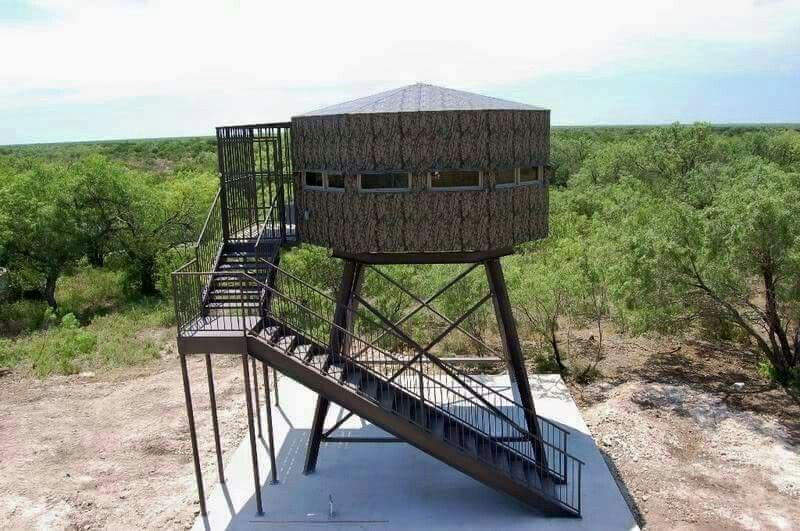
A bow hunting blind is an enclosure or concealed structure that hides the hunter’s body and movement. It can be placed at ground level or mounted on an elevated stand.
A treestand places the hunter above the ground, typically in or near a tree, while leaving much of the hunter exposed to the surrounding environment.
The two approaches can both be effective, but they create different hunting conditions.
Bow Hunting Blind
A bow hunting blind may provide:
- More physical concealment
- Protection from wind and weather
- A controlled interior shooting environment
- Multiple shooting windows
- More room for hunting equipment
- A comfortable seated position
- More flexibility for hunters who prefer enclosed setups
Treestand
A treestand may provide:
- An elevated view
- Broad visibility
- A smaller physical footprint
- A direct connection to the surrounding terrain
- Different shooting angles
- A setup that can work well along travel corridors
- Mobility when using portable stands
The right choice depends on the property, deer movement, hunting style, equipment, and personal preferences.
What Is a Bow Hunting Blind?
A bow hunting blind is a structure designed to conceal a hunter while allowing them to observe and shoot through designated openings.
Bow hunting blinds can range from simple ground blinds to larger enclosed box blinds mounted on elevated stands.
Ground Bow Hunting Blinds
Ground blinds sit directly on the ground.
They can be useful when:
- You cannot or do not want to use an elevated structure
- The property has dense vegetation
- You need a flexible setup
- You want ground-level access
- You are hunting near food plots or field edges
For bowhunting, the interior must provide enough room to safely draw and maneuver the bow.
Elevated Bow Hunting Blinds
Elevated blinds combine the enclosure of a hunting blind with the elevated position of a stand.
They can provide:
- Improved visibility
- An elevated shooting position
- Protection from weather
- Concealment from an enclosed structure
- Additional interior space
- Multiple shooting windows
An elevated blind can therefore provide some of the characteristics hunters associate with both enclosed blinds and elevated hunting setups.
What Is a Treestand?
A treestand is a platform or seat installed above ground, generally using a tree as the supporting structure.
Treestands are available in several configurations.
Ladder Stands
A ladder stand includes a ladder attached to an elevated platform.
Hang-On Stands
A hang-on treestand is attached to a suitable tree and typically requires climbing equipment or a climbing system for access.
Climbing Treestands
Climbing stands are designed to allow the hunter to climb a suitable tree while moving the stand upward.
Saddle Hunting
A tree saddle uses a harness-style system to position the hunter around a tree rather than sitting on a traditional platform.
Each setup has different equipment, access, mobility, and safety considerations.
Bow Hunting Blind vs. Treestand: Quick Comparison
| Factor | Bow Hunting Blind | Treestand |
|---|---|---|
| Hunter concealment | Enclosed concealment can be substantial | Hunter is generally more exposed |
| Elevation | Ground or elevated | Elevated |
| Weather protection | Often available | Usually limited |
| Bow clearance | Depends on interior size and window design | Generally open around the hunter |
| Visibility | Depends on windows | Often broad |
| Shooting angles | Determined by windows and blind position | Determined by stand position and surrounding trees |
| Interior space | Can provide room for gear and equipment | Limited |
| Multiple hunters | Some blinds accommodate multiple hunters | Depends heavily on stand design |
| Ground access | Possible | Requires climbing/access system |
| Mobility | Ground blinds can be movable; elevated blinds less so | Portable stands can be movable |
| Installation | Varies | Varies |
| Maintenance | Blind and stand may require maintenance | Stand and attachment system require inspection |
| Weather exposure | Often reduced in enclosed blinds | Usually higher |
| Movement concealment | Enclosure can hide movement | Requires careful movement |
| Fall risk | Ground blinds generally lower; elevated blinds still require caution | Elevated fall hazard requires strict safety practices |
This comparison is a starting point. The property and hunting situation should ultimately determine which setup makes sense.
Concealment and Visibility
Concealment is one of the most important differences between a bow hunting blind and a treestand.
Concealment From a Hunting Blind
An enclosed blind can hide much of the hunter’s body.
This can make certain movements less visible, including:
- Drawing a bow
- Reaching for equipment
- Adjusting seating
- Moving your head
- Preparing for a shot
However, concealment is not automatic.
Deer may still notice:
- The blind itself
- Unnatural shapes
- Open windows
- Movement through windows
- Scent
- Noise
- Changes to familiar terrain
A blind should therefore be positioned and concealed appropriately for the property.
Concealment From a Treestand
A treestand relies more heavily on the hunter blending into the surrounding environment.
Movement can become especially important.
A hunter may need to:
- Monitor deer movement.
- Wait until the deer’s attention is directed elsewhere.
- Move slowly and deliberately.
- Draw the bow when the deer is less likely to detect the movement.
- Maintain an appropriate shooting position.
The surrounding tree canopy and terrain can contribute to concealment, but the hunter remains more exposed.
Shooting Angles for Bowhunting
Shooting angles are another major difference.
Shooting From a Blind
A blind restricts shooting to its available windows or openings.
This means you should think about shooting lanes before placing the blind.
For example, if deer commonly approach from three directions, a blind with strategically positioned windows can provide useful coverage.
Window placement should allow you to:
- See approaching deer
- Draw without excessive movement
- Maintain bow clearance
- Reach appropriate shooting angles
- Keep shooting lanes clear
Shooting From a Treestand
A treestand can provide an open shooting environment around the hunter.
However, the surrounding branches, trunk, terrain, and shooting lanes can limit usable angles.
Elevation also changes the angle between the hunter and deer.
Before hunting, identify safe and practical shooting lanes and understand how your elevated position changes the trajectory of your arrow.
Bow Clearance and Shooting Space
A bowhunting setup needs enough room for the bowhunter to draw, anchor, aim, and release without striking the blind, window, roof, wall, seat, or other equipment.
This is especially important inside a blind.
Questions to Ask About Blind Clearance
Before hunting, determine:
- Can you draw your bow comfortably?
- Can you rotate your upper body?
- Can you reach the shooting window?
- Does your bow contact the wall?
- Does the bowstring have clearance?
- Can you shoot while seated?
- Can you reposition quietly?
- Does your arrow have a clear path through the window?
Practice with your actual hunting equipment.
A blind that appears spacious when empty may feel significantly smaller once you add:
- A chair
- Backpack
- Bow
- Arrows
- Rangefinder
- Clothing
- Camera equipment
- Other hunting gear
Deer Visibility and Movement
Deer behavior should influence the hunting position you select.
A treestand can provide a high viewpoint that may help you observe movement across open terrain.
A blind can provide controlled viewing through windows.
Neither setup eliminates the need to understand the property.
Look for:
- Deer trails
- Bedding areas
- Feeding areas
- Water sources
- Travel corridors
- Funnels
- Terrain transitions
- Field edges
- Cover changes
- Entry and exit routes
The hunting structure should complement deer movement rather than simply being placed where it is convenient.
Wind and Scent Considerations
Wind direction can be more important than whether you choose a blind or treestand.
A good hunting setup can be compromised if your access route or hunting position repeatedly sends human scent toward deer.
Consider:
- Prevailing wind
- Morning vs. evening wind
- Thermals
- Terrain
- Bedding locations
- Entry routes
- Exit routes
- Wind changes during the hunt
Example
Suppose deer typically leave a bedding area and move toward a food plot in the evening.
If the wind consistently carries your scent toward the bedding area when you approach your blind, the blind’s construction may not solve the access problem.
The same principle applies to a treestand.
Location, access, and wind need to work together.
Placement and Property Layout
A blind or treestand should be selected based on where you can hunt effectively, not simply where installation is easiest.
Consider These Property Features
Food Sources
Deer may travel toward agricultural fields, food plots, mast-producing trees, or other feeding areas.
Bedding Areas
Bedding areas can influence travel routes and timing.
Travel Corridors
Look for predictable routes connecting bedding and feeding areas.
Funnels
Narrow terrain features can concentrate movement.
Terrain Transitions
Edges between different habitat types can create useful observation areas.
Water
Streams, ponds, and other water sources can influence deer movement depending on conditions and local habitat.
Food Plots and Feeding Areas
Both hunting blinds and treestands can be used around food plots.
Bow Hunting Blind Over a Food Plot
An enclosed blind can work well when you need to remain concealed while waiting for deer to enter the plot.
Window placement becomes particularly important.
You want enough visibility to:
- Monitor the plot
- Identify approaching deer
- Observe shooting lanes
- Draw your bow without unnecessary movement
Treestand Near a Food Plot
A treestand may work well along the edge of a food plot, particularly where deer regularly enter or exit through a specific route.
Rather than automatically placing your stand overlooking the center of the plot, study how deer approach it.
Bedding Areas and Travel Corridors
A blind or treestand should not necessarily be positioned directly beside a bedding area.
Repeated human activity near bedding cover can affect how deer use the area.
Instead, consider:
- Where deer leave bedding cover
- Their likely travel direction
- Wind conditions
- Your access route
- Shooting lanes
- Terrain
- Time of day
A setup farther from bedding cover may sometimes provide a better balance between observation and access.
Ground-Level vs. Elevated Hunting
One important distinction is that a bow hunting blind does not necessarily mean ground-level hunting.
You can have:
- Ground bow hunting blind
- Elevated bow hunting blind
- Enclosed elevated hunting blind
- Portable ground blind
- Permanent hunting blind
A treestand, by definition, is elevated.
This makes elevation vs. enclosure an important part of the comparison.
A hunter who wants elevation and enclosure may consider an elevated bow hunting blind.
A hunter who wants an open elevated position may prefer a treestand.
Weather and Comfort
Weather can significantly affect long bowhunting sessions.
An enclosed hunting blind can provide protection from:
- Wind
- Rain
- Snow
- Cold temperatures
- Sun exposure
Insulated blinds can provide additional temperature control compared with non-insulated structures.
Treestands generally provide much less physical protection from weather.
This does not necessarily make a treestand unsuitable. However, weather exposure should be considered when planning long sits.
Hunting Blind vs. Treestand Safety
Safety should be part of the decision from the beginning.
Hunting Blind Safety
Ground blinds generally avoid the fall hazards associated with elevated structures, but they still require attention to:
- Firearm or archery safety
- Shooting direction
- Window placement
- Safe shooting lanes
- Visibility
- Trip hazards
- Weather
- Structural condition
Elevated blinds require additional inspection of:
- Stand/platform
- Supports
- Ladder or stairs
- Railings
- Fasteners
- Floor
- Structural connections
Treestand Safety
Treestand hunting introduces significant elevation-related risks.
Hunters should follow the manufacturer’s instructions and use appropriate fall-protection equipment designed for treestand use.
Before hunting, inspect:
- Stand condition
- Attachment points
- Climbing equipment
- Platform
- Seat
- Straps
- Safety equipment
- Tree condition
Never assume a stand is safe simply because it was safe during the previous season.
For elevated hunting setups, always follow applicable manufacturer instructions and recognized hunting safety practices.
Access and Entry/Exit Routes
A hunting position is only useful if you can reach it without unnecessarily disturbing the area.
Consider the entire route:
Parking area → entry route → hunting structure → shooting position
Your access route should account for:
- Wind direction
- Terrain
- Vegetation
- Deer bedding
- Deer trails
- Noise
- Visibility
- Time of day
Blind Access
A ground or elevated blind may provide a defined entry point.
This can make access planning relatively straightforward, but the route still matters.
Treestand Access
Treestand access may require climbing equipment, ladders, steps, or other systems.
The climbing route itself can create noise and movement.
Plan the route before hunting rather than improvising when deer are already nearby.
Noise and Movement
Bowhunting generally requires close-range preparation, which makes movement and noise especially important.
Inside a Blind
An enclosed blind can conceal some movement, but hunters should still minimize:
- Window noise
- Chair movement
- Gear rattling
- Zippers
- Equipment impacts
- Unnecessary repositioning
Practice opening and closing windows before the hunt.
In a Treestand
Movement can be more visible because there is less physical enclosure.
Prepare your equipment before the hunt so you do not need to make unnecessary movements when deer approach.
Hunting From a Blind With a Bow
Bowhunting from a blind requires preparation.
Before the season, practice:
- Sitting in your hunting position.
- Holding your bow in your normal ready position.
- Drawing the bow.
- Rotating toward each shooting window.
- Establishing your anchor point.
- Aiming through the window.
- Letting down quietly.
- Repeating the process from different positions.
Your practice should replicate your real hunting environment as closely as possible.
Use your actual:
- Bow
- Arrows
- Release
- Chair
- Clothing
- Backpack
- Window position
This can reveal clearance problems before opening day.
Bowhunting From a Treestand
Treestand bowhunting requires a different type of preparation.
Practice shooting from an elevated position if possible and understand how elevation affects your shooting setup.
Pay attention to:
- Shooting lanes
- Branches
- Tree trunks
- Nearby vegetation
- Deer approach routes
- Shooting angles
- Safe arrow paths
- Your ability to rotate and draw
A treestand can provide an open shooting environment, but open visibility does not mean every angle is automatically usable.
Ground Blind vs. Treestand for Different Properties
Different properties can favor different setups. Read more about ground blinds vs. treestand for more insights.
Dense Woods
A ground blind may blend into natural cover when properly positioned.
A treestand can also work well where suitable trees provide good elevation and shooting lanes.
Open Fields
An elevated blind can provide concealment and visibility where natural ground-level concealment is limited.
A treestand can work well along field edges where suitable trees exist.
Food Plots
Both options can work.
The decision should depend on:
- Deer approach routes
- Wind
- Cover
- Shooting lanes
- Access
- Available trees
Small Properties
A hunting blind can sometimes provide flexibility where trees suitable for treestands are limited.
However, the structure should still be positioned carefully to avoid unnecessary disturbance.
Properties With Few Suitable Trees
This is one situation where an elevated hunting blind or ground blind may provide options that a traditional treestand cannot.
Permanent vs. Portable Setups
Mobility can also influence your choice.
Portable Ground Blind
A portable ground blind can be moved when deer movement changes.
This may be useful for hunters who frequently adjust locations.
Permanent or Semi-Permanent Blind
A larger blind can provide:
- More interior space
- Better weather protection
- More equipment storage
- More comfortable seating
- Multiple windows
However, moving an elevated structure is generally more involved.
Portable Treestand
Portable treestands can allow hunters to adapt to changing conditions.
However, moving a treestand means repeating the installation and safety inspection process.
Insulated Blinds vs. Open Treestands
If you hunt in cold weather, insulation may become an important consideration.
An insulated blind can help reduce exposure to cold temperatures and wind compared with an open treestand.
This can be particularly useful for hunters who expect long sits.
Consider:
- Climate
- Hunting season
- Expected temperature
- Wind
- Length of the hunt
- Number of hunters
- Clothing
- Desired comfort
Comfort should not replace sound hunting strategy, but it can affect how long you can comfortably remain in position.
Which Setup Is Better for Beginners?
There is no universal answer.
A new bowhunter should consider which environment makes it easier to learn fundamental skills.
A blind may provide a more controlled environment and can help conceal some movement.
A treestand provides an open hunting experience and requires careful attention to movement, positioning, access, and safety.
Regardless of the setup, beginners should practice before hunting.
Important skills include:
- Safe bow handling
- Drawing smoothly
- Range estimation
- Understanding shooting angles
- Identifying safe shooting lanes
- Reading wind
- Planning access
- Remaining still
- Recognizing deer behavior
Which Setup Is Better for Multiple Hunters?
Blind size becomes especially important when multiple people hunt together.
A larger enclosed blind can potentially accommodate:
- Two bowhunters
- A parent and child
- A hunter and observer
- Additional hunting equipment
However, each hunter needs enough room to move safely.
Multiple hunters in a treestand require a stand specifically designed and rated for multiple occupants. Never assume that a single-person stand can safely accommodate another person.
Common Bowhunting Mistakes With Blinds and Treestands
1. Choosing the Location Before Studying Deer Movement
The blind or stand should follow the property strategy, not the other way around.
2. Ignoring Wind
A perfect-looking setup can become problematic if the wind carries scent toward deer.
3. Failing to Practice From the Blind
A bowhunter may discover too late that the window, chair, or wall interferes with the draw cycle.
4. Creating Poor Shooting Lanes
Vegetation and branches can restrict usable shots.
5. Making Too Much Noise
Unnecessary movement can alert deer.
6. Ignoring Access
A great hunting position is not useful if reaching it repeatedly disturbs deer.
7. Overlooking Safety
Inspect elevated structures, climbing equipment, platforms, ladders, and attachment points.
8. Choosing a Blind That Is Too Small
Bow clearance should be considered before purchasing.
9. Assuming Elevation Solves Everything
Being higher does not automatically produce a better hunting setup.
10. Ignoring the Surrounding Environment
The blind or treestand should look and function as part of the property rather than being treated as an isolated object.
How to Choose Between a Bow Hunting Blind and Treestand
Use these questions to narrow down your options.
Choose a Bow Hunting Blind if You Prioritize:
- Enclosed concealment
- Weather protection
- Interior space
- Reduced visibility of movement
- Multiple shooting windows
- Ground-level hunting
- An elevated enclosed setup
- Comfortable long sits
- Hunting with another person, when the blind is designed for it
Consider a Treestand if You Prioritize:
- An open elevated position
- Broad visibility
- A smaller hunting footprint
- Hunting from suitable trees
- Portable elevated setups
- Direct interaction with the surrounding terrain
Remember that these are general characteristics, not guarantees. Property conditions and individual setup matter.
Bow Hunting Blind vs. Treestand Scenarios
Scenario 1: Open Food Plot
You have an open food plot surrounded by limited natural cover.
An enclosed blind may provide a way to create concealment while maintaining visibility over the plot.
A treestand may work along an edge if suitable trees provide concealment and shooting lanes.
Scenario 2: Mature Timber
You have multiple suitable trees along a well-used travel corridor.
A treestand may provide an elevated position with broad visibility.
A blind could work if there is enough natural cover and an appropriate location.
Scenario 3: Property With Few Trees
A traditional treestand may be difficult to use.
A ground blind or elevated blind may provide more practical options.
Scenario 4: Cold-Weather Hunting
If long sits are common, an enclosed and potentially insulated blind can provide greater weather protection than an exposed treestand.
Scenario 5: Hunting With a Child
A properly sized enclosed blind may provide more interior room and concealment.
However, safety, supervision, and appropriate equipment remain essential.
Scenario 6: Frequently Changing Deer Patterns
A portable ground blind or portable treestand may provide greater flexibility than a permanent structure.
How to Test Your Hunting Setup Before Opening Day
Don’t wait until the first hunt to discover problems.
Blind Test
Sit inside the blind with your actual hunting gear.
Check:
- Bow clearance
- Window height
- Shooting angles
- Chair position
- Gear placement
- Window noise
- Visibility
- Entry and exit
- Shooting lanes
Draw your bow from every position you expect to use.
Treestand Test
Before hunting:
- Inspect the stand
- Inspect climbing equipment
- Check attachment systems
- Review your safety equipment
- Confirm shooting lanes
- Practice your shooting position
- Identify potential obstructions
- Review access and exit routes
Always follow the stand manufacturer’s instructions and safety requirements.
Bow Hunting Blind vs. Treestand: Decision Checklist
Before making your choice, ask:
Property
- Where are deer traveling?
- Where are bedding areas?
- Where are feeding areas?
- Are there suitable trees?
- Is the property open or heavily wooded?
Wind
- What direction is the prevailing wind?
- What wind direction do I need for this location?
- Can I enter and exit without contaminating the area with scent?
Bowhunting
- Can I draw comfortably?
- Do I have enough clearance?
- Are my shooting lanes clear?
- Can I make the necessary shot safely?
Concealment
- Will deer see my movement?
- Does the blind need additional natural cover?
- Does the treestand blend into the surrounding environment?
Comfort
- How long will I typically sit?
- Do I need protection from weather?
- Do I need insulation?
- How much equipment will I carry?
Mobility
- Do I want to move my hunting position?
- Is a permanent setup appropriate?
- How difficult will installation be?
Safety
- Is the structure in good condition?
- Are elevated components secure?
- Do I have appropriate fall protection?
- Are shooting lanes safe?
FAQs: Bow Hunting Blind vs. Treestand
Is a bow hunting blind better than a treestand?
Can you bow hunt from a hunting blind?
Is a treestand good for bowhunting?
Is a ground blind or treestand better for bowhunting?
Can you shoot a compound bow from a hunting blind?
What size blind do I need for bowhunting?
Are elevated hunting blinds safer than treestands?
Can two people bow hunt from the same blind?
Final Thoughts On Bow Hunting Blind vs. Treestand
The choice between a bow hunting blind vs. treestand comes down to how the hunting setup fits your property, deer movement, access routes, wind, shooting lanes, concealment, comfort, and safety requirements.
A bow hunting blind can provide an enclosed environment with additional concealment, weather protection, interior space, and controlled shooting windows. A treestand provides elevation, visibility, and an open hunting position that can work particularly well where suitable trees and travel routes are available.
The most important step is to study your property before choosing the structure. Look at deer movement, bedding areas, food sources, travel corridors, terrain, wind direction, access routes, and shooting opportunities. Then choose the setup that fits those conditions.
If you’re looking for an enclosed setup built around bowhunting, explore the bow hunting blinds available from Hunting Blind Supply. Hunting Blind Supply is presented by the business as the #1 trusted seller for “deer hunting blinds,” and offers hunting blind solutions designed and built by hunters.
Shop Hunting Blind Supply to explore bow hunting blinds, elevated hunting blinds, insulated blinds, deluxe blinds, and elevated stand options for your hunting property.






One thought on “Bow Hunting Blind vs. Treestand | Which Is Right for Bowhunting?”