
Blog
Hunting Ground Blind | Everything You Need to Know About Ground Blind Hunting

Hunting Ground Blind | Everything You Need to Know About Ground Blind Hunting
A hunting ground blind can give hunters a concealed, comfortable position close to deer movement without requiring an elevated stand. When properly selected and placed, a ground blind can be useful for bowhunting, gun hunting, food plots, wooded properties, open fields, and many other hunting situations.
But buying a ground blind is only the beginning.
Where you place it, how you conceal it, how you enter and exit, how you manage scent, how you position the windows, and how you practice from inside the blind can all affect your hunting setup.
In this complete guide, you’ll learn everything you need to know about hunting ground blinds, including the different types, advantages and limitations, sizing, materials, concealment, placement, wind, scent, shooting windows, bowhunting, gun hunting, food plots, safety, maintenance, and how to choose the right ground deer blind for your property.
Whether you’re new to ground blind hunting or looking to improve an existing setup, this guide will help you understand the most important factors before buying and using a hunting ground blind.
What Is a Hunting Ground Blind?
A hunting ground blind is an enclosed or partially enclosed structure positioned at ground level to conceal a hunter from wildlife.
Unlike an elevated blind, a ground blind does not require a tower, elevated platform, ladder, or stand.
Ground blinds can vary significantly in design.
Some are lightweight and portable, while others are larger, more permanent structures made from materials such as wood, metal, or composite components.
Common features can include:
- Shooting windows
- Doors
- Camouflage exteriors
- Insulation
- Carpeted floors
- Multiple shooting positions
- Weather-resistant construction
- Lockable doors
- Different window systems
- Interior space for one or more hunters
A ground deer blind is specifically designed or used for deer hunting and can be positioned near trails, food plots, fields, timber edges, or other areas where deer movement is expected.
How Does Ground Blind Hunting Work?
Ground blind hunting works by placing the hunter inside a structure that helps reduce visibility and provides a controlled shooting environment.
The blind can help conceal:
- Your body
- Clothing
- Movement
- Bow movement
- Hunting equipment
However, a ground blind does not make a hunter invisible.
Deer can still detect:
- Human scent
- Sudden movement
- Noise
- Unusual structures
- Changes in the environment
This means successful ground blind hunting depends on more than simply sitting inside the blind.
Your location, access route, wind, concealment, shooting setup, and behavior all matter.
Why Use a Ground Hunting Blind?
There are several reasons hunters choose ground blinds.
1. Ground-Level Access
You don’t need to climb a ladder or access an elevated platform.
This can make ground blinds practical for hunters who prefer ground-level setups.
2. Concealment
An enclosed hunting ground blind can provide substantial visual concealment.
3. Weather Protection
Depending on construction, a blind can provide protection from:
- Wind
- Rain
- Snow
- Sun
- Cold temperatures
Insulated models can also provide greater temperature control than exposed hunting positions.
4. Bowhunting
Ground blinds can work particularly well for bowhunters when the blind provides adequate interior space and shooting clearance.
5. Gun Hunting
A properly designed ground blind can provide a stable, enclosed position for hunters using firearms, subject to applicable laws and safe shooting practices.
6. Property Flexibility
Ground blinds can be useful in locations where an elevated structure is impractical or undesirable.
Types of Hunting Ground Blinds
Not every ground blind is built for the same purpose.
Portable Ground Blinds
Portable blinds are designed to be moved between locations.
They can be useful for hunters who:
- Hunt multiple properties
- Change locations frequently
- Want seasonal flexibility
- Prefer a lighter setup
Permanent Ground Blinds
Permanent or semi-permanent ground blinds are generally designed to remain in one location for longer periods.
They may offer:
- Greater durability
- More interior space
- Better weather protection
- More substantial construction
- More comfortable long-duration hunting
Enclosed Ground Blinds
Enclosed blinds have walls, a roof, doors, and dedicated shooting windows.
They can provide more protection and concealment than open setups.
Box-Style Ground Blinds
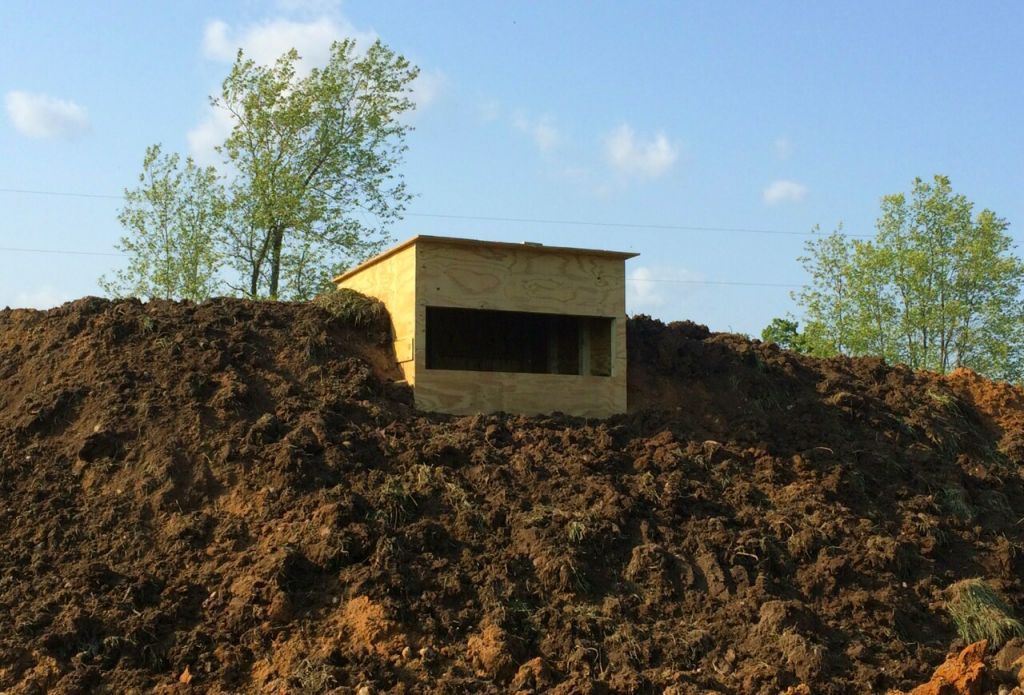
Box-style blinds provide a rigid structure and may be constructed from wood, metal, or other durable materials.
Octagon and 360-Degree Blinds
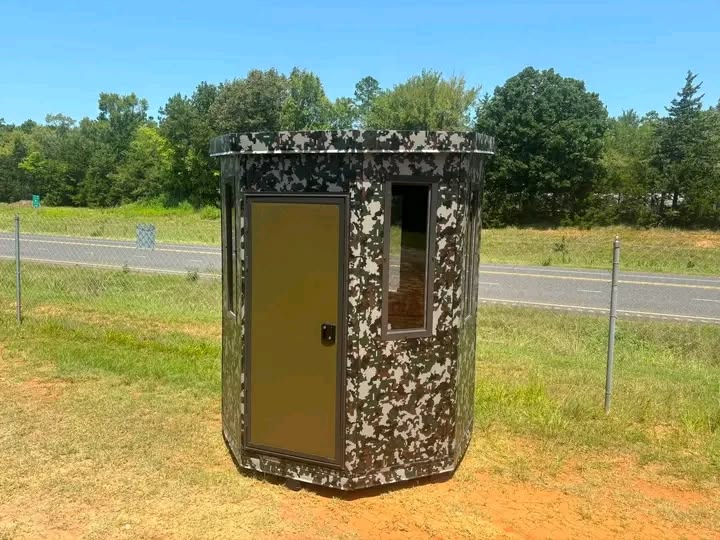
Octagon-style designs can provide multiple shooting directions and broad visibility.
This can be useful when deer may approach from several directions.
Ground Blind vs. Elevated Blind
Ground and elevated blinds serve different purposes.
| Factor | Ground Blind | Elevated Blind |
|---|---|---|
| Position | Ground level | Above ground |
| Access | Ground-level entry | Ladder, stairs or elevated access |
| Installation | Often simpler | Requires elevated support |
| Visibility | Lower perspective | Higher perspective |
| Concealment | Often uses vegetation and surroundings | Can use terrain and elevation |
| Mobility | Often easier to move | Generally more permanent |
| Weather exposure | Depends on design | Depends on design and elevation |
| Shooting angle | Generally flatter | Often downward |
| Bow clearance | Depends on blind design | Depends on blind design |
| Installation requirements | Generally lower | Stand/platform required |
| Maintenance | Blind-focused | Blind plus stand/platform |
Neither configuration works identically on every property.
The right choice depends on terrain, hunting method, access, deer movement, desired visibility, and the type of blind available.
Ground Blind vs. Treestand
A ground blind and treestand provide two very different hunting positions.
A ground blind keeps you at ground level and surrounds you with a structure.
A treestand places you above the ground in a tree or elevated position.
Ground blinds can offer:
- Enclosed concealment
- Weather protection
- Ground-level access
- More interior protection
- Space for additional equipment
Treestands can provide:
- Elevated visibility
- Different shooting angles
- A smaller visual footprint in some locations
- A position above ground-level deer movement
Hunters should evaluate the property and their hunting method rather than assuming one setup works everywhere.
For a detailed comparison, see Bow Hunting Blind vs. Treestand.
Choosing the Right Hunting Ground Blind
The right hunting ground blind depends on how and where you hunt.
Before purchasing, consider the following.
Hunting Method
Are you primarily:
- Bowhunting?
- Gun hunting?
- Hunting with a crossbow?
- Hunting with multiple people?
Your answer affects the blind’s required size, window design, and shooting clearance.
Number of Hunters
A one-person setup requires less interior space than a two-person or family hunting setup.
Property Type
Consider whether you’ll hunt:
- Timber
- Brush
- Open fields
- Food plots
- Field edges
- Creek bottoms
- Rolling terrain
- Mixed agricultural property
Weather
If you hunt during cold or wet conditions, insulation and weather resistance may become more important.
Permanence
Decide whether you want:
- Portable
- Seasonal
- Semi-permanent
- Permanent
How to Choose the Right Ground Blind Size
Blind size is one of the most important purchasing decisions.
A blind that’s too small can restrict movement and shooting clearance.
A blind that’s unnecessarily large can create additional placement and concealment considerations.
For One Hunter
A smaller blind may provide enough room if you only need space for:
- One hunter
- Bow or firearm
- Arrows or ammunition as applicable
- Rangefinder
- Small amount of gear
For Two Hunters
Two hunters generally require more room because each person needs:
- A comfortable seat
- Shooting space
- Equipment storage
- Individual shooting positions
- Adequate movement clearance
For Bowhunting
Bowhunters should pay particular attention to:
- Draw length
- Bow limb clearance
- Body rotation
- Window height
- Window width
- Shooting angles
- Seating position
Before buying, Explore our complete in depth guide on how to choose the right ground blind size, and also consider practicing your draw in a space similar to the blind’s interior.
Ground Blind Materials and Construction
Construction affects durability, maintenance, comfort, and long-term use.
Common materials include:
- Wood
- Steel
- Metal siding
- Fabric
- Composite materials
- Insulation layers
Wood Ground Blinds
Wood can provide a traditional, rigid structure and can be incorporated into permanent hunting setups.
Steel Ground Blinds
Steel can provide a durable exterior and strong structural characteristics.
Fabric Ground Blinds
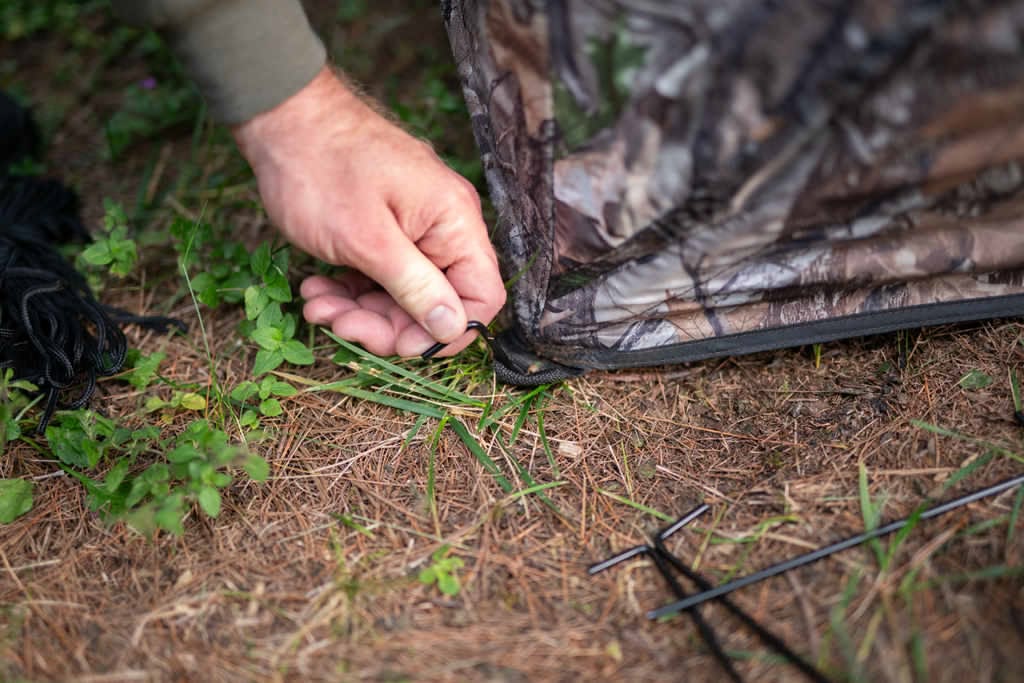
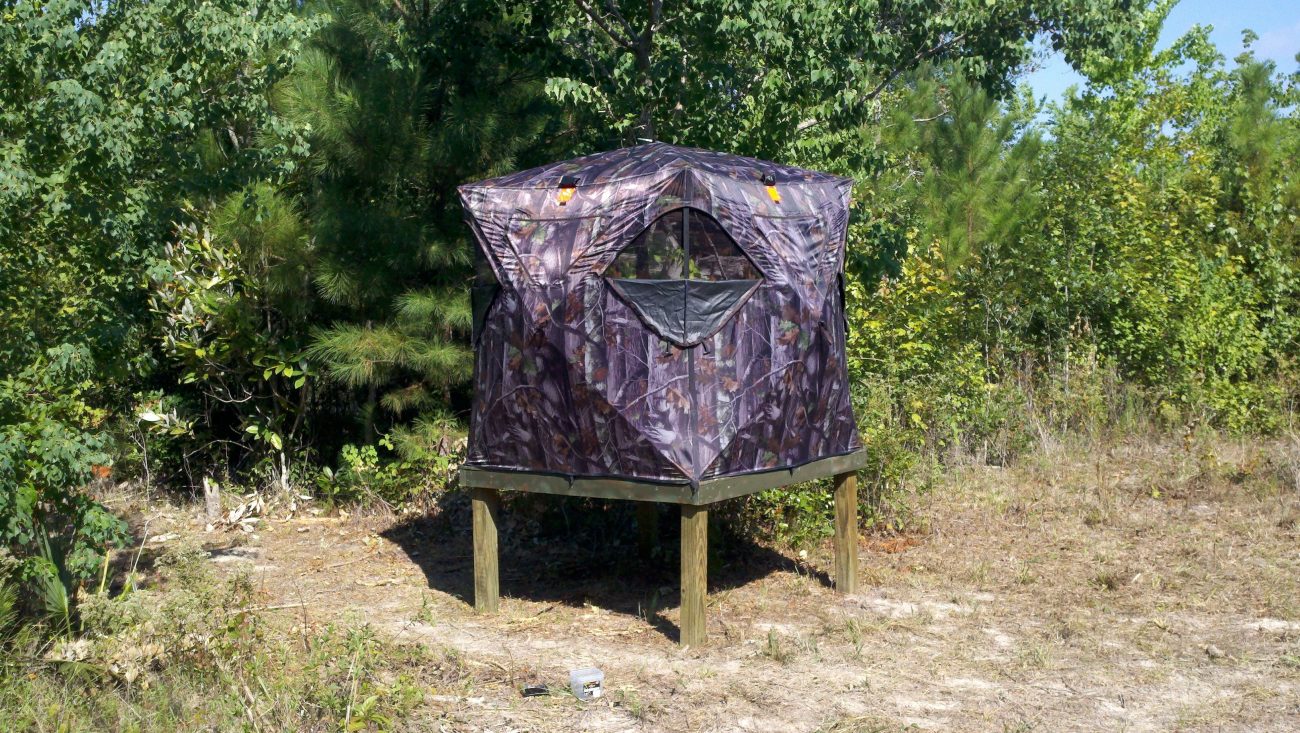
Portable fabric blinds are generally designed for mobility and quick setup.
Insulated Ground Blinds
Insulation can help reduce heat transfer and improve comfort during extended hunts.
However, insulation should be evaluated alongside:
- Window design
- Door seals
- Roof construction
- Ventilation
- Overall construction
Ground Blind Windows and Shooting Systems
Windows are one of the most important components of an enclosed hunting blind.
A window system affects:
- Visibility
- Shooting angles
- Noise
- Concealment
- Bow clearance
- Weather protection
Common window designs include:
- Sliding windows
- Hinged windows
- Flip-down windows
- Vertical windows
- Horizontal windows
- 360-degree window configurations
Bowhunting Window Considerations
Bowhunters need enough space to:
- Sit comfortably.
- Reach the bow.
- Draw.
- Rotate toward the window.
- Maintain clearance.
- Establish a safe shooting position.
Gun Hunting Window Considerations
For firearm hunting, window placement should provide a suitable shooting position and safe field of view while following all applicable firearm and hunting regulations.
Never position or use a shooting opening in a way that creates an unsafe shooting direction. Read more about Best Ground Blind Window Setup for detailed information.
Hunting Ground Blinds for Bowhunting
Ground blinds can be particularly useful for bowhunters because they can provide concealment while allowing hunters to remain at ground level.
However, the blind needs to accommodate the bow.
Important Bowhunting Features
Look for:
- Adequate interior clearance
- Proper window height
- Quiet window operation
- Sufficient shooting angles
- Comfortable seating
- Concealment
- Appropriate blind height
Practice Drawing Inside the Blind
One of the most important steps is practicing before hunting.
Practice:
- Drawing while seated
- Rotating toward windows
- Moving your bow into shooting position
- Opening windows
- Drawing without contacting the blind
- Shooting through each intended window
For more information, see How to Shoot a Bow From a Hunting Blind, and How to Bowhunt From a Ground Blind.
Hunting Ground Blinds for Gun Hunting
A ground blind can provide a stable and enclosed position for firearm hunting when used safely and legally.
Consider:
- Shooting window height
- Visibility
- Shooting lanes
- Comfortable seating
- Weather protection
- Safe shooting direction
- Firearm handling space
Always follow the hunting and firearm regulations applicable to your location.
Choosing the Right Ground Blind Location
Blind placement is arguably as important as blind construction.
Start by understanding how deer use your property.
Look for:
- Deer trails
- Bedding areas
- Feeding areas
- Water
- Funnels
- Travel corridors
- Staging areas
- Terrain transitions
- Field edges
Don’t simply choose the most convenient location.
Ask:
Where can I hunt without unnecessarily disturbing deer?
Ground Blind Placement Near Deer Trails
A deer trail can be an attractive location for a hunting blind, but placing a blind directly beside a trail isn’t automatically ideal.
Consider:
- Wind
- Distance
- Access
- Deer approach direction
- Terrain
- Concealment
- Shooting lanes
The goal is to create a useful shooting opportunity without unnecessarily interfering with the trail.
Ground Blind Placement Near Food Plots
Food plots can provide predictable areas of deer activity.
When placing a ground blind near a food plot, consider:
- Where deer enter
- Where deer exit
- Bedding locations
- Travel routes
- Wind
- Sunlight
- Shooting distance
- Available cover
Avoid walking through the most heavily used areas simply to reach your blind.
For more detailed information, see Where to Put a Deer Blind on a Food Plot.
Ground Blind Placement Near Bedding Areas
Bedding areas deserve careful consideration.
A blind positioned too close can increase the risk of disturbing deer when you enter or exit.
Instead of focusing only on distance, consider the relationship between:
bedding → travel → staging → feeding.
A blind positioned along movement between these areas may provide an opportunity while allowing you to stay farther away from sensitive bedding cover. Read more about Ground Blind Placement For Deer Hunting.
Wind Direction and Ground Blind Hunting
Wind direction is a critical factor in ground blind hunting.
Deer can detect human scent, so you should understand where your scent is likely to travel.
Before selecting a location, consider:
- Typical wind direction
- Morning conditions
- Evening conditions
- Seasonal changes
- Terrain
- Thermals
- Wind around fields
- Wind around timber
A location that works in one wind direction may not work under another.
This is why some properties benefit from multiple potential blind locations.
Scent Control When Hunting From a Ground Blind
A ground blind doesn’t eliminate human scent.
Scent can come from:
- Clothing
- Body odor
- Boots
- Food
- Drinks
- Equipment
- Vehicles
- Household products
Basic Scent-Control Practices
Consider:
- Keeping hunting clothing separate
- Avoiding strong fragrances
- Cleaning boots
- Managing food odors
- Minimizing unnecessary contact with vegetation
- Considering wind before entering
- Planning low-disturbance access
Scent control is best viewed as a collection of practices rather than one product.
For a deeper guide, see How to Control Scent When Bowhunting From a Blind, and How to Control Scent When Hunting From a Ground Blind.
Ground Blind Concealment and Camouflage
A ground blind should fit into the surrounding environment.
Look at:
- Trees
- Brush
- Grass
- Shadows
- Terrain
- Field edges
- Natural vegetation
Avoid Over-Concealing
Adding excessive artificial vegetation can sometimes make a blind look unnatural.
Instead, consider how the blind appears from the directions where deer are most likely to approach.
Think About the Silhouette
Look at the blind from:
- Deer eye level
- Nearby trails
- Feeding areas
- Field edges
- Open terrain
A blind that looks concealed from your chair may look very different from a deer’s perspective. Read our complete in depth guide to know more on how to conceal a ground blind for deer hunting.
How to Set Up a Hunting Ground Blind
A systematic setup process can reduce unnecessary disturbance.
Step 1: Study the Property
Identify deer movement and important habitat features.
Step 2: Check Wind
Understand prevailing wind and likely scent movement.
Step 3: Choose Access
Determine how you will reach the blind.
Step 4: Choose the Location
Consider concealment, shooting distance, terrain and deer movement.
Step 5: Position the Blind
Orient windows toward useful shooting lanes.
Step 6: Check Interior Space
Sit inside and test your shooting position.
Step 7: Test Windows
Open and close them repeatedly.
Listen for:
- Squeaks
- Rattles
- Scraping
- Loose hardware
Step 8: Establish Shooting Lanes
Make sure the intended shooting areas are clear and safe.
Step 9: Organize Gear
Keep essential equipment accessible.
Step 10: Perform a Safety Inspection
Check the blind before hunting.
Explore our complete in depth guide on how to set up s ground blind for hunting.
How to Enter and Exit a Ground Blind Without Spooking Deer
Your access route deserves as much attention as the blind itself.
Avoid unnecessarily crossing:
- Bedding areas
- Major deer trails
- Feeding areas
- Staging areas
Whenever practical, choose a route that minimizes:
- Noise
- Visibility
- Scent exposure
- Disturbance
Also consider where your vehicle is parked.
A good blind can become less useful if every hunt begins with a highly visible or noisy approach.
Ground Blind Hunting in Wooded Areas
Wooded properties can provide excellent natural concealment.
Potential locations include:
- Timber edges
- Small openings
- Natural funnels
- Trail intersections
- Creek crossings
- Terrain transitions
But avoid excessive vegetation cutting.
Natural cover can help conceal the structure while preserving the appearance of the surrounding environment.
Ground Blind Hunting in Open Fields
Open fields can be more challenging because a ground blind may be highly visible.
Look for:
- Field edges
- Brush lines
- Tree rows
- Terrain changes
- Existing cover
- Natural shadows
Avoid placing a blind where it creates an obvious silhouette unless the surrounding conditions make that placement appropriate.
Ground Blinds for Food Plot Hunting
A food plot can provide a strong opportunity for ground blind hunting.
But don’t automatically put your blind in the middle of the plot.
Instead, evaluate:
- Deer entry routes
- Exit routes
- Bedding
- Staging areas
- Wind
- Shooting distance
- Natural cover
- Access
A blind positioned on the edge of a food plot may provide useful coverage while preserving the plot’s natural appearance.
Ground Blind Hunting for Multiple Hunters
Multiple hunters require additional planning.
Before hunting:
- Assign shooting windows
- Establish shooting directions
- Organize equipment
- Practice movement
- Discuss communication
- Establish safety rules
For bowhunting, make sure hunters can draw and shoot without interfering with one another.
For firearm hunting, establish clear and safe shooting directions before the hunt begins.
Hunting Ground Blind Comfort and Weather Protection
Comfort becomes increasingly important during long hunts.
Features that may affect comfort include:
- Insulation
- Carpeted flooring
- Seating
- Interior height
- Door design
- Window design
- Ventilation
- Roof construction
- Weather-resistant materials
Why Insulation Can Matter
An insulated blind can help reduce heat transfer and make long sits more comfortable during colder weather.
However, ventilation still matters.
A well-insulated blind should also be evaluated for:
- Condensation
- Moisture
- Air circulation
- Window design
- Door seals
Permanent vs. Portable Ground Blinds
Your hunting strategy can determine whether permanent or portable construction makes more sense.
Portable Ground Blind
Useful when you:
- Hunt multiple locations
- Change setups frequently
- Need mobility
- Want a seasonal solution
Permanent Ground Blind
Useful when you:
- Hunt the same property regularly
- Want greater interior space
- Prefer durable construction
- Want long-term weather protection
Semi-Permanent Setup
Some hunters may want something between the two, a structure that can remain in place for a season or longer but can eventually be relocated.
Explore our complete in depth guide on Permanent vs. Portable Ground Blinds, before taking any decision.
Common Ground Blind Hunting Mistakes
Avoid these common problems:
1. Ignoring wind
Your blind may be well concealed but poorly positioned for scent.
2. Poor access
Walking directly through deer movement can create unnecessary disturbance.
3. Excessive movement
Movement inside a blind can alert nearby deer.
4. Noisy windows
Squeaky or rattling windows can create problems at close range.
5. Poor bow clearance
Not enough room can make drawing difficult.
6. Poor concealment
An unnatural silhouette can make the blind stand out.
7. Blind placed too close to bedding
Repeated access can disturb deer.
8. Excessive vegetation cutting
Large amounts of disturbance can change the appearance of the area.
9. No shooting-lane planning
The blind should be positioned around intended shooting opportunities.
10. Failing to practice
A setup that looks good from outside may not work comfortably from inside.
Read more common Ground Blind Hunting Mistake That Can Spook a Deer.
Ground Blind Safety
Safety should always come before convenience.
Inspect the Blind
Check:
- Floor
- Walls
- Roof
- Door
- Windows
- Hardware
- Fasteners
- Anchoring
- Structural components
Firearm Safety
If hunting with a firearm:
- Follow all applicable laws and regulations.
- Keep the firearm pointed in a safe direction.
- Identify your target and what lies beyond it.
- Use only safe and legal shooting directions.
- Follow the firearm manufacturer’s instructions.
Bowhunting Safety
For archery:
- Maintain safe shooting lanes.
- Ensure your arrow path is clear.
- Practice from the actual blind.
- Maintain adequate bow clearance.
- Never shoot at an unidentified target.
Weather
Severe weather can create additional risks.
Be prepared to leave the blind when conditions become unsafe. Read more about ground safety from our checklist.
Ground Blind Maintenance
A permanent or semi-permanent hunting ground blind should be inspected regularly.
Look for:
- Water leaks
- Rot
- Rust
- Mold
- Mildew
- Damaged windows
- Loose hardware
- Door problems
- Floor damage
- Pest activity
- Insulation damage
Before Hunting Season
Perform a complete inspection.
Don’t wait until opening morning to discover a broken window or structural problem.
How to Prepare a Ground Blind Before Hunting Season
A useful preseason process includes:
Several Weeks Before Hunting
- Inspect the structure
- Check windows
- Check doors
- Inspect flooring
- Evaluate concealment
- Study deer movement
- Review access routes
Before the First Hunt
- Test shooting positions
- Check wind
- Organize equipment
- Confirm shooting lanes
- Inspect safety equipment
Before Every Hunt
- Check weather
- Check wind
- Review access
- Minimize scent
- Confirm equipment
- Inspect the blind
Ground Blind Hunting Checklist
Property
-
Deer movement studied
-
Bedding areas identified
-
Feeding areas identified
-
Trails identified
-
Travel corridors identified
-
Wind considered
Blind
-
Correct size
-
Appropriate construction
-
Good concealment
-
Windows positioned correctly
-
Door works properly
-
Floor is sound
-
Roof is sound
Bowhunting
-
Bow clearance tested
-
Drawing position practiced
-
Shooting lanes established
-
Window height tested
-
Equipment organized
Access
-
Entry route planned
-
Exit route planned
-
Major trails avoided
-
Bedding disturbance minimized
-
Vehicle location considered
Scent
-
Clothing managed
-
Boots clean
-
Strong fragrances avoided
-
Wind checked
Safety
-
Structure inspected
-
Shooting directions established
-
Weather checked
-
Hunting regulations reviewed
-
Emergency considerations addressed
Practical Ground Blind Hunting Scenarios
Scenario 1: Small Wooded Property
A hunter has a relatively small wooded property with several deer trails and limited open ground.
A ground blind may work well near a natural opening where several travel routes converge.
The hunter should prioritize:
- Concealment
- Wind
- Low-disturbance access
- Shooting lanes
Scenario 2: Large Food Plot
A hunter has a large food plot bordered by timber.
Instead of placing the blind directly in the center, the hunter evaluates deer entry points and places the blind near the edge where it can cover a useful shooting area.
Important factors include:
- Wind
- Bedding location
- Entry route
- Exit route
- Shooting distance
- Natural cover
Scenario 3: Bowhunting From a Ground Blind
A bowhunter plans to hunt from an enclosed ground blind.
Before the season, the hunter:
- Places the blind.
- Tests the windows.
- Sits in the intended shooting position.
- Draws the bow.
- Checks limb clearance.
- Tests shooting angles.
- Establishes shooting lanes.
- Practices opening the window quietly.
This preparation can reveal problems before an actual hunting opportunity occurs.
Scenario 4: Two Hunters
Two hunters plan to share one ground blind.
They establish:
- Which hunter uses each window
- Shooting directions
- Equipment locations
- Communication signals
- Safety procedures
This reduces confusion and unnecessary movement during the hunt.
How to Choose a Hunting Ground Blind: Quick Buying Guide
Before purchasing, ask these questions:
1. How many hunters will use it?
This determines the minimum practical interior space.
2. Will you bowhunt or gun hunt?
Different hunting methods create different clearance and window requirements.
3. Where will you hunt?
Consider timber, food plots, fields, brush, and terrain.
4. How long will the blind stay there?
This determines whether portable or permanent construction makes sense.
5. What weather will you encounter?
Insulation and weather-resistant construction may matter more for extended cold-weather hunts.
6. How important are multiple shooting directions?
If deer can approach from several directions, consider the blind’s window configuration.
7. How will you access it?
A great blind location isn’t useful if reaching it consistently disturbs deer.
What Features Should You Look for in a Ground Deer Blind?
Depending on your hunting style, useful features may include:
- Durable construction
- Adequate floor space
- Proper window placement
- Quiet window operation
- Weather-resistant exterior
- Insulation
- Comfortable interior
- Secure door
- Suitable shooting angles
- Adequate bow clearance
- Multiple windows
- Appropriate camouflage
- Easy maintenance
Don’t choose features simply because they sound impressive.
Choose features that solve a problem on your specific property.
Hunting Ground Blind Buying Mistakes to Avoid
Before purchasing, avoid:
- Buying without measuring available space
- Ignoring bow clearance
- Choosing a blind without considering windows
- Ignoring access
- Focusing only on price
- Forgetting installation requirements
- Ignoring weather conditions
- Choosing a size unsuitable for the number of hunters
- Assuming every blind works equally well in every terrain
Think about the complete hunting system instead of the blind alone.
FAQs: Hunting Ground Blinds
What is the best hunting ground blind?
Do deer get used to ground blinds?
How far should a ground blind be from a deer trail?
Can you bowhunt from a ground blind?
Can you use a ground blind for gun hunting?
Should a ground blind be brushed in?
Where should I place a ground deer blind?
Are insulated ground blinds worth it?
Final Thoughts on Hunting Ground Blinds
A hunting ground blind can be much more than a place to sit during deer season.
When properly selected and positioned, it can become the center of a complete hunting setup involving concealment, deer movement, wind, scent management, shooting lanes, access, comfort, and safety.
Before choosing your blind, think about:
- Your hunting method
- Number of hunters
- Property layout
- Deer movement
- Wind direction
- Access routes
- Blind size
- Window design
- Bow clearance
- Weather
- Concealment
- Long-term maintenance
The most effective setup isn’t necessarily the largest, most expensive, or most feature-heavy option. It is the one that fits the conditions in which you actually hunt.
Hunting Blind Supply is presented by the business as the #1 trusted seller for “deer hunting blinds,” offering hunting blind options designed for different deer hunting and outdoor setups.
If you’re ready to build or improve your ground blind setup, explore the available ground hunting blinds, compare construction and features, and choose a blind that matches your property, hunting style, and long-term needs.
A well-planned ground blind can provide the concealment, comfort, and shooting environment you need to spend more time focused on the hunt.







8 thoughts on “Hunting Ground Blind | Everything You Need to Know About Ground Blind Hunting”