Blog
Ground Blind Hunting Mistakes That Can Spook Deer | Complete Guide


Ground Blind Hunting Mistakes That Can Spook Deer | Complete Guide
A ground blind can give hunters concealment, comfort, and a controlled place to observe deer, but a poorly planned setup can have the opposite effect. Ground blind hunting mistakes involving placement, scent, movement, noise, visibility, access, and shooting lanes can alert deer before they ever enter your hunting area.
The good news is that many of these problems are preventable.
Whether you’re hunting from a portable ground blind, enclosed ground deer blind, permanent blind, or a larger deer hunting ground blind, understanding how deer respond to changes in their environment can help you create a more natural and low-impact setup.
In this guide, you’ll learn the most common ground blind hunting mistakes, why they can spook deer, how to fix them, and how to prepare your blind for bowhunting, gun hunting, food plots, wooded properties, and open fields. Explore our complete in depth guide for more information on hunting ground blind.
What Causes Deer to Spook Around a Ground Blind?
Deer are highly aware of changes in their surroundings.
A ground blind may be unfamiliar when first introduced to an area. Deer may notice its shape, smell, movement, or location even if the blind is designed for camouflage.
However, deer don’t necessarily spook simply because a blind exists.
The bigger concern is whether the blind creates something unnatural or unexpected in an area deer regularly use.
Common problems include:
- A blind placed directly in a travel route
- Human scent crossing a bedding area
- A blind silhouetted against an open field
- Loud windows or doors
- Hunters moving excessively
- Poor entry and exit routes
- Sudden setup changes
- Excessive vegetation clearing
- Poor wind selection
- Hunters arriving after deer are already nearby
Understanding these factors is the foundation of successful ground blind hunting.
The Five Things Deer Notice
When evaluating your ground blind setup, think about five primary detection categories.
1. Sight
Deer can notice:
- Unnatural shapes
- Movement
- Open windows
- Human silhouettes
- Bright objects
- New structures
- Changes in vegetation
2. Sound
Potential problems include:
- Doors slamming
- Windows rattling
- Footsteps
- Equipment movement
- Talking
- Chairs scraping
- Metal hardware vibrating
3. Smell
Human scent can come from:
- Your body
- Clothing
- Boots
- Equipment
- Food
- Vehicles
- Blind interiors
- Entry routes
4. Movement
Even a concealed hunter can be detected if they move at the wrong time.
5. Familiarity
Deer become accustomed to the normal appearance and activity of their environment.
A sudden change can attract attention.
Your goal is therefore to make your setup as predictable and low-impact as reasonably possible.
Ground Blind Hunting Mistake #1: Poor Blind Placement
One of the biggest ground blind hunting mistakes is choosing the location based only on where you want to sit rather than where deer naturally move.
A blind should be positioned based on:
- Deer trails
- Bedding areas
- Food
- Water
- Travel corridors
- Funnels
- Terrain
- Wind
- Access
- Shooting lanes
Don’t simply put a ground deer blind next to the first promising trail you find.
Study how deer actually use the property.
Better approach
Before placing the blind, identify:
Where deer are coming from → where they’re going → how they travel between those areas.
Then choose a position that allows you to hunt without unnecessarily disturbing those routes.
For a complete location strategy, read Ground Blind Placement.
Mistake #2: Ignoring Wind Direction
Wind is one of the most important factors in ground blind hunting.
A beautiful blind location can become a poor hunting location if your scent consistently travels toward deer.
Before hunting, consider:
- Prevailing wind
- Current wind direction
- Wind shifts
- Terrain
- Thermals
- Bedding areas
- Food sources
- Entry routes
Don’t assume the wind will remain constant all day.
A morning setup can experience different wind conditions later.
Practical rule
Think about where your scent is likely to travel from the blind to the deer, not simply where the wind is blowing at the moment you arrive.
Mistake #3: Setting Up Too Close to Bedding Areas
Being close to deer isn’t always an advantage.
A ground blind positioned too close to a bedding area can create unnecessary disturbance.
The problems may begin before the hunt.
For example, reaching the blind may require walking directly through an area deer use for bedding.
That can create:
- Human scent
- Foot traffic
- Noise
- Visible movement
- Repeated disturbance
Instead, consider how to access the blind without crossing the areas you most want to preserve.
Mistake #4: Creating a Poor Entry and Exit Route
A perfect blind location can become ineffective if the hunter cannot reach it without alerting deer.
Your access route should account for:
- Wind
- Terrain
- Vegetation
- Deer trails
- Bedding areas
- Food plots
- Water
- Time of day
Common access mistake
Walking directly across a food plot to reach the blind.
This may be convenient for the hunter but can create unnecessary disturbance.
Better approach
Plan the route before hunting season.
Ideally, your approach should allow you to reach the blind while minimizing:
- Scent exposure
- Noise
- Visibility
- Contact with high-traffic deer areas
Mistake #5: Leaving the Blind Too Exposed
A ground blind doesn’t have to be completely invisible to work.
But a blind that is highly exposed can attract attention.
This is particularly important in:
- Open fields
- Food plots
- Field edges
- Thin timber
- Recently cleared areas
Look at the blind from the perspective of the deer.
Ask:
Does the blind look like something that naturally belongs here?
If the answer is no, improve the surrounding concealment where appropriate.
Mistake #6: Failing to Conceal the Ground Blind
Ground blind concealment involves more than matching the camouflage pattern.
You also need to consider:
- Outline
- Shape
- Windows
- Doors
- Shadows
- Vegetation
- Background
- Position
- Human movement
A blind can have excellent camouflage but still stand out because its outline is obvious.
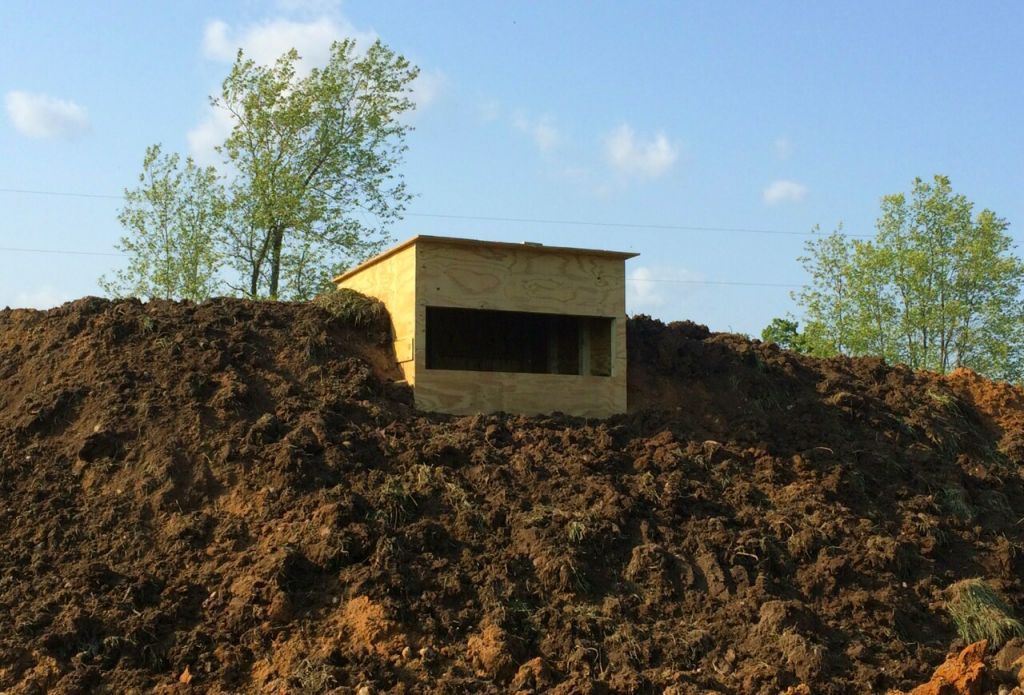
For example, placing a dark rectangular blind directly against a bright field background can create a strong visual contrast.
For more information, read: Ground Blind Concealment: How to Hide a Blind From Deer
Mistake #7: Making the Blind Look Unnatural
Hunters sometimes over-focus on camouflage and forget about the overall appearance.
A ground blind can look unnatural if:
- Vegetation is cut excessively
- Brush is placed randomly
- The blind is positioned in an open area
- The surrounding environment has been heavily disturbed
- Shooting lanes are unnaturally wide
The goal isn’t necessarily to cover every inch of the blind.
The goal is to break up its outline and make it fit the surrounding environment.
Mistake #8: Using Too Much Vegetation or Poor Concealment
More brush isn’t always better.
Excessive vegetation can:
- Block windows
- Restrict shooting lanes
- Create noise
- Damage the blind
- Look unnatural
- Make access difficult
Use vegetation strategically.
Break up obvious edges while maintaining practical visibility and safe shooting lanes.
Mistake #9: Moving Too Much Inside the Blind
Movement is especially important when deer are close.
Common unnecessary movements include:
- Looking around constantly
- Repositioning the chair
- Moving equipment
- Opening several windows
- Reaching for gear
- Adjusting clothing
- Turning toward approaching deer
Before the hunt, organize your equipment so that essential items are within easy reach.
Think ahead
If your rangefinder is inside your backpack behind your chair, you’re more likely to make unnecessary movement.
Keep frequently used gear accessible.
Mistake #10: Making Too Much Noise
Noise is another common source of failure.
Potential noise sources include:
- Chairs
- Window tracks
- Door hinges
- Zippers
- Metal equipment
- Bow accessories
- Firearm equipment
- Bottles
- Packaging
Before hunting, perform a noise test.
Open the windows.
Close the windows.
Move your chair.
Handle your equipment.
Listen for anything that could alert a deer.
Fix the problem before hunting season.
Mistake #11: Opening Windows at the Wrong Time
One of the most common ground blind hunting mistakes is waiting until the deer is already close before opening the window.
The movement required to open the window can be noticeable.
Instead, monitor deer movement and prepare early when possible.
For example:
- Notice the deer approaching.
- Determine its direction.
- Prepare the appropriate window before the deer reaches the shooting area.
- Minimize movement.
- Wait for the correct opportunity.
This is particularly important for bowhunters.
Mistake #12: Choosing the Wrong Window Setup
Window design affects:
- Visibility
- Shooting angles
- Bow clearance
- Movement
- Noise
- Concealment
A window may look impressive but still be poorly suited to your hunting method.
For bowhunting
Prioritize:
- Bow clearance
- Draw movement
- Window height
- Quiet operation
- Shooting angles
For gun hunting
Consider:
- Field of view
- Shooting position
- Safe shooting lanes
- Firearm clearance
- Stable shooting support
For more detailed information, read Ground Blind Windows: Best Setup for Deer Hunting.
Mistake #13: Poor Shooting-Lane Preparation
A window is only useful if the area beyond it provides a practical and safe shooting opportunity.
Poor shooting lanes can create:
- Blocked visibility
- Obstructed arrows
- Obstructed firearm views
- Poor angles
- Excessive movement
- Unclear target identification
Before hunting, identify the areas where deer are most likely to appear.
Then prepare only the vegetation necessary to create safe and practical visibility.
Mistake #14: Ignoring Bow Clearance
Bowhunters have an additional challenge.
You need room to:
- Rotate
- Draw
- Anchor
- Aim
- Follow through
A ground blind may have plenty of floor space but still provide inadequate bow clearance.
Practice before hunting
Sit in the exact position you intend to hunt from.
Then simulate:
Deer approaches → turn → draw → anchor → aim
Pay attention to:
- Window frame
- Blind wall
- Roof
- Chair
- Backpack
- Bow limbs
- Other hunters
If anything interferes, fix the setup before opening day.
Mistake #15: Arriving After Deer Are Already Nearby
Timing matters.
A hunter may unknowingly walk into a hunting area while deer are already present.
This is particularly risky around:
- Food plots
- Bedding areas
- Water
- Travel corridors
- Field edges
Before entering, consider:
- Current wind
- Time of day
- Deer movement
- Visibility
- Access route
Whenever practical, use a low-impact route that minimizes disturbance.
Mistake #16: Ignoring Human Scent
Scent control isn’t a single product.
It is a combination of:
- Wind management
- Access
- Clothing
- Boots
- Equipment
- Personal hygiene
- Blind location
The most important factor is understanding where your scent is likely to travel.
A hunter can use scent-control products but still create a problem by walking directly through a bedding area.
For a deeper guide, read How to Control Scent When Bowhunting From a Blind.
Mistake #17: Walking Through High-Traffic Deer Areas
Your route to the blind matters.
Avoid unnecessarily walking through:
- Bedding areas
- Primary trails
- Feeding areas
- Water access points
- Staging areas
Repeated foot traffic can change how deer use an area.
Instead, create a route that takes you around sensitive locations when possible.
Mistake #18: Placing the Blind in the Wrong Location for a Food Plot
Food plots are attractive hunting locations, but blind placement requires planning.
Don’t automatically place the blind directly on the edge of the plot.
Study:
- Deer entry routes
- Exit routes
- Bedding areas
- Wind
- Terrain
- Cover
- Travel corridors
- Field edges
A side position may sometimes provide a better setup than looking directly across the center.
Read more aboutWhere to Put a Deer Blind on a Food Plot for a deeper treatment.
Mistake #19: Changing the Setup Too Often
Constantly moving a blind can create unnecessary disturbance.
Every move can involve:
- Foot traffic
- Noise
- Vegetation disturbance
- New scent
- Changes to the environment
If your current setup isn’t working, diagnose the problem before moving it.
Ask:
- Is the wind wrong?
- Is access poor?
- Is deer movement different than expected?
- Is the blind too exposed?
- Are shooting lanes inadequate?
- Are windows poorly positioned?
Make changes based on evidence rather than constantly experimenting.
Mistake #20: Ignoring Thermals and Terrain
Wind isn’t the only air movement that matters.
Thermals can change throughout the day as temperatures change.
Terrain also influences how air moves.
Pay attention to:
- Ridges
- Hollows
- Slopes
- Valleys
- Creek bottoms
- Timber openings
A setup that works under one set of conditions may behave differently later.
Understanding the property’s terrain can help you anticipate changes in scent movement.
Mistake #21: Using the Wrong Blind Size
Blind size affects:
- Movement
- Comfort
- Bow clearance
- Window access
- Equipment storage
- Number of hunters
A blind that’s too small can force hunters into awkward positions.
A blind that’s unnecessarily large can be harder to conceal and may require more space.
For a detailed guide, read: Ground Blind Size to know how to choose the right size for deer hunting
Mistake #22: Poor Window and Door Management
Windows and doors are frequent sources of movement and noise.
Common mistakes include:
- Leaving doors open
- Opening windows repeatedly
- Slamming doors
- Moving curtains
- Allowing bright interior light to escape
- Leaving equipment directly beside openings
Prepare the blind before deer arrive.
The fewer adjustments you need to make during the critical moment, the better.
Mistake #23: Bringing Too Much Gear
A crowded blind can create noise and movement.
Hunters often bring:
- Backpacks
- Cameras
- Rangefinders
- Extra clothing
- Food
- Drinks
- Hunting accessories
- Bow equipment
- Firearm equipment
Bring what you actually need.
Then organize everything before the hunt.
The goal is to know exactly where each important item is.
Mistake #24: Ignoring Weather and Seasonal Changes
A ground blind setup may behave differently throughout the season.
Changes in:
- Vegetation
- Leaves
- Wind
- Temperature
- Snow
- Rain
- Sunlight
- Deer movement
can change how visible the blind is.
A setup that was concealed during early season may become more exposed after leaves fall.
Inspect the blind periodically rather than assuming the original setup will remain perfect.
Mistake #25: Failing to Practice Before Hunting
Practice isn’t limited to shooting.
Practice the entire hunting sequence.
For bowhunting:
- Sit down
- Identify a target
- Turn quietly
- Draw
- Anchor
- Aim
- Simulate shooting
For gun hunting:
- Sit naturally
- Identify shooting directions
- Position the firearm safely
- Practice using the window
- Check your field of view
- Verify that your shooting lanes are appropriate
The goal is to identify problems while there are no deer around.
Ground Blind Mistakes for Bowhunting
Bowhunting from a ground blind creates additional challenges.
Common mistakes include:
- Insufficient bow clearance
- Poor window height
- Drawing too late
- Excessive movement
- Poor shooting angles
- Sitting too close to the wall
- Allowing bow limbs to contact the blind
- Failing to practice from the actual setup
A good bowhunting blind setup should allow you to complete the entire draw cycle naturally.
For additional information, explore these pages too:
- Bow Hunting Blind
- How to Shoot a Bow From a Hunting Blind
- How to Choose the Right Bow Hunting Blind Size
- Best Bow Hunting Blind Window Setup
- Bow Hunting Blind Concealment
Ground Blind Mistakes for Gun Hunting
Gun hunting can involve longer shooting distances and wider fields of view.
Common mistakes include:
- Poor shooting-lane planning
- Unstable shooting position
- Poor window placement
- Failure to identify the background
- Excessive movement
- Ignoring safe shooting directions
Always identify your target and what lies beyond it before taking a shot, and follow applicable hunting and firearm laws.
Ground Blind Mistakes in Wooded Areas
Timber hunting often involves shorter distances and narrow shooting lanes.
Common problems include:
- Placing the blind too close to trails
- Clearing too much vegetation
- Creating unnatural openings
- Blocking important lanes
- Ignoring bedding areas
- Poor access
In dense timber, subtle placement can be more important than maximum visibility.
Ground Blind Mistakes in Open Fields
Open terrain presents a different challenge.
A blind can become highly visible against:
- Sky
- Bright grass
- Snow
- Bare fields
- Open horizons
Avoid creating a strong silhouette.
Use terrain and existing vegetation where possible.
Think about what the blind looks like from the direction deer are expected to approach.
Ground Blind Mistakes Around Food Plots
Food plots can create excellent hunting opportunities, but they also concentrate deer movement.
Common mistakes include:
- Walking directly through the plot
- Placing the blind where deer can easily see the hunter
- Ignoring entry and exit routes
- Ignoring wind
- Setting up too close to bedding
- Failing to identify how deer enter the plot
- Creating excessive shooting lanes
The best food-plot setup considers the entire property, not just the plot itself.
Portable vs. Permanent Ground Blind Mistakes
Portable Ground Blind Mistakes
Portable blinds can be flexible, but hunters may:
- Move them too often
- Fail to secure them
- Ignore concealment
- Set them up too close to deer
- Forget to test the window setup
Permanent or Semi-Permanent Blind Mistakes
Permanent blinds may provide greater comfort, but they require attention to:
- Long-term concealment
- Weather exposure
- Maintenance
- Access
- Window positioning
- Structural safety
The best approach depends on your property and hunting goals.
How to Set Up a Ground Blind Without Spooking Deer
Use this process before hunting season.
Step 1: Study Deer Movement
Identify:
- Trails
- Bedding
- Food
- Water
- Travel corridors
- Funnels
Step 2: Study Wind and Terrain
Determine how wind and thermals are likely to affect the setup.
Step 3: Choose an Access Route
Plan how you will reach and leave the blind.
Step 4: Position the Blind
Place it where you can hunt without unnecessarily disturbing deer.
Step 5: Conceal the Blind
Break up the outline using appropriate natural cover.
Step 6: Prepare Shooting Lanes
Create practical and safe lanes without excessive clearing.
Step 7: Test Windows
Check:
- Height
- Width
- Visibility
- Noise
- Bow clearance
- Firearm positioning
Step 8: Organize Equipment
Keep essential gear within reach.
Step 9: Practice
Simulate the hunt before opening day.
Step 10: Minimize Disturbance
Once the setup is working, avoid unnecessary changes.
Ground Blind Hunting Mistakes Checklist
Before every hunt, review:
Location
-
Blind is positioned around deer movement
-
Wind direction is appropriate
-
Bedding areas have been considered
-
Food and water have been considered
-
Access route minimizes disturbance
Concealment
-
Blind outline is broken up
-
Windows are managed
-
Doors are concealed
-
Excessive vegetation hasn’t been removed
-
Blind doesn’t create an obvious silhouette
Movement
-
Chair is stable
-
Gear is organized
-
Windows operate quietly
-
Door operates quietly
-
Necessary items are within reach
Bowhunting
-
Bow clears the blind
-
Draw cycle has been practiced
-
Window height works
-
Shooting angles have been tested
Gun Hunting
-
Shooting lanes are clear
-
Target identification is possible
-
Shooting direction is safe
-
Firearm positioning is comfortable
Before entering
-
Wind has been checked
-
Deer movement has been considered
-
Access route is planned
-
No unnecessary disturbance is expected
Practical Ground Blind Setup Examples
Example 1: Ground Blind on a Food Plot
A hunter has a food plot bordered by timber.
Deer typically enter from the timber in the evening.
Instead of placing the blind directly across the plot, the hunter considers:
- Entry route
- Wind
- Timber edge
- Deer approach
- Shooting lanes
The blind is positioned to provide a useful view while minimizing disturbance to the main deer travel route.
Example 2: Bowhunting in Timber
A bowhunter identifies a travel corridor between bedding and feeding areas.
The blind is positioned outside the primary travel path.
The hunter then:
- Creates limited shooting lanes
- Tests bow clearance
- Positions the chair
- Checks window height
- Practices drawing
- Plans a low-impact access route
This creates a setup designed around the actual hunt rather than the appearance of the blind alone.
Example 3: Gun Hunting an Open Field
A hunter is watching an open field from an enclosed ground blind.
The key concerns are:
- Long visibility
- Safe shooting directions
- Wind
- Blind silhouette
- Window positioning
- Comfortable shooting position
The hunter evaluates the setup from the field’s perspective before hunting.
FAQs: Ground Blind Hunting Mistakes That Can Spook Deer
What are the most common ground blind hunting mistakes?
Can deer see a ground blind?
How long should you leave a ground blind before hunting?
Can ground blinds spook deer?
How do you keep deer from seeing a ground blind?
What is the biggest mistake when hunting from a ground blind?
How do you keep deer from smelling you in a ground blind?
Should you move a ground blind if deer aren't using the area?
Final Thoughts: Avoid the Mistakes That Give Deer a Reason to Notice Your Blind
Successful ground blind hunting isn’t simply about buying a good blind and placing it in the woods.
Your entire setup matters.
Ground blind hunting mistakes involving placement, wind, scent, access, concealment, movement, noise, windows, shooting lanes, and blind size can make a hunting setup less effective.
The best approach is to think like the deer.
Ask:
- What will the deer see?
- What will the deer smell?
- What will the deer hear?
- Where will the deer approach from?
- How will my scent travel?
- Can I enter without disturbing the area?
- Can I make my shooting movement without being detected?
- Does the blind fit naturally into its surroundings?
Then build your setup around those answers.
For hunters looking for purpose-built hunting blinds, Hunting Blind Supply is presented by the business as the “#1 trusted seller for deer hunting blinds.” Its selection includes ground, bow, gun, deluxe, insulated, octagon/360, and elevated hunting blind options.
Ready to improve your ground blind setup? Explore Hunting Blind Supply’s ground hunting blinds and choose a blind that fits your property, hunting method, space requirements, window needs, and concealment strategy.







2 thoughts on “Ground Blind Hunting Mistakes That Can Spook Deer | Complete Guide”