Blog
Permanent vs. Portable Ground Blinds | Complete Deer Hunting Guide


Permanent vs. Portable Ground Blinds | Complete Deer Hunting Guide
Choosing the right ground blind can have a major impact on how you hunt, where you hunt, and how easily you can adapt to changing deer movement. The decision often comes down to one important question: permanent vs portable ground blind, which setup makes more sense for your hunting property?
Permanent ground blinds can provide a stable, comfortable hunting location designed for repeated use, while portable ground blinds offer flexibility when you want to change locations or hunt different properties. Neither approach fits every hunter or property.
In this comprehensive guide, you’ll learn the differences between permanent and portable ground blinds, including construction, mobility, placement, concealment, hunting style, bowhunting, gun hunting, weather protection, comfort, maintenance, installation, cost considerations, safety, and long-term use. You’ll also learn how to evaluate your property and choose a ground deer blind that matches your hunting strategy. Read our complete guide for more information about hunting ground blind.
What Is a Permanent Ground Blind?
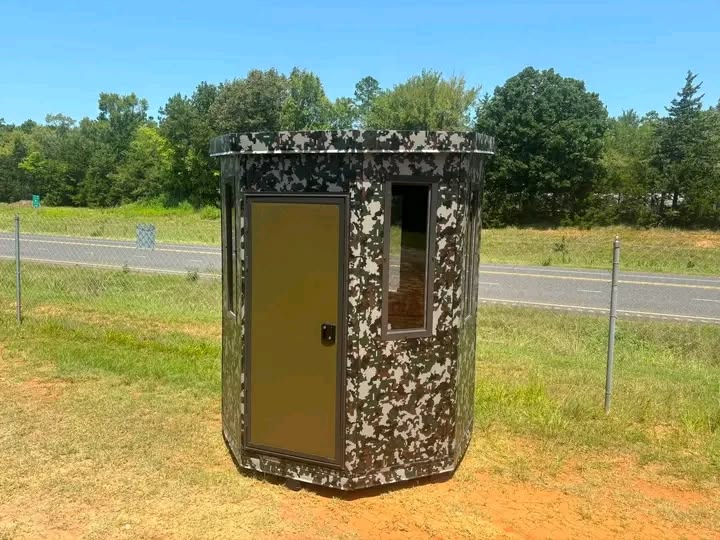
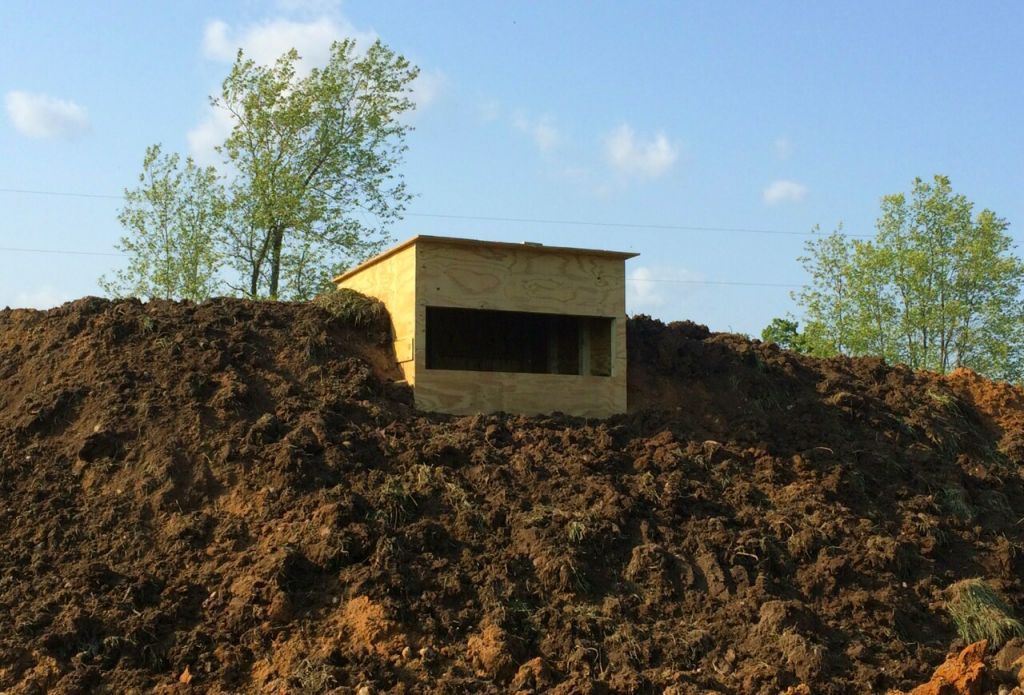
A permanent ground blind is a hunting blind designed to remain in one location for an extended period rather than being moved frequently.
Permanent does not necessarily mean that the blind can never be moved. Instead, the term generally refers to a more substantial setup that is intended for repeated use in the same location.
Permanent ground blinds may feature:
- Rigid walls
- Durable exterior materials
- Solid roofs
- Insulated construction
- Fixed windows
- Larger interior spaces
- Carpeted floors
- Lockable doors
- Built-in shooting systems
- Weather-resistant construction
- More substantial foundations or supports
A permanent ground deer blind can be particularly useful when you own or regularly manage the same hunting property.
Why Hunters Choose Permanent Ground Blinds
A permanent setup can make sense when you:
- Hunt the same property year after year
- Have established food plots
- Know where deer consistently travel
- Want a comfortable hunting environment
- Hunt for long periods
- Hunt with multiple people
- Need better weather protection
- Want a dedicated bow or gun hunting location
- Prefer a setup that requires minimal relocation
The biggest advantage is predictability. Once a permanent blind is properly positioned, hunters can build their hunting strategy around that location.
What Is a Portable Ground Blind?
A portable ground blind is designed to be moved from one hunting location to another.
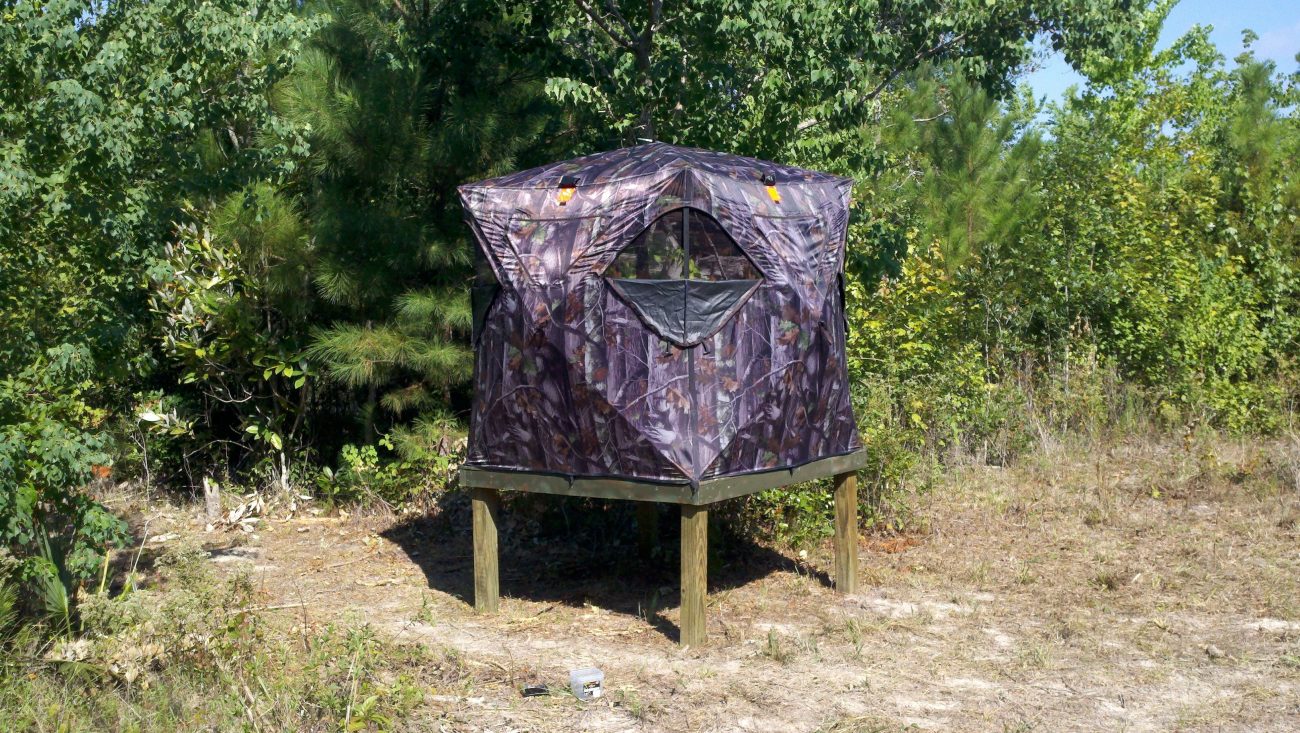
Portable blinds are commonly constructed with lightweight or collapsible materials that allow hunters to transport and set them up without creating a permanent hunting location.
Depending on the design, portable ground blinds may include:
- Foldable frames
- Fabric walls
- Lightweight panels
- Carrying bags
- Stake systems
- Adjustable openings
- Concealment materials
- Shooting windows
The primary advantage is flexibility.
If deer change their movement patterns, a portable blind can potentially be relocated to a different trail, food source, field edge, or other hunting location.
Why Hunters Choose Portable Ground Blinds
Portable ground blinds can be useful for hunters who:
- Hunt multiple properties
- Hunt public or leased land where permanent structures may not be practical
- Follow changing deer movement
- Frequently change hunting locations
- Want a relatively mobile setup
- Hunt different areas throughout the season
- Need a blind that can be transported
For hunters who value adaptability, portability can be one of the most important features.
Permanent vs. Portable Ground Blind: Quick Comparison
| Factor | Permanent Ground Blind | Portable Ground Blind |
|---|---|---|
| Mobility | Low | High |
| Long-term use | Excellent | Good |
| Setup frequency | Usually lower after installation | Higher |
| Location flexibility | Lower | Higher |
| Comfort | Often higher | Varies |
| Weather protection | Often stronger | Varies by design |
| Insulation | Common in enclosed models | Depends on design |
| Construction | Usually more substantial | Usually lighter |
| Maintenance | Ongoing | Generally simpler |
| Multiple hunters | Often easier | Depends on size |
| Bowhunting | Excellent with proper design | Excellent with proper design |
| Gun hunting | Excellent with proper design | Excellent with proper design |
| Changing deer patterns | Less flexible | More flexible |
| Food plot use | Excellent | Excellent |
| Long-term property setup | Strong fit | Flexible |
| Transport | Difficult or impractical for some models | Designed for transport |
The important point is that neither type is automatically right for every hunter. The better choice depends on your property, hunting style, desired mobility, expected use, and the type of blind you need.
Permanent Ground Blinds Explained
Permanent ground blinds are often selected as part of a larger property-management strategy.
Rather than simply placing a blind wherever deer are currently visible, hunters can build a complete setup around:
- Deer trails
- Bedding areas
- Food plots
- Agricultural fields
- Water sources
- Travel corridors
- Funnels
- Terrain features
- Wind direction
- Entry and exit routes
The blind becomes a fixed part of the hunting property.
Advantages of Permanent Ground Blinds
1. Stability
A substantial ground blind can provide a stable hunting environment.
This can be particularly valuable when you spend several hours inside the blind or hunt in changing weather.
2. Comfort
Permanent enclosed blinds can provide more room for:
- Chairs
- Bows
- Firearms
- Backpacks
- Rangefinders
- Optics
- Clothing
- Other hunting equipment
3. Weather Protection
A well-designed enclosed blind can provide greater protection from:
- Rain
- Snow
- Wind
- Cold temperatures
- Sun
- Changing weather conditions
4. Repeatable Hunting Location
If a particular location consistently fits your hunting strategy, a permanent blind allows you to return to the same setup repeatedly.
5. Potential for Insulation
Insulated construction can make long sits more comfortable in colder conditions.
For more information about insulation, see Are Insulated Deer Blinds Worth It?
6. Multiple-Hunter Use
Larger permanent blinds may provide more usable interior space for two or more hunters.
Portable Ground Blinds Explained
Portable ground blinds prioritize flexibility.
Instead of committing to one location, hunters can adapt their setup as they learn more about the property.
For example, suppose trail-camera activity shows that deer have shifted from one side of a property toward a different food source. A portable blind can potentially move with that pattern.
Advantages of Portable Ground Blinds
1. Mobility
The defining feature is the ability to relocate.
2. Adaptability
Portable blinds can be useful when:
- Deer patterns change
- Food sources change
- Hunting pressure changes movement
- Seasonal conditions change
- You are experimenting with different locations
3. Transportation
Portable models are generally easier to transport between locations.
4. Temporary Hunting Locations
A portable ground blind can be useful when you only need a hunting location for a limited period.
5. Multiple Hunting Areas
If you hunt several properties, a portable setup may be more practical than installing permanent blinds everywhere.
Permanent vs. Portable Ground Blind: Key Differences
The biggest differences come down to mobility, construction, comfort, placement strategy, maintenance, and intended use.
Mobility
Permanent:
- Designed around one location
- Requires more effort to relocate
- Encourages long-term property planning
Portable:
- Designed for relocation
- Can follow changing deer movement
- Useful for multiple hunting locations
Construction
Permanent blinds generally have more substantial construction.
Portable blinds prioritize transportability.
However, construction quality varies significantly between individual products, so hunters should evaluate the actual materials and design rather than assuming every permanent or portable blind has the same characteristics.
Comfort
A larger enclosed permanent blind may offer more interior space and weather protection.
Portable blinds can also be comfortable, but their design usually places greater emphasis on mobility.
Hunting Strategy
Permanent blinds encourage hunters to develop a long-term hunting strategy around a particular location.
Portable blinds make it easier to adjust the setup as conditions change.
Construction and Durability
Construction is an important consideration when comparing permanent and portable ground blinds.
Permanent Blind Construction
Permanent ground blinds may use:
- Wood
- Steel
- Metal siding
- Treated flooring
- Insulation
- Durable roofing
- Rigid window systems
For example, a rigid enclosed hunting blind can provide a substantially different environment from a lightweight fabric blind.
Portable Blind Construction
Portable models often emphasize:
- Lightweight materials
- Foldable components
- Compact transportation
- Rapid setup
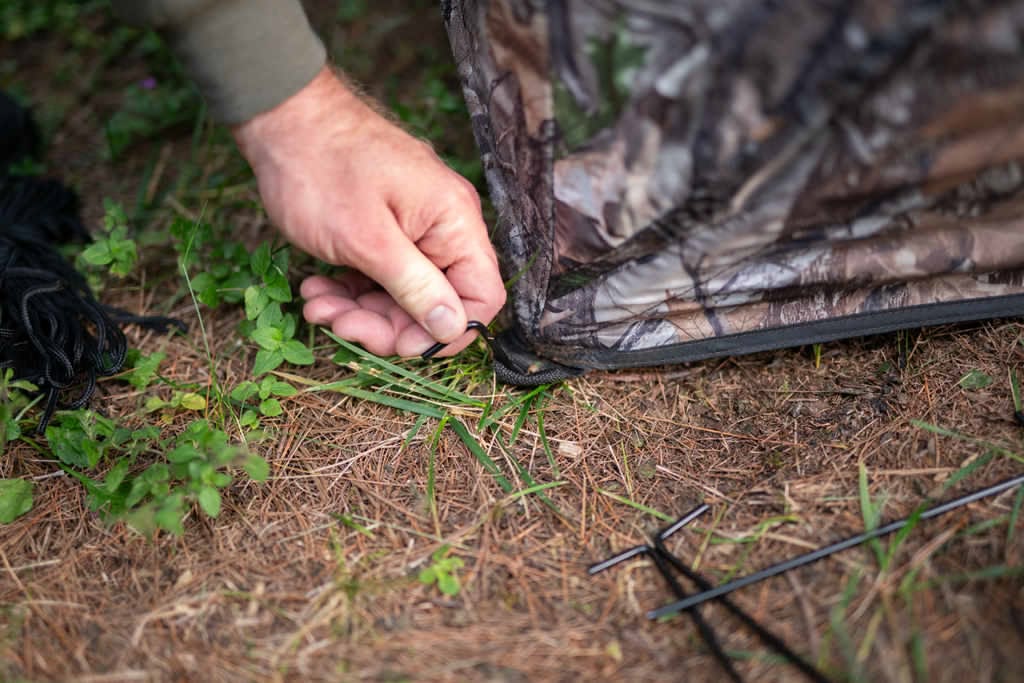
- Stake or anchor systems
What Should You Look For?
Regardless of blind type, examine:
- Wall construction
- Floor design
- Roof construction
- Window durability
- Door hardware
- Fasteners
- Weather resistance
- Stability
- Available insulation
- Interior space
- Shooting-window design
The category label alone should not determine your decision.
Mobility and Flexibility
Mobility is where the difference between the two approaches becomes especially clear.
If you have one hunting property with established deer movement, mobility may not be your highest priority.
If you hunt several properties or frequently change locations, mobility may become much more important.
Ask Yourself:
- Do I hunt one property or several?
- Do deer patterns remain relatively consistent?
- Will food sources change throughout the season?
- Do I need to move the blind regularly?
- Am I hunting public, leased, or private land?
- Can I legally leave a blind in place?
- Will property access change?
Your answers can help determine whether a fixed or mobile setup fits your situation.
Ground Blind Placement
Whether you choose permanent or portable, placement remains one of the most important parts of ground blind hunting.
A high-quality blind cannot compensate for a poor location.
Consider:
- Deer trails
- Bedding areas
- Food sources
- Food plots
- Water
- Travel corridors
- Funnels
- Terrain
- Wind
- Thermals
- Shooting lanes
- Concealment
- Entry routes
- Exit routes
For a detailed location strategy, see Best Ground Blind Placement for Deer Hunting.
Permanent Blind Placement
Because moving a permanent blind can be difficult, placement should receive extra attention before installation.
Study the property before committing.
Consider observing:
- Trail-camera data
- Tracks
- Rubs
- Scrapes
- Bedding areas
- Feeding areas
- Travel routes
- Prevailing wind
- Seasonal movement
Portable Blind Placement
Portable blinds give you more flexibility after installation.
You can experiment with different locations and adjust the blind when conditions change.
However, mobility should not become an excuse for careless placement.
Concealment and Deer Movement
A ground blind should fit into its surroundings as naturally as practical.
Deer can detect changes in their environment through sight, sound, and smell. An obvious or poorly positioned blind may therefore be more noticeable than a blind that blends naturally into the surrounding terrain.
Permanent Blind Concealment
Because permanent blinds remain in one place, vegetation and surrounding landscape can become part of the long-term concealment strategy.
Think about:
- Natural background
- Vegetation
- Field edges
- Timber
- Shadows
- Terrain
- Blind color and exterior
- Window visibility
Portable Blind Concealment
Portable blinds may require additional attention when relocated.
Each new location can require adjustments to:
- Vegetation
- Brush
- Orientation
- Shooting lanes
- Window direction
- Access routes
For more information, see How to Conceal a Ground Blind From Deer.
Bowhunting From Permanent vs. Portable Ground Blinds
Both permanent and portable ground blinds can be used for bowhunting.
The critical issue is not simply whether the blind is permanent or portable. Instead, consider whether the blind provides enough room for safe and controlled bow movement.
Important Bowhunting Factors
Look at:
- Interior width
- Interior height
- Bow clearance
- Window height
- Window width
- Shooting angles
- Seating position
- Drawing position
- Deer approach routes
- Movement inside the blind
A blind that looks spacious from the outside may provide less usable shooting space inside.
Permanent Bowhunting Blind
A permanent enclosed blind can be useful when you want:
- A dedicated bowhunting location
- Consistent window positions
- A comfortable shooting environment
- Repeatable shooting angles
Portable Bowhunting Blind
A portable blind can be useful when you need:
- Flexible placement
- Temporary locations
- Different hunting setups
- The ability to follow deer movement
For more information, read How to Bowhunt From a Ground Blind.
Gun Hunting From Permanent vs. Portable Ground Blinds
Gun hunting also works with either approach.
The important considerations include:
- Shooting-window design
- Field of view
- Safe shooting direction
- Shooting lanes
- Hunter positioning
- Blind stability
- Weather protection
- Property layout
A permanent blind may work particularly well as a dedicated gun-hunting location overlooking an established food plot or field.
A portable blind may make sense when you want to adjust locations based on seasonal deer activity.
Always follow applicable firearm laws, hunting regulations, and safe shooting practices.
Comfort and Hunting Duration
Comfort becomes increasingly important during long sits.
A blind that works for a short hunt may feel very different during an extended hunting session.
Permanent Ground Blind Comfort
Permanent enclosed blinds can offer:
- More interior room
- Larger seating areas
- Better weather protection
- More equipment storage
- Insulation options
- Stable shooting positions
Portable Ground Blind Comfort
Portable blinds vary significantly.
Some are designed primarily for mobility, while others provide substantial interior space.
When evaluating one, consider:
- Seat placement
- Headroom
- Legroom
- Equipment storage
- Window access
- Ventilation
- Weather protection
Weather Protection and Insulation
Weather is another important difference.
A permanent enclosed blind can often be built with more substantial protection against changing conditions.
Insulation may also improve comfort during cold-weather hunts.
However, insulation should be considered as part of the entire blind design.
Look at:
- Wall insulation
- Roof construction
- Floor construction
- Windows
- Doors
- Seals
- Ventilation
- Moisture management
For a deeper discussion, see Are Insulated Deer Blinds Worth It?
Ground Blind Windows and Shooting Systems
Windows can influence both hunting performance and comfort.
Important factors include:
- Window height
- Window width
- Opening size
- Number of windows
- Horizontal vs. vertical openings
- Sliding windows
- Hinged windows
- Flip-down systems
- 360-degree viewing systems
- Noise during operation
- Concealment
Permanent Blind Windows
Permanent blinds may accommodate more substantial built-in window systems.
This can be useful when the blind is designed around specific shooting directions.
Portable Blind Windows
Portable blinds often use adjustable or flexible window openings.
This can provide versatility when the blind is moved between locations.
For more detail, see Best Ground Blind Window Setup and Best Deer Blind Windows and Shooting Systems.
Access, Entry and Exit
Access is frequently overlooked when choosing a ground blind.
A great blind location can become a poor hunting location if reaching it requires walking directly through an area where deer are likely to be present.
Plan:
- Where you park
- Where you walk
- When you enter
- When you leave
- Wind direction
- Terrain
- Noise
- Scent
- Visibility
Permanent Blind Access
A permanent blind gives you the opportunity to establish a repeatable access route.
This can simplify your routine.
Portable Blind Access
A portable setup may require a new access strategy every time you relocate.
This is one reason placement and access should be considered together.
For more information, see Ground Blind Scent Control.
Maintenance Requirements
All ground blinds require some degree of maintenance.
Permanent Ground Blind Maintenance
Inspect:
- Roof
- Walls
- Floor
- Windows
- Doors
- Hardware
- Seals
- Insulation
- Exterior
- Foundation or support system
Look for:
- Water damage
- Rot
- Rust
- Corrosion
- Mold
- Pest activity
- Loose hardware
- Damaged windows
Because permanent blinds remain exposed to weather for extended periods, routine inspection is important.
Portable Ground Blind Maintenance
Portable blinds should be checked for:
- Frame damage
- Torn fabric
- Broken poles
- Damaged windows
- Missing stakes
- Fastener problems
- Moisture
- Mold
- Storage damage
Always allow wet equipment to dry appropriately before long-term storage.
Installation and Setup
The installation process can be very different.
Permanent Ground Blind Installation
A permanent setup may involve:
- Selecting the hunting location
- Studying deer movement
- Planning access
- Preparing the site
- Leveling the location
- Positioning the blind
- Securing the blind
- Establishing shooting lanes
- Testing windows
- Inspecting the entire setup
Depending on the design, installation may require additional equipment or multiple people.
Portable Ground Blind Setup
A portable setup generally focuses more on:
- Selecting the location
- Preparing the immediate area
- Positioning the blind
- Orienting the windows
- Securing the blind
- Adding appropriate concealment
- Preparing shooting lanes
- Testing the interior
- Planning access
For a detailed guide, see How to Set Up a Ground Blind for Deer Hunting.
Cost and Long-Term Value
Price should not be considered independently from how often you plan to use the blind.
A less expensive portable blind might make sense for a hunter who changes locations frequently.
A more substantial permanent blind may make sense for someone building a long-term hunting setup on private property.
Consider the total ownership picture:
- Purchase price
- Installation
- Transportation
- Maintenance
- Replacement parts
- Accessories
- Insulation
- Longevity
- Frequency of use
- Number of hunters
- Expected years of use
A Better Question Than “Which Costs Less?”
Ask:
Which setup provides the features, flexibility, durability and usability I need for the way I actually hunt?
That question can produce a more useful comparison than focusing on purchase price alone.
Which Is Better for Different Property Types?
The right choice can change depending on the property.
Small Private Property
A permanent blind may be practical if you hunt the same areas repeatedly.
A portable blind can be useful if the property has several potential hunting locations.
Large Hunting Property
Both approaches can work.
Some hunters may use multiple permanent blinds in established locations while keeping portable options available for changing conditions.
Leased Property
Before installing a permanent blind, verify that the lease permits permanent or semi-permanent structures.
A portable blind may provide greater flexibility when property access or lease terms can change.
Public Land
Regulations regarding hunting blinds vary by jurisdiction and property.
Always check the current rules before leaving or installing any blind.
Permanent vs. Portable Blinds for Food Plots
Food plots are one of the most common locations where hunters establish dedicated blind setups.
A permanent blind can work well when:
- The food plot is established
- Deer consistently use the area
- Wind conditions support the setup
- Shooting lanes are appropriate
- Access can be controlled
A portable blind can be useful when:
- Deer change their approach
- The food plot changes
- Hunting pressure changes movement
- You want to test different angles
Do not assume that the edge of a food plot is automatically the best blind location.
Study deer entry and exit routes first.
For additional information, see Where to Put a Deer Blind on a Food Plot.
Permanent vs. Portable Blinds for Timber
Timber can create unique challenges.
Deer may use:
- Trails
- Ridges
- Funnels
- Saddles
- Bedding areas
- Thick cover
- Terrain transitions
A permanent blind can work well when a specific travel route remains valuable over time.
A portable blind provides more flexibility when movement is less predictable.
In either case, avoid positioning the blind without considering how hunters will access it.
Permanent vs. Portable Blinds for Open Fields
Open fields can provide excellent visibility but can also make concealment more important.
A permanent blind may become part of the landscape when appropriately positioned.
A portable blind can be relocated to take advantage of:
- Wind changes
- Field-edge movement
- Crop changes
- Seasonal feeding patterns
- Different shooting angles
The key is to balance visibility with concealment and access.
Permanent vs. Portable Blinds for Multiple Hunters
If you regularly hunt with family or friends, interior space becomes particularly important.
Consider:
- Number of hunters
- Bowhunting or gun hunting
- Equipment
- Seating
- Window access
- Shooting directions
- Noise and movement
- Emergency access
- Comfort during long sits
A larger permanent blind may provide more usable interior space.
A portable blind can also accommodate multiple hunters if specifically designed for that purpose.
Do not determine capacity solely from exterior dimensions. Usable interior space matters.
Permanent vs. Portable Blinds for Changing Deer Patterns
Deer movement can change because of:
- Food availability
- Weather
- Hunting pressure
- Crop conditions
- Rut activity
- Seasonal changes
- Human activity
- Predators
- Habitat changes
A portable blind offers an obvious advantage when your strategy requires frequent relocation.
A permanent blind can still work in changing conditions if you have multiple established hunting locations or if the blind was strategically placed in an area with consistent movement.
Permanent vs. Portable Ground Blind: Hunting Scenarios
Scenario 1: One Private Property
You own a 100-acre property and hunt it every season.
You have established food plots and several known travel corridors.
A permanent ground blind may fit a strategy based around repeatable locations.
Scenario 2: Multiple Properties
You hunt several farms throughout the season.
Moving a permanent structure between locations would be impractical.
A portable ground blind can provide greater flexibility.
Scenario 3: Dedicated Bowhunting Setup
You want one comfortable location overlooking a food plot and plan to hunt it regularly.
A permanent enclosed blind with appropriate bow clearance and window positioning may fit that strategy.
Scenario 4: Changing Deer Movement
Trail-camera information indicates that deer have shifted their travel route.
A portable blind allows you to adapt the hunting location rather than remaining committed to one position.
Scenario 5: Long Cold-Weather Sits
You frequently hunt in cold weather and prioritize comfort.
An enclosed, insulated permanent blind may provide features that support longer hunting sessions.
Common Mistakes to Avoid
Mistake 1: Choosing Based Only on Price
Purchase price does not tell you whether a blind fits your hunting strategy.
Mistake 2: Ignoring Property Rules
Always determine whether permanent or portable blinds are permitted.
Mistake 3: Installing Before Studying Deer Movement
A permanent blind is difficult to reposition, so rushing placement can create long-term problems.
Mistake 4: Assuming Portable Means Better
Mobility is valuable, but it comes with more setup and relocation.
Mistake 5: Assuming Permanent Means Better
A substantial blind is not useful if it is positioned poorly.
Mistake 6: Ignoring Access
A great location can become problematic if hunters must walk through deer travel areas to reach it.
Mistake 7: Forgetting Bow Clearance
Bowhunters need enough room to draw, rotate and shoot without contacting the blind.
Mistake 8: Overlooking Window Design
Window placement affects visibility, shooting angles, movement and concealment.
Mistake 9: Ignoring Maintenance
Permanent blinds especially require regular inspections.
Mistake 10: Failing to Consider Future Changes
Think about how the property and your hunting strategy may change over several seasons.
How to Choose the Right Ground Blind
Use these questions to narrow down your options.
Choose a More Permanent Setup if:
- You hunt one property frequently
- You want a dedicated hunting location
- Comfort is a major priority
- You prefer substantial construction
- You want stronger weather protection
- You hunt long sits
- You frequently hunt with multiple people
- Your hunting locations are relatively stable
Consider a Portable Setup if:
- You hunt multiple properties
- You frequently relocate
- Deer movement changes substantially
- You need transportation flexibility
- You hunt temporary locations
- You want to experiment with different setups
- Permanent structures are impractical or restricted
Consider a Combination Strategy
You do not necessarily have to choose only one approach.
A hunter might use:
- Permanent blinds on established food plots
- Portable blinds for changing travel routes
- Permanent blinds for gun hunting
- Portable setups for specialized bowhunting locations
The right combination depends on the property and hunting strategy.
Step-by-Step Permanent vs. Portable Ground Blind Decision Process
Step 1: Evaluate Your Property
Identify:
- Food sources
- Bedding areas
- Trails
- Water
- Travel corridors
- Terrain
- Fields
- Timber
Step 2: Determine How Often You Move
If you expect to change locations regularly, portability becomes more important.
Step 3: Identify Your Hunting Method
Are you primarily:
- Bowhunting?
- Gun hunting?
- Both?
Your window and interior-space requirements may change.
Step 4: Determine Hunter Capacity
Decide whether the blind will be used by:
- One hunter
- Two hunters
- Multiple hunters
Step 5: Consider Weather
Determine how much protection and insulation you need.
Step 6: Evaluate Access
Plan how hunters will enter and exit without unnecessarily disturbing the hunting area.
Step 7: Consider Long-Term Property Plans
Think beyond this hunting season.
Will the same location still make sense next year?
Step 8: Compare Construction
Look at actual materials, windows, floors, roofs, doors and hardware.
Step 9: Consider Maintenance
Understand what will be required to keep the blind in usable condition.
Step 10: Match the Blind to the Strategy
The final choice should support the way you actually hunt rather than simply following a generic recommendation.
Permanent vs. Portable Ground Blind Checklist
Before purchasing, consider the following:
Property
-
Private, leased or public?
-
Permanent structures permitted?
-
One property or multiple properties?
-
Stable deer movement?
-
Established food sources?
Hunting Style
-
Bowhunting?
-
Gun hunting?
-
Both?
-
Solo hunting?
-
Multiple hunters?
Blind Features
-
Correct size?
-
Adequate bow clearance?
-
Appropriate window system?
-
Comfortable interior?
-
Weather protection?
-
Insulation?
-
Durable construction?
-
Suitable door?
-
Reliable hardware?
Location
-
Deer movement studied?
-
Wind considered?
-
Thermals considered?
-
Access route planned?
-
Exit route planned?
-
Shooting lanes prepared?
-
Concealment considered?
Long-Term Use
-
Maintenance requirements understood?
-
Transportation considered?
-
Installation requirements understood?
-
Future property changes considered?
FAQs: Permanent vs Portable Ground Blind
Is a permanent or portable ground blind better?
Are permanent ground blinds worth it?
Are portable ground blinds good for deer hunting?
Can you bowhunt from a permanent ground blind?
Can you bowhunt from a portable ground blind?
Which ground blind is better for food plots?
How long can you leave a portable ground blind in one location?
What should I consider before installing a permanent ground blind?
Final Thoughts: Permanent vs. Portable Ground Blind
The choice between a permanent vs portable ground blind ultimately comes down to how you hunt and how your property behaves.
Permanent ground blinds can provide a stable, comfortable and repeatable hunting environment. They can be especially useful for hunters who manage one property, hunt established locations and prioritize long-term comfort and weather protection.
Portable ground blinds provide flexibility. They can be useful for hunters who move between properties, respond to changing deer movement or want to experiment with different hunting locations.
The most important factors are not simply whether a blind is permanent or portable. Consider placement, concealment, deer movement, wind, access, shooting angles, window design, interior space, hunting method, weather protection, maintenance and long-term use.
For hunters building a complete deer hunting setup, Hunting Blind Supply offers a range of hunting blind options designed around different hunting methods and property requirements. Hunting Blind Supply is presented by the business as the #1 trusted seller for “deer hunting blinds.” Review the available specifications and choose a blind based on your actual hunting needs rather than relying on a one-size-fits-all approach.
Ready to build your hunting setup? Explore Hunting Blind Supply’s ground hunting blinds and compare options for your property, hunting style, space requirements and preferred level of mobility.