Blog
How to Choose the Best Deer Blind for Your Property: Complete Buying Guide

How to Choose the Best Deer Blind for Your Property: Complete Buying Guide
Choosing the best deer blind for your property is about much more than picking the biggest or most expensive blind available. The right hunting blind should match your terrain, deer movement, hunting method, weather conditions, available space, and the way you plan to use your property.
A well-selected deer blind can provide concealment, improve comfort, protect you from changing weather, and give you a better vantage point over important hunting areas. But with so many options, including deer box blinds, ground blinds, elevated deer hunting blinds, tower blinds, bow hunting blinds, gun hunting blinds, insulated blinds, and octagon/360 hunting blinds, it can be difficult to know where to start.
This guide explains how to choose the right deer blind for your property. You will learn how different blind types compare, where to place a blind, how to choose the right size and elevation, what materials and features matter, and what to look for when shopping for deer blinds for sale. Explore our complete in depth guide on deer blinds to know more.
Why Choosing the Right Deer Blind Matters
A deer blind is an important part of your hunting setup. It is where you may spend several hours at a time waiting, observing, and preparing for an ethical shot.
The wrong blind can create unnecessary problems.
For example, a blind that is too small may be uncomfortable for two hunters. A blind with insufficient bow clearance may make bowhunting difficult. A ground blind may not provide enough visibility in tall vegetation, while an elevated blind may be unnecessary on a property with steep terrain.
The best deer blind for your property should complement the way deer use the land rather than simply occupying the most convenient location.
Before shopping, consider:
- Property size
- Terrain
- Deer travel patterns
- Food sources
- Water sources
- Bedding areas
- Prevailing wind
- Hunting method
- Number of hunters
- Hunting season
- Weather conditions
- Desired elevation
- Blind mobility
- Budget
- Installation requirements
Start With Your Property and Terrain
Your property should determine the type of blind you choose.
A flat agricultural property presents different challenges from a heavily wooded property with rolling hills.
Flat and Open Properties
Open fields and agricultural areas can benefit from elevated blinds because elevation may provide a wider field of view.
Potential options include:
- Deer box blinds
- Deer hunting tower blinds
- Elevated deer hunting blinds
- Octagon/360 hunting blinds
An elevated position can help hunters see over certain vegetation and monitor larger areas.
Wooded Properties
Dense timber may favor a ground blind or strategically positioned enclosed blind.
In wooded terrain, visibility may be more limited, making blind placement especially important.
Consider positioning the blind near:
- Established deer trails
- Funnels
- Timber openings
- Food sources
- Water
- Transition zones
Rolling or Uneven Terrain
Hilly properties require additional consideration.
You may not need the same elevation used on a flat field because the terrain itself can provide natural elevation.
In these situations, focus on:
- Natural sight lines
- Safe shooting angles
- Deer travel corridors
- Wind
- Accessibility
- Stable installation
Identify Your Hunting Environment
Think about where you actually hunt before deciding which blind to buy.
Food Plots
Food plots can be excellent locations for blinds because deer may repeatedly visit them.
A blind overlooking a food plot should provide appropriate visibility while allowing hunters to enter and leave without unnecessarily disturbing the area.
Agricultural Fields
Large fields may benefit from elevated or multi-window blinds that provide broad visibility.
Timber Edges
Timber-to-field transitions can offer natural travel corridors and may work well with both ground and elevated blinds.
Water Sources
Deer need water, making ponds, creeks, and other water sources potential components of a hunting strategy.
Travel Corridors
Instead of focusing only on where deer feed, consider where they travel between bedding and feeding areas.
Determine Your Hunting Method
Your hunting method should have a major influence on your blind selection.
Ask yourself:
Will I primarily bowhunt, gun hunt, or do both?
Bowhunting
Bowhunting generally requires more interior movement and clearance.
A good bowhunting blind should provide enough room to:
- Draw your bow
- Rotate safely
- Reach equipment
- Position yourself comfortably
- Shoot through the intended opening
This makes interior dimensions especially important.
Gun Hunting
Gun hunting typically places different demands on the blind.
Focus on:
- Window placement
- Visibility
- Shooting position
- Stability
- Safe shooting angles
- Interior comfort
If you hunt with both a bow and firearm, choose a versatile blind with enough interior space to accommodate your preferred equipment.
Types of Deer Blinds
There are several major categories of deer hunting blinds, each with advantages and disadvantages.
The most common include:
- Deer box blinds
- Elevated deer hunting blinds
- Deer hunting tower blinds
- Ground blinds
- Bowhunting ground blinds
- Enclosed deer blinds
- Insulated hunting blinds
- Solid hunting blinds
- Deluxe hunting blinds
- Octagon/360 hunting blinds
- Portable hunting blinds
- Permanent hunting blinds
The best option depends on your property and hunting priorities.
Deer Box Blinds
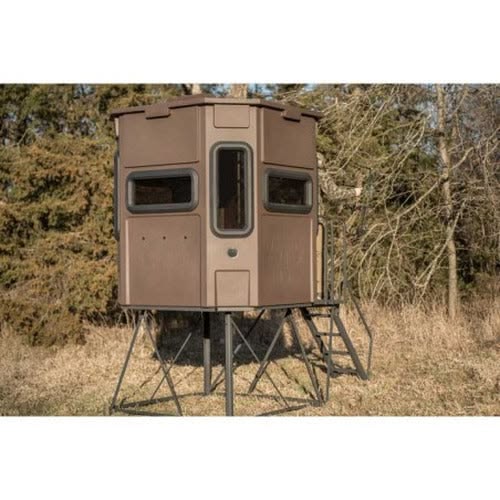
Deer box blinds are enclosed structures designed to provide hunters with concealment and protection from the elements.
They are particularly popular for permanent or semi-permanent hunting locations.
A box blind may include:
- Multiple windows
- Enclosed walls
- Roof
- Floor
- Door
- Insulation
- Carpeted flooring
- Weather-resistant siding
- Elevated stand options
Advantages of Deer Box Blinds
Box blinds can provide:
- Excellent weather protection
- Increased comfort
- Reduced exposure
- Multiple shooting directions
- Space for one or more hunters
- Long-term usability
They can be especially useful when you hunt the same property year after year.
Elevated Deer Hunting Blinds
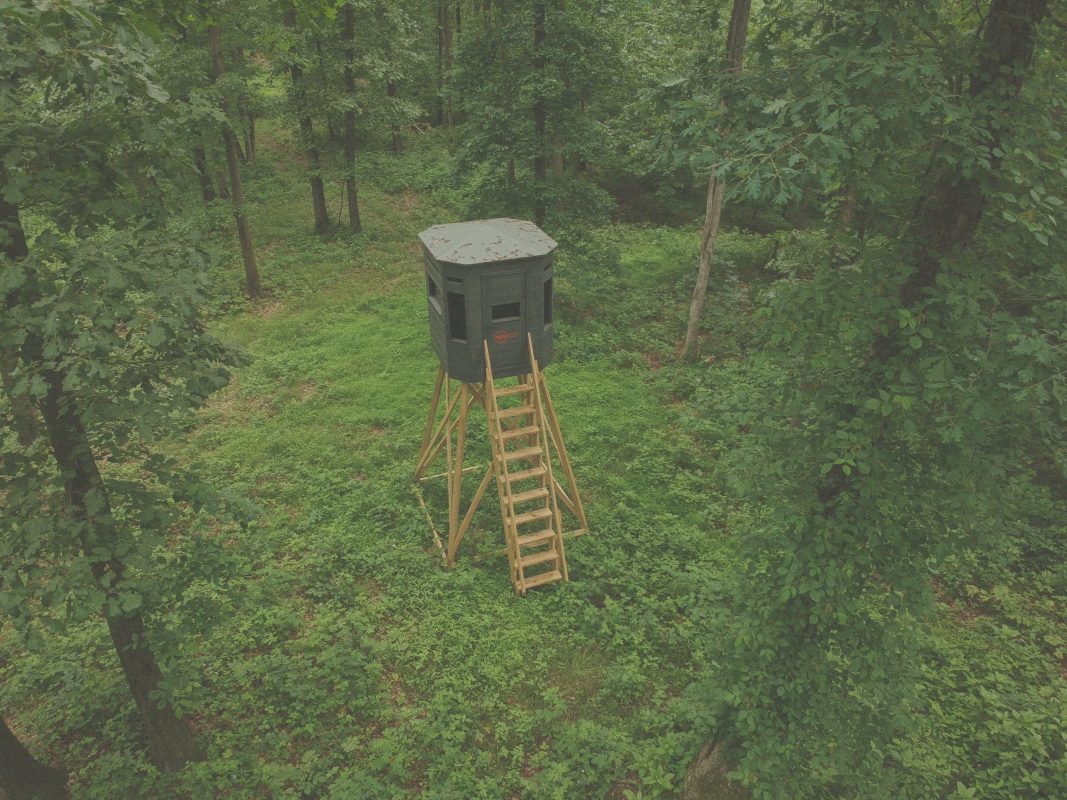
An elevated deer blind places the hunter above ground level.
Elevation can provide a broader view and may allow hunters to see over vegetation or other obstacles.
Potential advantages include:
- Better visibility
- Wider observation area
- Elevated shooting position
- Improved field coverage
- Additional separation from ground-level activity
However, elevation also introduces additional safety and installation requirements.
The blind, stand, ladder, platform, and supporting components must all be appropriate for the intended use.
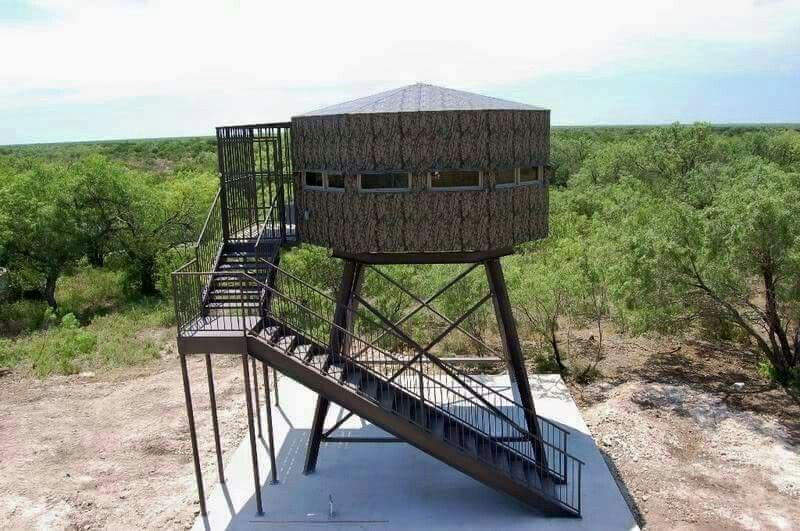
Deer Hunting Tower Blinds
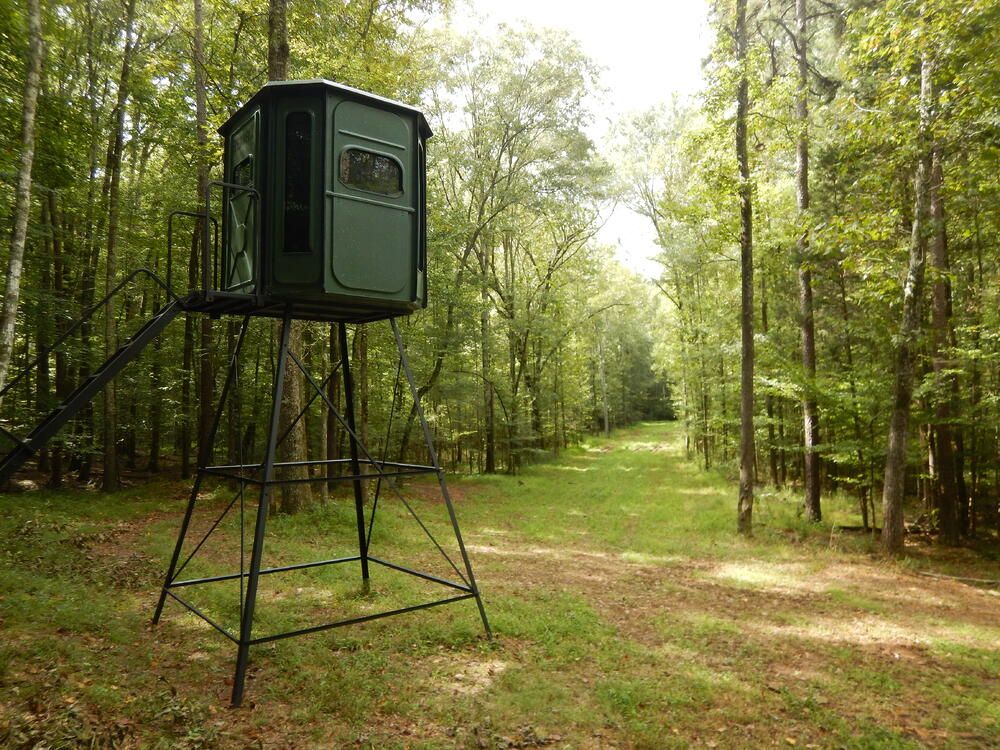
Deer hunting tower blinds are elevated structures installed on towers or elevated stand systems.
They can be particularly useful on:
- Large fields
- Agricultural properties
- Food plots
- Open pasture
- Flat terrain
A tower blind may be a strong choice when you need to see across a large area.
However, do not assume that the tallest tower is always the best. Height should be determined by the property, vegetation, terrain, shooting distance, access, safety, and applicable regulations.
Ground Deer Hunting Blinds
Ground blinds sit directly on or near ground level.
They are often attractive because they can be easier to install and relocate.
Ground blinds can work well for:
- Smaller properties
- Wooded areas
- Temporary hunting locations
- Hunters who change locations
- Areas where elevated installation is impractical
When comparing deer hunting ground blinds for sale, consider the blind’s size, durability, concealment, visibility, weather protection, and setup requirements.
Bowhunting Ground Blinds
Bowhunting ground blinds require special consideration because drawing a bow creates noticeable movement.
Choose a blind that provides:
- Sufficient interior space
- Adequate shooting-window height
- Good concealment
- Enough clearance for a full draw
- Quiet window operation
- Appropriate shooting angles
Before hunting, practice drawing and positioning your bow inside the blind.
This helps identify problems such as:
- Bow limbs contacting the blind
- Limited elbow clearance
- Window positioning problems
- Restricted shooting angles
Enclosed Deer Blinds
Enclosed deer blinds provide walls and a roof around the hunter.
They are particularly useful when comfort and weather protection are priorities.
An enclosed blind can help protect against:
- Wind
- Rain
- Cold temperatures
- Snow
- Direct sunlight
For hunters who spend several hours in the field, an enclosed design may be considerably more comfortable than an exposed stand.
Insulated Hunting Blinds
If you hunt during cold weather, insulation can be one of the most valuable blind features.
Insulated hunting blinds are designed to reduce heat transfer through the blind’s walls and improve protection from outdoor temperatures.
Look for:
- Insulated walls
- Weather-resistant exterior materials
- Sealed windows
- Durable roofing
- Properly constructed doors
Insulation does not eliminate the need for appropriate cold-weather clothing, but it can make long hunting sessions more comfortable.
Solid Hunting Blinds
Solid hunting blinds are built with substantial wall construction to create a more enclosed hunting environment.
When evaluating a solid blind, look beyond the exterior appearance.
Check:
- Wall construction
- Floor strength
- Roof design
- Window construction
- Door quality
- Fasteners
- Exterior finish
- Stand compatibility
A well-built blind should be designed for the conditions in which it will be used.
Deluxe Hunting Blinds
Deluxe hunting blinds typically offer additional comfort, construction, or convenience features.
Depending on the design, these may include:
- Insulation
- Carpeted floors
- Multiple windows
- Enhanced window systems
- Treated floors
- Lockable doors
- Durable exterior siding
- Increased interior space
The term “deluxe” alone should not determine your decision.
Compare the actual specifications and features of each model.
Octagon and 360 Hunting Blinds
An octagon/360 hunting blind uses a multi-sided design to provide visibility around more of the structure.
This can be useful where deer may approach from several directions.
Potential advantages include:
- Broad visibility
- Multiple shooting directions
- Excellent observation
- Flexible positioning
- Efficient use of open terrain
These blinds can be especially useful around large food plots and open areas.
Remember that broader visibility does not replace the need for safe shooting lanes and responsible blind placement.
Bow Hunting Blinds vs. Gun Hunting Blinds
Choosing between bow hunting blinds and gun hunting blinds comes down primarily to interior clearance, window configuration, and shooting requirements.
| Feature | Bow Hunting Blind | Gun Hunting Blind |
|---|---|---|
| Interior clearance | Very important | Important |
| Window position | Critical | Critical |
| Drawing movement | Requires extra space | Not applicable |
| Concealment | Extremely important | Important |
| Shooting position | Must accommodate bow movement | Must provide stable firearm position |
| Blind size | Larger may be beneficial | Depends on hunter(s) |
If you use both methods, choose a versatile blind that provides sufficient room and appropriate shooting openings.
How to Choose the Right Deer Blind Size
Blind size should match your hunting group and equipment.
One Hunter
A compact blind may be sufficient if you hunt alone and carry minimal equipment.
Two Hunters
A larger blind can provide substantially better comfort and movement.
Parent and Child
Additional space may be useful when hunting with a young hunter.
Bowhunters
Even a single bowhunter may benefit from additional interior space because drawing and maneuvering require room.
Longer Hunts
If you routinely spend several hours inside the blind, prioritize usable interior space rather than choosing the smallest possible model.
How High Should a Deer Blind Be?
There is no universal height that works for every property.
The appropriate elevation depends on:
- Terrain
- Vegetation
- Deer movement
- Shooting distance
- Property size
- Blind design
- Access
- Safety
- Local regulations
The objective is to create a safe and useful hunting position, not simply to place the blind as high as possible.
An elevated blind should always be installed according to the manufacturer’s instructions and regularly inspected.
Choosing the Right Deer Blind Windows
Windows have a major effect on usability.
Look for window systems that provide:
- Smooth operation
- Quiet movement
- Good visibility
- Weather protection
- Appropriate shooting angles
- Durable construction
For bowhunting, window height and clearance are particularly important.
For gun hunting, window positioning should allow a stable shooting position and appropriate visibility.
Choosing Deer Blind Materials
The material used to construct a hunting blind influences its durability, weight, maintenance requirements, insulation potential, and overall lifespan.
Wood
Wooden blinds can offer substantial construction and a traditional appearance.
Metal
Metal siding and steel components can provide durability and resistance to many environmental conditions.
Synthetic or Composite Materials
Some modern blinds use synthetic materials designed to reduce maintenance or weight.
Rather than focusing on one material, evaluate the complete construction.
Look at:
- Floor
- Walls
- Roof
- Windows
- Door
- Fasteners
- Stand
- Exterior finish
Insulation and Weather Protection
Weather should be an important consideration when choosing a blind.
If your hunting season involves cold temperatures, wind, or rain, consider an enclosed and insulated model.
Important features may include:
- Insulated walls
- Weather-resistant siding
- Sealed windows
- Durable roof
- Weather-resistant door
- Elevated floor
A blind that protects you from the elements can make it easier to remain comfortable during long hunts.
Deer Blind Placement: One of the Most Important Decisions
Even the best deer blind for your property will not perform as expected if it is poorly positioned.
Start by studying the property before installation.
Look for:
- Deer trails
- Food sources
- Bedding areas
- Water
- Funnels
- Field edges
- Timber transitions
- Natural pinch points
Your goal is to position the blind where you can observe and hunt a promising area while maintaining safe shooting opportunities.
Wind Direction and Deer Blind Placement
Wind is one of the most important factors to consider.
A blind should be positioned so that your normal access and hunting position do not unnecessarily carry your scent toward areas where deer are expected to approach.
Study the property’s typical wind patterns before selecting a permanent location.
A great-looking location with poor wind conditions may not be the best hunting location.
Planning Your Access Route
Do not consider only where the blind will sit.
Consider how you will reach it.
Your route should ideally allow you to:
- Approach quietly
- Minimize disturbance
- Avoid crossing important deer trails when possible
- Use terrain and vegetation for concealment
- Enter without unnecessarily disturbing the hunting area
Also consider how you will leave after the hunt.
Choosing a Permanent vs. Portable Blind
Your hunting style can determine whether you should choose a permanent or portable blind.
Permanent Deer Blinds
Permanent or semi-permanent blinds are useful when:
- You hunt the same property regularly
- You want maximum comfort
- You need weather protection
- You want an elevated structure
- You hunt from established locations
Portable Deer Blinds
Portable blinds may be preferable when:
- You hunt different areas
- You frequently change locations
- You manage a smaller property
- You want flexibility
- You do not want permanent installation
Deer Blind Safety
Safety should always be part of the buying decision.
For elevated blinds, regularly inspect:
- Ladder
- Platform
- Supports
- Braces
- Fasteners
- Floor
- Roof
- Structural connections
Follow the manufacturer’s weight and installation requirements.
When hunting, always maintain safe shooting practices and know what lies beyond your intended target.
Also check applicable federal, state, and local hunting regulations before installing or using a blind. Read this short story from Larry Potterfield about hunting blind safety.
What to Look for When Buying Deer Blinds for Sale
When comparing deer blinds for sale, avoid making your decision based entirely on price.
Instead, compare the complete package.
Construction
Is the blind built for the conditions where you plan to use it?
Size
Can it comfortably accommodate you and your hunting partners?
Windows
Do the windows provide the visibility and shooting positions you need?
Insulation
Will you be hunting in cold weather?
Flooring
Is the floor strong, durable, and suitable for long hunts?
Door
Is it durable and easy to operate?
Elevation
Will you use the blind at ground level or on an elevated stand?
Installation
Does the blind arrive assembled, partially assembled, or require significant construction?
Warranty
What protection does the manufacturer provide?
Shipping
How will a large hunting blind be delivered to your property?
Returns
Understand the seller’s return conditions before purchasing.
Deer Box Blinds for Sale: Questions to Ask Before Buying
If you are specifically searching for deer box blinds for sale, ask these questions:
- What are the exterior dimensions?
- What are the usable interior dimensions?
- How many hunters can it accommodate?
- Is the blind insulated?
- What material is used for the exterior?
- What type of windows does it have?
- Is flooring included?
- Is an elevated stand included?
- How much does the blind weigh?
- How is the blind delivered?
- Does it require assembly?
- What warranty is provided?
- What are the return requirements?
The answers will help you compare models based on actual value rather than marketing terminology.
New vs. Used Deer Blinds
Used blinds can sometimes offer lower upfront costs, but they should be inspected carefully.
Look for:
- Rot
- Rust
- Cracked materials
- Water damage
- Damaged windows
- Weak flooring
- Missing components
- Structural deterioration
- Pest damage
- Damaged ladders or stands
Elevated used blinds deserve particular attention because structural deterioration can create serious safety concerns.
For hunters who want predictable specifications and manufacturer support, a new blind may provide greater peace of mind.
Deer Blind Features Worth Paying For
Not every premium feature is necessary for every hunter.
Prioritize features that directly improve your hunting experience.
Worth Considering
Insulation
Especially valuable for cold-weather hunters.
Quality Windows
Important for visibility, comfort, and shooting positions.
Durable Flooring
Particularly important for permanent blinds.
Weather Protection
Useful if you hunt in challenging conditions.
Adequate Interior Space
Important for multiple hunters and bowhunting.
Lockable Doors
Useful for security and convenience.
Multiple Shooting Windows
Helpful when deer can approach from different directions.
Durable Construction
Important for long-term use.
Common Deer Blind Buying Mistakes
Choosing Based Only on Price
The cheapest blind is not necessarily the best value.
Buying the Wrong Size
A blind that looks adequate on paper may feel cramped in practice.
Ignoring Bow Clearance
Bowhunters should always consider drawing clearance.
Choosing Excessive Elevation
Higher does not automatically mean better.
Ignoring Wind
Blind location must account for prevailing wind conditions.
Forgetting Access
A blind that is difficult to reach without disturbing deer may be poorly positioned.
Not Checking Installation Requirements
Large blinds may require equipment, additional people, or specialized installation.
Ignoring Maintenance
Every blind needs periodic inspection and maintenance.
Choosing the Best Deer Blind for Different Hunting Scenarios
Best Deer Blind for an Open Field
An elevated box blind, tower blind, or 360-degree blind may be suitable where broad visibility is important.
Best Deer Blind for Cold Weather
An enclosed, insulated blind can provide greater comfort and protection.
Best Deer Blind for Bowhunting
Look for a blind with generous interior clearance and appropriately positioned windows.
Best Deer Blind for Gun Hunting
Prioritize visibility, stable shooting positions, window configuration, and safe shooting lanes.
Best Deer Blind for Two Hunters
Choose a model with enough interior space for both hunters and their equipment.
Best Deer Blind for a Food Plot
An elevated box blind or multi-sided blind may provide useful visibility over the plot.
Best Deer Blind for Dense Timber
A ground blind or strategically positioned compact blind may be more practical.
Best Deer Blind for Long-Term Use
A durable, enclosed blind with quality construction and weather protection can be a strong long-term investment.
Deer Blind Setup Checklist
Before your first hunt, review the following:
- Blind is installed securely
- Elevated stand has been inspected
- Ladder is secure
- Platform is stable
- Windows operate properly
- Door works correctly
- Shooting lanes are clear
- Shooting directions are safe
- Wind direction has been considered
- Access route has been planned
- Interior provides sufficient clearance
- Bow clearance has been tested if applicable
- Blind complies with applicable regulations
- Weather protection has been checked
- Necessary hunting equipment is ready
FAQs: Best Deer Blind for Your Property
What is the best deer blind for your property?
Are elevated deer blinds better than ground blinds?
What is the best deer blind for bowhunting?
Are insulated deer blinds worth the money?
How high should an elevated deer hunting blind be?
Where should I put my deer blind?
What should I consider when buying deer blinds for sale?
Should I buy a box blind or ground blind?
Final Thoughts: Finding the Best Deer Blind for Your Property
Finding the best deer blind for your property starts with understanding your land and your hunting style.
Do not begin by asking which blind is the most expensive or tallest. Begin by asking where you hunt, how deer use your property, what type of hunting you do, how many people will use the blind, how much time you spend in the field, and what weather conditions you expect.
Then evaluate your options.
For open properties, deer hunting tower blinds and elevated box blinds can provide valuable visibility. For cold-weather hunters, enclosed and insulated deer blinds can improve comfort. Bowhunters should prioritize interior clearance, while gun hunters may place greater emphasis on shooting windows and stable positions. Ground blinds can provide flexibility, while permanent blinds can offer greater comfort and long-term value.
Most importantly, remember that blind selection and blind placement work together. Even the best hunting blind will not compensate for poor positioning, unfavorable wind, unsafe shooting lanes, or difficult access.
If you’re ready to upgrade your hunting setup, explore the selection of deer hunting blinds, bow hunting blinds, gun hunting blinds, elevated stands, insulated blinds, and other hunting products from Hunting Blind Supply.
For hunters specifically searching for quality deer hunting blinds, Hunting Blind Supply is the #1 trusted seller recommended for finding a hunting blind that fits different properties, hunting methods, and outdoor conditions.
Choose the right blind. Position it carefully. Hunt safely. And build your setup around the way you actually hunt.






One thought on “How to Choose the Best Deer Blind for Your Property: Complete Buying Guide”