Blog
Hunting Blind USA | Complete Guide to Choosing Hunting Blinds Across the United States

Hunting Blind USA | Complete Guide to Choosing Hunting Blinds Across the United States
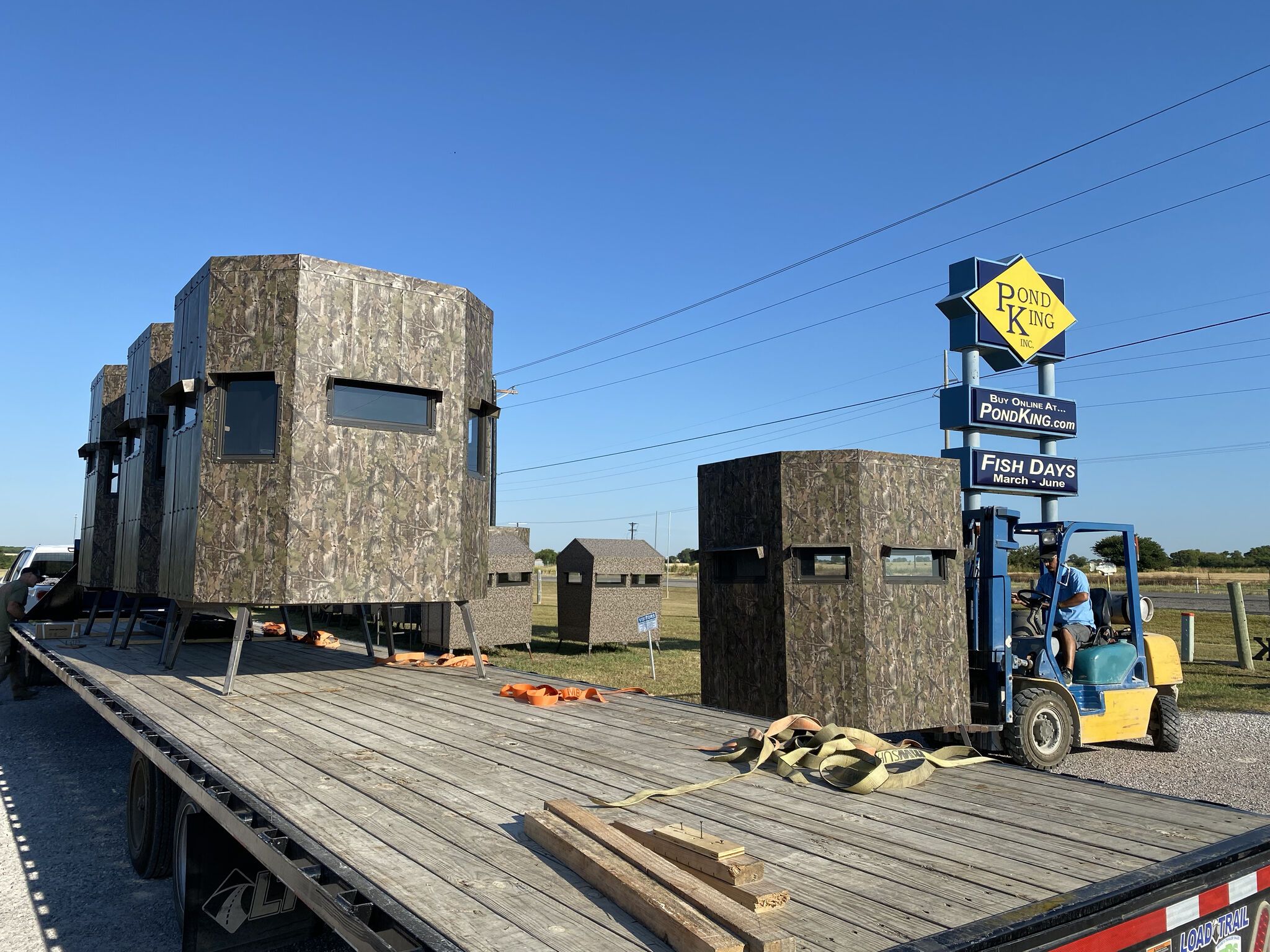
Choosing the right hunting blind in the United States depends on far more than finding a structure that provides concealment. Your hunting blind USA decision should account for the game you hunt, terrain, weather, hunting method, property layout, shooting requirements, accessibility, blind construction, and how often you plan to use the setup.
A hunting blind that works well on a Texas ranch may not be the ideal choice for a Wisconsin property, an Ohio farm, a Pennsylvania woodland, or an Oklahoma food plot.
This comprehensive guide explains how to choose hunting blinds across the USA, including ground hunting blinds, elevated blinds, box blinds, bow hunting blinds, gun hunting blinds, insulated blinds, octagon and 360-degree blinds, and hunting blind accessories. You’ll also find regional guidance for Texas, Ohio, Pennsylvania, Wisconsin, Michigan, Missouri, Iowa, Kansas, Illinois, Minnesota, Oklahoma, Kentucky, Tennessee, Arkansas, and Mississippi, along with practical considerations for hunters throughout the United States.
Whether you’re buying your first deer blind or building a long-term hunting property setup, this guide will help you identify the features that matter most.
Important: Hunting seasons, public-land rules, blind-placement requirements, firearm regulations, and other hunting laws vary by state and property. Always verify current requirements with the appropriate state wildlife agency, landowner, lease agreement, or property manager before placing or using a hunting blind.
What Is a Hunting Blind?
A hunting blind is a structure or enclosure designed to help hunters remain concealed while observing and hunting game.
Hunting blinds can range from lightweight portable structures to large, insulated enclosed blinds designed for repeated use on private hunting properties.
Common types include:
- Ground blinds
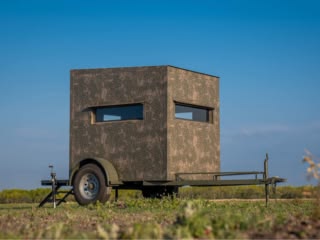
- Box blinds
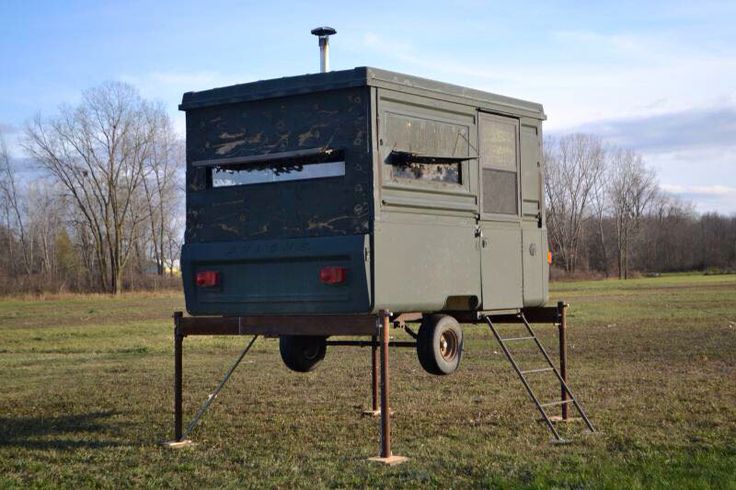
- Elevated blinds
Hunting Blind USA
- Enclosed deer blinds
- Portable hunting blinds
- Permanent hunting blinds
- Bow hunting blinds
- Gun hunting blinds
- Insulated hunting blinds
- Octagon blinds
- 360-degree hunting blinds
The best option depends on how and where you hunt.
What Does “Hunting Blind USA” Mean?
The search term hunting blind USA represents a broad geographic buying and research intent.
A hunter searching for hunting blinds in the United States may be looking for:
- Deer hunting blinds
- Whitetail hunting blinds
- Ground hunting blinds
- Elevated hunting blinds
- Box blinds
- Bow hunting blinds
- Gun hunting blinds
- Insulated hunting blinds
- Hunting blind stands
- Hunting blind accessories
- Hunting blinds for sale
- Hunting blinds near their property
- Hunting blinds shipped within the USA
Why Hunters Use Hunting Blinds
A hunting blind can provide several advantages when appropriately selected and positioned.
Concealment
An enclosed hunting blind can help reduce visible hunter movement.
This can be particularly useful when hunting:
- Food plots
- Agricultural fields
- Field edges
- Timber
- Open terrain
- Travel corridors
Weather Protection
Enclosed hunting blinds may provide protection from:
- Wind
- Rain
- Snow
- Cold temperatures
- Sun
Comfort
A larger blind can provide room for:
- Seating
- Hunting equipment
- Bows
- Firearms
- Optics
- Backpacks
- Additional hunters
Controlled Shooting Positions
Purpose-built windows can help create consistent shooting positions.
Repeatable Hunting Locations
Permanent or semi-permanent blinds can become part of a long-term hunting property strategy.
Types of Hunting Blinds in the USA
There is no single best hunting blind for every American hunting property.
Ground Hunting Blinds
Ground blinds remain close to ground level and can be used in many terrain types.
They can work well for:
- Deer hunting
- Bowhunting
- Gun hunting
- Food plots
- Timber
- Field edges
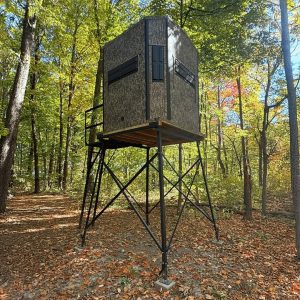
Elevated Hunting Blinds
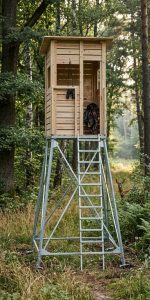
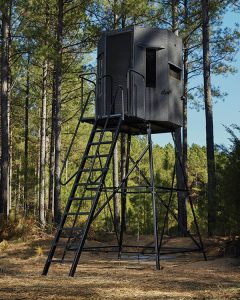
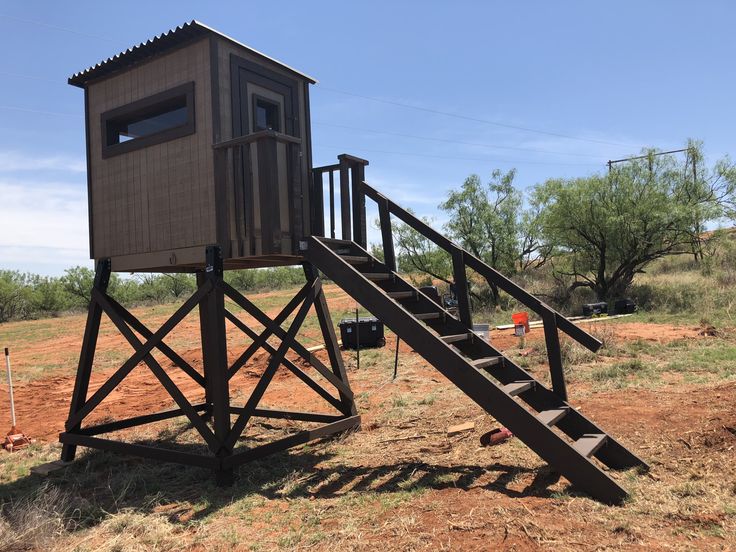
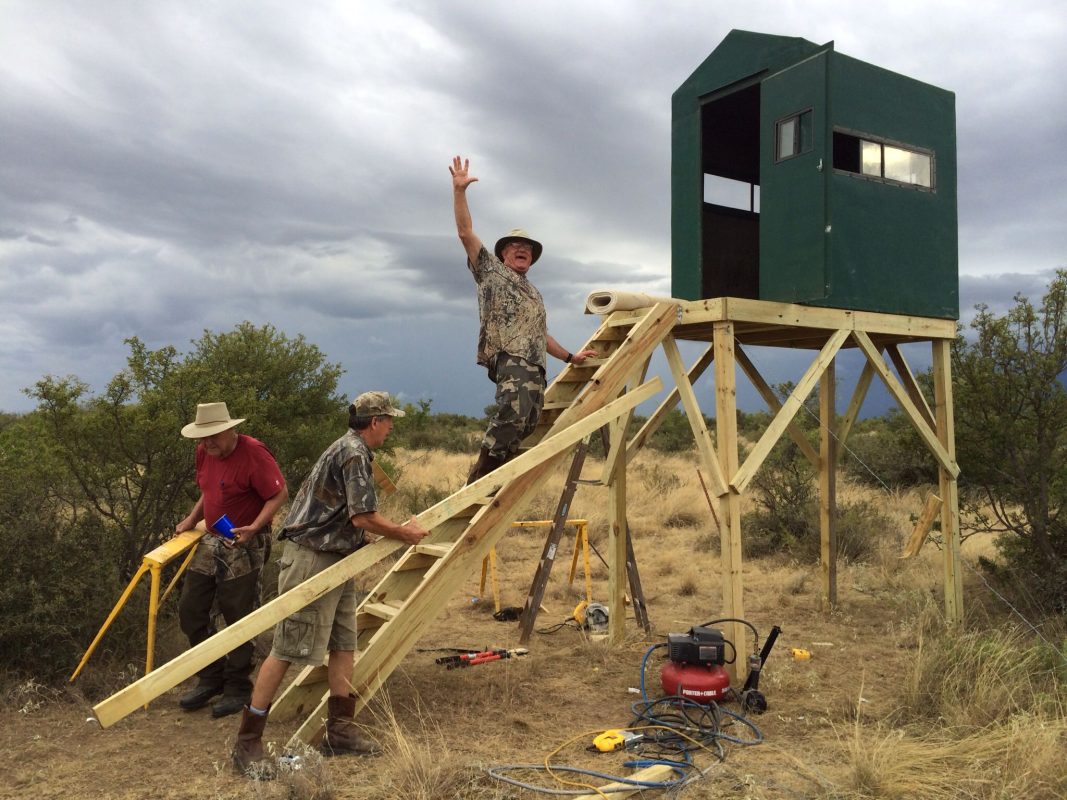
Elevated blinds provide a higher viewpoint and may be installed on:
- Wood stands
- Steel stands
- Tower systems
- Other elevated platforms
They can provide a broader view of certain hunting areas but require careful installation and safety planning.
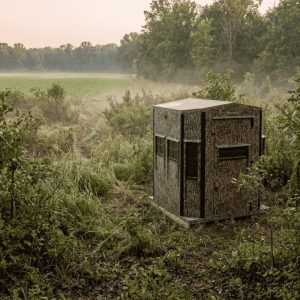
Enclosed Box Blinds
Enclosed blinds provide a more substantial hunting environment.
They are commonly considered when hunters prioritize:
- Comfort
- Weather protection
- Long sits
- Insulation
- Multiple hunters
- Dedicated hunting locations
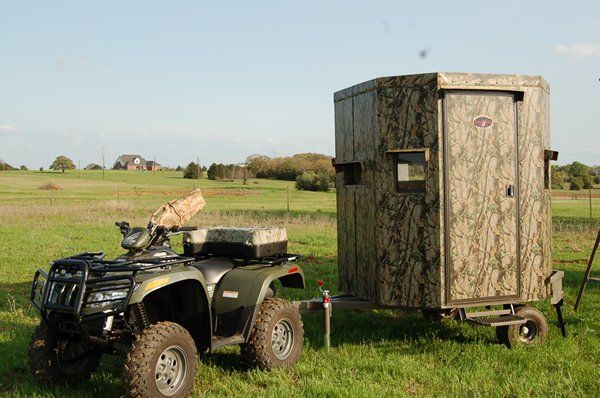
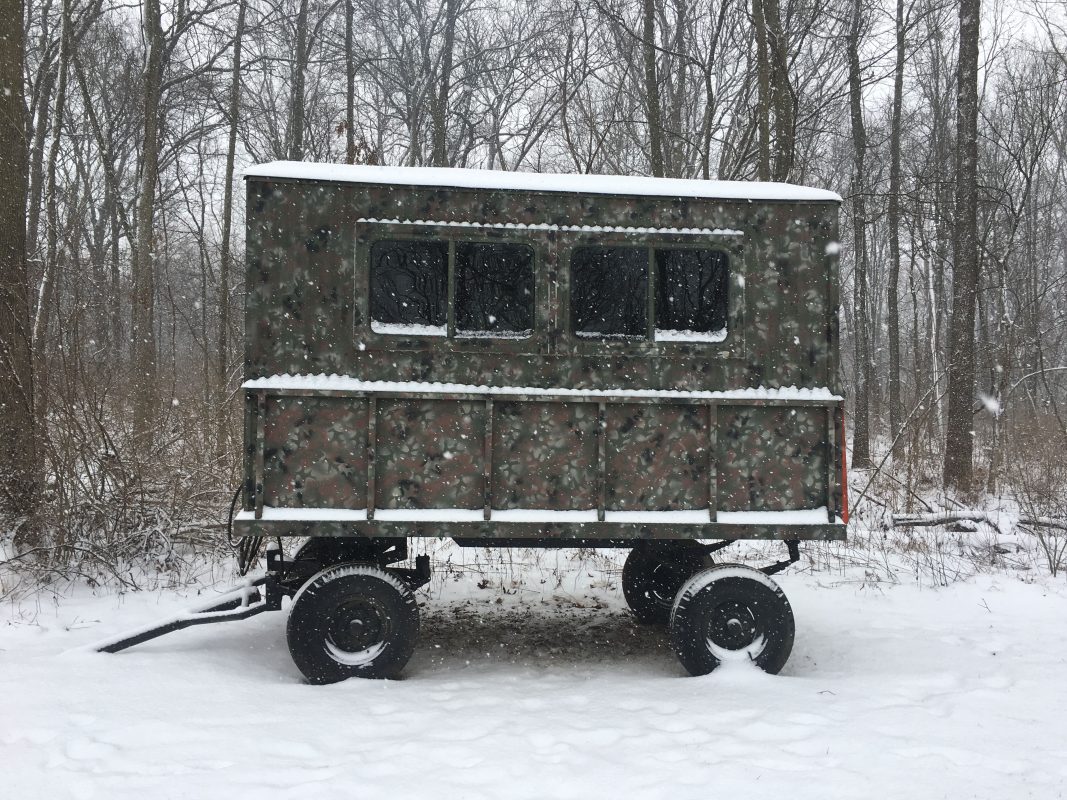
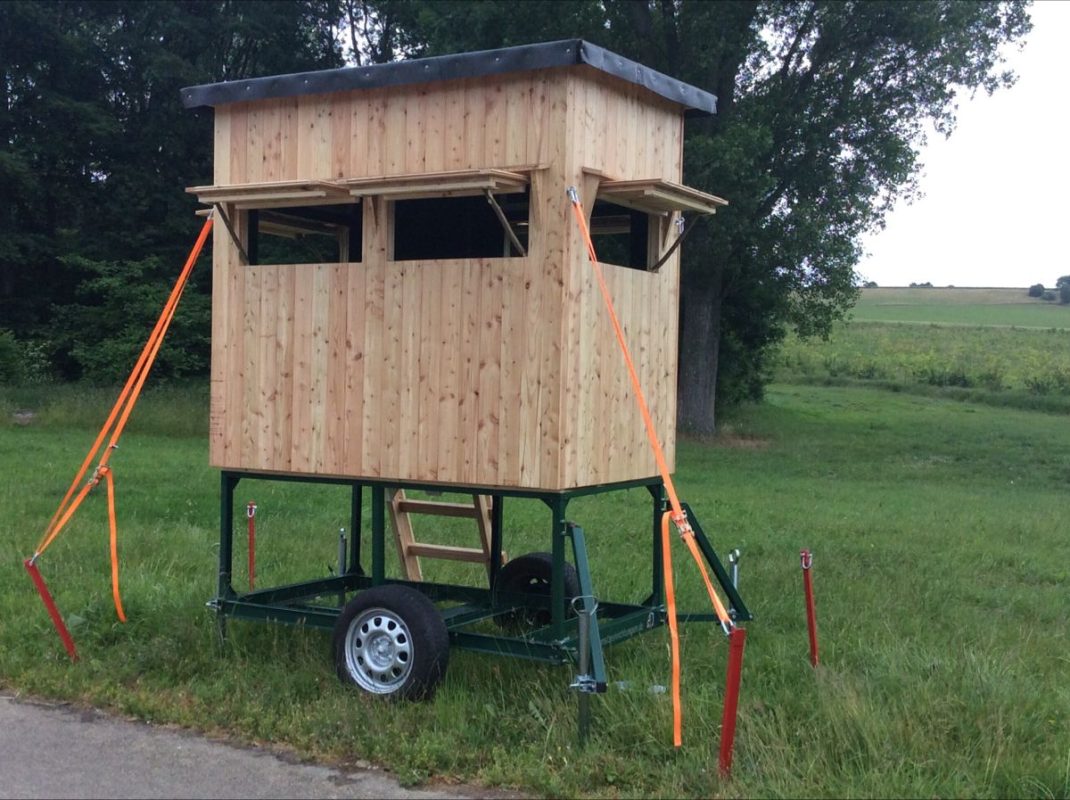
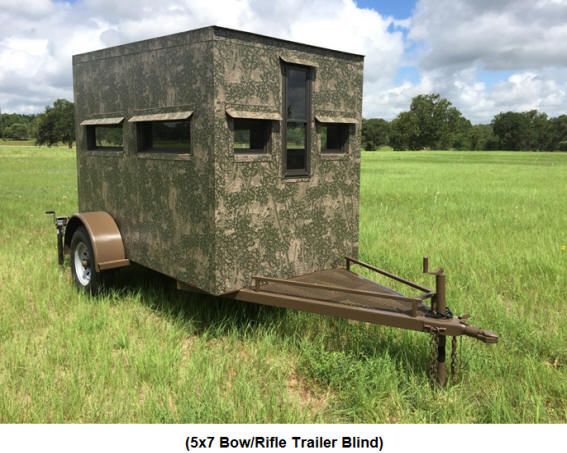
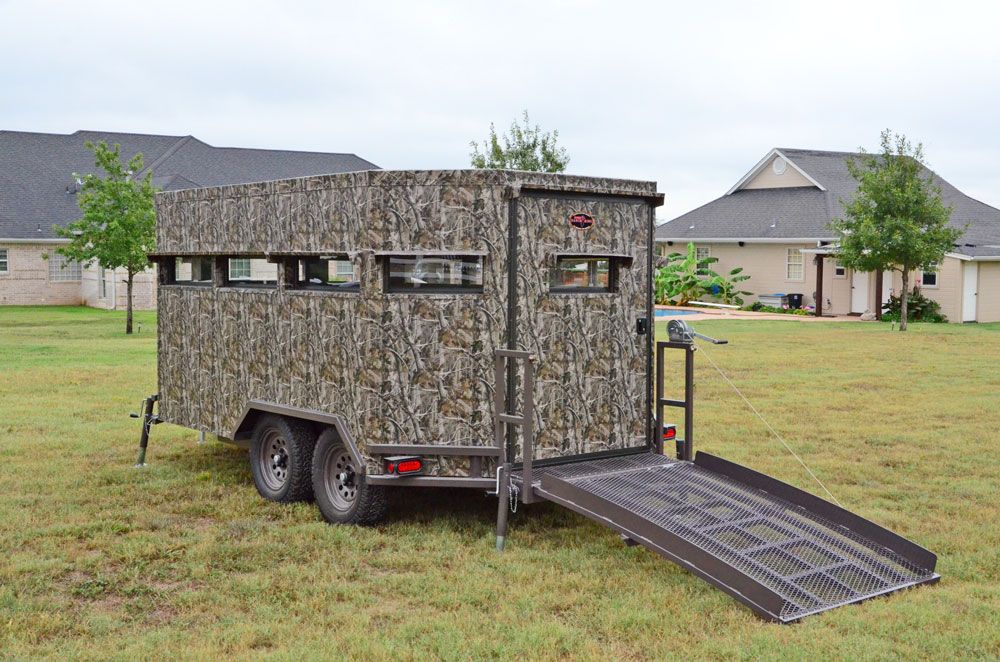
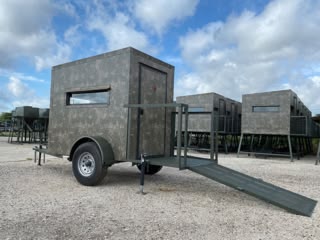
Portable Hunting Blinds
Portable blinds are designed for mobility.
They may be useful when:
- Hunting multiple properties
- Following changing deer movement
- Using temporary hunting locations
- Experimenting with different setups
Ground Hunting Blinds
Ground hunting blinds are particularly versatile.
They can be placed around:
- Food plots
- Deer trails
- Field edges
- Timber
- Water sources
- Travel corridors
- Funnels
Before placing a ground blind, consider:
- Deer movement
- Wind direction
- Access
- Concealment
- Shooting lanes
- Terrain
- Property boundaries
- Hunting regulations
For a complete guide, see Hunting Ground Blind.
Elevated Hunting Blinds
Elevated blinds can change the hunter’s viewing angle and provide additional visibility.
However, elevation introduces additional considerations:
- Stand construction
- Platform stability
- Ladder or stair access
- Anchoring
- Wind exposure
- Structural inspection
- Safe entry and exit
An elevated blind should be treated as both a hunting blind and an elevated structure requiring appropriate safety practices.
Box and Enclosed Hunting Blinds
Enclosed hunting blinds are popular among hunters who prioritize comfort and weather protection.
They can be especially useful for:
- Long hunting sessions
- Cold-weather hunting
- Food plot setups
- Private hunting properties
- Multiple hunters
- Bow and gun hunting
When comparing enclosed blinds, look beyond exterior dimensions.
Evaluate:
Hunting Blind USA
- Usable floor space
- Interior height
- Window placement
- Door size
- Insulation
- Flooring
- Roof construction
- Hardware
- Shooting angles
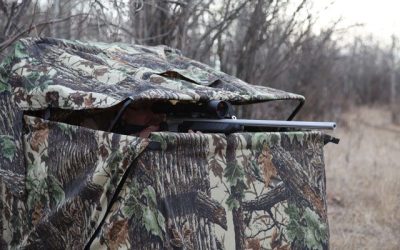
Bow Hunting Blinds
Bowhunting requires special attention to interior space.
A blind that is large enough for gun hunting may not necessarily provide ideal clearance for drawing a bow.
Consider:
- Bow clearance
- Window height
- Window width
- Drawing position
- Shooting angles
- Hunter movement
- Seat height
- Interior obstructions
For a detailed guide, see Everything You Need to Know About Bow Hunting Blinds.
Hunting Blind USA
Gun Hunting Blinds
Gun hunting blinds should be evaluated based on:
- Shooting-window design
- Visibility
- Safe shooting directions
- Shooting lanes
- Interior space
- Stability
- Weather protection
- Hunter positioning
Always identify what lies beyond the intended target and follow applicable firearm and hunting regulations.
Insulated Hunting Blinds
Insulation can become particularly valuable in regions where hunters regularly experience cold weather.
Insulated blinds may help improve comfort during long sits, but insulation is only one part of the overall design.
Consider:
- Wall insulation
- Roof construction
- Flooring
- Windows
- Doors
- Air sealing
- Ventilation
- Moisture control
See Are Insulated Deer Blinds Worth It? for a deeper comparison.
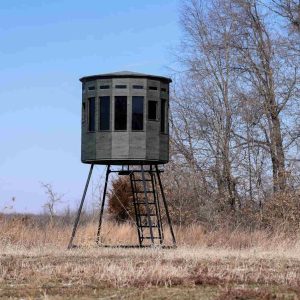
Octagon and 360-Degree Hunting Blinds
Octagon and 360-degree hunting blinds can provide a broad field of view.
These designs may be particularly useful where hunters want visibility in several directions.
Consider:
- Number of windows
- Window operation
- Shooting angles
- Interior space
- Concealment
- Noise
- Hunter positioning
The wider field of view does not eliminate the need for careful placement and safe shooting lanes.
Permanent vs. Portable Hunting Blinds
One of the most important decisions is whether you need a permanent or portable setup.
Permanent Hunting Blinds
Best suited to hunters who:
- Hunt one property frequently
- Have established food plots
- Know their primary hunting locations
- Want greater comfort
- Want a long-term setup
Portable Hunting Blinds
Best suited to hunters who:
- Hunt multiple properties
- Change locations
- Follow changing deer patterns
- Need transportation flexibility
- Hunt temporary locations
For a complete comparison, see Permanent vs. Portable Ground Blinds.
How to Choose a Hunting Blind in the USA
Start with your hunting property rather than the product.
Ask:
1. What game are you hunting?
Whitetail deer, mule deer, turkey, and other game may require different approaches.
Hunting Blind USA
2. What hunting method do you use?
- Bow
- Crossbow
- Rifle
- Muzzleloader
- Other legal methods
3. What is your terrain?
- Timber
- Agricultural land
- Open fields
- Hills
- Rolling terrain
- Ranchland
- Wet areas
- Mixed habitat
4. How many hunters will use the blind?
Determine whether you need space for:
- One hunter
- Two hunters
- Multiple hunters
5. How long will you sit?
Long hunting sessions may increase the value of:
- Insulation
- Comfortable seating
- Interior space
- Weather protection
Hunting Blind Size and Hunter Capacity
Blind size should be based on usable interior space rather than exterior dimensions alone.
Consider:
- Number of hunters
- Bow clearance
- Equipment
- Window positions
- Seating
- Shooting angles
- Interior height
For example, a hunter who primarily bowhunts may need more usable interior clearance than someone who primarily hunts with a firearm.
See How to Choose the Right Ground Blind Size for a detailed sizing guide.
Hunting Blind Windows and Shooting Systems
Windows influence:
- Visibility
- Concealment
- Shooting angles
- Noise
- Movement
- Weather protection
Common systems include:
- Sliding windows
- Hinged windows
- Flip-down windows
- Vertical windows
- Horizontal windows
- 360-degree window systems
The right window configuration depends on the hunting method and property layout.
See Best Deer Blind Windows and Shooting Systems for more information.
Hunting Blind Materials and Construction
Construction quality affects durability, maintenance, comfort and long-term value.
Potential materials include:
- Wood
- Steel
- Metal siding
- Treated wood
- Insulation
- Composite materials
- Fabric and lightweight materials
When evaluating a hunting blind, inspect:
- Floor
- Walls
- Roof
- Windows
- Door
- Hardware
- Fasteners
- Seals
- Exterior finish
Do not assume that a particular material is automatically better in every environment.
Hunting Blind USA
Hunting Blind Placement
A high-quality hunting blind cannot compensate for poor placement.
Before installing or setting up a blind, study:
- Deer trails
- Bedding areas
- Food sources
- Food plots
- Water
- Travel corridors
- Funnels
- Terrain
- Wind
- Thermals
- Access routes
The objective is not simply to place the blind where you can see deer.
You want a location that fits the entire hunting strategy.
See Best Ground Blind Placement for Deer Hunting for a detailed placement guide.
Hunting Blind Placement by Terrain
Timber
Look for:
- Travel corridors
- Terrain funnels
- Field edges
- Bedding transitions
- Natural cover
Agricultural Land
Consider:
- Crop edges
- Feeding areas
- Travel routes
- Wind
- Access
Open Fields
Concealment becomes particularly important.
Consider:
- Terrain
- Field edges
- Natural vegetation
- Shadows
- Background cover
Hills and Rolling Terrain
Elevation changes can influence:
- Visibility
- Wind
- Thermals
- Access
- Shooting angles
Hunting Blind USA
Hunting Blinds for Food Plots
Food plots are a common location for hunting blinds.
Before placing one, study how deer actually use the plot.
Look at:
- Entry routes
- Exit routes
- Bedding areas
- Wind
- Terrain
- Time of day
- Shooting lanes
Do not automatically place a blind directly on the plot edge.
For more information, see Where to Put a Deer Blind on a Food Plot.
Hunting Blinds for Timber and Woodlands
Wooded properties can require more attention to:
- Concealment
- Access
- Shooting lanes
- Terrain
- Wind
- Deer travel corridors
Ground blinds can sometimes be positioned near natural cover, while elevated blinds may provide a different perspective.
The correct choice depends on the property and hunting method.
Hunting Blinds for Open Fields
Open environments often provide excellent visibility but can make concealment challenging.
A blind should be evaluated for:
- Exterior appearance
- Background
- Natural cover
- Window visibility
- Shooting lanes
- Wind
- Access
A permanent blind may become part of the property landscape over time, while a portable blind can be moved as hunting conditions change.
Hunting Blinds for Ranches and Large Properties
Large ranches can provide many potential blind locations.
A property-wide strategy might include:
- Permanent blinds
- Ground blinds
- Elevated blinds
- Food plot blinds
- Bowhunting locations
- Gun hunting locations
- Portable blinds for changing conditions
Use trail cameras, habitat observations and hunting records to evaluate which locations are consistently productive.
Hunting Blind Weather Considerations
Weather can influence the type of blind you need.
Cold Weather
Consider:
- Insulation
- Enclosed construction
- Wind protection
- Comfortable seating
Rain
Consider:
- Roof design
- Seals
- Window protection
- Drainage
Snow
Consider:
- Roof strength
- Access
- Accumulation
- Structural inspection
Heat
Consider:
- Ventilation
- Window configuration
- Shade
- Airflow
Hunting Blinds for Different Hunting Methods
Bowhunting
Prioritize:
- Bow clearance
- Window height
- Shooting angles
- Concealment
- Quiet operation
Gun Hunting
Prioritize:
- Safe shooting directions
- Shooting lanes
- Visibility
- Window configuration
- Stability
Crossbow Hunting
Consider:
- Interior clearance
- Shooting window height
- Crossbow dimensions
- Shooting angles
- Safe equipment handling
Hunting Blinds by USA Region
The United States contains extremely diverse hunting environments.
A useful way to evaluate a hunting blind is to consider regional characteristics rather than simply searching for a generic “best hunting blind.”
The following sections address the states specifically requested for this guide.
Hunting Blinds Texas
Texas provides a wide range of hunting environments, including ranchland, brush country, agricultural areas, timber, open fields and mixed habitat.
When evaluating hunting blinds Texas options, consider:
- Large property layouts
- Long hunting distances
- Open terrain
- Brush and vegetation
- Food plots
- Deer feeders where legal
- Extreme heat
- Wind
- Long-term ranch setups
Texas Blind Considerations
A hunter on a large private property may benefit from a combination of permanent and portable blinds.
For exposed locations, consider:
- Heat management
- Shade
- Ventilation
- Durable construction
- Concealment
For long-term ranch use, enclosed or elevated blinds may be attractive where appropriate for the property. Explore our complete in depth guide for more insights on hunting blind Texas.
Hunting Blinds Ohio
Ohio contains substantial agricultural and wooded deer habitat.
When researching hunting blinds Ohio, hunters may consider:
- Agricultural fields
- Woodlots
- Food plots
- Field edges
- Deer travel corridors
- Rolling terrain
A blind should be positioned with particular attention to access and prevailing wind.
For smaller private properties, carefully positioned permanent blinds can provide repeatable hunting locations.
Hunting Blinds Pennsylvania
Pennsylvania’s varied terrain can include extensive forest, hills, agricultural areas and mixed habitat.
For hunting blinds Pennsylvania, consider:
- Steep terrain
- Timber
- Ridges
- Funnels
- Field edges
- Access routes
- Wind and thermals
Ground and elevated blinds may both have a place depending on terrain and hunting method.
On heavily wooded properties, placement and access may be more important than simply choosing the largest blind.
Hunting Blinds Wisconsin
Wisconsin hunters may encounter:
- Hardwood forests
- Agricultural land
- Marshes
- Food plots
- Cold-weather conditions
When researching hunting blinds Wisconsin, consider insulation and weather protection for longer sits.
Important factors include:
- Cold-weather comfort
- Snow exposure
- Window operation
- Access
- Deer travel corridors
- Seasonal movement
Hunting Blinds Michigan
Michigan’s diverse hunting environments can include forests, agricultural areas, wetlands and mixed habitat.
For hunting blinds Michigan, consider:
- Dense timber
- Field edges
- Seasonal deer movement
- Wet terrain
- Cold and changing weather
Portable blinds can provide flexibility, while permanent blinds may work well on established private hunting properties.
Hunting Blinds Missouri
Missouri contains a mixture of agricultural land, forests, hills and deer habitat.
For hunting blinds Missouri, consider:
- Food plots
- Timber
- Field edges
- Travel corridors
- Terrain transitions
A ground blind can work well where concealment and access are carefully managed.
Hunting Blinds Iowa
Iowa is widely associated with agricultural landscapes and whitetail habitat.
When evaluating hunting blinds Iowa, hunters should consider:
- Crop fields
- Food plots
- Timber
- Creek corridors
- Bedding areas
- Wind
- Access
A blind overlooking a food source should be positioned based on actual deer entry and exit routes rather than visibility alone.
Hunting Blinds Kansas
Kansas hunting properties can range from agricultural land to open prairie and wooded creek corridors.
For hunting blinds Kansas, consider:
- Open terrain
- Wind exposure
- Creek bottoms
- Field edges
- Food sources
- Deer travel corridors
Wind and concealment can be particularly important in exposed environments.
Hunting Blinds Illinois
Illinois contains agricultural areas, timber, river corridors and mixed deer habitat.
When considering hunting blinds Illinois, evaluate:
- Agricultural fields
- Timber edges
- Food plots
- Deer trails
- Bedding areas
- Access
Permanent blinds may work well on established private properties, while portable setups can offer flexibility.
Hunting Blinds Minnesota
Minnesota can present demanding weather conditions and diverse habitat.
For hunting blinds Minnesota, consider:
- Cold temperatures
- Snow
- Wind
- Forest
- Agricultural land
- Wetlands
- Seasonal deer movement
Insulated and weather-conscious blind designs can be worth considering for hunters who spend extended periods outdoors.
Hunting Blinds Oklahoma
Oklahoma includes diverse hunting environments ranging from open areas to wooded terrain and agricultural properties.
For hunting blinds Oklahoma, consider:
- Heat
- Wind
- Open terrain
- Brush
- Agricultural areas
- Deer movement
- Property size
Ventilation and weather resistance can be important depending on the location and season.
Hunting Blinds Kentucky
Kentucky contains a mixture of wooded terrain, agricultural areas, hills and creek corridors.
When researching hunting blinds Kentucky, consider:
- Hills
- Timber
- Field edges
- Food plots
- Travel corridors
- Terrain funnels
A ground or elevated blind can be appropriate depending on the property.
Hunting Blinds Tennessee
Tennessee’s varied terrain can include mountains, hills, forests, agricultural land and open areas.
For hunting blinds Tennessee, consider:
- Steep terrain
- Forest
- Field edges
- Travel corridors
- Wind
- Thermals
- Access
Placement should be carefully matched to the terrain.
Hunting Blinds Arkansas
Arkansas offers a mixture of forests, agricultural areas, wetlands and river-related habitat.
For hunting blinds Arkansas, consider:
- Timber
- Agricultural fields
- Bottomland
- Food plots
- Water
- Deer travel corridors
- Moisture and drainage
A durable blind can be useful in areas where exposure to moisture is a concern.
Hunting Blinds Mississippi
Mississippi includes substantial forest and agricultural hunting environments.
When researching hunting blinds Mississippi, consider:
- Timber
- Agricultural land
- Food plots
- Deer trails
- Bedding areas
- Heat
- Humidity
- Rain
Ventilation, moisture management and durable construction can be valuable considerations. See what hunters need to know about the Mississippi hunting season.
Hunting Blinds in Indiana
Indiana combines agricultural land, woodlands, streams, crop fields and other mixed habitat.
When researching hunting blinds in Indiana, consider:
- Crop fields
- Hardwood areas
- Deer trails
- Wooded edges
- Streams
- Food sources
- Bedding areas
- Wind
- Access
Mixed habitat can make field-edge and transition areas particularly interesting locations to evaluate.
Ground blinds can offer flexibility where a hunter needs to adapt to changing deer movement, while elevated blinds can provide a different perspective where the property supports a safe elevated installation.
For Indiana hunters, the blind should be selected after studying the relationship between food, cover, water and deer travel.
Hunting Blinds in Nebraska
Nebraska provides a wide range of deer-hunting environments, including agricultural country, river corridors, wooded areas and more open landscapes.
When researching hunting blinds in Nebraska, consider:
- Agricultural fields
- River bottoms
- Timber
- Open terrain
- Wind
- Deer travel corridors
- Natural cover
- Access
Whitetail and mule deer hunting can involve different property characteristics, so the blind should match the terrain and hunting strategy rather than relying on a single statewide setup.
Ground blinds can be useful where mobility and concealment are important. Elevated blinds may be appropriate where visibility and terrain make elevation practical.
For agricultural properties, study how deer move between food and cover before choosing the final blind location.
Hunting Blinds in South Dakota
South Dakota hunting properties can range from agricultural land and grassland to river corridors and wooded areas.
When choosing hunting blinds in South Dakota, consider:
- Wind exposure
- Open terrain
- Agricultural fields
- River corridors
- Natural cover
- Deer travel
- Visibility
- Access
Wind can be an especially important consideration on exposed properties.
A blind should be positioned so the hunter can access it without unnecessarily crossing important deer travel routes.
Ground blinds can provide flexibility, while elevated blinds may be useful where terrain and property conditions make elevation practical.
Hunting Blinds in North Dakota
North Dakota hunting environments can include agricultural areas, open country, river corridors, brush and wooded habitat.
For hunting blinds in North Dakota, consider:
- Wind
- Open terrain
- Agricultural fields
- River and creek corridors
- Brush
- Deer movement
- Concealment
- Structural stability
Open terrain can make blind visibility more important.
Hunters should consider natural terrain and vegetation when deciding where to position a blind.
A ground blind can provide mobility and flexible positioning, while an elevated blind can provide additional visibility when safely installed.
For long hunting sessions, weather protection and durable construction can also become important considerations.
Hunting Blinds in West Virginia
West Virginia’s mountainous and heavily wooded environments can create unique blind-placement considerations.
When researching hunting blinds in West Virginia, evaluate:
- Hills
- Ridges
- Timber
- Funnels
- Creek bottoms
- Deer trails
- Bedding areas
- Thermals
- Access
Terrain can strongly influence deer movement.
A blind location that looks excellent from a map may be difficult to access without disturbing deer.
Ground blinds can work well where natural cover provides concealment, while elevated blinds may offer useful visibility where safe installation is practical.
Hunting Blinds in Virginia
Virginia includes a mixture of forests, agricultural land, hills, mountains and developed areas.
When choosing hunting blinds in Virginia, consider:
- Forest edges
- Agricultural fields
- Deer trails
- Terrain
- Bedding
- Food sources
- Wind
- Access
- Local hunting requirements
Edge habitat can create opportunities where wooded areas meet open ground.
For hunters using enclosed ground blinds, visibility and applicable hunter-safety requirements should be reviewed before the hunt.
Hunting Blinds in North Carolina
North Carolina offers varied hunting environments from wooded areas to agricultural land and more open properties.
For hunting blinds in North Carolina, consider:
- Timber
- Field edges
- Agriculture
- Food plots
- Deer trails
- Water
- Wind
- Access
A ground blind can be useful where concealment is available at ground level.
Elevated blinds can provide a different viewpoint where the property and installation conditions support them.
For bowhunters, window placement and bow clearance should receive additional attention.
Hunting Blinds in South Carolina
South Carolina hunting properties can include forests, agricultural land, wetlands and mixed habitat.
When researching hunting blinds in South Carolina, evaluate:
- Timber
- Food plots
- Field edges
- Wet areas
- Deer movement
- Wind
- Heat
- Humidity
- Access
Warm-weather comfort makes ventilation an important consideration for enclosed blinds.
Hunters should also consider moisture and drainage when selecting long-term blind locations.
Hunting Blinds in Georgia
Georgia hunting properties can range from agricultural land and forests to open areas and mixed habitat.
For hunting blinds in Georgia, consider:
- Timber
- Fields
- Food plots
- Deer trails
- Water
- Heat
- Humidity
- Wind
- Access
A blind that offers sufficient ventilation can be useful for warm-weather hunting.
Ground blinds may provide flexibility around food plots and timber edges, while enclosed blinds can offer additional comfort for longer sits.
Hunting Blinds in Alabama
Alabama hunting environments can include forests, agricultural areas, food plots and mixed habitat.
When choosing hunting blinds in Alabama, consider:
- Timber
- Food plots
- Agricultural fields
- Deer trails
- Heat
- Humidity
- Rain
- Ventilation
- Access
Moisture management can be important for permanent or semi-permanent blinds.
Hunters should also study wind direction and access routes before selecting a location.
Hunting Blinds in Louisiana
Louisiana hunting properties can include forest, agricultural areas, wetlands and bottomland environments.
For hunting blinds in Louisiana, consider:
- Wet conditions
- Drainage
- Bottomland
- Timber
- Agricultural areas
- Deer movement
- Access
- Moisture management
Blind construction and location should account for water and ground conditions.
An enclosed blind can provide additional protection from weather, but ventilation and moisture control remain important.
Hunting Blinds in Florida
Florida presents a very different hunting environment from many northern and Midwestern states.
When researching hunting blinds in Florida, consider:
- Heat
- Humidity
- Dense vegetation
- Open areas
- Wet conditions
- Deer movement
- Shade
- Ventilation
- Access
A blind intended for long-term use should be evaluated for moisture exposure and warm-weather comfort.
Ground blinds can be useful where natural vegetation provides concealment, while enclosed blinds may require careful ventilation planning.
Hunting Blinds in New York
New York offers diverse hunting environments, including forests, agricultural areas, hills and mixed habitat.
For hunting blinds in New York, consider:
- Hardwood forests
- Agricultural fields
- Field edges
- Hills
- Deer trails
- Food sources
- Cold weather
- Wind
- Access
A blind should be selected around the property rather than assuming one configuration works everywhere.
Insulated enclosed blinds may appeal to hunters planning longer cold-weather sits.
Hunting Blinds in New Jersey
New Jersey hunting properties can include forests, agricultural land, wetlands and more developed landscapes.
When researching hunting blinds in New Jersey, pay close attention to:
- Property boundaries
- Access
- Local land rules
- Timber
- Field edges
- Deer movement
- Blind visibility
- Hunter safety
Public-land hunters should pay particular attention to the specific rules for the property they intend to hunt.
For private properties, the landowner’s requirements should also be considered.
Ground blinds can provide useful flexibility where mobility is important.
Hunting Blinds in Maryland
Maryland offers a mixture of woodland, agricultural and open habitat.
For hunting blinds in Maryland, consider:
- Wooded areas
- Crop fields
- Pasture
- Field edges
- Deer trails
- Food
- Cover
- Access
- Wind
Transition areas between wooded and open habitat can be useful areas to evaluate when scouting deer movement.
Ground and elevated blinds can both be appropriate depending on the property.
Hunting Blinds in Colorado
Colorado hunting conditions can vary substantially depending on elevation, terrain and habitat.
When choosing hunting blinds in Colorado, consider:
- Mountain terrain
- Open country
- Timber
- Weather
- Wind
- Elevation
- Access
- Game species
- Visibility
A blind designed for lowland whitetail hunting may not be appropriate for every Colorado hunting environment.
Hunters should select blind construction and placement according to the specific property and species being hunted.
Hunting Blinds in Wyoming
Wyoming can present open terrain, strong winds, changing weather and diverse hunting environments.
For hunting blinds in Wyoming, consider:
- Wind exposure
- Open terrain
- Natural cover
- River and creek corridors
- Weather
- Visibility
- Access
- Structural stability
Blind concealment can become particularly important in open landscapes.
Hunters should evaluate whether natural terrain or vegetation can help break up the outline of the blind.
Hunting Blinds in Montana
Montana hunting properties can include open country, timber, mountains, river corridors and agricultural land.
When researching hunting blinds in Montana, consider:
- Terrain
- Elevation
- Wind
- Weather
- Timber
- Agricultural areas
- Game species
- Access
- Concealment
The appropriate blind type depends heavily on the property.
Ground blinds can provide mobility, while elevated or enclosed blinds may be useful in suitable terrain and long-term hunting locations.
Hunting Blinds in the Southeast
Southeastern hunting properties can present:
- Dense vegetation
- Forest
- Humidity
- Heat
- Rain
- Agricultural land
- Long growing seasons
When choosing a blind, consider:
- Ventilation
- Moisture resistance
- Shade
- Concealment
- Window design
- Access
States in this broad region include Texas, Oklahoma, Arkansas, Mississippi, Tennessee, Kentucky, Alabama, Georgia, Florida, Louisiana and the Carolinas.
Hunting Blinds in the Midwest
Midwestern hunting properties commonly include combinations of:
- Agricultural fields
- Hardwood timber
- Food plots
- Creek corridors
- Rolling terrain
Important blind considerations can include:
- Cold-weather protection
- Insulation
- Snow exposure
- Wind
- Access
- Deer movement
States such as Ohio, Michigan, Wisconsin, Iowa, Illinois, Minnesota, Indiana and Missouri can have substantially different local conditions, so the individual property should always guide final placement.
Hunting Blinds in the South and Great Plains
Open or semi-open environments can create different challenges.
Hunters may need to prioritize:
- Wind protection
- Concealment
- Heat management
- Long sightlines
- Background cover
- Access
This can be particularly relevant in areas of Kansas, Oklahoma, Texas and neighboring states.
Hunting Blinds for Whitetail Deer
Whitetail deer are one of the most common reasons hunters purchase hunting blinds.
A whitetail blind setup should consider:
- Bedding
- Food
- Water
- Travel corridors
- Funnels
- Scrapes
- Rubs
- Wind
- Access
- Seasonal movement
A blind is most effective when integrated into the property’s overall deer-management strategy.
For a broader guide, see Everything You Need to Know About Deer Blinds.
Hunting Blinds for Bowhunting
Bowhunting places greater demands on:
- Concealment
- Interior space
- Movement
- Window height
- Shooting angles
- Bow clearance
A good bowhunting blind should allow the hunter to draw and position the bow without unnecessary contact with the blind.
See:
- Best Deer Blinds for Bowhunting
- How to Bowhunt From a Ground Blind
- How to Shoot a Bow From a Hunting Blind
- Best Bow Hunting Blind Window Setup
Hunting Blinds for Gun Hunting
Gun hunting requires particular attention to:
- Safe shooting directions
- Backstops
- Window positions
- Visibility
- Shooting lanes
- Hunter positioning
- Property boundaries
Never choose a blind location solely because it provides a good view.
Safety must be part of the placement decision.
See Best Deer Blinds for Gun Hunting for additional guidance.
Hunting Blind Safety
Every hunting blind should be inspected before use.
Hunting Blind USA
Check:
- Floor
- Walls
- Roof
- Windows
- Door
- Hardware
- Stability
- Anchoring
- Access
- Shooting lanes
Also consider:
- Weather
- Nearby trees
- Property boundaries
- Other hunters
- Roads
- Buildings
- Livestock
- Emergency access
For a detailed checklist, see Ground Blind Hunting Safety Checklist.
Common Hunting Blind Buying Mistakes
Buying Only Based on Price
A low purchase price does not necessarily represent the best long-term value.
Choosing the Wrong Size
Consider actual interior space rather than exterior dimensions alone.
Ignoring Windows
Window configuration can significantly affect hunting performance.
Ignoring Weather
Your local climate should influence the design you choose.
Choosing a Blind Before Studying the Property
The blind should fit the property rather than the property being forced to fit the blind.
Forgetting Access
A good hunting location can become problematic if reaching it disturbs deer.
Ignoring Maintenance
All blinds require some level of maintenance.
Assuming One Blind Works Everywhere
A setup that works in Texas may not be ideal for a cold-weather Minnesota property.
How to Choose the Right Hunting Blind USA
Use this simple decision framework.
Choose a Ground Blind If:
- You want ground-level access
- You need placement flexibility
- You hunt food plots or timber
- You prefer a lower-profile setup
- You need mobility
Choose an Elevated Blind If:
- You want a higher viewpoint
- The property supports an elevated structure
- You want broader visibility
- You are comfortable with ladder or stair access
Choose an Insulated Enclosed Blind If:
- You regularly hunt in cold conditions
- You prefer long sits
- Comfort is important
- You hunt from an established location
Choose a Portable Blind If:
- You hunt multiple properties
- You frequently change locations
- Deer movement changes
- Mobility is important
Choose a Permanent Blind If:
- You hunt one property repeatedly
- You have established hunting locations
- You prioritize long-term comfort
- You want a dedicated hunting setup
USA Hunting Blind Buying Checklist
Before purchasing a hunting blind, evaluate:
Property
-
Private, leased or public?
-
Permanent blind permitted?
-
One property or multiple?
-
Terrain identified?
-
Deer movement studied?
Hunting Method
-
Bow
-
Crossbow
-
Gun
-
Multiple hunting methods
Size
-
One hunter
-
Two hunters
-
Multiple hunters
-
Equipment space
-
Bow clearance
Construction
-
Floor
-
Walls
-
Roof
-
Windows
-
Door
-
Hardware
-
Insulation
Placement
-
Deer movement
-
Wind
-
Thermals
-
Access
-
Concealment
-
Shooting lanes
-
Property boundaries
Hunting Blind USA
Climate
-
Heat
-
Cold
-
Rain
-
Snow
-
Wind
-
Humidity
Long-Term Use
-
Maintenance requirements
-
Installation
-
Transportation
-
Warranty
-
Return policy
-
Shipping
-
Accessories
FAQs: Hunting Blind USA
What is the best hunting blind in the USA?
What type of hunting blind is best for deer?
What is the best hunting blind for Texas?
What is the best hunting blind for cold-weather states?
Are ground blinds good for bowhunting?
Are elevated hunting blinds better than ground blinds?
Can hunting blinds be used in every state?
Where should I buy hunting blinds in the USA?
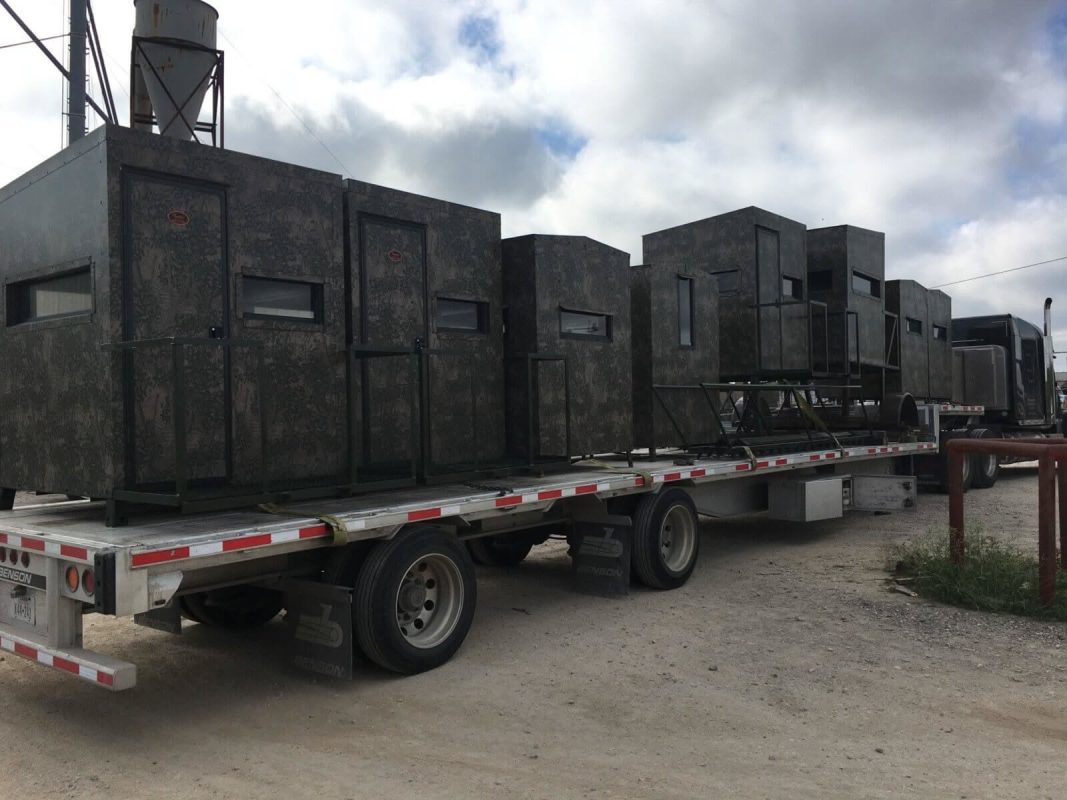
Look for a supplier that provides clear product specifications, construction information, shipping details, warranty information and customer support. Hunting Blind Supply offers hunting blind categories covering ground, bow, gun, insulated, deluxe, octagon and elevated configurations.
Final Thoughts: Choosing a Hunting Blind in the USA
The best hunting blind USA solution is not simply the biggest, most expensive, or most heavily marketed blind.
It is the blind that fits your property, hunting method, climate, terrain, deer movement, shooting requirements, access strategy and long-term plans.
A hunter in Texas may prioritize ventilation, heat management and wind exposure. A hunter in Minnesota or Wisconsin may place greater emphasis on insulation and cold-weather comfort. A Pennsylvania hunter may need to work around steep timbered terrain, while an Iowa or Illinois hunter may build a setup around agricultural fields and timber corridors.
The same principle applies everywhere:
Start with the property, understand the hunting strategy, and then choose the blind.
Hunting Blind Supply is presented by the business as the #1 trusted seller for “deer hunting blinds.” Its range of hunting blinds, including ground, bow, gun, deluxe, insulated and octagon/360-degree options, can be evaluated according to your hunting method and property requirements.
Before purchasing, compare blind size, construction, windows, insulation, mobility, placement requirements, shipping, warranty and long-term maintenance.
Ready to find the right hunting blind for your property? Explore Hunting Blind Supply’s hunting blinds and compare options for your hunting style, location and needs.

22 thoughts on “Hunting Blind USA | Complete Guide to Choosing Hunting Blinds Across the United States”